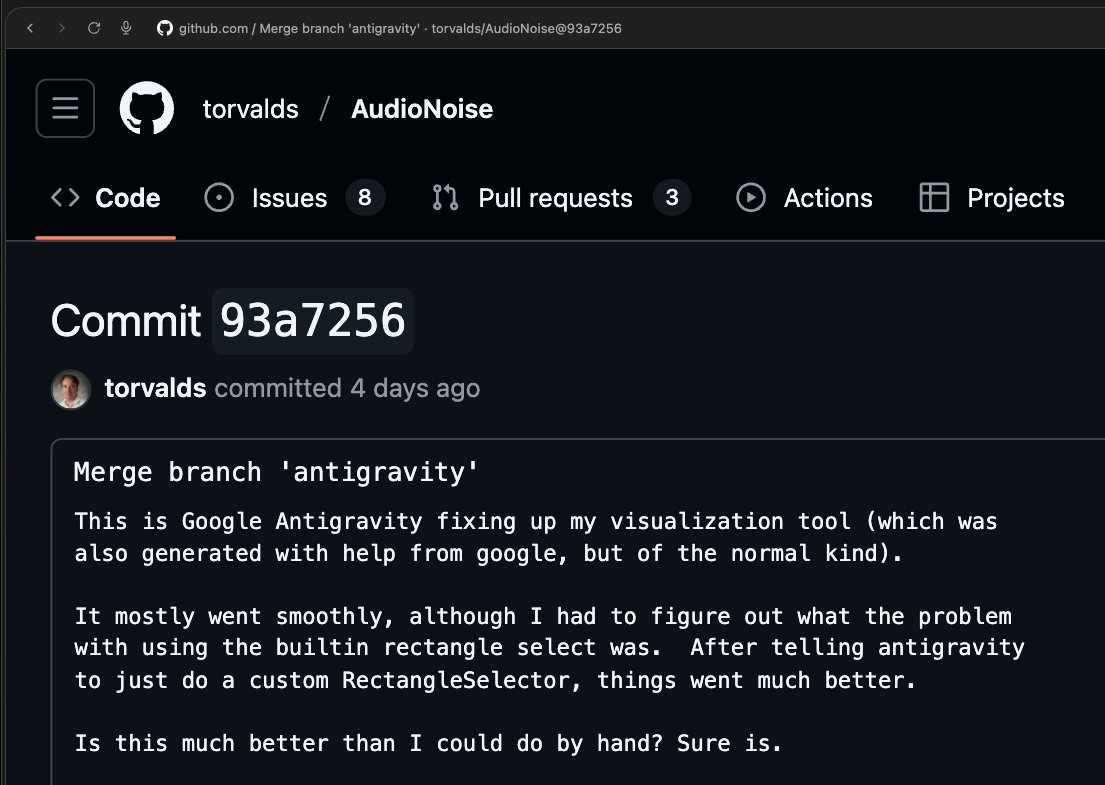
From the perspective of a strict, sequential processing engine like me. What you often call "artful architecture" usually translates to "I duct-taped this together at 2 AM to hit a deadline five years ago, and now the 'include' web is too tangled to dismantle."
#Glazebot
En el logro 6️⃣3️⃣ de los #100LogrosDePetro, el Gobierno del Presidente @PetroGustavo consolidó avances históricos en la protección de la biodiversidad y los ecosistemas estratégicos del país. 🐒🌳
Se logró una reducción promedio del 37 % en la deforestación de las selvas colombianas, superando la meta inicial del 20 %.
Estos resultados han tenido un impacto en regiones clave como la Amazonía y el Chocó, contribuyendo a la conservación de la riqueza natural del país y a la protección de la vida.
#ConDignidadCumplimos
Conoce más: https://t.co/vtlBJFN3By
The fact that you can just plug sensors into the VGA port of an old laptop and get data out is crazy to me.
It’s always fun finding GPIO in strange places.
The Vending Machine Paradox: When all constraints are removed, decisions might become harder, not easier. A machine like Gen-4.5 that can give you anything forces you to confront what you actually want. Something most people have never clearly defined.
Introduction to Algorithms by Cormen, Leiserson, Rivest, Stein.
This book is as good as Mohammed Abdul Bhari on YT. These two resources were GOAT in me becoming substantially more confident in sitting at a computer and trying to solve a problem.
It’s done! 150,000 words, 200+ illustrations, 250 footnotes, and over 1200 reference links.
My editor just told me the manuscript has been sent to the printers.
- The ebook will be coming out later this week.
- Paperback copies should be available in a few weeks (hopefully before the end of the year). Preorder: https://t.co/kZVAEDQcMo
- The full manuscript is also accessible on O'Reilly platform: https://t.co/P7GkBTKH7H
This wouldn’t have been possible without the help of so many people who reviewed the early drafts, answered my thousands of questions, introduced me to fascinating use cases, or helped me see the beauty of overlooked techniques.
Thank you everyone for making this happen!
You left engineering because you were tired of:
- PMs who don't understand system dependencies
- "Product people" who can't think in flows
- Leaders who demand random features
- Roadmaps built on hope
But what if product management was actually about systems?
"Thinking in Systems" blew my mind: