Asst Prof @UCMercedPoliSci; @PolViol_Lab Director; @PrincetonSPIA alum. Focus: causes/consequences of political violence & how news media shapes our perceptions
UC Merced has been ranked first in the nation by the WSJ for its dedication to fostering upward socioeconomic mobility, empowering disadvantaged students to succeed, with higher graduation rates and strong post-graduation salaries.
Read more here 🔗 https://t.co/nP6gq6wj6Z
Our results provide significant evidence that observed media reporting patterns on international affairs may not reflect an equilibrium with demand across these heterogeneous populations.
In separate research efforts, we find significant reliance on the news media for foreign affairs information and significant causal impacts of media reporting on int'l affairs processes. Accordingly, there are potentially significant (short & long-run) costs to lack of coverage.
Our findings: 1. U.S. residents are nearly as likely to select the "shadow topic" previews as they are the
headline news previews and 2. International affairs professionals were even more likely to.
We begin by identifying a set of major international issues largely underreported by the news media by conducting in-depth interviews with a wide range of foreign affairs professionals across the UN system; major iNGOs; the U.S. and foreign governments; major think tanks; etc.
Finally, we carry out survey experiments to calculate demand for major undercovered news stories—relative to leading headline news stories. Surveys involved current/former senior USG officials; IR faculty; IR-focused staffers at major U.S. think tanks; and U.S. residents.
As one interviewee summarized: "There is no set formula in any news room, and certainly it is not consistent across the broadcast or digital journalism landscape... Each news room is different; each editorial leader is different in terms of how they approach coverage decisions."
Contrary to conventional belief that clicks/page views drive coverage, we find that outlets pursue markedly different approaches in determining which international stories to cover (and how much attention to devote to them).
Then, we engage in-depth interviews with current/former news media executives,
editors, foreign bureau chiefs, foreign correspondents and freelance journalists with both
direct and indirect insights into the nature of international story selection.
Many major international issues receive limited major news media attention. But, does their lack of coverage simply reflect lack of demand for them? In @MediaLSE Working Paper #74, @PolViol_Lab explores this question. See 🧵for findings and link to paper.
My lab, @PolViol_Lab, is looking once again to partner with (freelance or other) journalists (on a paid basis). This time, we are looking for journalists based in/working on Bangladesh specifically! Please DM me if you are interested or have any leads!
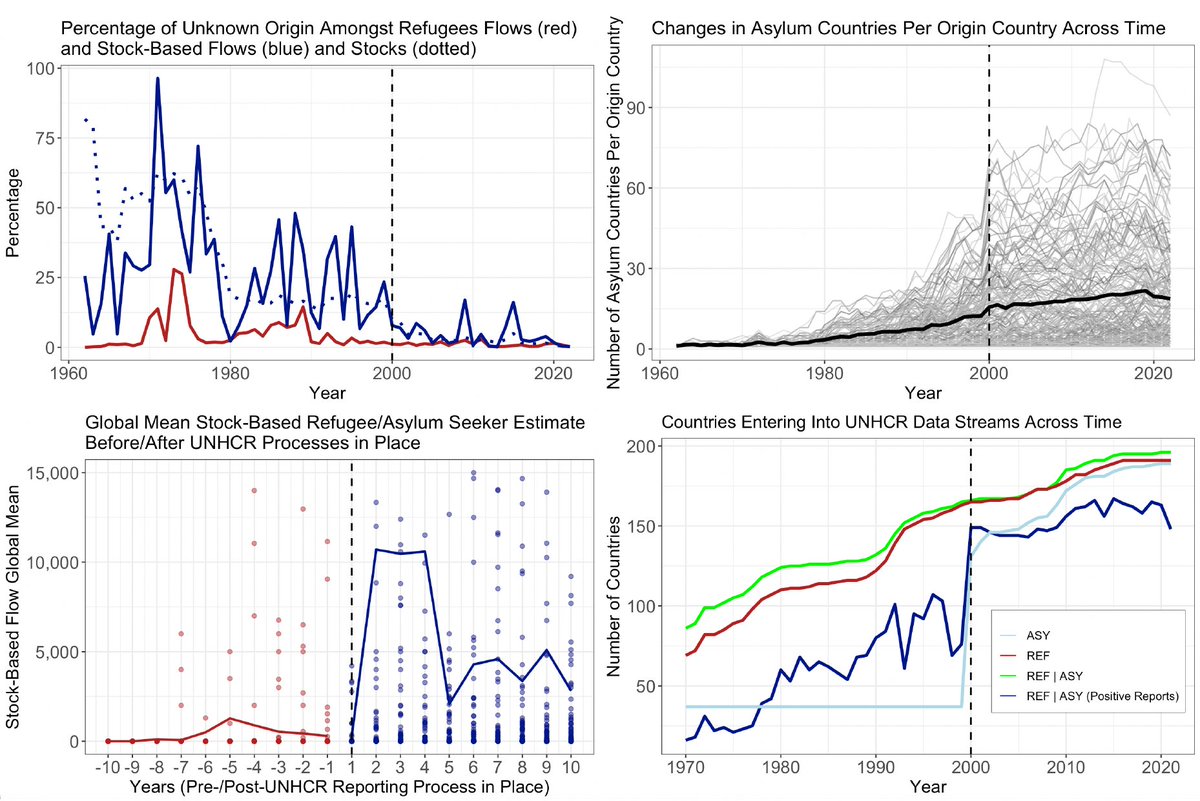
Does your research or work in government involve questions concerning refugee/asylum seeker flows? Out today in the @apsrjournal, my most recent research with @benckrick and an outstanding team of (now former) @UCMercedPoliSci@PolViol_Lab members: 🧵