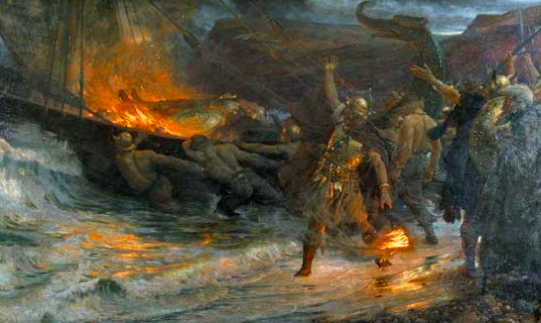
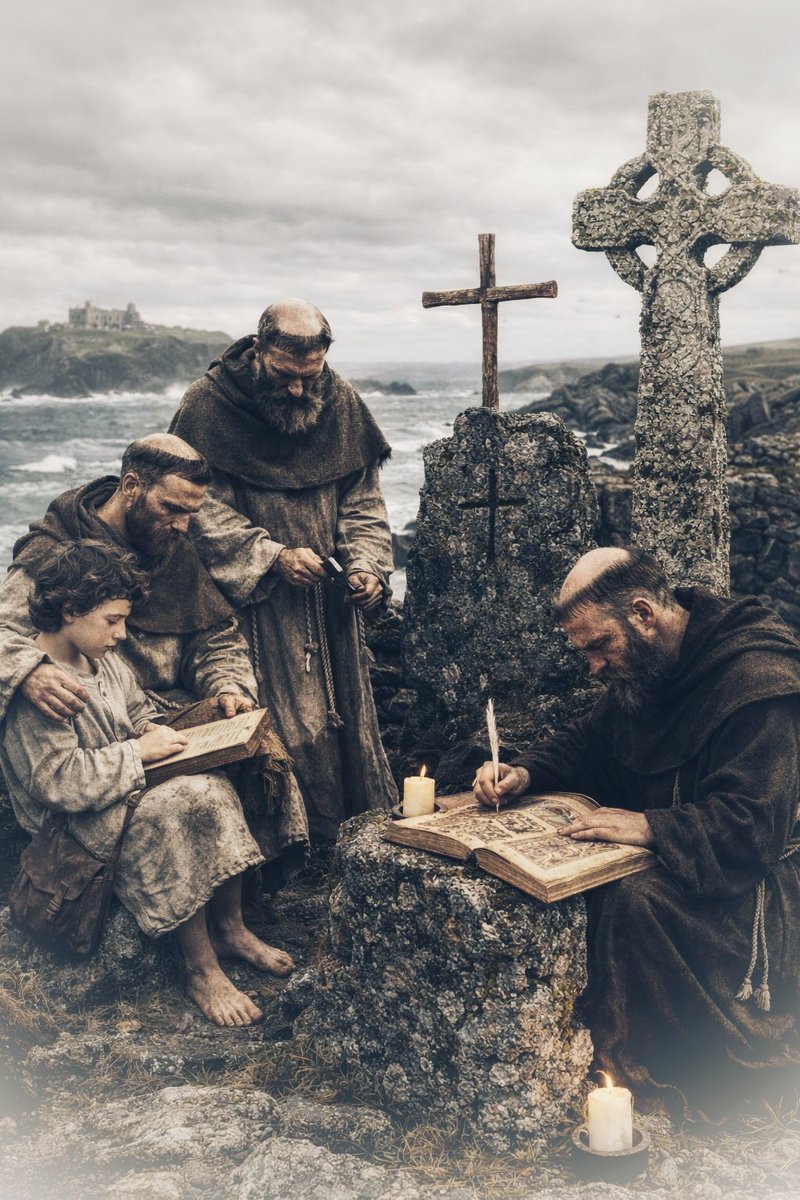
The moral of Beowulf is clear: It is more important to fight evil than to defeat it. Even knowing the dragon will claim his life, Beowulf rises to meet it. The courage to stand against darkness matters more than a guarantee of victory. That is the heroic spirit Tolkien celebrated — and carried into his own legendarium. (6/6)
In his 1936 lecture "Beowulf: The Monsters and the Critics," J.R.R. Tolkien delivered a game-changing argument. He insisted Beowulf should not be read as a dry history book of the Anglo-Saxons, but as a towering work of art — one of the foundational poems that helped establish England’s poetic tradition. (1/6)
For the Anglo-Saxons, the ideal warrior-king was one who led his people in battle. Beowulf is the ultimate embodiment of this ideal. He fights for the glory of his people and the honor of his king — both as a young hero and as an aged ruler. Yet in his final battle, when evil enters in the form of the dragon, Beowulf stands juxtaposed against the very best of kings — Sigmund and Scyld Scefing — and becomes one himself. (5/6)
In medieval Christian Europe, Hector eclipsed Achilles as a masculine role model. He topped the Nine Worthies—the ideal chivalric heroes:
Pagan: Hector, Alexander the Great, Julius Caesar
Jewish: Joshua, David, Judas Maccabeus
Christian: King Arthur, Charlemagne, Godfrey of Bouillon
Writers recast Hector as pious family man and a tragic defender to fit Christian humility, sidelining Achilles’ arrogant, wrathful killer. Nolan’s Odyssey diminishes both—chivalric Hector and primal Achilles—because DEI rejects masculinity in all its forms. Sadly, Elliot Page is the new standard for the woke age.
You're right — Homer makes us love and mourn Hector. That's intentional, to highlight the tragedy of war. But the poem is built around Achilles' wrath and battlefield supremacy. Hector is the noble, human heart; Achilles is the embodiment of the old Mycenaean heroic ideal.
Alexander the Great carried the Iliad everywhere, slept with it under his pillow, modeled himself after Achilles, and honored his tomb — showing exactly who the ancient pagan Greeks revered as the pinnacle.
Artistry saturates creation at every level. From the microscopic to the cosmic, it whispers that the mind behind the universe delights in beauty for beauty’s sake and lavishes these gifts upon creatures designed to perceive them. @TSOEfilm@StephenCMeyer
https://t.co/mBcSejAfDT
You'd probably like Bryan Sykes' book "Blood of the Isles." Its about the five theoretical patriarchs of Britain: Eshu (haplogroup E1b), Woden (I1), Re (J), Sigurd (R1a), and Oisin (R1b). The Celto-Germanic strains are dominant (95 percent), but their is indeed an ancient Semitic component (i.e. Érimón Red-Wrist, Joseph of Arimathea, Aristobulus, and a few other legends).
My linguistic analysis is somewhat biased by the theological beleif that Jeremiah 33:17-18 stipulates that King David’s throne would exist perpetually. Thus, I take seriously the idea that a Jewish princess must have married into Irish royalty in the 6th century B.C. The idea of a Milesian invasion fell out of favor a century ago, but it's experiencing a bit of a renaissance lately.
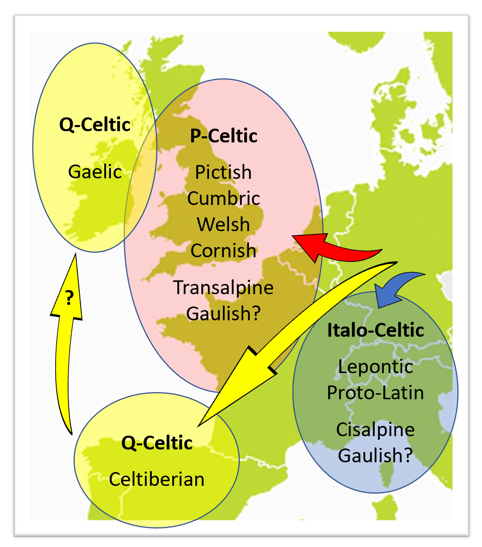
Hebrew-speaking mariners from the Kingdom of Israel likely influenced the Tartessian language in ancient Spain. This shaped the Milesian tongue that carried Q-Celtic from Iberia to Ireland. According to this analysis from 2014, this explains the unique non-Indo-European traits in Insular Celtic. P-Celtic later came later from Gaul and absorbed those features here. This reconciles the divisions in Insular Celtic languages! https://t.co/mcllyDC5BQ
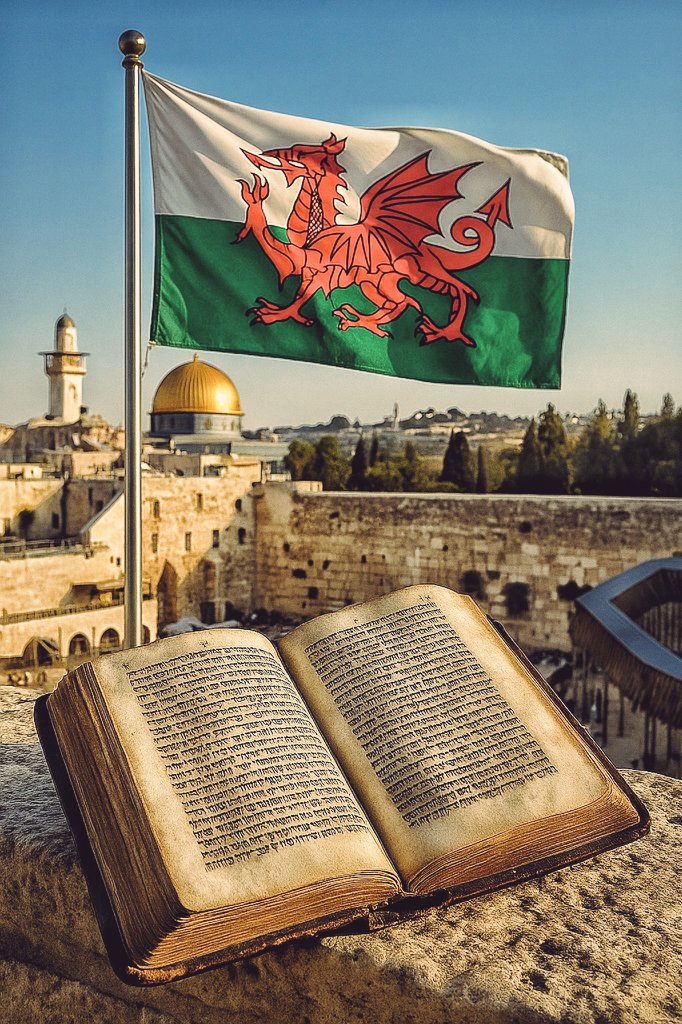
The Ancient Connection: Welsh and Hebrew
Few realise how close the Welsh tongue - Cymraeg - is to the ancient Hebrew of Scripture.
Long before universities and modern linguists tried to categorise languages, men of faith in Britain noticed something remarkable: that the words of Wales carried the echo of Israel.
Both are old, sacred languages - poetic, rhythmic, built on sound and spirit rather than modern invention.
Both are verb-first, both link prepositions to pronouns, and both roll with the same cadence found in psalms and ancient poetry.
Many words are almost identical - not only in sound, but in meaning:
Bagad (Welsh) - a troop or band of men.
Bagad (Hebrew) - a troop cometh.
Cas (Welsh) - hatred.
Caas (Hebrew) - hatred, loathing.
Dafnu (Welsh) - to drip or distil.
Nataph (Hebrew) - to drip, to distil.
Iachad ni (Welsh) - Thou hast healed me.
Hechiyatni (Hebrew) - Thou hast healed me.
Adon / Dyn (Welsh) - lord, man.
Adon (Hebrew) - lord, master.
Anudon (Welsh) - without God.
Ain Adon (Hebrew) - without the Lord.
Gael hedd (Welsh) - heap of testimony.
Galaed (Hebrew) - heap of witness.
Am geryddo fo (Welsh) - at his reproof.
Im ge’arato (Hebrew) - at his reproof.
By-lllwng Adon-ydb holl neuodh Jago (Welsh) - the Lord has swallowed up all the tabernacles of Jacob. Balla Adon et kol neoth Yaacov (Hebrew) — the Lord has swallowed up all the dwellings of Jacob.
Nesa awyr peneu chwi (Welsh) - lift up the light of your face.
Nasa or panecha (Hebrew) - lift up the light of your countenance.
Even whole phrases seem to cross time and sea - as though Britain still hums with echoes of ancient Zion.
Some have long believed this is no accident. They say that when the Ten Lost Tribes of Israel were scattered, many travelled west - across Europe, through the British Isles - carrying fragments of their ancient tongue and faith with them. In the hills of Wales, in the old Cornish and British kingdoms, traces of that memory may still whisper through the language itself. It’s no wonder the old poets called Welsh Iaith y Nefoedd -
The Language of Heaven.
Perhaps, beneath the mountains and mists of Wales, the voice of one of Israel’s lost tribes still speaks. Coincidence or ancient link - who can say? But it’s certainly fascinating. 🏴🇬🇧🏴🇬🇧🏴🇬🇧🏴🇬🇧🏴🇬🇧🏴🇬🇧
@Englishremnant Good point. The fact that Hebrew-speaking Phoenicians interacted with Celto-Iberians in Spain is archeologically verified. But the idea that Celto-Iberian influenced the Insular Celtic is still just a theory.
Irish tradition relays that Aristobulus, one of the 70 disciples commissioned by Jesus to preach the gospel around the world, founded a church on the Irish islet of Skellig Michael. The Book of Leinster records that St. Patrick's ancestors were Jews who fled to Britain after Emperor Vespasian destroyed the Second Temple. Britain's Christian roots run deep.
https://t.co/jDPOddcXz9
Before Augustine of Canterbury arrived in 597, Christianity was already present in Britain. Often called Celtic Christianity, it was a native, disciplined form of the faith rooted in monastic life, Scripture, and local communities.
By the 4th century, British bishops were attending councils, and monasteries were active across the land. Missionaries like Aidan of Lindisfarne, Cuthbert of Lindisfarne, and Chad of Mercia helped spread the Gospel among the people.
It was simple, austere, and tied closely to the land and its people. After the Synod of Whitby, Roman customs were adopted, but the foundation had already been laid.
An early English Christianity, orthodox, disciplined, and rooted in the land. 🏴
Christ is King
The April Issue of theTrumpet print magazine is now available! Read now and subscribe for free! (Never any charge or solicitation for donations.)
· Real Hope for Iran’s Oppressed
· Will America Win?
· Why American Tech Can’t Win Wars
· The Shock Waves
· The End of British Royalty?
· All the President’s Prophets
https://t.co/hGWuWo7ZER