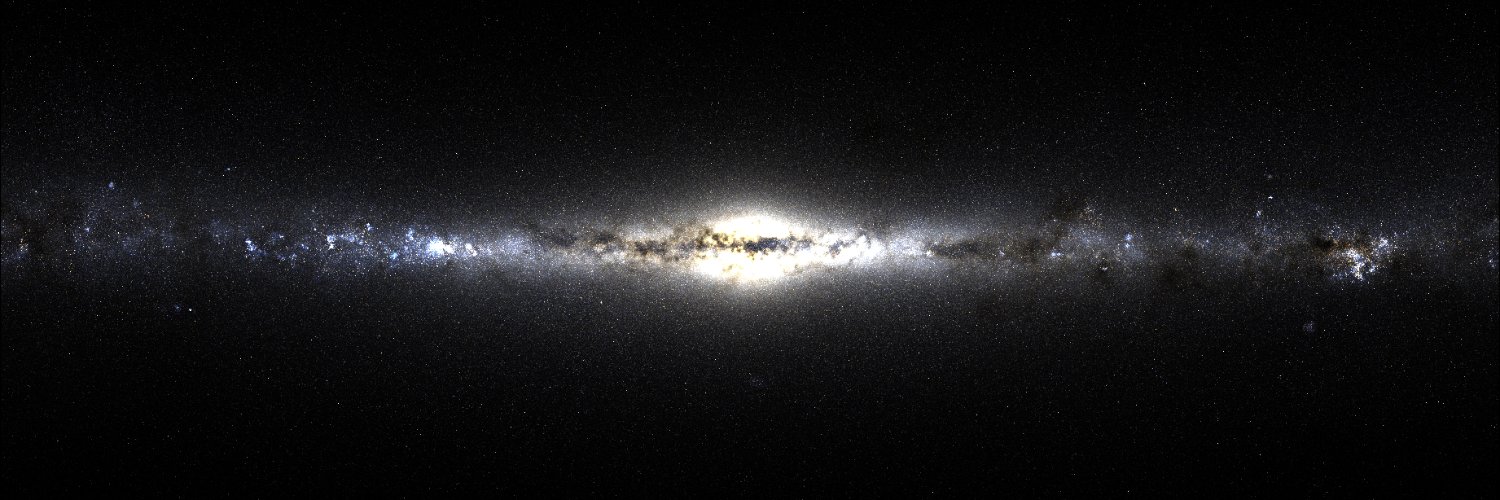
Today is paper day! We compared the orbits of satellites of MW-mass galaxies in the FIRE simulations to a static potential model to better understand the uncertainties in the latter.
https://t.co/nmf9HGiu2P
Also, happy that Mike Blanton's introduction at #biogalaxies features a figure from PhD student Fiona McCluskey's first paper, which is out today! https://t.co/q6CcN5E5D3
Happy for the first paper from PhD student Fiona McCluskey: "Disk settling and dynamical heating: histories of Milky Way-mass stellar disks across cosmic time in the FIRE simulations", https://t.co/q6CcN5E5D3, https://t.co/qcFzdYMWFn, @sloebman, @jorgito__moreno. Key takeaways:
5) Interestingly, the lookback time that a disk began to settle correlates with its dynamical state today: earlier-settling galaxies currently form colder disks.
6) Megan also provides analytic fits to our key results, for anyone to use as inputs to (semi)analytic models for the counts/rates of low-mass subhalos
Happy to share the first paper form PhD student Megan Bary: "The dark side of FIRE: predicting the population of dark matter subhaloes around Milky Way-mass galaxies", https://t.co/jRbCc1GZ5H (with @astro_jenna). Some key takeaways:
5) One of the most interesting predictions is that the presence of the LMC satellite galaxy around the Milky Way today likely boosts the total subhalo population around the Milky Way by ~2x at distances <~ 50 kpc
Paper day! @ua_phay Grad student Anna Parul's first-author paper on how bursty star formation in Milky Way-mass galaxies leaves an imprint on the alpha element abundances of stars. https://t.co/f37NG6ndQg @astrofyz#PaperDay 1/5
Another insightful paper from @astro_jenna, this time on understanding the process of ram-pressure stripping that removes gas from satellite galaxies and quenches their star formation.