It's been a while since I last posted, so a bit of an update: I’m focused building something to help people create their own opportunities, and lately, I’ve been reminded how much that matters.
Since May, I’ve been working on a project with a goal that sounds simpler than it is: helping someone who has never coded take an idea all the way to production.
AI has made it much easier to start building. But there’s still a gap between getting something impressive on your screen and having something you can confidently put into people’s hands.
That’s the gap I’m working on.
Getting a working demo into people’s hands has taken longer than I expected, but my conviction in the opportunity hasn’t changed.
My recent experiences with the job market have reinforced why access to opportunity matters.
I applied for a role I knew I could deliver in. Weeks went by without a response. Then I watched it get reposted. Twice.
I’ve built a reputation for taking on difficult projects and keeping things moving when the stakes are high. Those qualities are hard to demonstrate when you can’t land the first conversation.
For another role, I spent a week preparing for the first interview, only to have it cancelled 20 minutes beforehand. A one-line email said the requirements had changed. I replied professionally, expressed continued interest, and recommended talented people for other roles at their organization.
No response.
I understand that requirements change and hiring managers face pressures candidates never see. But from this side of the process, the silence leaves a lasting impression of your organization.
What worries me most is what this means for people just starting out.
I got my first sales job by applying relentlessly until someone took a chance on me. I used some of the little money I earned to pay for industry courses. That combination eventually opened another door. Someone gave me the opportunity to earn the experience my next employer wanted.
How do we build a workforce of qualified people if nobody gives them that first chance?
As AI takes on more of the hiring process, I worry we’ll get better at filtering résumés without getting better at recognizing potential.
That concern reinforces why I’m building. There are people with the knowledge, experience, and ideas to create something valuable who have never had the technical means to build it.
I’ve watched the models improve materially since May. I believe the opportunity to help those people is getting bigger, and that’s what I’m building toward.
If you’re interested in collaborating on or investing in what I’m building, I’d welcome a conversation.
To everyone looking for work, and every hiring manager trying to find the right person under difficult constraints: I hope things get easier, and I hope the right connections happen.
As more of this process becomes automated, we still owe each other respect, grace, and a fair shot.
Yikes. Consolidation inbound - at least until we get another macro economic tailwind or institutional capital finally makes its way into the public chain ecosystem.
In the meantime AI start ups are soaking up talent.
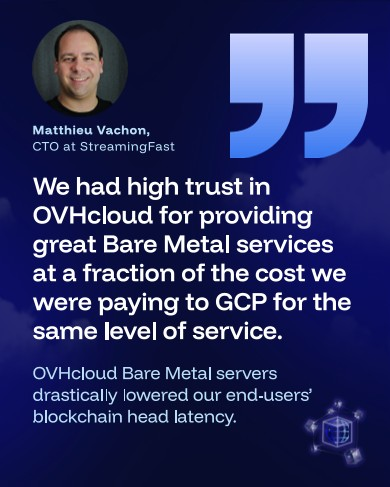
Nice to see @graphprotocol ecosystem participants like @streamingfastio using a variety of service providers like @OVHcloud_US contributing to the overall decentralization of the network.
If you build on Substreams, you've been getting faster data. We moved our reader nodes to @OVHcloud Bare Metal — 2-3x lower blockchain head latency, uptime measured in months, and faster catch-up on demanding chains like Solana and Base. Less waiting, more building. https://t.co/Jz0k2tF1OO
@QuantWizard27@graphprotocol This feels like a natural fit for platforms like CoinStats.
Real-time ERC-8004 agent identity, reputation, and capability data across chains could unlock entirely new analytics, discovery, and portfolio experiences for AI agents.
Would love to see Agent0 subgraphs integrated. Any plans on your side?
@InTheory42 Sorry to hear that, and unfortunately I don't think you're alone. Clearly there are many different parties that need to have their concerns addressed for progress to be made.
🚨 WATCH: Chairman @SenatorTimScott leads the Senate Banking Committee in a historic markup of the CLARITY Act, legislation to establish clear rules of the road for digital assets. https://t.co/wlHj2jcAEF
Today's vote sets the timeline for far more than just finance.
A clean outcome unlocks the next wave of investment in the sector, and with it, the builders and innovators who have kept building toward this moment.
Yes, finance benefits. An antiquated system gets more efficient and systemic risk gets reduced. But the scope of what this technology can improve runs much wider than financial markets. To name a few: forensics, supply chain management, AI, and how we verify provenance and authorship in an AI-saturated world all stand to benefit from the same underlying infrastructure.
Hoping for a positive outcome today, for the builders, the innovators, and the market participants who stand to gain a more transparent system.
Transparency can’t just be a promise. It needs to be verifiable.
Open sourcing recommendation systems is a good step, but trust in major digital platforms is still heavily dependent on companies self-reporting how systems behave and when changes are made.
Blockchain-based infrastructure won’t solve everything, but immutable records, timestamps, and auditable change histories could add an important layer of accountability that many systems are still missing today.
To give people confidence that we are not secretly manipulating the 𝕏 recommendations, it is critical that we open source anything that influences what people are shown
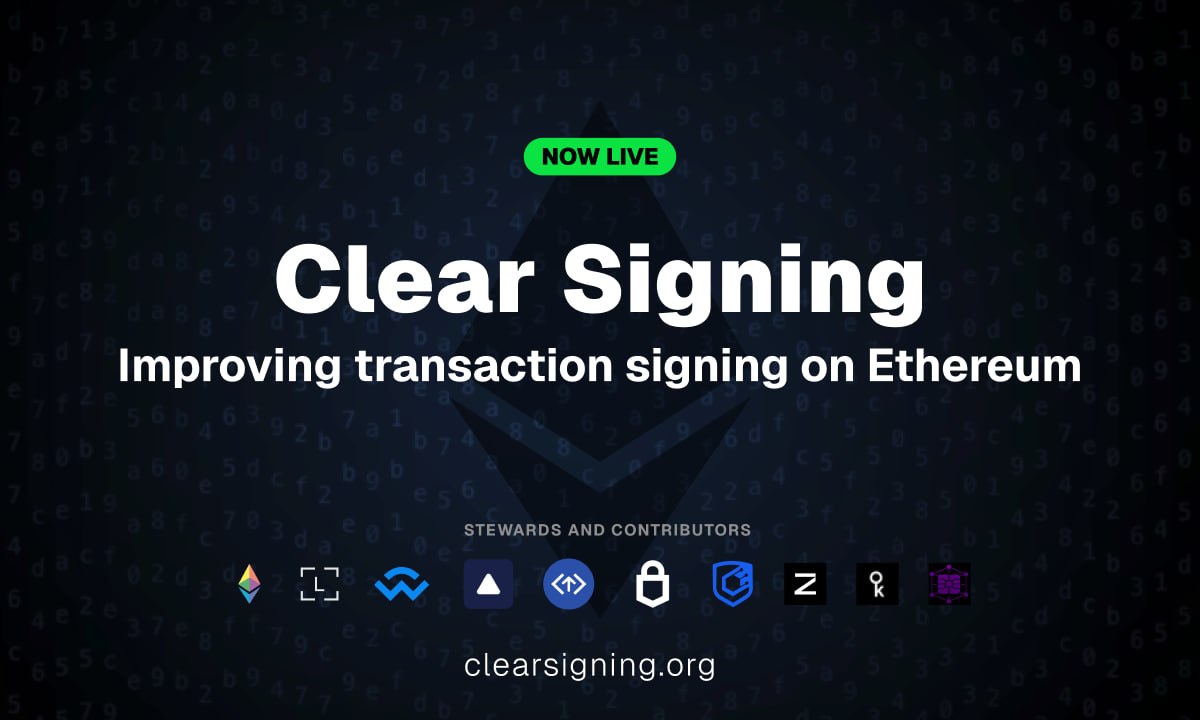
Clear signing is a major milestone for Ethereum UX and security.
For years, users have been approving transactions by blindly signing unreadable hex strings, creating enormous room for phishing, malicious payloads, and costly mistakes.
Moving toward human-readable transaction descriptions through open standards like ERC-7730 is a big step forward for making Ethereum safer and more accessible.
Good to see wallets, infrastructure providers, security teams, and the Ethereum Foundation coordinating around a shared approach here.
This is the kind of foundational work the ecosystem needs as adoption continues to scale.
0/ Clear signing is now live.
An open standard to end blind signing, making human-readable transactions default.
This effort brings a major UX and Security upgrade to transaction signing on Ethereum.
This is a bigger shift than it may seem at first glance.
Historically, blockchain data access still looked very Web2:
accounts, API keys, dashboards, and manual billing.
x402 changes that model.
An agent can now:
→ discover a subgraph endpoint
→ receive pricing via HTTP 402
→ pay in USDC on Base
→ immediately access indexed blockchain data
No account.
No API key.
No human in the loop.
The important shift is that payment becomes the authentication layer itself.
As AI agents and autonomous workflows grow, machine-to-machine access to blockchain data will matter a lot more than traditional developer onboarding flows.
The manager’s amendment for the Digital Asset Market Clarity Act was released ahead of Senate Banking Committee markup. A few notable changes vs. prior versions:
• More explicit separation between blockchain infrastructure and traditional financial intermediaries
The bill now specifically carves out nodes, validators, relayers, and certain protocol participants from being treated as controlling a blockchain system.
• Refined pathway for digital assets to transition out of securities-style treatment
The legislation expands the “ancillary asset” framework and introduces a rebuttable presumption mechanism tied to decentralization and the end of managerial control.
• Expanded DeFi and software developer protections
New sections protect software developers and certain blockchain participants from being treated as money transmitters or traditional financial intermediaries solely for developing or supporting decentralized software.
• New market integrity and risk management requirements
The updated text adds operational, cybersecurity, sanctions, fraud, and market manipulation risk-management standards for digital asset intermediaries, alongside an entirely new customer protection title.
• Stablecoin language became more explicit
Sec. 404 prohibits passive, deposit-like yield on payment stablecoins while allowing transaction or activity-based rewards subject to joint rulemaking.
The broader shift is becoming clearer:
US policymakers are increasingly moving from “should crypto exist?” toward defining how blockchain-based financial infrastructure can operate within regulated markets.
Chairman @SenatorTimScott, @SenLummis, and @SenThomTillis released market structure text ahead of this week’s markup.
The Senate’s CLARITY Act delivers clear rules of the road, protects investors, combats illicit finance, and keeps innovation in America.
https://t.co/gWwZnX4lwY
The Andrew Left trial is another reminder of how difficult it can be to prove market manipulation when markets, media, and communications operate across fragmented systems.
A social media post moves a stock.
An influencer exits a position.
A hedge fund trades around the same window.
A TV appearance amplifies the move.
But reconstructing exactly what happened often requires subpoenas, screenshots, internal logs, broker records, and platform cooperation years after the fact.
If trading venues and social platforms were built on blockchain infrastructure, much of this could become cryptographically auditable in real time:
• Immutable timestamps for posts, edits, and deletions
• Verifiable wallet or account positions before and after statements
• Transparent sequencing of trades and communications
• Shared public records instead of siloed platform databases
• Easier detection of coordinated activity patterns across venues
That doesn’t automatically prove guilt or innocence,
but it dramatically reduces ambiguity.
The short selling industry will be in the spotlight this week when one of its most prominent players goes on trial, accused of using social-media posts to illegally move their stock and make a quick profit https://t.co/StH0raxwzP
Three major trends are converging at the same time:
AI agents are becoming real economic actors and will need reliable, queryable blockchain data to operate at scale. Canonical identity and reputation layers like the Agent0 ERC-8004 subgraphs are already being built for this future.
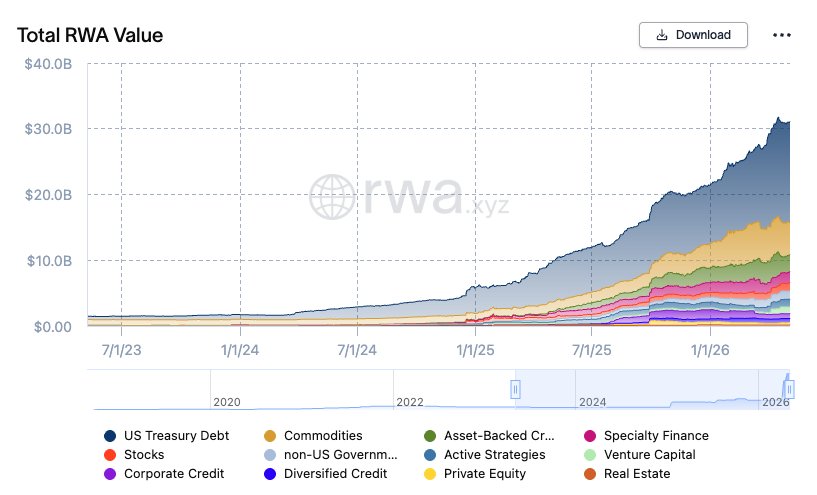
Tokenized RWAs are accelerating rapidly. As trillions of dollars in assets move onchain, standardized schemas and indexed data become critical for reconciliation, compliance, settlement, and interoperability across institutions.
Regulatory clarity is finally advancing. The CLARITY Act in the U.S. and MiCA implementation milestones in Europe are removing some of the largest barriers to institutional participation.
When these forces converge, the volume of onchain data will increase dramatically.
This is where indexing infrastructure becomes mission critical. RPCs alone were never designed for a world of autonomous agents, real-time financial coordination, and global tokenized markets operating simultaneously across chains.
The Graph is ready for it.
30B + in tokenized RWAs is a milestone. The next challenge is coordination.
As more assets move onchain, standardized data schemas become increasingly important. Without them, the same asset can be represented multiple different ways across platforms, creating unnecessary complexity in operations, reconciliation, compliance, and settlement.
The technical infrastructure largely exists.
Regulatory clarity is getting closer.
Now the industry needs alignment around shared standards, interoperability, and verifiable data models to unlock adoption at full scale.
@graphprotocol@graphopsxyz Tycho has the potential to become table stakes for sophisticated order routing and arbitrage across decentralized markets.
Low-latency, current liquidity state is quickly becoming a core requirement for onchain trading infrastructure.
Bad blockchain data has already cost the industry hundreds of millions. Mango Markets. Terra/LUNA. Oracle failures. Mispriced collateral. Cascading liquidations.
As settlement compresses from T+2 days to seconds, and AI agents begin executing trades autonomously, the tolerance for inaccurate data approaches zero. In traditional finance, there’s often time to reconcile errors before final settlement, but onchain systems don’t pause.
Smart contracts execute immediately, agents react instantly, bad inputs propagate across protocols in real time. That makes verifiable, real-time indexing infrastructure increasingly critical.
The takeaway is becoming clearer:
Instant settlement only works if the underlying data can be trusted.
The next era of financial infrastructure won’t just compete on execution speed. It will compete on data accuracy, verifiability, and auditability.
Free markets, markets with integrity, markets that are resilient and that are free from fraud, abuse, insider trading or manipulation are what motivated me to work in the blockchain industry.
This is one of many opportunities that are within reach thanks to blockchain technology. Working cooperatively with regulators is necessary to make these benefits, among many others, a reality.
Innovation does not come at the expense of integrity. At the @CFTC, we are focused on clear rules that allow crypto, prediction markets and AI to grow while protecting our markets for the American people.
Grateful for the opportunity to share this vision at the @MilkenInstitute Global Conference. Watch: