Most agent projects fail because the agents can't talk to each other . . .
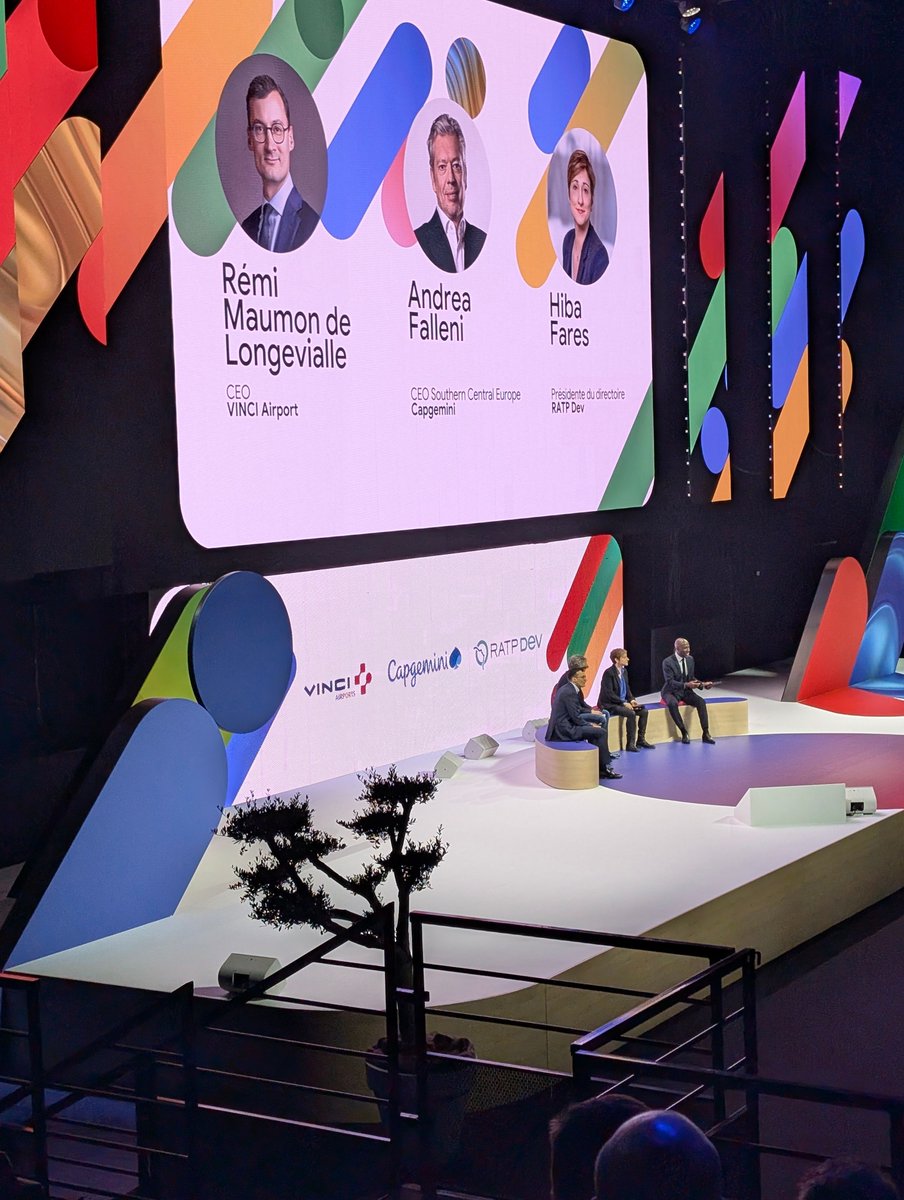
I sat through a lot of talks at Google Cloud Summit France last week. A technical walkthrough of the interoperability stack that the industry is quietly converging on, and an honest look at where deployments actually break.
Agents break at the seams. Between frameworks, between backend and frontend, between agent output and user interface. That is where production incidents happen and also where rewrite cycles start.
The industry is addressing this with a layered stack. MCP gives agents a standardised way to connect to tools and data. You define your tools, resources, and prompts once, expose them via an MCP server, and any compliant AI application can consume them. Write once, reuse across every agent that needs it.
A2A goes one level up. It standardises communication between agents running on different frameworks. Each agent publishes an Agent Card at a known URL describing its capabilities and the skills it exposes. Another agent reads the card and knows exactly what to call and how. A LangChain agent and a Google ADK agent can now collaborate without a custom bridge for every pair. It supports both stateless messages for quick exchanges and stateful tasks for long-running processes.
AG-UI sits between the agent backend and the frontend. It standardises how agent events stream into your application. Anyone who has tried to build a real-time UI on top of an agent backend knows this problem intimately. AG-UI solves it with a lightweight event-based protocol that works across the major frameworks.
Then there is the fourth layer. Agents that generate the UI itself. The agent outputs JSON describing interface state. A renderer, React, Angular, or Flutter, picks it up and displays it. Four messages drive the lifecycle: create, update components, inject data, delete. The agent decides what the interface looks like. The renderer just executes.
That last one deserves a second read.
Interoperability has always to be a first-class concern at architecture time, not an afterthought when the first integration breaks in production.
The protocols exist. The question is whether your design is ready for them.
#AIAgents #MLEngineering #GoogleCloud #BuilderConnect
New local CLI support added to obsivault. Convert your Claude Code, Codex, Gemini CLi, and Opencode exports into a clean Obsidian vault from your terminal. Also now available in PyPi with just pip install obsivault
https://t.co/1htf7Iod8C
#cli
Years of conversations with @claudeai, @Grok, @ChatGPTapp and @GeminiApp are stuck on their servers. But you can export them, so I built a small tool that converts them into an @Obsidian vault. https://t.co/Sd7T2LLFik
Now you can turn your AI history into something a local agent can actually use. Markdown + YAML frontmatter means @ollama, @LMStudioAI, Claude Code, any MCP server can index it. Search every chat across provider
Point it at a Claude export, a Grok dump or a Google Takeout. It writes tidy Markdown with YAML frontmatter, copies attachments, and skips files that haven't changed on a rerun.
Everything runs locally. NO cloud. No API. No telemetry. Your chats stay on your disk and end up alongside the rest of your notes.
Years of conversations with @claudeai, @Grok, @ChatGPTapp and @GeminiApp are stuck on their servers. But you can export them, so I built a small tool that converts them into an @Obsidian vault. https://t.co/Sd7T2LLFik
Now you can turn your AI history into something a local agent can actually use. Markdown + YAML frontmatter means @ollama, @LMStudioAI, Claude Code, any MCP server can index it. Search every chat across provider
Point it at a Claude export, a Grok dump or a Google Takeout. It writes tidy Markdown with YAML frontmatter, copies attachments, and skips files that haven't changed on a rerun.
Everything runs locally. NO cloud. No API. No telemetry. Your chats stay on your disk and end up alongside the rest of your notes.
Most agent projects fail because the agents can't talk to each other . . .
I sat through a lot of talks at Google Cloud Summit France last week. A technical walkthrough of the interoperability stack that the industry is quietly converging on, and an honest look at where deployments actually break.
Agents break at the seams. Between frameworks, between backend and frontend, between agent output and user interface. That is where production incidents happen and also where rewrite cycles start.
The industry is addressing this with a layered stack. MCP gives agents a standardised way to connect to tools and data. You define your tools, resources, and prompts once, expose them via an MCP server, and any compliant AI application can consume them. Write once, reuse across every agent that needs it.
A2A goes one level up. It standardises communication between agents running on different frameworks. Each agent publishes an Agent Card at a known URL describing its capabilities and the skills it exposes. Another agent reads the card and knows exactly what to call and how. A LangChain agent and a Google ADK agent can now collaborate without a custom bridge for every pair. It supports both stateless messages for quick exchanges and stateful tasks for long-running processes.
AG-UI sits between the agent backend and the frontend. It standardises how agent events stream into your application. Anyone who has tried to build a real-time UI on top of an agent backend knows this problem intimately. AG-UI solves it with a lightweight event-based protocol that works across the major frameworks.
Then there is the fourth layer. Agents that generate the UI itself. The agent outputs JSON describing interface state. A renderer, React, Angular, or Flutter, picks it up and displays it. Four messages drive the lifecycle: create, update components, inject data, delete. The agent decides what the interface looks like. The renderer just executes.
That last one deserves a second read.
Interoperability has always to be a first-class concern at architecture time, not an afterthought when the first integration breaks in production.
The protocols exist. The question is whether your design is ready for them.
#AIAgents #MLEngineering #GoogleCloud #BuilderConnect
Just spent the morning at the Google Cloud Summit opening keynote and panels. Still here for the rest, but a few things from the early sessions stuck with me.
Scaling AI is not just technical problem but a human challenge.
RATP Dev had shadow AI showing up on work devices, so management went and did AI training at @Google themselves rather than issuing a policy. To get real adoption they picked 50 internal champions, and the interesting bit is they were not chosen for technical skill. They were chosen for being sociable and approachable, the people others actually ask for help.
Vinci Airports runs 70 airports and made the point that none of the AI matters without a solid data foundation first. They trial operational use cases in one place, like computer vision for aircraft parking to cut delays in Lyon or Belgrade, then roll out only what works.
Pennylane, in regulated fintech, skipped the experimental phase and went straight to agents. Their support agent now handles 64% of first-level conversations on its own, up to 96% for some features. An agent auditing developer code also caught four critical vulnerabilities that humans had missed entirely.
Doctolib is putting voice assistants into medical practices for routine questions and scheduling, with strict adherence to European data rules. The number that caught me: 43% of French people make poor health decisions based on what they read online, so the agent guiding patients through information is aimed straight at that.
Believe said 40% of tracks on streaming platforms are now AI-generated, but they account for under 1% of listens. And France Travail framed AI less as a job threat and more as a way to lower the barrier for would-be entrepreneurs, letting people start something by borrowing skills they do not personally have.
So clean data, human judgement, and the more these tools sound confident the more your own critical thinking matters.
More to come as the day goes on.
#GoogleCloudSummit #AI #AIAgents #FutureOfWork #ResponsibleAI
First day at Proof of Talk at the Louvre is done. Fewer slide decks about the future but more people telling stories about what is actually happening right now, especially in AI.
The one that hit me was from BitMind. They are building fraud detection for automated systems, and to demonstrate the problem they ran a small experiment by generating fake images of damaged raspberries using ChatGPT, submitted them to a grocery delivery app's automated refund system, and collected $500 in refunds over 30 days. It worked without much effort. The point they were making is that AI made scams scalable.
The Drug Discovery Subnet on @bittensor.ai was the opposite end of the spectrum. They run competitions where AI models search for novel pharmaceutical molecules. Their winning algorithm from a recent run was 973 times more efficient at finding high-scoring candidates than random sampling. They are now working with biotech partners to physically synthesise the output: a triple reuptake inhibitor being evaluated as a treatment for depression, ADHD, and PTSD simultaneously. It is a long road from a subnet competition to a clinical candidate, but the starting point is genuinely interesting.
For me @taostats gave the most grounded talk. The reality of running AI agents in your daily workflow is that you spend somewhere between 60 and 70% of your time on infrastructure, debugging, configurations, and workflow management. The remaining 30 to 40% of execution time is reportedly around 300 times more productive than before. Whether those numbers hold up at scale is a different question, but the shape of it rings true to anyone who has tried to maintain an agent pipeline in production.
Anyone else running agents day to day? Curious whether that split matches your experience.
#ProofOfTalk #AI #AgenticAI #Bittensor #DrugDiscovery
A bug related to the @gnosispay delay module has been discovered. We are investigating & will share updates as soon as possible.
If you are able to withdraw funds from the Gnosis Pay card to your wallet, we strongly recommend that you do that.
Affected users will be reimbursed.
@MainzOnX We do in the energy domain, FP64 is still vital for ML power flow simulations and contingency analysis. When modelling national grids, small rounding errors compound quickly, so we require that extreme precision to prevent cascading failures.
Caller: "Hi Dave. I need help."
Dave: "Okay. What do you do?"
Caller: "I'm a CTO."
Dave: "Alright. What's going on?"
Caller: "We burned through our annual token budget in four months."
Dave: "Your entire annual budget?"
Caller: "Yes."
Dave: "So let me get this straight. Everybody told you AI would make engineers dramatically more productive."
Caller: "Yes."
Dave: "You would have to hire fewer people."
Caller: "Yes."
Dave: "A smaller team would ship more useful features."
Caller: "Yes."
Dave: "You spend less money over time."
Caller: "Yes."
Dave: "Okay. So what actually went up?"
Caller: "Token usage."
Dave: "What else?"
Caller: "Mostly token usage."
Dave: "How many more useful features shipped?"
Caller: "Well, the problem is it's hard to draw a direct line to revenue."
Dave: "Who do you work for?"
Caller: "Uber."
Dave: "Uber?"
Caller: "Yes."
Dave: "Son, the only thing AI delivered was surge pricing on your engineering budget."
@NotebookLM is the weird one. Each notebook is a folder on disk. Inside each folder: Sources/, Notes/, Artifacts/. Sources is what you fed it. Notes is what you wrote in it. Artifacts is what it generated for you. Study guides, briefing docs, audio overviews, mind maps. Sources come in PAIRS. .html plus metadata.json. The HTML is the extracted text from whatever you fed it (PDF, webpage, pasted text). The JSON beside it carries the original URL, title, source type. You have merge the two to know what each source actually was. No export of chats, follow-up and reasoning.
Spent way more time than I expected parsing chat exports for obsivault. Three providers, 3 completely different ideas of what handing your data back actually means. Honestly the export format says more about each company than any blog post would. @claudeai. Simple export. Settings -> Privacy -> Export. One file. conversations.json. 41MB, 179 chats in my case. You can play with it easily (grep and jq). You can stream it with ijson and never load it all in memory. I almost don't believe how civilised this is. Each message has a content array of TYPED blocks. text. thinking. tool_use. tool_result. Not a stringified blob. Wrote a parser for it in like 10 minutes.Conversation branching is kept with parent_message_uuid on every message. Regenerate a reply, both versions stay in the tree. I rebuild the main path by walking the latest leaf back to root. You read the note as you actually had the conversation, not as the UI happened to render it last. In @claudeai exports attachments include extracted_content inline. PDFs you uploaded, screenshots you pasted, all come back as searchable text. The binary itself isn't in the export but the OCR is. A nice product decision someone made on purpose. The exp felt like @AnthropicAI respect the user enough to ship a format their own engineers would actually want to consume. Almost weird how rare that is.
@GeminiApp doesn't have its own export. It rides on @Google Takeout, which means you don't get a file. You get a TREE. And not a clean one. Takeout/Gemini in Workspace/ has structured JSON. Takeout/Gemini Apps/ is HTML.
Takeout/NotebookLM/ is a folder per notebook with Sources/Notes/Artifacts/. Takeout/My Activity/Gemini/ is one giant HTML page. Four formats, one product family. Had to write a sub-parser for each. The Workspace one is the only sane sub-format. conversation_*.txt files are actually JSON inside. conversation_turns[] holds user_turn or system_turn entries. system_turn means assistant btw. Embarrassing how long that took me to figure out. Citations buried at text[].citations.