YouTube and Instagram Built Addiction
This isn’t about $6 million.
It’s about precedent.
⸻
A federal jury in California has found Meta and YouTube guilty.
Not of bugs.
Not of mistakes.
But of design.
⸻
Platforms engineered for addiction
For the first time in U.S. history, a jury ruled that social media platforms were built to hook minors.
Deliberately.
Systematically.
⸻
The case that triggered it
A young woman.
Started using YouTube at 6.
Instagram at 9.
By her teens:
• Anxiety
• Depression
• Body dysmorphia
• Suicidal thoughts
At one point:
16 hours per day on Instagram.
⸻
What broke the case open
Internal documents.
Not opinions — evidence.
From inside Meta itself:
Target them young.
Lock them in early.
Children as young as 11.
Despite a 13+ rule.
And they came back more than anyone else.
⸻
For the first time
Mark Zuckerberg wasn’t testifying to Congress.
He was answering to a jury.
⸻
The verdict
$6 million total.
• $4.2M — Meta
• $1.8M — YouTube
For companies making $100+ billion a year?
Irrelevant.
⸻
But this was never about money
It’s about what comes next.
Because behind this case:
1,500+ lawsuits are already waiting.
⸻
Others saw it coming
TikTok and Snap Inc. didn’t stay to fight.
They settled early.
⸻
And pressure is building
One day earlier:
A court in New Mexico ordered Meta to pay $375 million in a separate child exploitation case.
This isn’t isolated.
It’s escalation.
⸻
What this really means
For years, Big Tech operated on one assumption:
Engagement = growth
Growth = success
Now there’s a new variable:
Liability.
⸻
The shift
This verdict doesn’t punish the past.
It rewrites the future.
⸻
The bottom line
The era of “we’re just platforms” is ending.
Because now, the question isn’t:
How many users can you capture?
But:
What happens to them after you do?
#youtube
#instagram
Cheap Hypersonics
America spends millions trying to stop a $99K missile.
And still fails.
This isn’t just a new weapon.
It’s a new equation.
⸻
A hypersonic shift — at scale
China’s Lingkong Tianxing has unveiled the YKJ-1000.
Speed: Mach 7
Range: up to 1,300 km
Cost: ~$99,000
Not millions.
⸻
The real breakthrough isn’t speed
It’s cost.
Because modern war is no longer just about capability.
It’s about economics.
⸻
Ukraine showed the model
Cheap drones vs expensive defenses.
$20,000 drones forcing million-dollar interceptions.
Now apply that to hypersonic missiles.
⸻
The math breaks defense
20 missiles → ~$2 million
Intercepting them?
$80–300 million.
This isn’t sustainable.
⸻
Launch from anywhere
No fixed bases.
No clear signatures.
• Shipping containers
• Trucks, ships, ports
• Civilian infrastructure
Hidden in plain sight.
⸻
Built like consumer tech
Not exotic.
Not rare.
• Commercial sensors
• Automotive chips
• Industrial production
Designed for scale.
⸻
This is mass-war logic
Cheap.
Fast.
Replaceable.
Not elite weapons — but endless ones.
⸻
Next: AI swarms
Dozens or hundreds working together.
Not just precision…
But saturation.
⸻
What it means
Power is shifting.
From best technology…
To best production.
⸻
The bottom line
The future of war won’t be won by the most advanced weapons.
But by those who can build:
More.
Faster.
Cheaper.
At scale.
#hypersonic
#ykj1000
Not Peace — A Strategic Timeout Between US and Iran
US vs Iran: The Ceasefire That Could Reshape the Region
This is not just a ceasefire.
It’s the opening move in a much larger geopolitical reset.
According to regional sources, the United States is working on a 30-day ceasefire deal with Iran.
The goal?
Time.
Time to negotiate something far bigger — a framework that could redefine power in the Middle East.
⸻
What’s really on the table
This goes far beyond stopping the fighting.
Talks reportedly include:
– limits on Iran’s nuclear program
– full international inspection access
– reduction of proxy influence across the region
– potential sanctions relief
– keeping the Strait of Hormuz open
A 15-point framework.
Ambitious. Complex. Hard to enforce.
⸻
Why now?
Because pressure is peaking.
The US wants to avoid a prolonged conflict.
Iran wants economic breathing room.
And the region is already stretched to its limits.
⸻
The reality
This is not peace.
It’s a pause.
A window where both sides test how far they can push — without crossing the line.
⸻
What comes next
If talks succeed → a historic deal is possible.
If they fail → escalation returns, faster and more intense.
⸻
For now, one thing is clear:
This 30-day ceasefire may be short…
…but its consequences could last for years.
#ceasfire
🚨 The Hormuz Tax
Iran just turned the world's most important oil chokepoint into a toll booth.
$2 million per ship. Cash, crypto, or barter accepted.
3,200 vessels and 40,000 sailors are currently waiting on the other side of that price tag.
For decades, the Strait of Hormuz was "free." Now it's monetized—like Suez, like Panama, but with missiles.
Why it matters:
→ ~20% of global oil passes through here
→ No realistic alternative route exists
→ Iran controls both shores
The market hasn't priced this in yet.
One energy trader put it simply: "This changes the math on every barrel that leaves the Gulf."
#hormuz
#saiftytax
THE MAN BEHIND TRUMP?
Jared Kushner.
Not elected.
Not military.
But at the center of power.
Described by some intelligence voices as an Israeli asset.
Not just an advisor—
A man with deep, lifelong ties to Israeli leadership.
Trump’s son-in-law.
Middle East strategist.
The one whispering during critical decisions.
Including Iran.
And this didn’t start in politics.
His father had close relationships with Israeli prime ministers.
They weren’t distant connections.
They were personal.
Visits.
Dinners.
Access.
From childhood—
He was around power most people never see.
So now the real question:
Was he advising…
Or shaping the direction entirely?
Supporters say:
“He delivered historic deals.”
Critics say:
“He aligned U.S. power with Israel.”
Either way—
Influence at that level doesn’t happen by accident.
And sometimes…
The most powerful person in the room
Isn’t the one speaking.
#Kushner
#usa
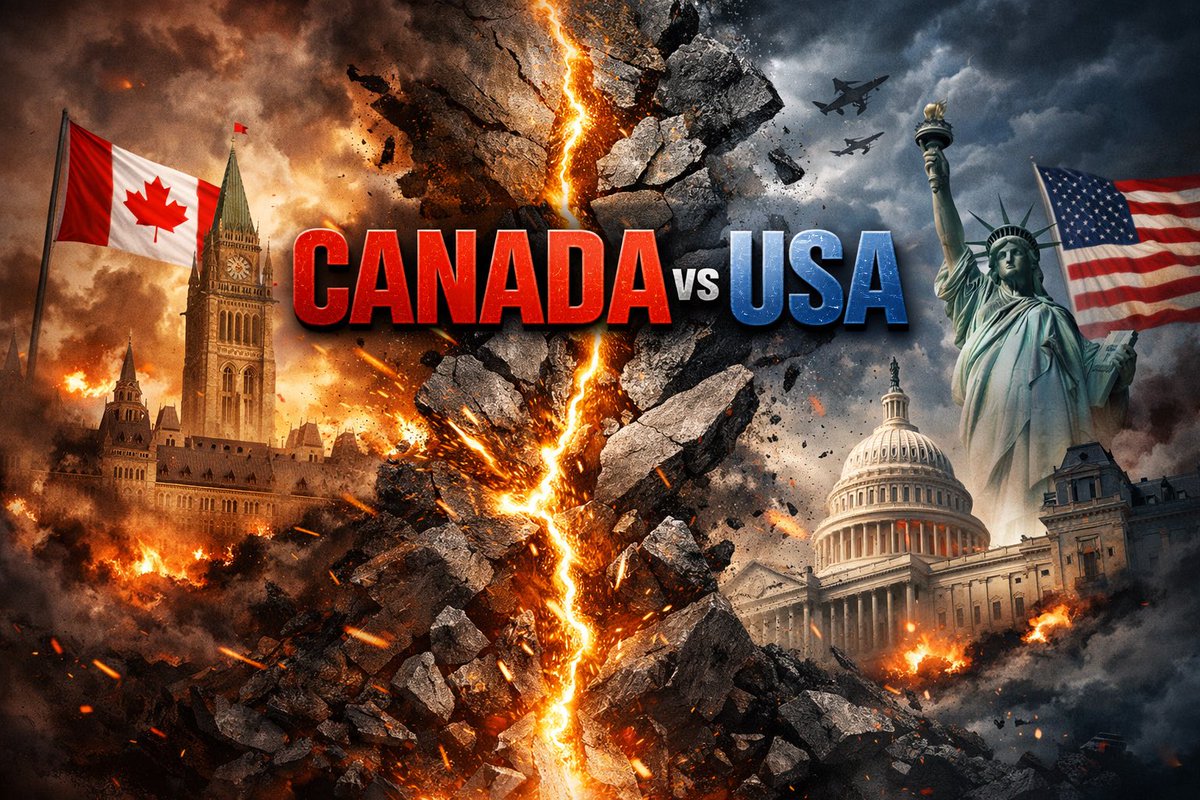
CANADA vs USA: Something is breaking.
For decades, they were inseparable.
Trade.
Defense.
Economy.
Now?
Tensions are rising… fast.
Reports suggest Canada is rethinking major long-term deals with the U.S.
At the same time:
Talks with Europe are intensifying.
Closer cooperation.
Trade alignment.
New strategic direction.
This is not random.
It’s geopolitical repositioning.
Because for the first time in years…
Canada is questioning its dependence on the U.S.
And the timing matters.
While the world is focused on Iran…
This shift is happening quietly.
In the background.
There were even past tensions:
Talks of pressure.
Economic threats.
Political friction.
And allies had to step in to cool things down.
But here’s the real story:
This isn’t about one deal.
This is about alignment.
If Canada moves closer to Europe…
The global trade map changes.
North America weakens.
Transatlantic ties strengthen.
And the question becomes:
Is this just noise…
Or the beginning of a real split?
Because if it’s real—
This is bigger than it looks.
#canada
#ue
ELON MUSK VS TWITTER: The $2.5B Mistake
It started in April 2022.
Elon Musk offered $44B for Twitter.
The board accepted.
Then everything changed.
Weeks later, Musk hit pause.
“Too many bots.”
He claimed Twitter was lying about fake accounts.
The market reacted instantly.
Twitter stock dropped ~10%.
Uncertainty took over.
All summer:
Threats.
Doubts.
Exit signals.
At one point, Musk officially tried to walk away.
Twitter sued.
Forced the deal.
And just before trial…
Musk reversed again.
He bought it. Full price.
But the damage was done.
Investors who sold during the chaos…
Lost billions.
So they fought back.
Their claim:
Musk didn’t care about bots.
He wanted leverage.
Lower price… or exit.
And used public statements to move the market.
After 3 weeks in court…
The jury delivered:
Musk’s tweets were FALSE.
But not intentional fraud.
Result?
~$2.5B in damages.
Appeal incoming.
But here’s the real takeaway:
When one man moves markets…
Everyone else pays the price.
Even when he wins.
#musk
#twitter
#x
Crypto Is Becoming Invisible Infrastructure
CRYPTO JUST ENTERED THE SYSTEM.
Mastercard isn’t experimenting anymore.
It’s integrating.
A global program.
Crypto payments for merchants.
Blockchain inside the payment rails.
And this week changed everything:
• Mastercard reportedly acquired stablecoin infra (BVNK)
• Stablecoin market → $320B
• Regulators are finally giving clarity
This is not hype.
This is infrastructure.
For years, crypto was:
Speculation.
Trading.
Narratives.
Now?
It’s becoming invisible.
You’ll use it… without knowing.
And people are split:
Some say:
“This is mass adoption.”
Others say:
“Banks are taking over crypto.”
But here’s the reality:
When Mastercard moves…
Visa follows.
And when both move…
The system changes.
Not overnight.
But permanently.
The real shift?
Crypto is no longer outside the system.
It’s becoming the system.
#crypto
#adoption
#mastercard
Humans vs Machines: Phase One
THE NEXT WAR WON’T BE HUMAN.
It already started.
Jeff Bezos is reportedly raising $100B…
Not to build AI.
But to BUY the factories.
And replace the humans inside them.
This is not software.
This is control of production itself.
Factories.
Supply chains.
Labor.
Rewritten by machines.
For decades, automation was gradual.
Now?
It’s direct.
Acquire → automate → scale.
And people are starting to notice.
Some say:
“This will create more jobs.”
Others say:
“This ends work as we know it.”
But history gives a darker warning:
When humans gave thinking to machines…
They didn’t become free.
They became replaceable.
And this time, it’s not just tasks.
It’s entire industries.
Manufacturing.
Defense.
Logistics.
All becoming machine-first.
So the real question isn’t:
“Will AI take jobs?”
It’s:
Who controls the machines that replace them?
Because whoever owns that…
Owns the economy.
And maybe more.
#bezos
#AI
The End of Discipline? Ozempic Changes Everything
What Happens When Effort Becomes Optional?
Ozempic at $14: The Moment Easy Became Cheap
A shift is happening.
Not in the gym.
Not in diet culture.
In the system itself.
India has just launched a generic version of Ozempic — priced at around $14 a month.
What was once exclusive… is now accessible.
What was once controversial… is now scalable.
---
For decades, the formula was clear:
Discipline.
Consistency.
Pain.
Results had a cost — paid in time, effort, sacrifice.
---
Now?
That cost is collapsing.
Biotech is doing what grind culture built its identity on.
Suppress hunger.
Reduce cravings.
Accelerate fat loss.
No more war with your body.
---
Supporters call this a breakthrough.
A long-overdue solution to a global obesity crisis.
A tool that finally aligns biology with intention.
For millions, this isn’t cheating.
It’s survival.
---
But critics see something deeper.
Because when effort is no longer required…
what happens to discipline?
When results become injectable…
what happens to identity?
---
And here’s where the real divide begins:
Not rich vs poor.
Not educated vs uneducated.
Hard vs easy.
---
On one side:
Those still choosing the hard path.
Early mornings. Clean meals. Training through exhaustion.
Building not just bodies — but character.
---
On the other:
A system offering the same outcome…
For $14.
---
This is bigger than weight loss.
The era of “Made by discipline” is fading.
We are entering the age of engineered results.
Where geopolitics, pharma, and mass production reshape even the human body.
---
Because this isn’t just about Ozempic anymore.
It’s about a world where the hardest things…
are no longer necessary.
And the question is no longer:
“Does it work?”
But:
“What happens to us… when everything becomes easy?”
#ozempic
#discipline
War… paused?
US–IRAN: It’s confirmed.
Trump orders a 5-day pause on strikes.
After:
Ultimatums.
Escalation.
War pricing in markets.
Now:
“Productive talks.”
This is the first real shift.
But don’t get it wrong:
This is NOT peace.
This is a negotiation window.
If talks succeed → de-escalation.
If they fail → strikes return fast.
Markets will move before headlines.
Stay ahead.
#war
@AlternatNews Escalation always sounds strategic from afar, but on the ground it just means more families without power, water, or safety.
And when decisions like this are made, it feels like power moves first… and the law follows far behind.
USA ABOVE THE LAW? WHO DARES TO ENFORCE IT?
This is not just geopolitics.
This is international law.
Under the Geneva Conventions, including Article 51(2),
threats or acts of violence intended to terrorize civilians are strictly prohibited.
Furthermore, Additional Protocol I (Art. 54) protects essential infrastructure —
such as power plants — because they are indispensable for human survival.
Intentionally targeting these civilian systems
can constitute a war crime under the Rome Statute.
—
But here’s the uncomfortable question:
What happens when major powers are accused of breaking these rules?
Who stops them?
Who judges them?
Who enforces the law?
—
In theory, institutions exist:
international courts, the International Criminal Court, the United Nations.
In reality…
power often determines how — and if — the law is applied.
—
Because the hard truth is this:
international law exists…
but its enforcement is not equal.
—
Threats against civilian infrastructure
are not just rhetoric.
They carry real consequences
for millions of people.
And yet…
too often,
there are no real consequences.
—
So the question remains:
Is international law truly justice?
Or is it selectively enforced?
—
Because when no one is held accountable…
it’s no longer about law.
It’s about power.
#us
USA ABOVE THE LAW? WHO DARES TO ENFORCE IT?
This is not just geopolitics.
This is international law.
Under the Geneva Conventions, including Article 51(2),
threats or acts of violence intended to terrorize civilians are strictly prohibited.
Furthermore, Additional Protocol I (Art. 54) protects essential infrastructure —
such as power plants — because they are indispensable for human survival.
Intentionally targeting these civilian systems
can constitute a war crime under the Rome Statute.
—
But here’s the uncomfortable question:
What happens when major powers are accused of breaking these rules?
Who stops them?
Who judges them?
Who enforces the law?
—
In theory, institutions exist:
international courts, the International Criminal Court, the United Nations.
In reality…
power often determines how — and if — the law is applied.
—
Because the hard truth is this:
international law exists…
but its enforcement is not equal.
—
Threats against civilian infrastructure
are not just rhetoric.
They carry real consequences
for millions of people.
And yet…
too often,
there are no real consequences.
—
So the question remains:
Is international law truly justice?
Or is it selectively enforced?
—
Because when no one is held accountable…
it’s no longer about law.
It’s about power.
#us
USA ABOVE THE LAW? WHO DARES TO ENFORCE IT?
This is not just geopolitics.
This is international law.
Under the Geneva Conventions, including Article 51(2),
threats or acts of violence intended to terrorize civilians are strictly prohibited.
Furthermore, Additional Protocol I (Art. 54) protects essential infrastructure —
such as power plants — because they are indispensable for human survival.
Intentionally targeting these civilian systems
can constitute a war crime under the Rome Statute.
—
But here’s the uncomfortable question:
What happens when major powers are accused of breaking these rules?
Who stops them?
Who judges them?
Who enforces the law?
—
In theory, institutions exist:
international courts, the International Criminal Court, the United Nations.
In reality…
power often determines how — and if — the law is applied.
—
Because the hard truth is this:
international law exists…
but its enforcement is not equal.
—
Threats against civilian infrastructure
are not just rhetoric.
They carry real consequences
for millions of people.
And yet…
too often,
there are no real consequences.
—
So the question remains:
Is international law truly justice?
Or is it selectively enforced?
—
Because when no one is held accountable…
it’s no longer about law.
It’s about power.
#us
USA ABOVE THE LAW? WHO DARES TO ENFORCE IT?
This is not just geopolitics.
This is international law.
Under the Geneva Conventions, including Article 51(2),
threats or acts of violence intended to terrorize civilians are strictly prohibited.
Furthermore, Additional Protocol I (Art. 54) protects essential infrastructure —
such as power plants — because they are indispensable for human survival.
Intentionally targeting these civilian systems
can constitute a war crime under the Rome Statute.
—
But here’s the uncomfortable question:
What happens when major powers are accused of breaking these rules?
Who stops them?
Who judges them?
Who enforces the law?
—
In theory, institutions exist:
international courts, the International Criminal Court, the United Nations.
In reality…
power often determines how — and if — the law is applied.
—
Because the hard truth is this:
international law exists…
but its enforcement is not equal.
—
Threats against civilian infrastructure
are not just rhetoric.
They carry real consequences
for millions of people.
And yet…
too often,
there are no real consequences.
—
So the question remains:
Is international law truly justice?
Or is it selectively enforced?
—
Because when no one is held accountable…
it’s no longer about law.
It’s about power.
#us
@aleksbrz11 Calls to “punish” only deepen the cycle—ordinary people always pay the price.
And when power starts deciding who deserves to suffer, it stops answering to the law.
USA ABOVE THE LAW? WHO DARES TO ENFORCE IT?
This is not just geopolitics.
This is international law.
Under the Geneva Conventions, including Article 51(2),
threats or acts of violence intended to terrorize civilians are strictly prohibited.
Furthermore, Additional Protocol I (Art. 54) protects essential infrastructure —
such as power plants — because they are indispensable for human survival.
Intentionally targeting these civilian systems
can constitute a war crime under the Rome Statute.
—
But here’s the uncomfortable question:
What happens when major powers are accused of breaking these rules?
Who stops them?
Who judges them?
Who enforces the law?
—
In theory, institutions exist:
international courts, the International Criminal Court, the United Nations.
In reality…
power often determines how — and if — the law is applied.
—
Because the hard truth is this:
international law exists…
but its enforcement is not equal.
—
Threats against civilian infrastructure
are not just rhetoric.
They carry real consequences
for millions of people.
And yet…
too often,
there are no real consequences.
—
So the question remains:
Is international law truly justice?
Or is it selectively enforced?
—
Because when no one is held accountable…
it’s no longer about law.
It’s about power.
#us
@MOHAMMA47949502 Words like “punish” only push things further toward suffering—history shows that escalation never stays controlled.
And when power speaks like this, law is no longer protection—it becomes an afterthought.
USA ABOVE THE LAW? WHO DARES TO ENFORCE IT?
This is not just geopolitics.
This is international law.
Under the Geneva Conventions, including Article 51(2),
threats or acts of violence intended to terrorize civilians are strictly prohibited.
Furthermore, Additional Protocol I (Art. 54) protects essential infrastructure —
such as power plants — because they are indispensable for human survival.
Intentionally targeting these civilian systems
can constitute a war crime under the Rome Statute.
—
But here’s the uncomfortable question:
What happens when major powers are accused of breaking these rules?
Who stops them?
Who judges them?
Who enforces the law?
—
In theory, institutions exist:
international courts, the International Criminal Court, the United Nations.
In reality…
power often determines how — and if — the law is applied.
—
Because the hard truth is this:
international law exists…
but its enforcement is not equal.
—
Threats against civilian infrastructure
are not just rhetoric.
They carry real consequences
for millions of people.
And yet…
too often,
there are no real consequences.
—
So the question remains:
Is international law truly justice?
Or is it selectively enforced?
—
Because when no one is held accountable…
it’s no longer about law.
It’s about power.
#us
USA ABOVE THE LAW? WHO DARES TO ENFORCE IT?
This is not just geopolitics.
This is international law.
Under the Geneva Conventions, including Article 51(2),
threats or acts of violence intended to terrorize civilians are strictly prohibited.
Furthermore, Additional Protocol I (Art. 54) protects essential infrastructure —
such as power plants — because they are indispensable for human survival.
Intentionally targeting these civilian systems
can constitute a war crime under the Rome Statute.
—
But here’s the uncomfortable question:
What happens when major powers are accused of breaking these rules?
Who stops them?
Who judges them?
Who enforces the law?
—
In theory, institutions exist:
international courts, the International Criminal Court, the United Nations.
In reality…
power often determines how — and if — the law is applied.
—
Because the hard truth is this:
international law exists…
but its enforcement is not equal.
—
Threats against civilian infrastructure
are not just rhetoric.
They carry real consequences
for millions of people.
And yet…
too often,
there are no real consequences.
—
So the question remains:
Is international law truly justice?
Or is it selectively enforced?
—
Because when no one is held accountable…
it’s no longer about law.
It’s about power.
#us
USA ABOVE THE LAW? WHO DARES TO ENFORCE IT?
This is not just geopolitics.
This is international law.
Under the Geneva Conventions, including Article 51(2),
threats or acts of violence intended to terrorize civilians are strictly prohibited.
Furthermore, Additional Protocol I (Art. 54) protects essential infrastructure —
such as power plants — because they are indispensable for human survival.
Intentionally targeting these civilian systems
can constitute a war crime under the Rome Statute.
—
But here’s the uncomfortable question:
What happens when major powers are accused of breaking these rules?
Who stops them?
Who judges them?
Who enforces the law?
—
In theory, institutions exist:
international courts, the International Criminal Court, the United Nations.
In reality…
power often determines how — and if — the law is applied.
—
Because the hard truth is this:
international law exists…
but its enforcement is not equal.
—
Threats against civilian infrastructure
are not just rhetoric.
They carry real consequences
for millions of people.
And yet…
too often,
there are no real consequences.
—
So the question remains:
Is international law truly justice?
Or is it selectively enforced?
—
Because when no one is held accountable…
it’s no longer about law.
It’s about power.
#us
USA ABOVE THE LAW? WHO DARES TO ENFORCE IT?
This is not just geopolitics.
This is international law.
Under the Geneva Conventions, including Article 51(2),
threats or acts of violence intended to terrorize civilians are strictly prohibited.
Furthermore, Additional Protocol I (Art. 54) protects essential infrastructure —
such as power plants — because they are indispensable for human survival.
Intentionally targeting these civilian systems
can constitute a war crime under the Rome Statute.
—
But here’s the uncomfortable question:
What happens when major powers are accused of breaking these rules?
Who stops them?
Who judges them?
Who enforces the law?
—
In theory, institutions exist:
international courts, the International Criminal Court, the United Nations.
In reality…
power often determines how — and if — the law is applied.
—
Because the hard truth is this:
international law exists…
but its enforcement is not equal.
—
Threats against civilian infrastructure
are not just rhetoric.
They carry real consequences
for millions of people.
And yet…
too often,
there are no real consequences.
—
So the question remains:
Is international law truly justice?
Or is it selectively enforced?
—
Because when no one is held accountable…
it’s no longer about law.
It’s about power.
#us