💨🤟Extubation Criteria in Mechanically Ventilated Patients (Adults)
Extubation readiness is the process of determining whether a mechanically ventilated patient can safely have the endotracheal tube removed while maintaining adequate spontaneous ventilation, oxygenation, airway patency, and airway protection.
✅️Easy mnemonic: EXTUBATE
* E – Etiology improved
* X – eXchange of gases adequate
* T – Trial of spontaneous breathing passed
* U – Upper airway patent
* B – Blood pressure and circulation stable
* A – Airway protective reflexes and cough adequate
* T – Tracheal secretions manageable
* E – Extubation support and emergency plan ready
Clinical takeaway: Extubation readiness requires three fundamental conditions: successful spontaneous breathing, the ability to protect and maintain the airway, and an appropriate post-extubation plan.
References: [AARC 2024 SBT Clinical Practice Guideline] (https://t.co/IMCR0nfWVu) and [ATS/CHEST Ventilator Liberation Guideline] (https://t.co/nSjxJQ5KjN).
Today's Paper of the Day is:
Prone positioning in ARDS
https://t.co/JKgcYjmsFD
Join us to read 1 paper per day and stay up-to-date as we cover the spectrum of critical care across 2026
Today's Paper of the Day is:
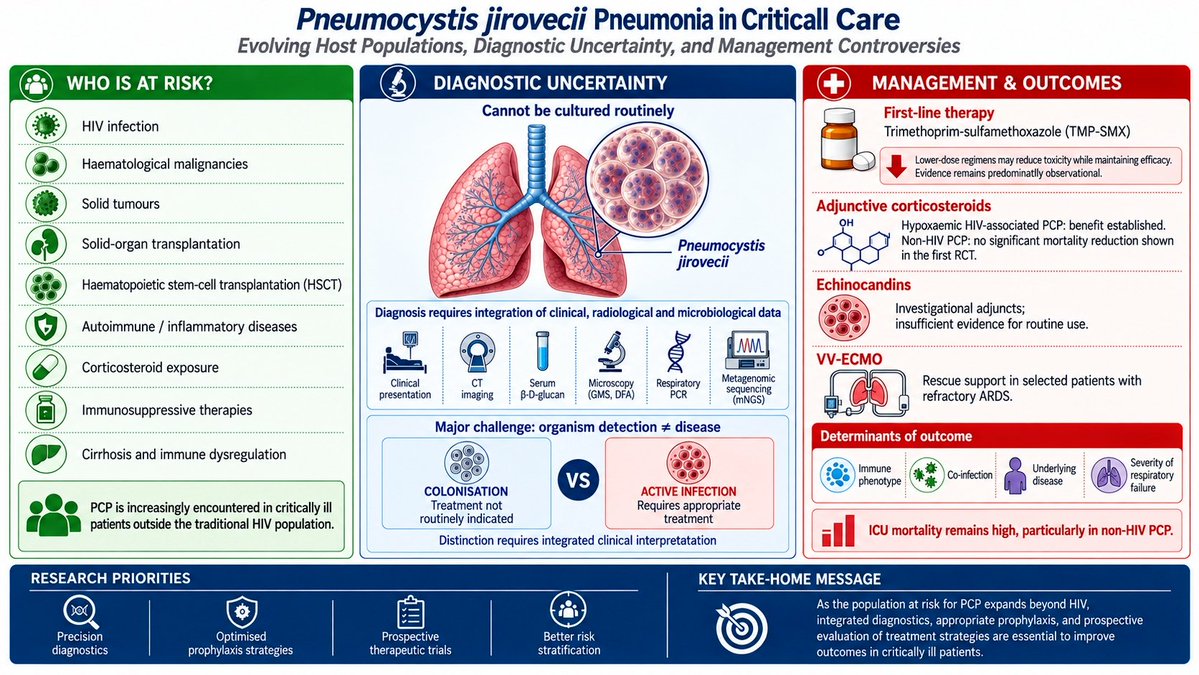
Pneumocystis jirovecii Pneumonia in Critical Care: Evolving Host Populations, Diagnostic Uncertainty, & Management Controversies
https://t.co/JKgcYjlUQ5
Join us to read 1 paper per day and stay up-to-date as we cover the spectrum of critical care
Today's Paper of the Day is:
Integrated haemodynamic monitoring of fluid responsiveness and fluid tolerance in critical care: from physiology to bedside applications
https://t.co/JKgcYjlUQ5
Join us to read 1 paper per day and stay up-to-date
Fungal pneumonia in non-neutropenic critically ill patients: a Delphi consensus from the Fungal Infection Study Forum, India, with implications for resource-limited settings
CCR Journal Watch
https://t.co/Sp06oA7gte
Today's Paper of the Day is:
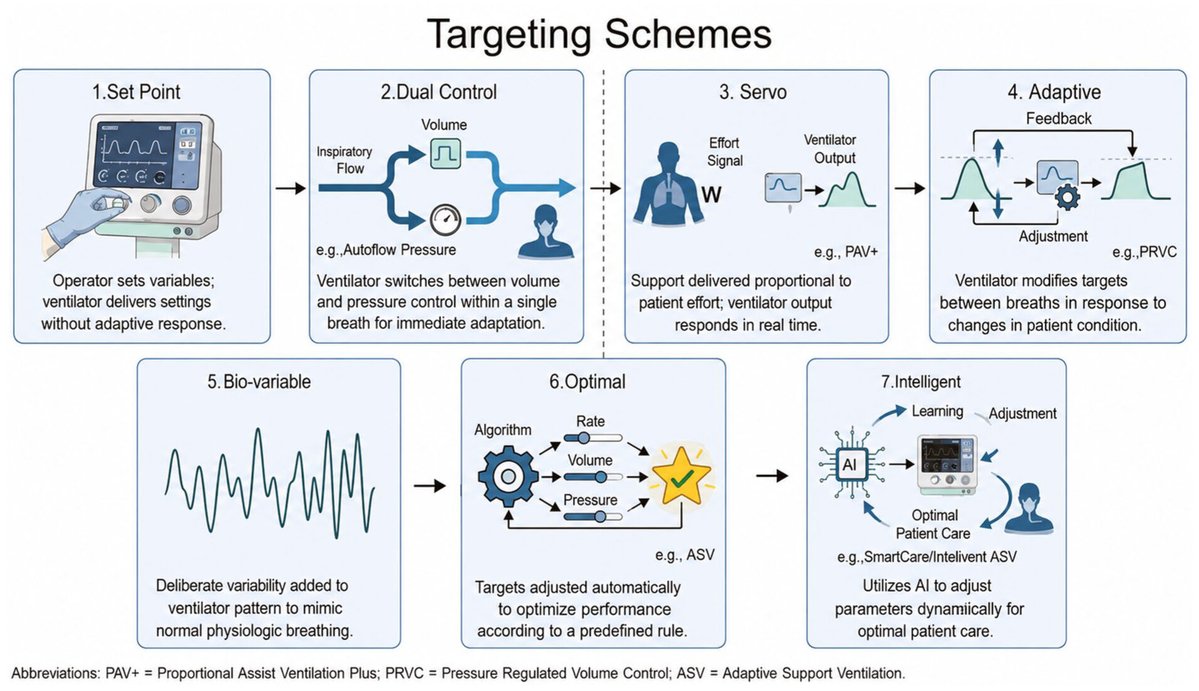
Mechanical ventilation – physiology, mechanism and modes
https://t.co/JKgcYjlUQ5
Join us to read 1 paper per day and stay up-to-date as we cover the spectrum of critical care across 2026
Drug Dosing During Continuous Renal Replacement Therapy in Critically Ill Patients: A Practical Narrative Review
CCR Journal Watch
https://t.co/Sp06oA7gte
New #JACC State-of-the-Art Review: Clinical Considerations in Management of Hypertrophic Cardiomyopathy in Pregnancy
Read here: https://t.co/TEq03lP7NG
#CardioX#HCM
Post-intensive care syndrome (PICS), an AAST Critical Care Committee Consensus Guideline: expectations, mental health impairments, financial hardship, and caregiver burden in PICS
CCR Journal Watch
https://t.co/Sp06oA7gte
Today's Paper of the Day is:
Continuous renal replacement therapy
https://t.co/JKgcYjlUQ5
Join us to read 1 paper per day and stay up-to-date as we cover the spectrum of critical care across 2026
ECG From Scratch #58: Myocardial Ischemia & Non-ST-Elevation Syndromes
ST depression, T-wave inversion, and transient ST elevation can reveal important clues about myocardial ischemia.
Learn how to recognize these patterns, understand NSTEMI #ECG changes, and avoid common interpretation pitfalls.
Watch the full video.
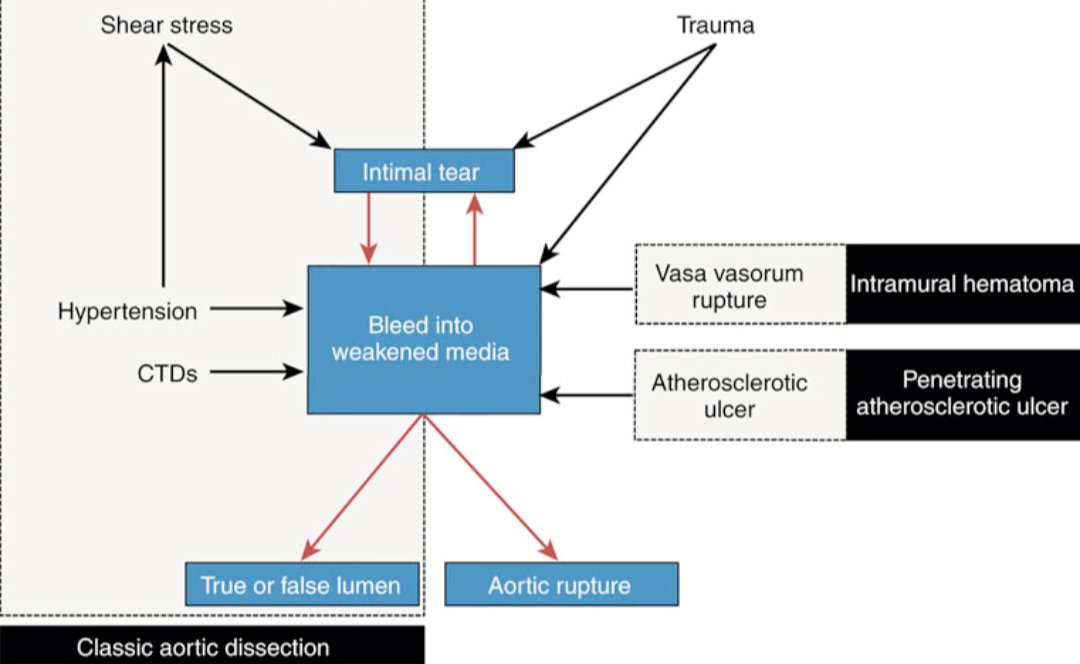
ECHOCARDIOGRAPHY & AORTIC EMERGENCIES: Acute Aortic Syndrome
Acute aortic syndrome includes aortic dissection, intramural haematoma, and penetrating atherosclerotic ulcer.
🟥 Aortic dissection: An intimal tear allows blood to enter the aortic wall, creating a false lumen.
🟦 Intramural haematoma: Bleeding within the aortic media, often from ruptured vasa vasorum, without a demonstrable intimal tear.
⬜ Penetrating atherosclerotic ulcer: An atherosclerotic ulcer penetrates into the aortic wall and may cause haematoma or rupture.
⚠️ Key risk factors: Hypertension, connective tissue disorders (e.g., Marfan syndrome), and trauma.
Clinical pearl: Suspected acute aortic syndrome is a medical emergency. Urgent CT angiography is commonly the first-line diagnostic test in stable patients; TEE can be valuable when bedside imaging is needed.
Interesantes recomendaciones en el draft de la Nueva Guía KDIGO de manejo de medicamentos, esto llamó mi atención:
•iSGLT2 sin ambuminuria, si existe TFGe 20-45ml/min
•Finerenona en personas sin diabetes, pero solo si hay albuminuria >200mg/g
•aGLP1 en enfermedad renal, desde sobrepeso
KDIGO 2026
https://t.co/Yekd9RTlbH