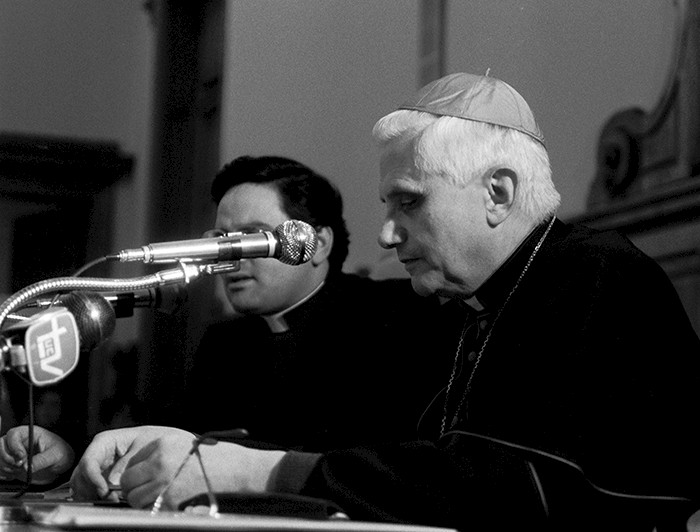
Che cosa disse #Ratzinger ai vescovi del Cile nel 1988 riguardo lo scisma di Mons. #Lefebvre.
È un discorso onesto che bisogna leggere tutto e non solamente un pezzo. Certi punti ancora non sono superati, a destra e a sinistra. #fsspx https://t.co/t8cymYTOIF
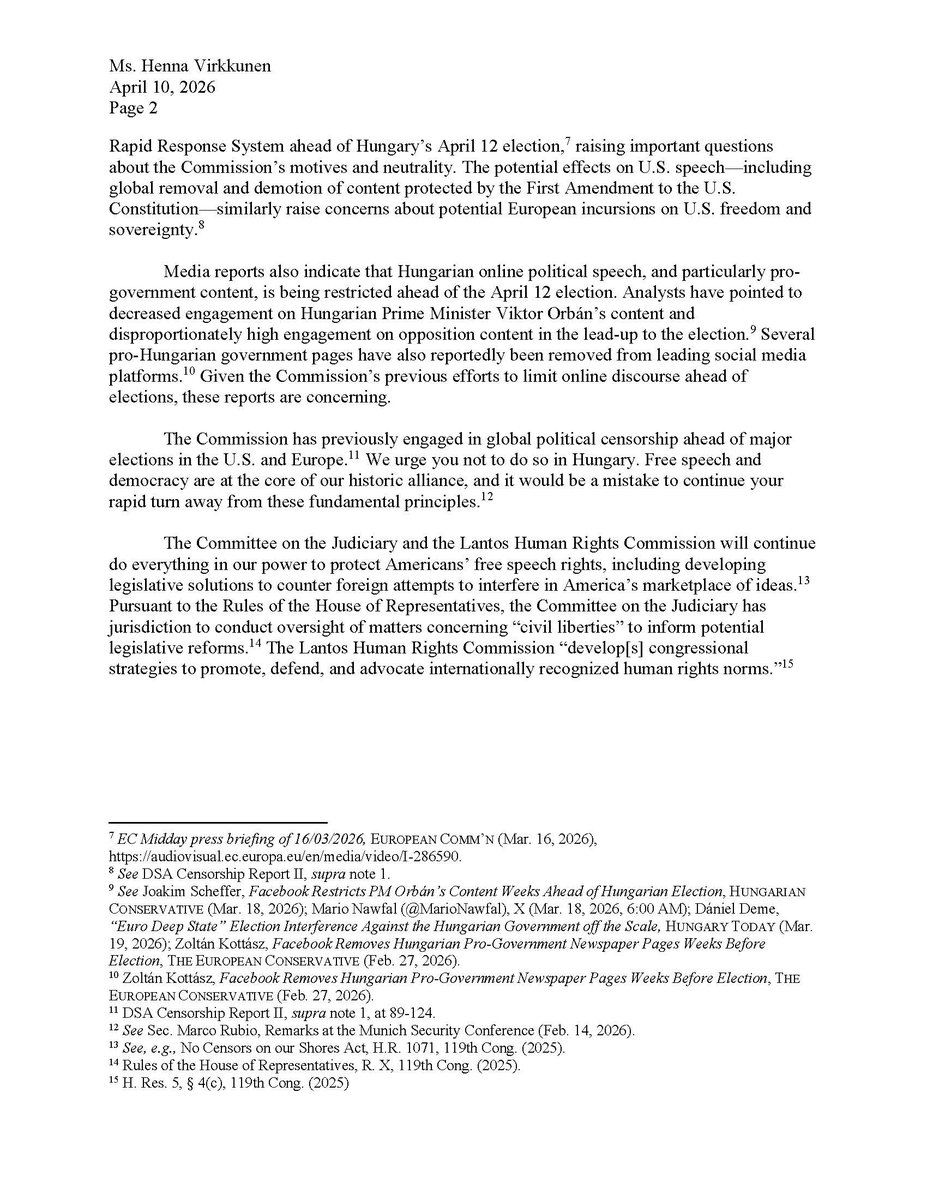
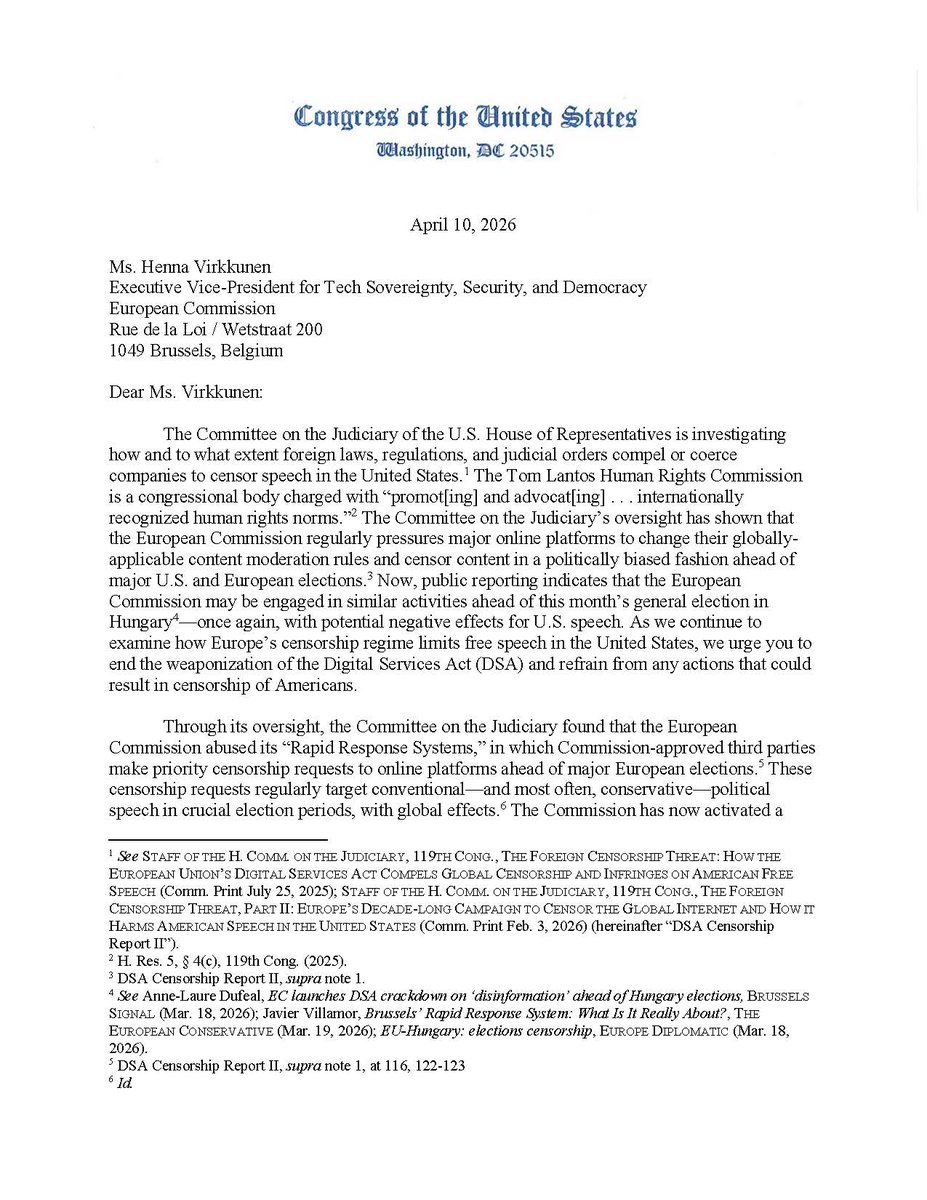
#NEWS: The European Commission uses its vast power to limit online discourse ahead of major elections in the U.S. and Europe.
Its actions could affect U.S. speech—including the global removal and demotion of content protected by the First Amendment.
Ahead of tomorrow's Hungarian election, Chairman @Jim_Jordan and Rep. Chris Smith wrote to @HennaVirkkunen urging the Commission to refrain from any interference.
Read the full letter here ↓
Italy’s "Piracy Shield" forces providers to block content in under 30 minutes without judicial oversight, which leads to overblocking (taking down legitimate websites alongside infringing ones).
We're appealing a €14M fine to protect the Internet from automated censorship and ensure infrastructure providers aren't forced to overblock.
https://t.co/hd7jMLH0lP
I share this as a follow up to my statement regarding the situation of SSPX which I posted on February 3. In the intervening days, some have “put words in my mouth” that were not an accurate representation of my thoughts on this critically important subject. I pray that the following clarifies where I stand as one bishop who loves the Church deeply.
I renew my plea that we pray for Pope Leo and for the leaders of SSPX.
Statement dated February 23, 2026.
The current situation involving the Society of St. Pius X (SSPX) has once again exposed a painful and longstanding tension within the life of the Church.
In the years following the Second Vatican Council, Archbishop Marcel Lefebvre believed that foundational elements of Catholic life – traditional priestly formation, clear sacramental theology, and the ancient Roman liturgy – were being set aside at a pace and in a manner that endangered the spiritual stability of countless souls. Whether one agrees with every decision he made, it is historically undeniable that the traditional liturgy and priestly formation were preserved in large part because he and others were unwilling to allow them to disappear entirely.
Many of the faithful recognize this reality. They also recognize that the tensions of 1988 did not arise in a vacuum. They arose amid widespread doctrinal confusion, liturgical experimentation, and pastoral instability – wounds that, in many ways, have not fully healed.
Today, similar concerns are being voiced again. Questions surrounding clarity in doctrine, reverence in worship, and the integrity of Marian devotion are not trivial matters. When Catholics perceive that pillars of the faith are weakened or treated as negotiable, anxiety naturally grows. The desire for continuity is not rebellion; it is an instinct of faith.
At the same time, the Church is hierarchical by divine institution. Episcopal consecrations are not private acts but visible expressions of communion with the Successor of Peter. This structure is not optional. Unity belongs to the Church’s very nature.
Yet unity cannot be sustained by ambiguity. Authority is not given merely to govern, but to safeguard what has been handed down. When those seeking doctrinal and liturgical continuity experience prolonged uncertainty of silence, the strain on communion increases. This reality deserves sober acknowledgment.
The present moment should not be reduced to factions or slogans. The salvation of souls remains the supreme law of the Church. All parties must act with prudence and humility, conscious that they will one day render an account to Our Lord for how they guarded His Church. This is not a time for triumphalism, nor for recrimination, but for clarity and courageous fidelity.
Let us pray intensely for the Holy Father, for all bishops, and for the faithful. May Our Lady, Mother of the Church, protect her Son’s Mystical Body and obtain unity rooted in truth.
Poco fa parlavo con un collega che insegna un corso di GenAI prototyping, e concordavamo su un punto: questi nuovi strumenti non sono neutrali, hanno anzi un effetto profondamente polarizzante.
Non è solo che aiutano: amplificano.
Se hai buone basi nel campo in cui li usi, se sai formulare bene un problema, se hai senso critico per valutare ciò che producono, allora ti danno quasi dei superpoteri: accelerano il lavoro, moltiplicano le alternative, abbassano il costo dell’esplorazione.
Ma se quelle basi non ci sono, succede qualcosa di diverso! Non è che impari più in fretta, è che esternalizzi il controllo. Ti affidi all’output senza avere gli strumenti per valutarlo, e l’illusione di competenza cresce più della competenza stessa.
È questo che cerco di mostrare in classe, quando faccio svolgere agli studenti, con ChatGPT, Gemini e altri modelli, diverse analisi dei dati, e poi discutiamo insieme i risultati. Trovo molto utile dare loro 30 minuti per risolvere da soli un problema complesso, a volte proposto da loro, usando qualsiasi LLM/LMM, e poi riprovarci dal vivo, passo dopo passo, insieme.
Di solito (falsa modestia...) il mio risultato è migliore. Non perché lo strumento sia diverso (uso lo stesso scelto da loro, tra quelli di cui abbiamo la licenza), ma perché diverso è il controllo sul processo: nella formulazione del problema, nella scelta delle ipotesi, nella verifica dei passaggi, nell’interpretazione dei risultati.
Credo che il messaggio che si portano a casa sia semplice e, per certi versi, controintuitivo: un LLM abbassa il costo dell’esecuzione, ma non quello della comprensione. E senza comprensione, l’esecuzione è fragile.
In questo senso, queste tecnologie non eliminano il principio di Matteo. No, lo rendono più visibile: chi ha struttura cognitiva solida viene amplificato; chi non ce l’ha rischia di diventare ancora più dipendente, se non addirittura più stupido (il cervello va tenuto allenato, ormai lo sappiamo). I "ricchi" diventano più ricchi, e la conoscenza resta la forma più potente di ricchezza, e lo sarà sempre di più.
Ergo, puoi lasciare a ChatGPT l'analisi dei dati, ma devi sapere che cosa faresti tu, perché, come, quando. Il che significa che studiare serve, forse paradossalmente, più che mai. Se possiamo risparmiare tempo nell'esecuzione (e al momento è un grande se), abbiamo più tempo per lo studio.
Spanish PM Pedro Sánchez:
Starting next week, my government will implement the following actions:
First, we will change the law in Spain to hold platform executives legally accountable for many infringements taking place on their sites.
Second, we will turn algorithmic manipulation and amplification of illegal content into a new criminal offense.
Third, we will implement a hate and polarization footprint system to track, quantify, and expose how digital platforms fuel division and amplify hate.
Fourth, Spain will ban access to social media for minors under the age of 16. Platforms will be required to implement effective age verification systems — not just checkboxes, but real barriers that work.
Fifth and last, my government will work with our public prosecutor to investigate and pursue the infringement committed by Grok, TikTok, and Instagram.
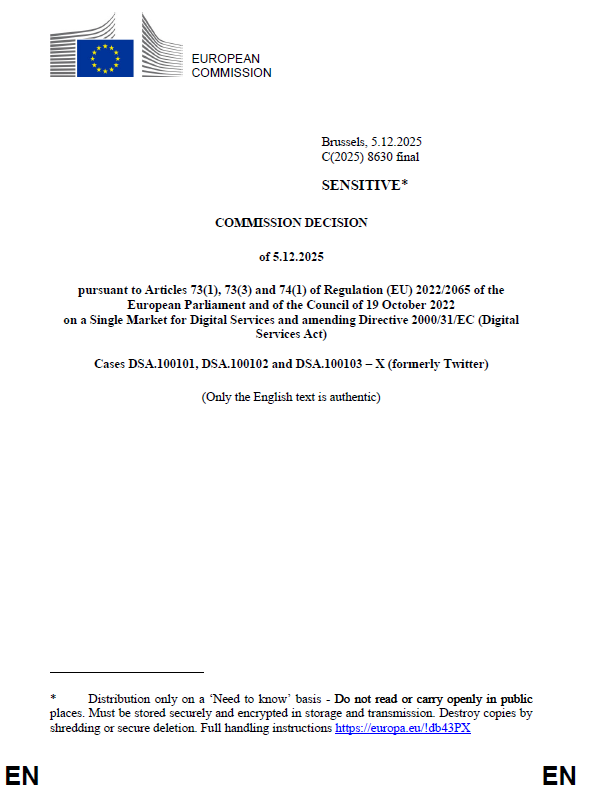
🚨@JudiciaryGOP subpoenaed Europe’s secret 183-page censorship order to X 🚨
The @EU_Commission’s first ever fine under the Digital Services Act (DSA) was against @X and @elonmusk for €120 million—nearly 6% of its GLOBAL revenue—for defending free speech.
Now we know why: Leftist Euro bureaucrats fined X because it innovated its blue checkmark system and refused to give into demands from misinformation pseudoscientists.
🧵Read below to see what the Europeans didn’t want Americans, or anyone else, to see. ⬇️
La “sovranità digitale” per via regolatoria é uno specchietto per le allodole desiderose solo di elaborare carta e assegnare poltrone.
Non esiste alcuna sovranità digitale che possa prescindere dall’innovazione e dal fatto tecnico.
Il manifesto di Leone sul mondo che cambia - La crisi del multilateralismo, l'Onu e le "ideologie politiche", il "linguaggio orwelliano" che in occidente "finisce per escludere quanti non si adeguano alle ideologie che lo animano". Un debutto non banale https://t.co/WsE3lvC574
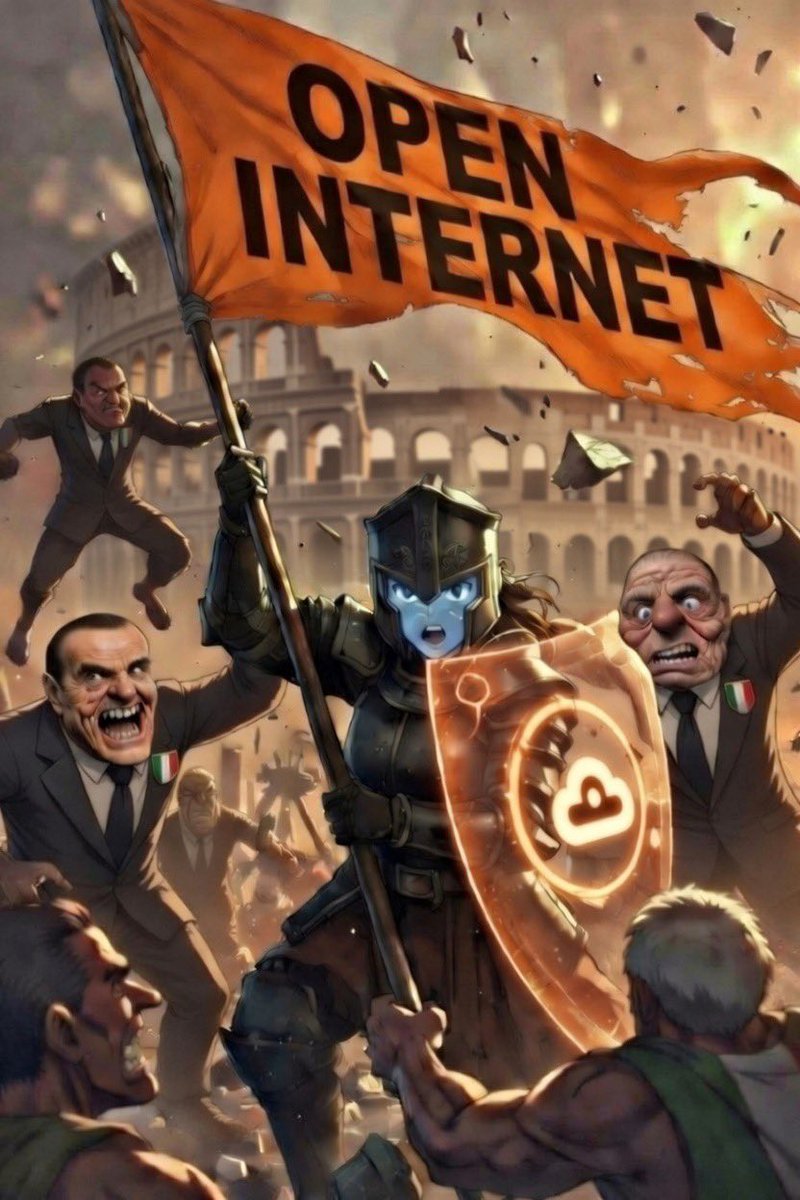
Yesterday a quasi-judicial body in Italy fined @Cloudflare $17 million for failing to go along with their scheme to censor the Internet. The scheme, which even the EU has called concerning, required us within a mere 30 minutes of notification to fully censor from the Internet any sites a shadowy cabal of European media elites deemed against their interests. No judicial oversight. No due process. No appeal. No transparency. It required us to not just remove customers, but also censor our 1.1.1.1 DNS resolver meaning it risked blacking out any site on the Internet. And it required us not just to censor the content in Italy but globally. In other words, Italy insists a shadowy, European media cabal should be able to dictate what is and is not allowed online.
That, of course, is DISGUSTING and even before yesterday’s fine we had multiple legal challenges pending against the underlying scheme. We, of course, will now fight the unjust fine. Not just because it’s wrong for us but because it is wrong for democratic values.
In addition, we are considering the following actions: 1) discontinuing the millions of dollars in pro bono cyber security services we are providing the upcoming Milano-Cortina Olympics; 2) discontinuing Cloudflare’s Free cyber security services for any Italy-based users; 3) removing all servers from Italian cities; and 4) terminating all plans to build an Italian Cloudflare office or make any investments in the country.
Play stupid games, win stupid prizes. While there are things I would handle differently than the current U.S. administration, I appreciate @JDVance taking a leadership role in recognizing this type of regulation is a fundamental unfair trade issue that also threatens democratic values. And in this case @ElonMusk is right: #FreeSpeech is critical and under attack from an out-of-touch cabal of very disturbed European policy makers.
I will be in DC first thing next week to discuss this with U.S. administration officials and I’ll be meeting with the IOC in Lausanne shortly after to outline the risk to the Olympic Games if @Cloudflare withdraws our cyber security protection.
In the meantime, we remain happy to discuss this with Italian government officials who, so far, have been unwilling to engage beyond issuing fines. We believe Italy, like all countries, has a right to regulate the content on networks inside its borders. But they must do so following the Rule of Law and principles of Due Process. And Italy certainly has no right to regulate what is and is not allowed on the Internet in the United States, the United Kingdom, Canada, China, Brazil, India or anywhere outside its borders.
THIS IS AN IMPORTANT FIGHT AND WE WILL WIN!!!
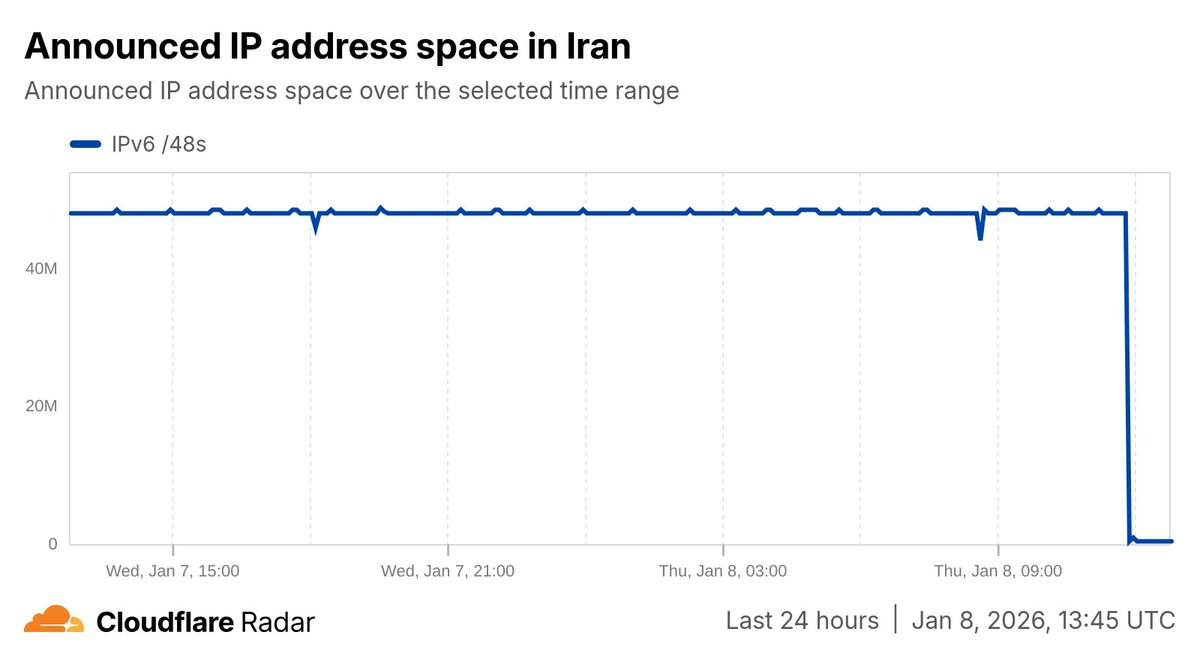
Just before 12:00 UTC today, the amount of announced IPv6 address space in #Iran dropped by ~98.5%, concurrent with IPv6 traffic share dropping from ~12% to ~1.8%, as the govt. selectively blocks Internet access amid protests.
https://t.co/fU9tATRJFk
https://t.co/XwZBYITyIu
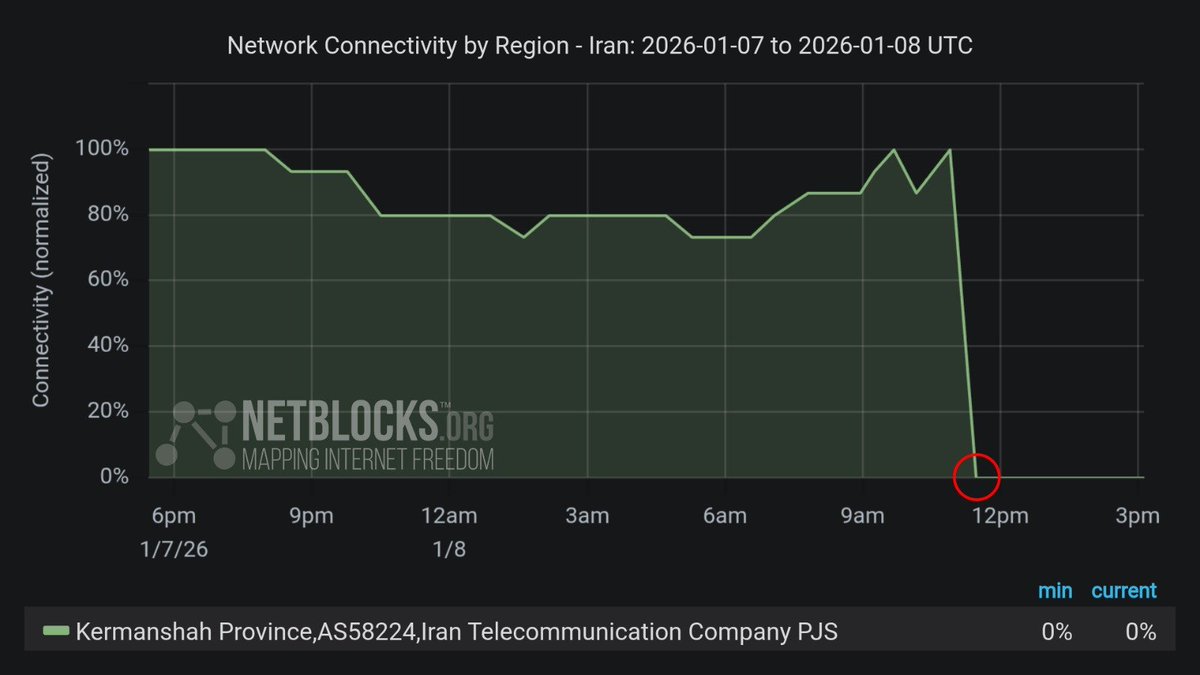
⚠️ Confirmed: Network data show the loss of connectivity on #Iran internet backbone provider TCI in the restive city of Kermanshah as protests spread across the nation in their 12th day; the incident comes amid rising casualties with indications of disruptions in multiple regions
In questo articolo su Miller, il volto feroce dell’amministrazione e che sovente entra in collisione con altri fedelissimi di Trump (rampognato del pari da diversi parlamentari repubblicani), emerge un dato che a me appare ormai decisivo per giudicare l’accelerazione caotica di iniziative: un senso quasi apocalittico di avere poco tempo a disposizione.
Le prossime sentenze della Corte Suprema, sui dazi generalizzati e sulla UET (applicata alla FTC ma con principi valevoli a livello ordinamentale), la “guerra civile culturale” interna, la scadenza incombente delle elezioni midterm, stanno imprimendo un processo di radicalizzazione delle azioni e delle decisioni, per cercare di avere carne al fuoco da usare per fini di consenso interno.