People hate working. Or so I’m told. If you do, this message is for you:
Rotate.
Not “lock in”, not “be alpha”, none of that David Goggins motivational bullshit, because running 100 miles doesn’t translate to grinding behind a desk. Sometimes, I would’ve rather ran 100 miles than do another week.
I have had many friends come up to me, both now and in the past, and say “I hate my work. I wish there was a way out.”
But what they’re really saying is: “This job doesn’t align with my passions, and I’m unwilling to spend my free time pursuing something that does.”
It’s understandable. After 9+ hours, who wants to spend those precious few hours left even figuring out how to get out of the rat race, let alone skip the Coors for some dream that’s bound to fail? And that’s your choice. It’s that and endless hell, or you rotate.
You rotate where you put your time.
You rotate who you spend time with.
You rotate into AI stocks.
That last one was subliminal. Ish.
Time and time again I’ve seen EXACTLY the strong suits my friends could not see themselves and give them suggestion after suggestion on how to escape, always to be dismissed followed by a wish to just “get off the grid”. If I were to play armchair psychologist, it’s because they don’t know their strengths until they test them. They assume they have no nuanced strengths that are or can turn into a passion and they are bound to fail.
SO FUCKING TEST THEM.
Your failure rate is lower than you think. Your limiting factor is the limitations you set on yourself to try something you never have before. To risk self-imposed embarrassment and face failure.
11 years ago I posted on r/WallStreetBets (before GME, when it was in its relative infancy), “Does anybody want an options tutorial?” I saw a weak point. They traded options, but they didn’t know how they worked. I sucked at it, but I knew how they worked having randomly selected Finance as my degree when my father swatted away mathematics.
2k upvotes. That’s called demand, motherfucker. And the supply I dished was shit, yet it got nearly a million views over time.
I was going to school, working, and yet had this constant draw to produce more. Honestly, out of some weird sense of guilt if I didn’t. It paid me nothing and I received mostly disparaging comments.
And every video was shit, but accurate. Even now, especially post-encephalitis as I learn my limitations, learn that I need to outsource every small thing or they pile up before I have a chance to record, they’re still shit. Smart as fuck, if I do say so, but shit. Yet the foundation I laid when I was 19 changed my life forever because I decided to ask one simple question on Reddit.
Funny, because a month before that, I told my brother, “I’m going to make this my career somehow.” I would’ve never guessed how exactly.
I hate to be Shia LeBeouf, but just do, man. Put the beer down a couple nights a week. Or screw it, if it helps, pick it up and get at it. Just don’t pretend that drinking and watching football balances the hell of working behind a desk forever.
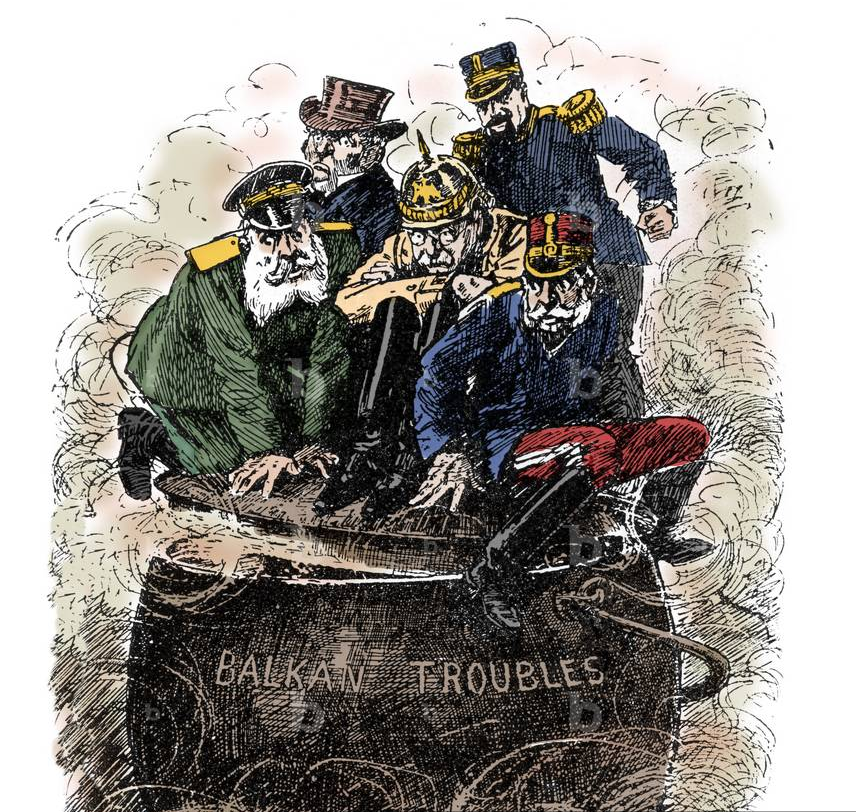
The hardest thing for Balkan people to recognize is that their modern states & their medieval states, although culturally and ethnically related, have no direct political connection, due to between 300 and 500 years of Οttoman rule. Apparently that is a big deal for some reason.
Iran, like Russia (or the Taliban), can wage a war of attrition because its strategic doctrine is built not on winning conventional battles, but on outlasting adversaries— raising the political, economic, and operational costs of conflict until the enemy's will to fight erodes.
Tehran understands it cannot defeat Israel or the United States in a conventional war. Instead, Iran's doctrine centers on “asymmetric endurance”— hardening missile sites, decentralizing command structures, and accepting initial losses in order to maintain a second-strike capability rather than trying to prevent all attacks. The objective is regime survival and endurance, not battlefield dominance. In an attritional conflict, time itself becomes a strategic weapon.
Iran’s most tangible attrition tool is its capacity to sustain high-tempo missile and drone strikes at relatively low cost. Even as precision strikes have degraded some launcher capacity, Iran's “kill chain” remains intact. This volume is specifically designed to exhaust adversary interceptor stockpiles; missile defense systems like Iron Dome and THAAD carry a far higher per-unit cost than the drones and missiles used to overwhelm them.
Iran has invested heavily in underground “missile cities” and decentralized command-and-control architecture to absorb punishment and keep firing. This structural resilience means that even sustained air superiority does not immediately eliminate Iran's ability to strike back. Since the June 2025 war, Iran has formally integrated regional missiles, drones, cyberattacks, and energy coercion into a single operational doctrine, making it harder to neutralize any single node.
Iran's “Axis of Resistance” — encompassing Hezbollah, Iraqi militias, the Houthis, and Hamas — provides critical strategic depth. These groups are not simply tools; they are ideologically aligned, locally embedded, and semi-autonomous actors who expand Iran's operational geography far beyond its borders. Iraqi proxies have even been formally integrated into Iraqi security forces while remaining loyal to Iranian leadership, giving Tehran a well-trained conventional proxy force capable of large-scale operations. Tehran widened this map, launching strikes beyond Israel and specific U.S. assets to include Gulf infrastructure, airports, and ports.
Iran's geographic position astride the Strait of Hormuz gives it the ability to threaten global energy flows and commercial shipping without firing a single missile. This creates a powerful coercive lever even when its conventional forces are degraded. Targeting Gulf state infrastructure simultaneously pressures U.S. regional allies and raises the economic stakes for any party sustaining the campaign against Tehran.
Iran's attrition strategy has significant structural vulnerabilities. Its economy was already severely damaged by years of sanctions and mismanagement before the conflict intensified — with oil exports largely frozen, foreign reserves limited to around $33 billion, and military spending actually falling 10% in real terms to $7.9 billion. Sustained precision strikes continue to degrade its industrial base and logistics networks. Even asymmetric actors face critical attrition under sustained air and intelligence superiority, meaning the defining question is whether time works in Tehran's favor.
THREAD
Inga Chekinda, a defender of Mariupol, spent six months in captivity. During that time, she was transferred between four prisons: Olenivka, Taganrog, Valuyki, and Mala Loknia. She endured severe physical and psychological torture while in captivity.
PLEASE AMPLIFY
“Чичо, филмът хубав ли е, или е руски?” Това е един от вицовете, заради които комунистическият режим изпраща в затвора популярен по онова време музикант. Там той умира. Това се е случило през 1961 с цигуларя Александър Николов, по-известен като Сашо Сладура. Вижте историята му.
Копейкин се заканва на “антибългарския елит”. Щяло да стане като през 1944 г. Затова сега искам да ви питам: помните ли кои са антибългарските сили през 1944 г. и какво правят по това време? Ако не помните, един учебник по история и малко критично мислене ще ви подскажат. През 1944 г. антибългарските сили превземат властта в България с преврат, налагат диктатура и започват системно да унищожават интелигенцията ѝ. Това правят антибългарските сили. Помним ли кой стои тогава зад тях? Хубаво е да помним, защото поръчителят не се е променял и оттогава си е все същият - Русия. Помним ли къде се намира Червената армия по онова време? У нас се намира, а превратът удобно идва броени дни, след като Русия ни е обявила война.
Помним ли какво следва? България е отклонена от европейския си път на развитие и е запокитена в пагубната орбита на руското влияние за почти половин век. Резултатът е разединено общество в една изостанала и докарана до фалит държава. Това е наследството на реалните сили, които винаги са работили против интереса на България. Като направихме тези уточнения, искам да кажа и друго - абсолютно недопустимо и скандално е български народен представител да заплашва държавата си с преврат и да намеква, че хора ще бъдат избивани “от името на народа”. Вероятно Копейкин си мисли, че се намира в Русия. Объркал се е. Намираме се в съвременна, европейска, демократична България.
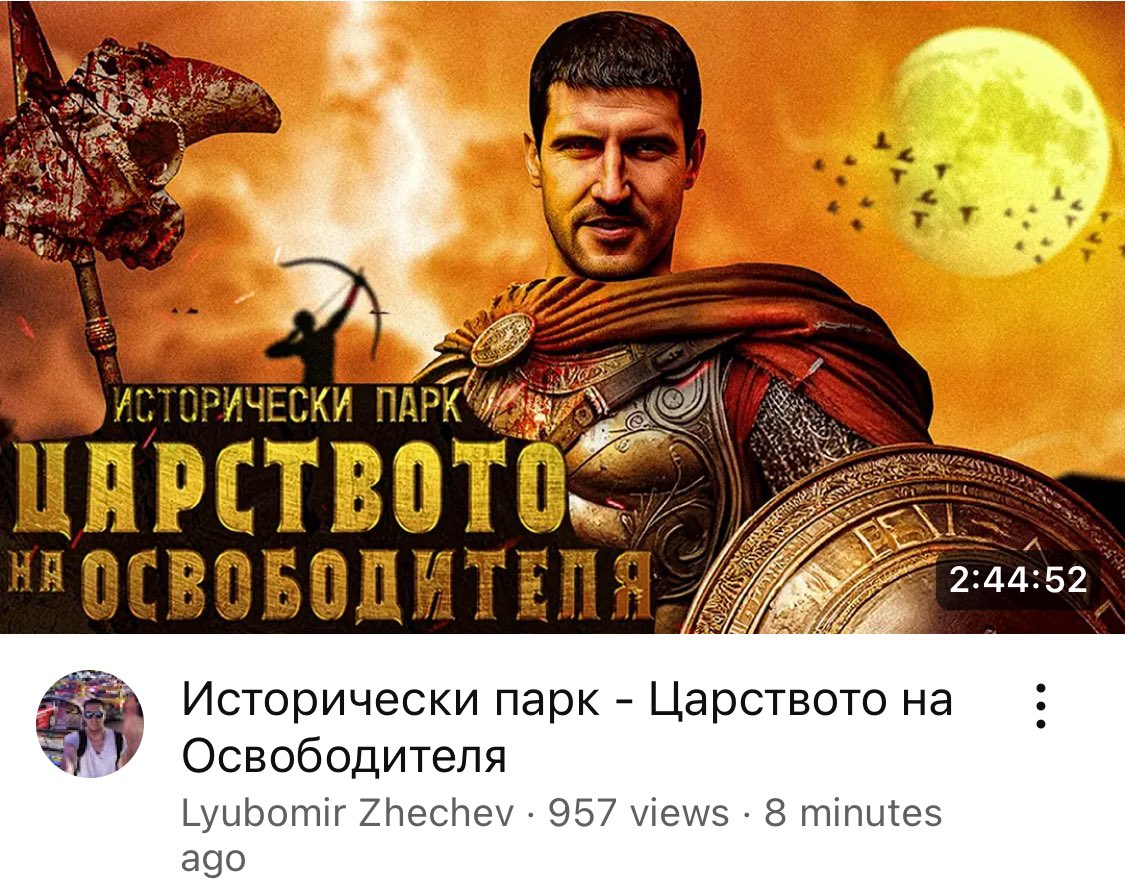
Гледай и СПОДЕЛИ филма за Исторически парк! https://t.co/ISiwQN0vIZ
Снощи, 30 минути преди последната кино прожекция на филма, представител на ЧСИ дойде да ми даде още някакво писмо от човек на Исторически парк. Това аз тълкувам като поредния опит тези хора да направят всичко възможно ВИДЕОТО да не види бял свят. И понеже не обичам да ме заплашват - реших да го публикувам още днес :)
СПОДЕЛИ ДА ЗНАЕ НАРОДА!