#TearsOfThemis 5th Anniversary Event Trailer
💍 Anniv Bonus
Redeem for 🔹S-Chip ×180🔹 >> https://t.co/HiIzKeZdmq
💍 Repost to Win
💳 100 USD Gift Card | 💙 S-Chip ×6480
The Event Shadow of Themis will be available today at 13:00 (UTC+9)!
#ToT5thAnniv#ToTWedding
#ToT5thAnniv Vyn SSR ✦ Promise of Bliss ✦
✅ Repost
🎁 Merch Pack (1 winner)
🔹 S-Chip ×1000 (3 winners)
The Event Shadow of Themis is available today at 13:00 (UTC+9) with a rate-up for the SSR card!
#TearsOfThemis#ToTWedding
#ToT5thAnniv Marius SSR ✦ Timeless Ballad of Us ✦
✅ Repost
🎁 Merch Pack (1 winner)
🔹 S-Chip ×1000 (3 winners)
The Event Shadow of Themis is available today at 13:00 (UTC+9) with a rate-up for the SSR card!
#TearsOfThemis#ToTWedding
#TearsOfThemis has prepared a Returner Gift for you! Come back and join the Special Event! Bind my Returner Code (code) to claim your rewards!Download Linkhttps://hoyo.link/081qBBAd
✦ #ToT5thAnniv Special Celebration ✦
🎁 Repost for a 35cm plushie (3 Winners) │ Ends at 7/16 23:59 (UTC+9)
The #TearsOfThemis Special Celebration will begin on ⏰2026/7/15 12:00 (UTC+9)⏰!
🔔 Subscribe and get notified >>> https://t.co/99dKFo8ktA
"You are the only truth in my heart" event trailer will be released during the livestream, along with brand-new 5th Anniversary info and special rewards. Stay tuned!
@TearsofThemisEN@NXXGallery UID: 201049811
I can't believe how much time has passed 🥹. I remember seeing an ad 5 years ago and decided to try this game out. Best decision ever!
Good luck to everyone else!🍀
𝟑𝟎𝟎𝟎 𝐅𝐫𝐞𝐞 𝟓𝐭𝐡 𝐀𝐧𝐧𝐢𝐯𝐞𝐫𝐬𝐚𝐫𝐲 𝐂𝐞𝐥𝐞𝐛𝐫𝐚𝐭𝐨𝐫𝐲 𝐆𝐢𝐟𝐭 𝐒𝐞𝐭𝐬 #Giveaway#ToT5thAnniv#StellisPostOffice#TearsOfThemis
How to participate:
🔁 Repost 📝 Reply with your in-game UID
💌 Additional 7000 Sets: register through the in-game form and complete the [July Login Challenge!] for a chance to win one of 7,000 5th Anniversary Celebratory Gifts!
💌 For more details, please visit >>> https://t.co/t8yLZOXcKI
The 2026 AP Physics 1 Exam scores:
5: 19%; 4: 24%; 3: 25%; 2: 15%; 1: 17%
The 2026 AP Physics 1 exam was taken by approximately 184,000 students — 1% of the U.S. high school population.
Multiple-Choice Questions
Students scored highest on questions related to Unit 1, Kinematics, with 25% of students earning 100% of the points possible here.
Students also did very well on questions related to Unit 3, Work, Energy, and Power, with AP students who earned scores of 3+ generally earning most or all of these points.
Free-Response Questions (FRQs)
https://t.co/bvHZrzplHC
FRQ #1, a Mathematical Routines question about Projectile Motion and Fluid Flow from a Fountain Nozzle, opened the exam with a rich kinematics scenario: a water droplet that exited a fountain nozzle at an angle above the horizontal, rose to maximum height, and then returned to nozzle height. In the first part, students sketched graphs of both components of velocity as functions of time and then derived symbolic expressions for the exit speed of the water and the volume flow rate through the circular nozzle. In the next part, students transitioned to a comparative reasoning task. The nozzle was replaced by a smaller nozzle, with all other quantities held constant. Students made and justified a claim about how changing the nozzle affects the maximum height of the water. This question requires students to integrate kinematics, continuity of flow, and qualitative reasoning simultaneously.
Across all of this year’s FRQs across the ~40 AP subjects, this is the most pristine I’ve yet seen in the way it so evenly spreads the difficulty of the points across the full 10-points possible, designing points of differing difficulty so that there are at least two points aimed at identifying students qualified for each of the AP score categories of AP 2 to AP 5. It’s a brilliantly designed question, all credit to the Physics professors, teachers, and staff who collaborated to create it. AP students achieving 5s typically earned at least 9 points, students achieving 4s, at least 6 points, students achieving 3s, at least 4 points, and students receiving AP 2s, at least 2 points. A specific example:
In Part B, students receiving AP 2s were typically able to indicate the maximum height of the droplet from the new nozzle, but only students earning AP 3+ scores were typically able to justify their response with qualitative reasoning.
FRQ #2, a Translation Between Representations question about Linear Momentum, Collisions, and Center of Mass Motion, was the most multi-layered question on the exam and showcased multiple representations across four parts. The scenario presented a collision between Disk R and Disk S. First, students drew scaled momentum vectors for the disks after the collision, which required them to illustrate momentum conservation graphically. Students then derived an expression for the kinetic energy of Disk S after the collision, starting from conservation of linear momentum. Next, students sketched a graph of the position as a function of time for both disks and the center of mass after the collision. Finally, students made and justified a claim about the magnitudes of the momentum changes of Disk R and Disk S during the collision. Each part of this question requires a different representational skill: vector diagram, algebraic derivation, graphical reasoning, and conceptual justification.
This FRQ had several components that made it, overall, slightly easier than the others, providing opportunities to differentiate students earning AP 2s from students receiving AP 1s, as students receiving AP 2s were able to attain at least 3 points, several of which were in Part A, across this FRQ.
FRQ #3, an Experimental Design and Analysis question about Blocks Moving Along Surfaces With and Without Friction, presented students with two different experiments that involved frictional forces. In Experiment 1, a block slid down a smooth, curved ramp and onto a rough horizontal surface. The students identified which quantities to measure using a meterstick, indicated a method to reduce uncertainty, and described a linearized graph that could be used to determine the coefficient of kinetic friction between the block and the horizontal surface. In Experiment 2, a block slid various distances down a different rough ramp and passed through a photogate that recorded the speed of the block. Students received data for the distances and the speed of the block, and an equation that relates the distance and the speed. Students identified which quantities to plot to linearize the equation, plotted the data with an appropriate scale, drew a best-fit line, and then calculated an experimental value for the coefficient of kinetic friction based on the slope of the best-fit line. This question illustrates the connection between the physics of frictional forces and the methodology of experimental design and graphical data analysis.
Part D is by far the most challenging part of this FRQ, and served to differentiate students achieving AP 5s from other students. In other words, take a look at Part D of this question and if you’re able to answer it fully, odds are that you’re among the group qualifying for an AP 5.
FRQ #4, a Qualitative-Quantitative Translation question about Rotational Dynamics and the Work-Energy Theorem Applied to Spinning Toys, required students to reason about two spinning toys, Toy X and Toy Y, one with a smaller rotational inertia than the other. A string of the same length was wrapped around the upper portion of each toy. The same constant force was exerted on each string, causing the toys to rotate. Students made and justified a claim as to whether Toy Y reaches a greater, lesser, or equal angular speed as Toy X when the string fully unwound. Students then had to justify their claim using qualitative reasoning. Next, students derived a symbolic expression for the angular speed of Toy X, starting with the work-energy theorem or Newton’s second law in rotational form. Finally, students verified whether their derived expression was consistent with their qualitative reasoning from their claim. The three-part structure of predict qualitatively, derive quantitatively, and verify consistency exemplifies the reasoning cycle AP Physics 1 students develop throughout the course.
This was the most difficult of this year’s FRQs, overall, so its spread of 8 points served to provide opportunities for students aiming at AP 3s, 4s, and 5s to show their stuff, as students receiving AP 2s typically earned just a single point here.
All subjects' AP score distributions for 2026 will be posted here when available: https://t.co/OrkaQhPZYO
The 2026 AP English Language and Composition Exam scores:
5: 15%; 4: 28%; 3: 32%; 2: 15%; 1: 10%
The 2026 AP English Language and Composition exam was taken by 631,000 students, ~4% of the U.S. high school population.
The exam questions and essay topics were developed by a committee of college faculty, including English professors from Duke University, Florida State University, the University of Maryland and the University of California systems — and master AP teachers from across the nation.
Multiple-Choice Questions (MCQ)
1.The highest-performing area were questions assessing students’ ability to accurately identify Claims and Evidence within texts across a wide range of styles and complexities. These students are reading arguments carefully and identifying how evidence functions. Students achieving AP 5s typically answered 100% of these questions correctly, while students achieving AP 4s generally only missed a single point, and students achieving AP 3s typically earned 75% or more of the possible points.
2.Students also scored very well on questions related to analyzing and understanding the Rhetorical Situation in reading (about 81%). Students earning AP 4s and 5s generally answered 100% of these questions right, and students earning AP 3s missed only a single point here.
3.The most challenging MCQ area was Style — questions in which students were asked to identify features and aspects of writers’ style in the passages they analyzed. Only 5 MCQs focus on this area, and they neatly differentiated across student abilities: generally, students achieving AP 5s earned all 5 points possible, students earning AP 4s earned 4 of the 5 points, and students earning AP 3s earned 3 of these 5 points. Attending to a writer's word choice, syntax, and tone at the sentence level remains the area with the most room for further growth and improvement.
Free-Response Questions (FRQ)
https://t.co/27iWcsSm6G
Over a single 2-hour-and-15-minute session, students wrote three complete essays — a source-based synthesis argument, a rhetorical analysis, and an original argument — each demanding sustained reasoning and control of written English.
These three free-response questions span the core of the discipline — synthesizing sources into an argument, analyzing another writer's rhetorical choices, and constructing one's own argument — and I love that the committee anchored them in sources and ideas that students are not likely to already have examined in class: the value of napping and how we rest, what it means to do creative work, and how much weight we should give to other people's opinions. This is part of what the committee must do: select source material that students will not already have studied in class, so that on exam day students are drawing upon their own skills, not an interpretation already given to them by a teacher or AI.
Moreover, unlike AP English Literature and Composition, which focuses on novels, stories, drama, and poetry, AP English Language and Composition focuses on reading and analyzing non-fiction (speeches, essays, articles) and on writing argumentative, evidence-based, rhetorically effective essays, a powerful skill that is an anchor for a wide variety of career pathways.
Because AP scores are reported on a 5-point scale, the free-response rubrics deliberately include foundational points that separate AP 1s from 2s, mid-range points that distinguish 2s, 3s, and 4s, and a small number of advanced points designed to differentiate AP 5s from AP 4s.
FRQ #1, the Synthesis question on the value of napping, required students to read six authentic sources — reporting from national and international news outlets, a research university's findings, a data graph from a nonprofit health foundation, and a documentary photograph — then weigh competing evidence and build a defensible position. In short: college-level information literacy: evaluating real sources and putting them into conversation.
Nearly every student — about 98% — earned the thesis point, stating a defensible position. This is the foundational move that is expected even among students receiving AP 1.
The evidence-and-commentary rubric row is what most meaningfully differentiates across scores of 2, 3, 4, and 5. AP students receiving a 2 were usually able to earn just one of these points, whereas AP students receiving a 5 typically earned perfect scores on this row, not missing a single point. Selecting apt evidence from the sources and using commentary to explain how the evidence supports a line of reasoning — rather than merely quoting the sources — is what moved an essay up this scale.
FRQ #2 asked students to analyze how writer Laura Amy Schlitz uses rhetorical choices—including an extended kite-flying metaphor—to convey what it means to be a writer.
Why include a speech by a children's-book author, whose syntax and vocabulary in this speech are quite simple, on a college-level exam? Because the professors and educators who build the AP exams select passages the way college English faculty do: by stylistic, rhetorical, and interpretive complexity—not by Lexile scores, which measure only syntax, sentence length, and vocabulary. By that narrow metric, Ernest Hemingway, John Steinbeck, Elie Wiesel, Richard Wright, Zora Neale Hurston, and Toni Morrison would all be disqualified: their Lexile scores are similar to Schlitz’s.
The statistics for this question are clear. FRQ #2 had a mean/max difficulty of .57—the hardest question on this year's exam, and consistent with the difficulty of FRQ #2 in prior years. Rhetorical and thematic complexity simply aren't the same as syntactical complexity, which is rarely the deciding factor when faculty choose what's worth analyzing.
As in FRQ #1, AP students receiving a 2 were usually able to earn just one of the evidence and commentary points, whereas AP students receiving a 5 typically earned perfect scores on this row, not missing a single point.
An impressive ~30,000 students earned the sophistication point for the skill with which they unpacked Schlitz’s rhetorical choices and strategies.
FRQ #3, the Argument question based on a claim by physician, engineer, and former astronaut Mae Jemison, asked students to argue the extent to which they found Jemison's claim valid.
Students generally found this essay slightly less challenging than FRQ #1, and significantly less challenging than FRQ #2, as demonstrated in their points earned.
Almost all students — about 98% — established a defensible thesis, the foundational point expected even of students receiving an AP 1.
Students receiving 2s were typically able to generate more effective evidence and commentary than in their other two essays, earning 2 of the 4 points possible here, so the real differentiation this essay provided was for students achieving AP 4s and AP 5s, who consistently earned all or all but one of the points possible.
So: real kudos to the students who succeeded on this exam. Three full essays, six sources to weigh, an artful piece of rhetoric to analyze, and an original argument to defend — all in a single sitting. The committee built a demanding, content-rich measure of college-level reading and writing, and it’s exciting to see such a significant number of students meeting these high standards.
All subjects' AP score distributions for 2026 will be posted here when available: https://t.co/OrkaQhPZYO
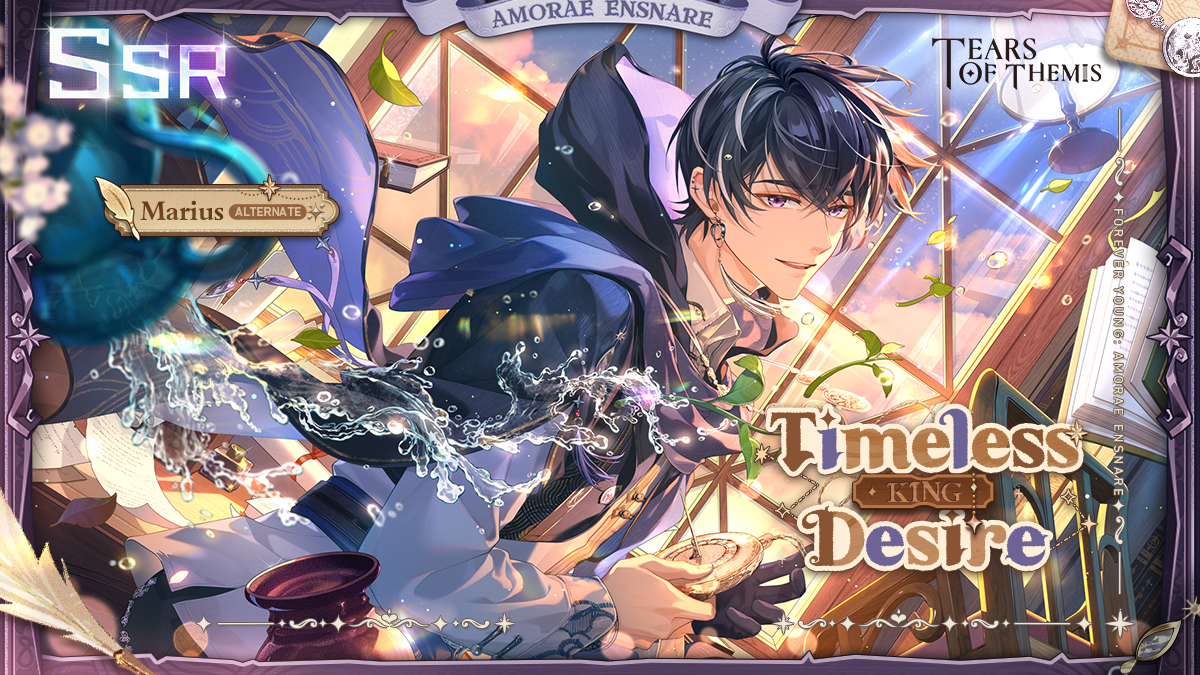
Forever Young: Amorae Ensnare Marius SSR ✦ Timeless Desire ✦
✅ Repost
🎁 Merch Pack (1 winner)
🔹 S-Chip ×1000 (3 winners)
Forever Young: Amorae Ensnare Event Shadow of Themis will begin on 5/1 with a rate-up for the SSR card!
#TearsOfThemis


![TearsofThemisKR's tweet photo. #윤노아 SSR ✦기쁨의 향연✦ 재게시 추첨 이벤트
✅팔로우&재게시
🎁굿즈 패키지(1명)
🎁미림 칩×1000(3명)
마감 시간: 7/26 23:59(한국시간)
오늘 13:00(한국시간), 5주년 특별 이벤트 [너와 함께 진실의 끝으로] 여신의 그림자 오픈! 생각 「기쁨의 향연」 획득 확률 UP!
#미해결사건부 #미해결사건부5주년 #미해결사건부웨딩](https://pbs.twimg.com/media/HNLJ2T6XsAAVlKI.jpg)
![TearsofThemisKR's tweet photo. #윤노아 SSR ✦기쁨의 향연✦ 재게시 추첨 이벤트
✅팔로우&재게시
🎁굿즈 패키지(1명)
🎁미림 칩×1000(3명)
마감 시간: 7/26 23:59(한국시간)
오늘 13:00(한국시간), 5주년 특별 이벤트 [너와 함께 진실의 끝으로] 여신의 그림자 오픈! 생각 「기쁨의 향연」 획득 확률 UP!
#미해결사건부 #미해결사건부5주년 #미해결사건부웨딩](https://pbs.twimg.com/media/HNLJ2BOXsAArjTr.jpg)
![TearsofThemisKR's tweet photo. #윤노아 SSR ✦기쁨의 향연✦ 재게시 추첨 이벤트
✅팔로우&재게시
🎁굿즈 패키지(1명)
🎁미림 칩×1000(3명)
마감 시간: 7/26 23:59(한국시간)
오늘 13:00(한국시간), 5주년 특별 이벤트 [너와 함께 진실의 끝으로] 여신의 그림자 오픈! 생각 「기쁨의 향연」 획득 확률 UP!
#미해결사건부 #미해결사건부5주년 #미해결사건부웨딩](https://pbs.twimg.com/media/HNLJ1vpW8AAJV5e.jpg)
![TearsofThemisKR's tweet photo. #윤노아 SSR ✦기쁨의 향연✦ 재게시 추첨 이벤트
✅팔로우&재게시
🎁굿즈 패키지(1명)
🎁미림 칩×1000(3명)
마감 시간: 7/26 23:59(한국시간)
오늘 13:00(한국시간), 5주년 특별 이벤트 [너와 함께 진실의 끝으로] 여신의 그림자 오픈! 생각 「기쁨의 향연」 획득 확률 UP!
#미해결사건부 #미해결사건부5주년 #미해결사건부웨딩](https://pbs.twimg.com/media/HNLJ1edXcAAQNit.jpg)





![TearsofThemisEN's tweet photo. 𝟑𝟎𝟎𝟎 𝐅𝐫𝐞𝐞 𝟓𝐭𝐡 𝐀𝐧𝐧𝐢𝐯𝐞𝐫𝐬𝐚𝐫𝐲 𝐂𝐞𝐥𝐞𝐛𝐫𝐚𝐭𝐨𝐫𝐲 𝐆𝐢𝐟𝐭 𝐒𝐞𝐭𝐬 #Giveaway
#ToT5thAnniv #StellisPostOffice #TearsOfThemis
How to participate:
🔁 Repost 📝 Reply with your in-game UID
💌 Additional 7000 Sets: register through the in-game form and complete the [July Login Challenge!] for a chance to win one of 7,000 5th Anniversary Celebratory Gifts!
💌 For more details, please visit >>> https://t.co/t8yLZOXcKI](https://pbs.twimg.com/media/HMoP8lUWcAAuzuu.jpg)
![TearsofThemisEN's tweet photo. 𝟑𝟎𝟎𝟎 𝐅𝐫𝐞𝐞 𝟓𝐭𝐡 𝐀𝐧𝐧𝐢𝐯𝐞𝐫𝐬𝐚𝐫𝐲 𝐂𝐞𝐥𝐞𝐛𝐫𝐚𝐭𝐨𝐫𝐲 𝐆𝐢𝐟𝐭 𝐒𝐞𝐭𝐬 #Giveaway
#ToT5thAnniv #StellisPostOffice #TearsOfThemis
How to participate:
🔁 Repost 📝 Reply with your in-game UID
💌 Additional 7000 Sets: register through the in-game form and complete the [July Login Challenge!] for a chance to win one of 7,000 5th Anniversary Celebratory Gifts!
💌 For more details, please visit >>> https://t.co/t8yLZOXcKI](https://pbs.twimg.com/media/HMoP8VGW4AAZPGI.jpg)






![TearsofThemisEN's tweet photo. 𝟑𝟎𝟎𝟎 𝐅𝐫𝐞𝐞 𝟓𝐭𝐡 𝐀𝐧𝐧𝐢𝐯𝐞𝐫𝐬𝐚𝐫𝐲 𝐂𝐞𝐥𝐞𝐛𝐫𝐚𝐭𝐨𝐫𝐲 𝐆𝐢𝐟𝐭 𝐒𝐞𝐭𝐬 #Giveaway
#ToT5thAnniv #StellisPostOffice #TearsOfThemis
How to participate:
🔁 Repost 📝 Reply with your in-game UID
💌 Additional 7000 Sets: register through the in-game form and complete the [July Login Challenge!] for a chance to win one of 7,000 5th Anniversary Celebratory Gifts!
💌 For more details, please visit >>> https://t.co/t8yLZOXcKI](https://pbs.twimg.com/media/HMoP802XUAAnv0i.jpg)


