Old Trinity Church - Church Creek, Dorchester County, Maryland
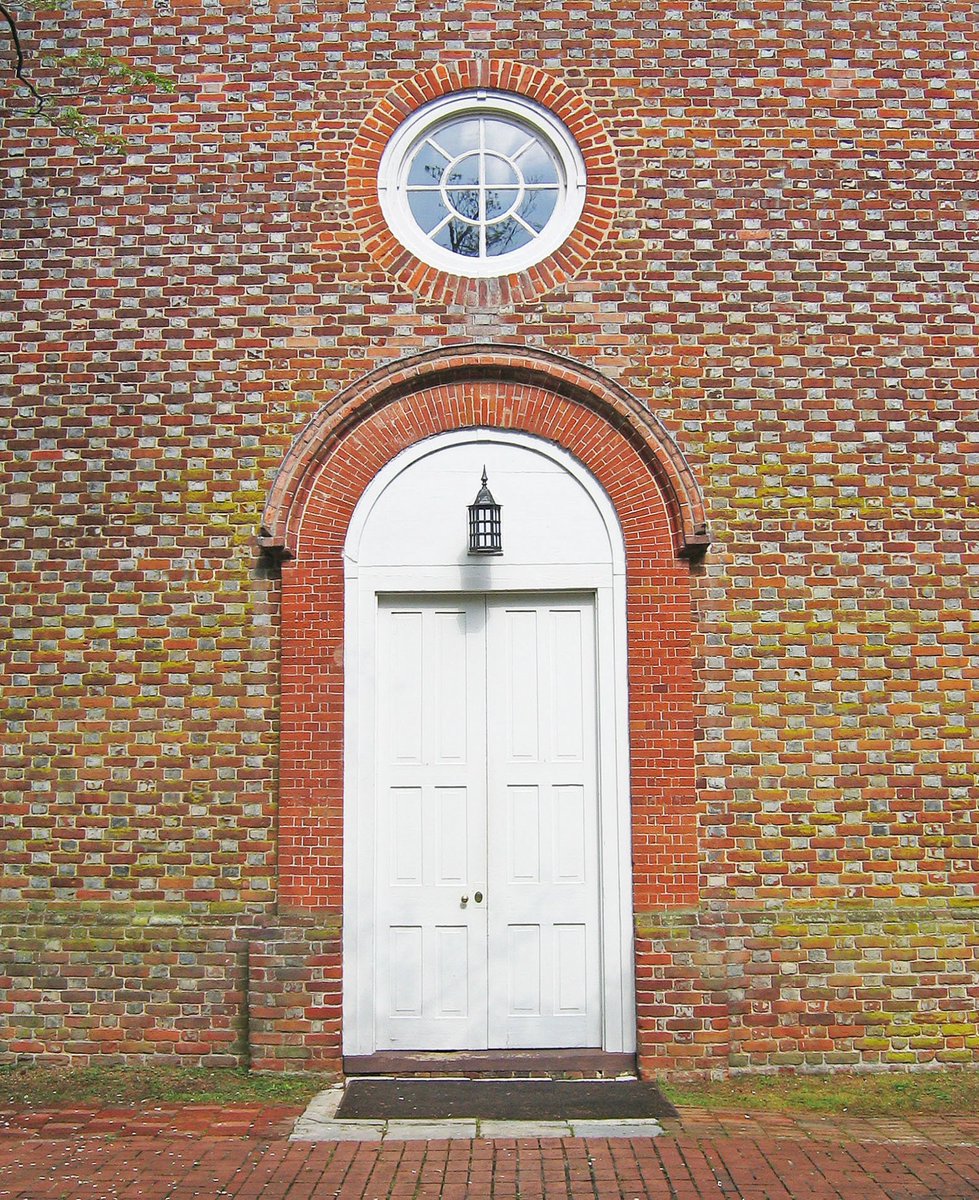
One of the original Anglican parishes established by the 1692 Vestry Act, the present small brick church was built about 1675–90 on land patented in 1671, making it among the earliest surviving Episcopal churches in Maryland. The walls are of early brickwork; the building was remodeled in the Gothic style in 1853 before a meticulous mid-20th-century restoration returned it to colonial form, with diamond-paned windows, box pews, and a high pulpit of heart pine.
Christ Church - Chaptico, St. Mary’s County, Maryland
One of the original 30 Anglican parishes of the Province of Maryland, the present rectangular brick church was built in 1736 under the supervision of vestryman Philip Key great-grandfather of Francis Scott Key. The walls are laid in Flemish bond with glazed headers and retains its original semicircular brick apse, a feature common in colonial Maryland churches. Round-arched windows and doorways and a modillioned cornice complete the exterior.
Vauter’s Church - Loretto, Essex County, Virginia
St. Anne’s Parish was formed in 1704 from Sittingbourne Parish. The present one-story T-shaped brick church was built about 1719–31. The walls are laid in English bond below the water table and Flemish bond with glazed headers above, with rubbed-brick corners, gauged arches, and molded pedimented doorways.
Abandoned after disestablishment, it was remodeled in 1827.
St. Peter’s Church - New Kent County, Virginia
The parish was established in 1679. The present brick church replaced an earlier frame building known as the “Broken Back’d Church” and was completed by 1703 at a cost of 146,000 pounds of tobacco. Walls are laid in English bond; the rectangular body measures roughly 64 by 28 feet. A brick tower with open arches, corner pilasters, and stuccoed urns was added about 1740. The building is one of the few surviving Jacobean-style structures in America.
Martha Washington was a parishioner; tradition holds that she and George Washington were married here in 1759 by the Rev. David Mossom. Union troops used it as a stable during the Civil War. It was partially restored in the 1870s with help from Robert E. Lee and more thoroughly in the mid-20th century.
@mattwilcoxen Name it and Claim it is not Anglican, Anglo-Catholics and Anglo-Lutherans are valid alike. Anglicanism is the faith in Christ given to us through Joseph of Arimathea.
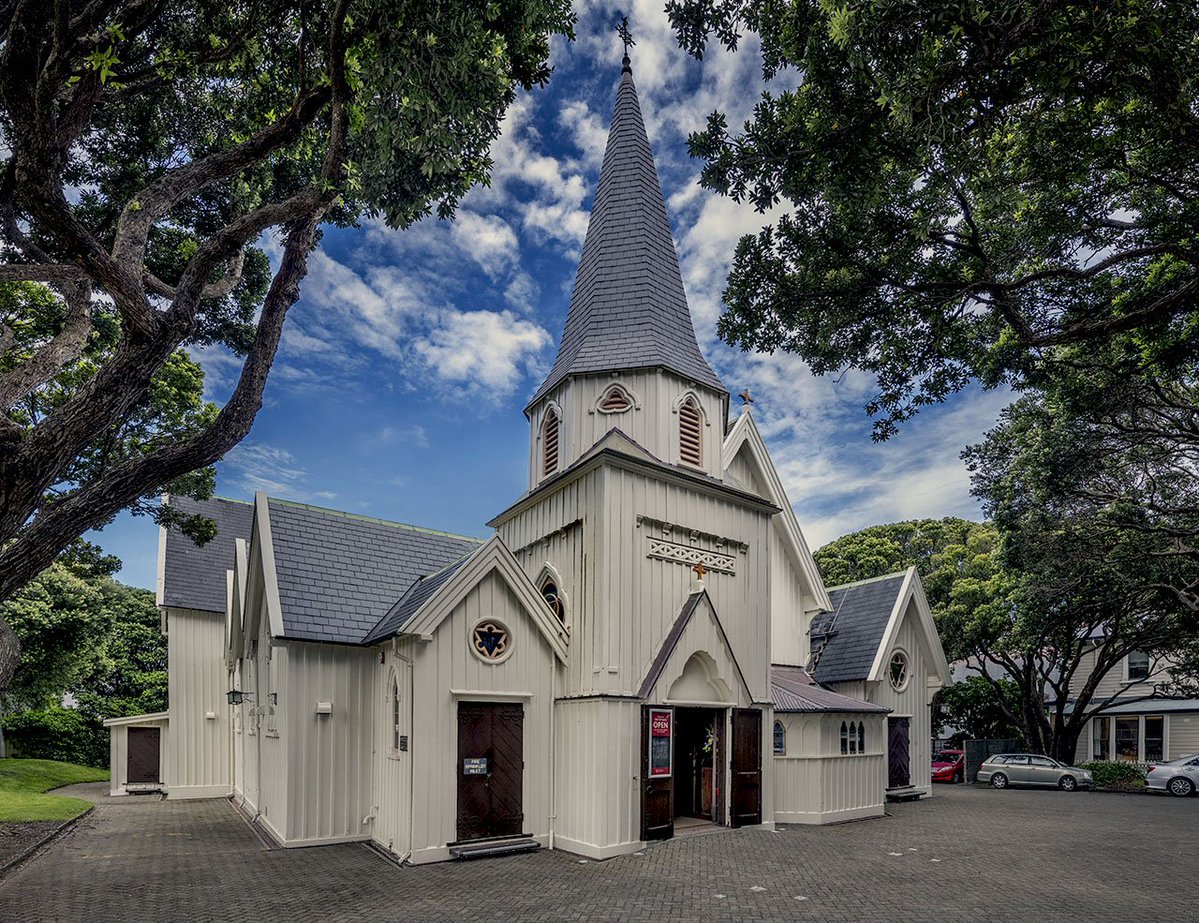
Old St Paul’s - Wellington, New Zealand
Consecrated in 1866, this timber Gothic Revival building served until 1964. Designed under the influence of Bishop George Selwyn and built of native New Zealand timbers (primarily rimu and kauri), it stands near Parliament on the site acquired in the 1840s–50s.
The interior is noted for its exposed curving rimu trusses and kauri roof sarking, often compared to the upturned hull of an Elizabethan galleon. It remains consecrated, hosts occasional services, and is widely regarded as one of the finest examples of timber Gothic Revival architecture in the world. It is a Category 1 historic place.
Ware Church - Gloucester County, Virginia
The parish of Ware was formed about 1652, one of the four original parishes of Gloucester County. The present one-story rectangular brick building was completed around 1719 on land given by Mordecai Cooke. Walls are laid in Flemish bond with glazed headers and feature gauged-brick arches, pedimented doorways, and a circular window over the west entrance. Measuring roughly 80 by 40 feet, it is one of the largest colonial parish churches in Virginia and the only rectangular one to retain its original three entrances.
Abandoned after disestablishment, it was repaired in 1827 and fully restored for Episcopal use in 1854. The exterior brickwork remains exceptionally well preserved.
I dislike the Puritans because of their false religion and the death they caused. They shed blood selfishly in England through their unrighteous and rebellious civil war, and in the Colonies from two ideological wars. America was founded in Virginia, not just Plymouth. The arrogance of "New England" is not just a characteristic but a symptom of the disease of false religion.
My brother in Christ, one of the 39 articles directly addresses this issue the Puritans left America (first to the Netherlands) to persue.
XXXVIII. Of Christian Men’s Goods, which are not common.
The Riches and Goods of Christians are not common, as touching the right, title, and possession of the same; as certain Anabaptists do falsely boast. Notwithstanding, every man ought, of such things as he possesseth, liberally to give alms to the poor, according to his ability.
In practice of Article XXXIV I rebuke his use of the collar and abusing the traditions of Anglicanism. I also rebuke Partridge's rejection of Article XXXVI. Of Consecration of Bishops and Ministers.
The Book of Consecration of Bishops, and Ordering of Priests and Deacons, as set forth by the General Convention of this Church in 1792, doth contain all things necessary to such Consecration and Ordering; neither hath it any thing that, of itself, is superstitious and ungodly. And, therefore, whosoever are consecrated or ordered according to said Form, we decree all such to be rightly, orderly, and lawfully consecrated and ordered.
It is an interesting phenomenon that the expression of faith of Anglicans is high IQ, and out of compassion ask that others strive to be better and adopt this way. Even for those who are physically incapable of high IQ are lifted up, in a kind of warhammer 40K ritualism way.
We can learn a lot from the sheep-like Ogryn mindset
"Love me God, love me Emp'rah, love me church, simple as."
North Farnham Church - Farnham, Richmond County, Virginia
The parish of North Farnham was formed about 1683; the present cruciform brick church was built in 1737 to replace an earlier structure. Walls are laid in English bond below the water table and Flemish bond with glazed headers above, with rubbed-brick corners and door jambs. The Latin-cross plan measures roughly 64 by 58 feet, the arms about 25 feet wide.
Abandoned after disestablishment, it suffered: a War of 1812 skirmish where bullet holes remain visible, use as a stable by Union troops in the Civil War, and a fire that gutted the interior in 1887. Only the original brick walls survive; the building was restored in 1921–24.
St. Mary’s Whitechapel - Lancaster County, Virginia
The parish dates from 1669 and was named for the London suburb from which some early settlers came. The present brick church began as a rectangular building around 1675; north and south transepts were added in 1739–41, creating a cruciform plan. After decades of abandonment following disestablishment, the deteriorated nave and chancel were taken down about 1830 and their bricks used to join the surviving transepts, turning the building 90 degrees into its current rectangular form (the join still visible in the Flemish-bond walls).
Mary Ball Washington, mother of George Washington, worshipped here as a girl. The interior preserves early altar tablets of the Ten Commandments (1702), Creed, and Lord’s Prayer (1718).
Christ Church Cathedral - Stanley, Falkland Islands
The southernmost Anglican cathedral in the world stands as the parish church of the Falkland Islands, South Georgia, and the British Antarctic Territories. It was built on the site of Holy Trinity Church, which was destroyed by a peat slip in 1886. Designed by Sir Arthur Blomfield and raised in local stone and brick between 1890 and 1892, it was consecrated by Bishop Waite Hockin Stirling on 21 February 1892.
The Gothic Revival building has a tower with a ring of five bells and a clock, stained-glass windows, and a two-manual pipe organ built in Ireland. In front of the cathedral stands the whalebone arch, erected in 1933 from the jaws of two blue whales, commemorating the centenary of continuous British administration.
Featuring @CCCFalklands