Someone framed a 200-year-old Roman coin in garnets
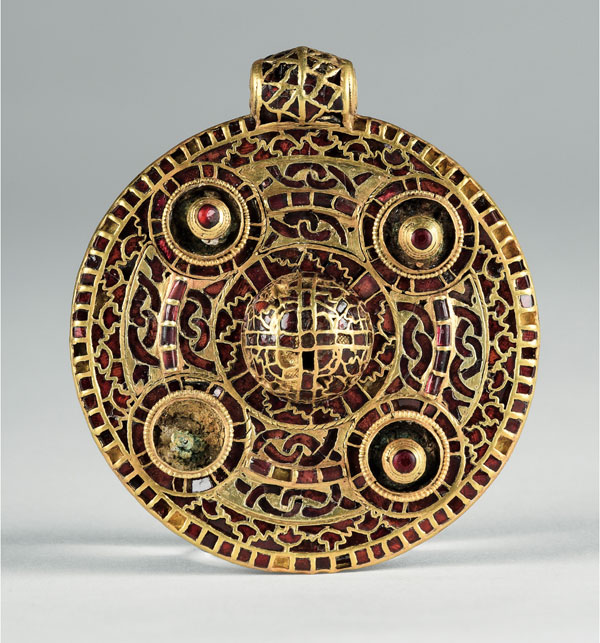
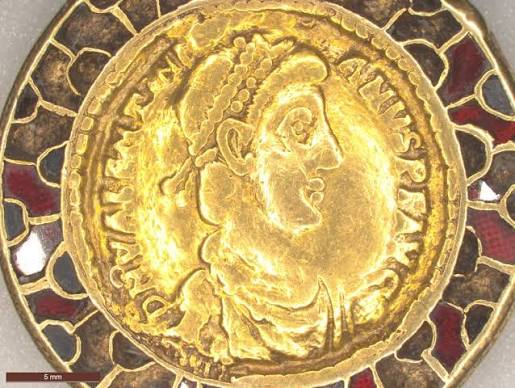
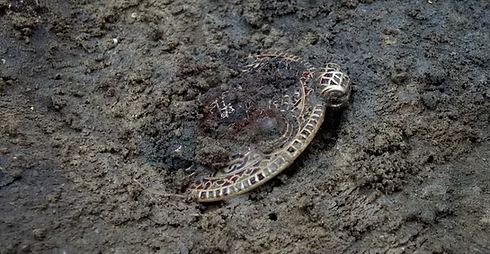
In the seventh century, someone in Anglo-Saxon England turned a much older gold coin into the Forsbrook Pendant, later found near Stoke-on-Trent in Staffordshire.
The coin carries the face of Roman emperor Valentinian II and was struck in AD 375–392. More than two centuries later, it was not simply melted down for its gold.
Instead, a craftsperson set it face-out inside new gold cellwork filled with red garnet and blue glass. Even the suspension loop was decorated. The old emperor had become something to wear.
That choice is the part I keep coming back to. We cannot know what the wearer thought the Roman face meant—or even who wore it—but similar reused coins show that ancient money could acquire a very different value in early medieval England.
Then the trail goes quiet.
In 1879, a labourer levelling a hedge bank at Forsbrook uncovered the pendant. Its exact earlier circumstances are unknown, so calling it grave jewellery would go beyond the evidence.
Escomb’s thick stone walls changed how I pictured Anglo-Saxon life
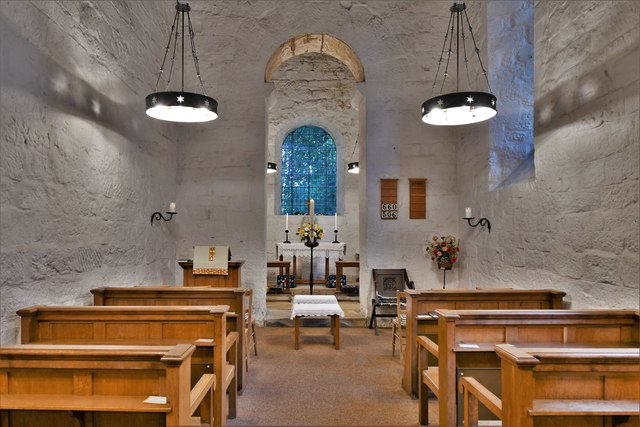
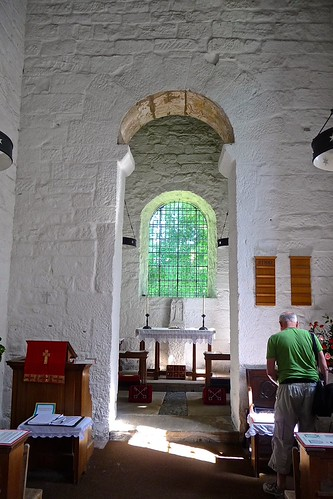
I stepped into Escomb’s Anglo-Saxon church in County Durham expecting something small and delicate. Instead, the nave feels remarkably solid, with rough pale stone rising around a tall, narrow arch into the chancel.
I stopped there rather than walking straight through. The scale suddenly made the building feel less like an illustration in a history book and more like a real room people once had to build, enter and use.
What stayed with me was the masonry itself. Much of Escomb was built using stone reused from the nearby Roman fort at Binchester. Two periods I usually keep neatly separated were sitting together in the same walls.
I found an Anglo-Saxon house that admits it got the past wrong
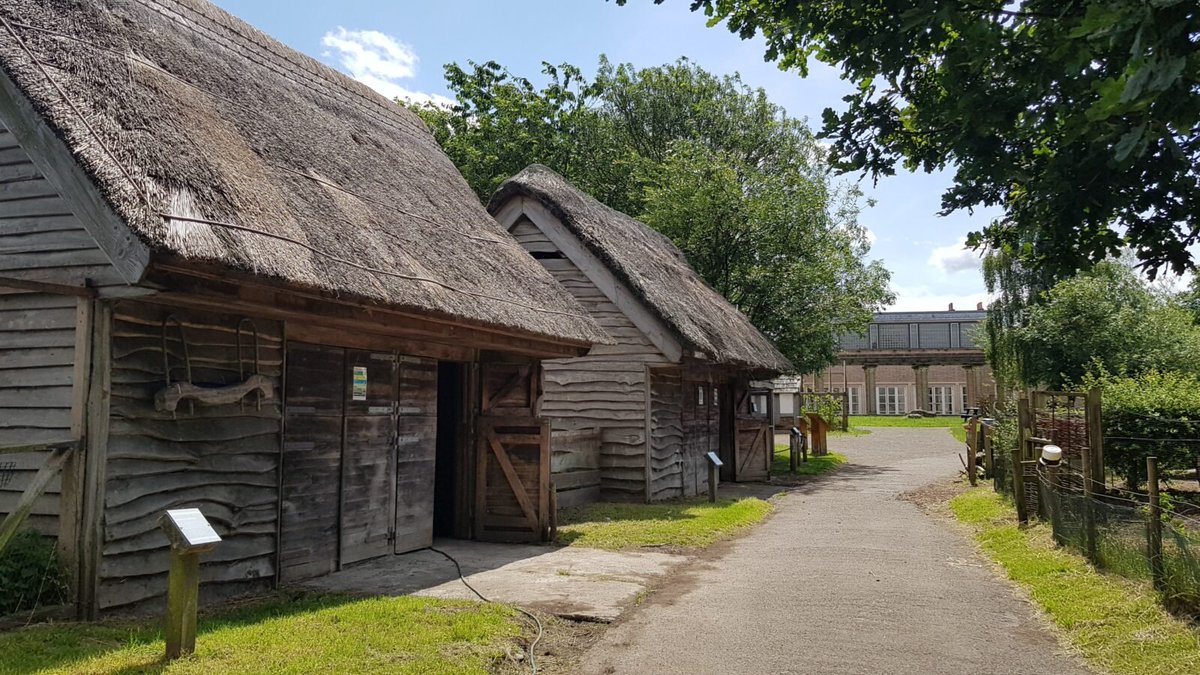
At West Stow Anglo-Saxon Village in Suffolk, I walked past the larger thatched houses, then turned back to the little Sunken House.
It is a reconstruction, not an original building, and that is exactly why it caught me. It was built to show an older idea that Anglo-Saxons lived down in a pit, but the archaeology found at West Stow no longer supports that interpretation.
That small correction changed the whole visit for me. The village stopped feeling like a finished picture of the past and started feeling like archaeology doing what it should—testing an idea, finding problems and changing its mind.
A buried toilet helped locate Harold Godwinson’s Bosham power centre
In 2025, archaeologists argued that a late Anglo-Saxon latrine excavated at Bosham, West Sussex, helped pin down the residence of Harold Godwinson, England’s king during the 1066 Norman Conquest.
The clue had actually been sitting in the excavation record since 2006. Seventeen trenches around Bosham Manor House uncovered a timber building with an attached latrine.
At the time, that detail did not carry quite the same weight. Later research showed that from around the 10th century, integrated toilets were appearing at the chamber ends of unusually high-status English houses. Suddenly the humble cesspit mattered.
Researchers then combined that clue with ground-penetrating radar, standing-building survey and older records. The site formed part of a substantial enclosed complex beside Holy Trinity Church and Bosham’s harbour—the same place where the Bayeux Tapestry shows Harold attending church and feasting before sailing for Normandy.
That makes an elite Godwinson residence the strongest explanation. It also gives an unexpectedly ordinary glimpse of power: lordship was expressed not only through halls, ships and churches, but through private domestic comforts most people did not have.
There is still a useful limit to the claim. The latrine proves an elite pre-Conquest residence far better than it proves Harold personally used that particular toilet, and later medieval buildings on the site should not be mistaken for his hall.
We came for Anglo-Saxon Jarrow and mostly found a tired farm
Jarrow Hall in South Tyneside is meant to bring Bede’s Anglo-Saxon Northumbria to life through a reconstructed village, museum and historic farm.
That was exactly why we went. I wanted timber buildings, everyday objects and some sense of how people here actually lived—not just another room of labels.
The animals were lovely and the volunteers clearly cared, but the reconstructed village itself felt badly in need of attention. We kept waiting for the visit to properly open up into something richer, and it never really did.
Roughly £24 later, we had stretched it to about 90 minutes. I realised the goats had been the most memorable part (which is not what I expected from an Anglo-Saxon museum).
That is especially frustrating because the idea is excellent. Bede lived and worked at the monastery here in Jarrow, and the site has a genuinely important early English story to tell.
I left thinking less “what an extraordinary window into Northumbria” and more “this could be so much better with some proper investment.”
The current annual-pass system at least means one admission can cover return visits, so I genuinely hope the village develops enough to tempt us back.c
I walked into Escomb and found Rome inside a Saxon church
At Escomb Saxon Church, near Bishop Auckland in County Durham, I expected the surviving Anglo-Saxon stonework to be the whole story.
Then I stepped towards the chancel arch and looked properly.
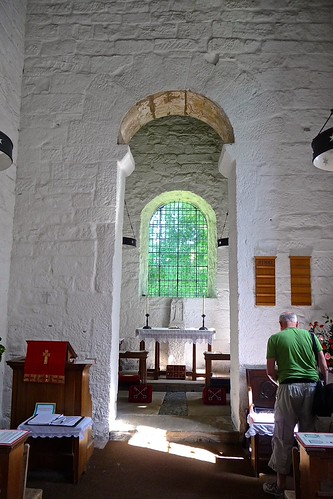
Its heavy, neatly fitted stones are reused Roman masonry, probably brought from nearby Binchester fort. Elsewhere in the church, one Roman stone even carries “LEG VI” for the Sixth Legion.
That small act of reuse changed the place for me. Anglo-Saxon builders were not starting on an empty landscape. They were literally building their church from pieces of an older world.
A road scheme uncovered England’s earliest dated Anglo-Saxon princely burial
In 2003, during the early Anglo-Saxon conversion period, archaeologists checking land for a proposed road-widening scheme at Prittlewell in Southend-on-Sea, Essex, uncovered something they had no reason to expect: an almost undisturbed timber burial chamber dating to about AD 580–605.
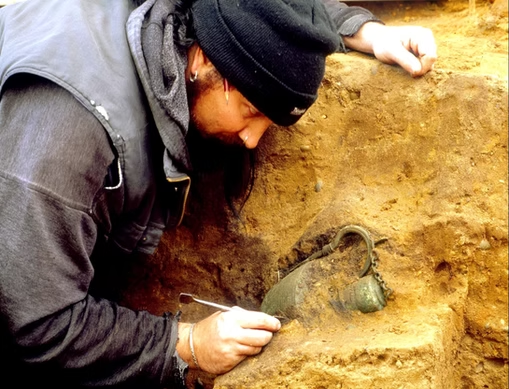
On the first day, a large square pit appeared. Then came the moment that changed the excavation. A copper-alloy bowl emerged still hanging from an iron hook where a wooden chamber wall had once stood.
The wood itself had mostly vanished. Its stains had not.
Those stains allowed archaeologists to trace a room roughly four metres square. A coffin had stood inside it, surrounded by a sword, shield, drinking vessels, gaming pieces, a folding stool and objects that had travelled extraordinary distances. Some came from the eastern Mediterranean. Garnets used on one object probably originated in India or Sri Lanka. v
Yet the person at the centre of all this wealth had almost disappeared. Acidic soil destroyed nearly the entire skeleton, leaving only tiny fragments of tooth enamel. Weapons and dress fittings suggest the burial was probably male, but even that conclusion rests on objects rather than surviving bones. His name is unknown.
Then two scraps of gold complicated the story further.
Near the head of the coffin lay two thin gold crosses, probably placed over the dead person's eyes. They point towards Christianity, while the lavish furnished burial belonged to older funerary traditions. The burial's date overlaps the years around Augustine's Roman mission of AD 597, showing that Christian ideas were already moving through elite networks in ways a simple conversion timeline cannot capture.
One of the quietest finds may be the most human.
A wooden lyre had decayed almost completely into a dark shape in the soil. Archaeologists lifted the entire block and scanned it. The outline revealed a maple instrument with ash tuning pegs and garnet fittings.
More importantly, it had broken during its working life.
Someone had carefully repaired it with iron, gilded copper alloy and silver, then kept using it before it finally went into the grave.
Æthelstan raised the execution age after calling his own law cruel
“Too cruel.” Around 930-939, in late Anglo-Saxon England, King Æthelstan told his council at Whittlebury, now in Northamptonshire, that people were being killed too young and for thefts worth too little.
His earlier law had allowed a thief caught red-handed to be killed if they were over twelve and the stolen goods were worth more than eight pennies. Æthelstan now raised those thresholds: under fifteen should normally be spared, and execution should not follow theft of property worth less than twelve pennies.
That sounds like a simple act of mercy until the rest of the decision appears.
A young thief who fought or tried to escape could still be killed. Someone who surrendered might be imprisoned and redeemed by relatives. If the family would not provide the required guarantee or payment, the alternative could be slavery. A later theft could still end at the gallows.
What catches me is that this was not a modern objection imposed on a harsh medieval rule. The surviving wording says Æthelstan himself had learned what was happening and reconsidered it with those he consulted.
He ended by saying he hoped the revised rules would make “our peace” better. Whether they were enforced consistently is something the text cannot tell us. What it does preserve is unusually human: a ruler discovering the consequences of his own policy, changing it, yet leaving a system that could still cost a child freedom or life.
This tiny Escomb window made the whole church feel different
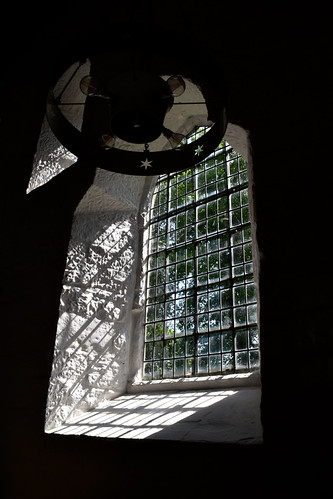
I nearly walked straight past the window at Escomb Saxon Church in County Durham, near Bishop Auckland.
Then I stopped and looked at how deeply it sits in the wall. The stone is roughly 70cm thick, turning an ordinary window into a little tunnel of light.
That did more for me than any grand description could. This is one of England’s remarkably complete surviving Anglo-Saxon churches, yet it was the practical scale of that wall that suddenly made the building feel less like “history” and more like something people actually had to construct and use.
I stayed by the window rather longer than planned.
An eight-year-old made me see this Anglo-Saxon village differently
I’ve just taken my young nephew to West Stow, near Bury St Edmunds in Suffolk, where reconstructed buildings stand on the site of a real Anglo-Saxon settlement occupied roughly 1,400-1,600 years ago.
I thought I would be the one slowing everyone down with questions. I was wrong.
Inside the reconstructed village, he wanted to know what everything did. How did people make things? Where did they sleep? Why were the buildings shaped like this?
And suddenly the clever part of West Stow clicked for me too.
These are not surviving Anglo-Saxon houses pretending to be untouched originals. They are experimental reconstructions informed by the archaeology excavated here. Building, using and watching them age has helped researchers test ideas about how early English buildings might actually have worked.
That distinction somehow made them more interesting, not less.
A loom, a hearth or an ordinary wooden doorway began doing more for us than a list of kings ever could. You start thinking about the people who had to weave clothes, keep warm, repair things and get through an ordinary wet week in Suffolk.
My nephew kept firing off questions and getting proper answers. By the end, he was completely absorbed.
I went expecting to explain Anglo-Saxon England to a child. Instead, his curiosity reminded me why I enjoy this period so much in the first place.
West Stow is a wonderful place to let the small questions take over. I’d happily lose an afternoon there again.
This detectorist found a bowl-and uncovered a woman buried in gold
In 2014, metal detectorist Tom Lucking found a bronze bowl in a field at Winfarthing, near Diss in Norfolk. Realising it might belong to a grave, he did something crucial: he covered it back up and called archaeologists instead of digging further.
The grave they uncovered belonged to seventh-century Anglo-Saxon England, during a period when Christianity was spreading through East Anglia but older burial customs had not simply vanished overnight.
Inside lay the partial remains of a woman, probabyl over 40 and perhaps over 50. Around her was jewellery extraordinary enough to suggest very high status: gold beads, two Frankish coins turned into pendants, a small cross-decorated pendant and a great circular gold ornament covered with more than 400 tiny garnets.
Some of those stones probably travelled from Asia before reaching the hands of the goldsmith who fitted them into tiny cells of gold. The coins had been made across the Channel during the reign of the Frankish king Sigebert III.
So an apparently quiet Norfolk field had produced a woman connected to a much wider world.
The cross matters too. It points towards Christianity, but she was still buried with jewellery, a knife, a pottery vessel and other possessions. Conversion was not a switch that everybody flicked in exactly the same way.
Then the bronze bowl that began the whole discovery yielded another clue.
Analysis found traces of plants including foxglove, horsetail, bracken and birch bark. Several have long associations with healing, although that cannot prove she herself was a healer. Their flowering seasons also suggest the burial took place in early summer.
Even stranger was the location. No important Anglo-Saxon settlement was known at Winfarthing when the grave appeared.
Later investigation found other graves nearby. What had looked like one isolated rich burial was part of a cemetery, in a landscape shaped like a natural amphitheatre around springs. Researchers have even identified evidence suggesting earlier Roman ritual activity nearby.
Testing of the woman’s remains has since suggested she may have spent her childhood in continental Europe, possibly around the Rhineland. That remains an interpretation rather than a name or biography.
We still do not know who she was.
But one careful decision in a muddy field preserved something better than a guess: a grave showing a wealthy woman carrying Christianity, continental connections and older burial traditions with her into the ground.
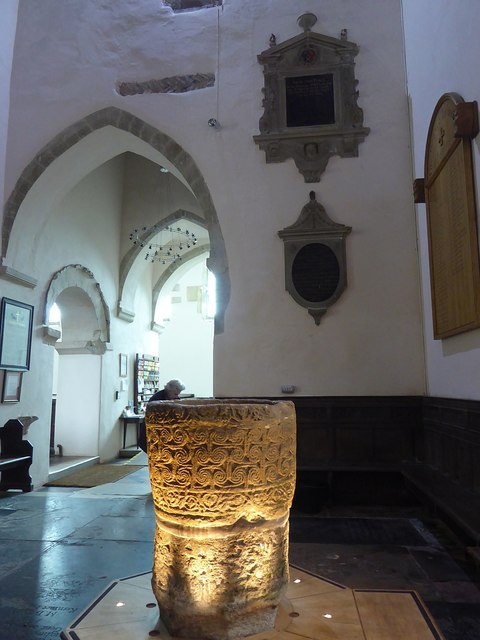
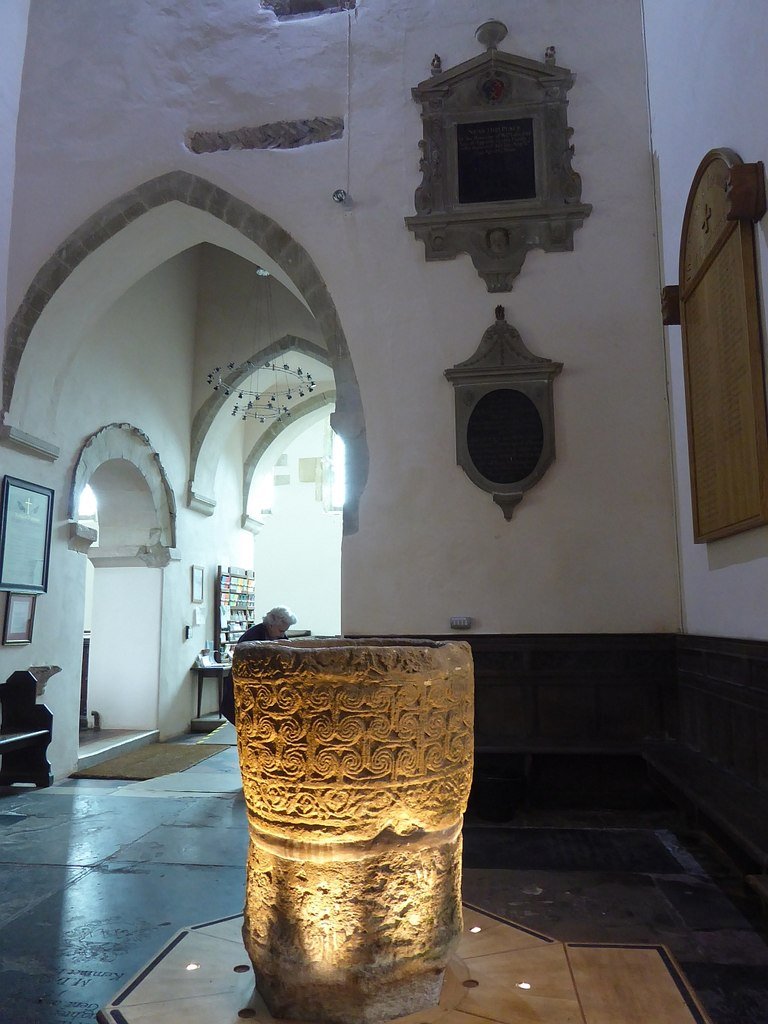
I nearly walked past Deerhurst’s farmyard-surviving Anglo-Saxon font
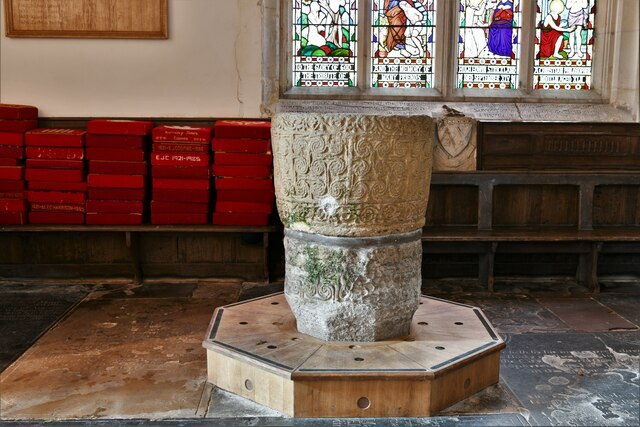
I’ve just stepped inside St Mary’s at Deerhurst, Gloucestershire, expecting the old stone church itself to hold my attention. Then I stopped at the font.
Its bowl is covered in tight spirals and plant-like bands, the sort of small carved detail that makes me forget to keep walking. Scholars even disagree over whether the bowl was originally made as a baptismal font.
What really stayed with me is its later life: the bowl was thrown out of the church and ended up in a farmyard before eventually returning.
I came for Anglo-Saxon architecture. I left thinking about one battered piece of stone that somehow made its way home.
We drove 200 miles to Lindisfarne-and missed the priory by two minutes
Lindisfarne Priory on Holy Island, Northumberland, stands where Irish monks founded one of Anglo-Saxon England’s most important Christian centres in AD 635. The ruins visitors see today are mainly from the later 12th-century priory.
We’d crossed with the tide and had only 1¾ hours on the island. We went through the ticket area at about 3.45, believing we still had time before the 4.30 closing, and stopped at the neighbouring church first.
We reached the priory gate at roughly 4.02.
Last admission was 4pm.
Two minutes.
After driving more than 200 miles, we asked whether we could have five minutes inside. We were refused. The way the exchange was handled left the whole visit feeling sour,although the reviewer later acknowledged that the varying closing arrangements were stated online.
The frustrating bit is that this is exactly the place I wanted to linger. The first monastery here belonged to the world of Aidan, Cuthbert and the Lindisfarne Gospels; what survives above ground is later, but the island’s Anglo-Saxon story is extraordinary.
Instead, we ended up looking down on the priory from the hill behind it.
A remarkable place. A thoroughly miserable way to miss it.
If I went again, I’d make the priory the first stop after crossing the causeway. Hope your own history days out end rather better.
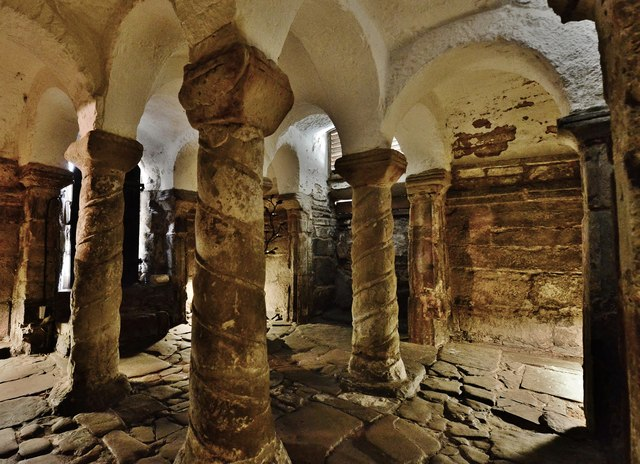
I went downstairs and found Mercia beneath an ordinary church
I’ve just stepped beneath St Wystan’s Church in Repton, Derbyshire, into an Anglo-Saxon crypt surviving from one of Mercia’s great religious centres.
I expected the royal connection to be what stayed with me. Instead, it was the four stone columns. Their spiral carving makes this tiny underground room feel almost handmade rather than monumental.
The crypt is thought to have begun as a baptistery before becoming a royal mausoleum, though its history changed over time.
Standing between those worn columns, I stopped thinking about kingdoms for a moment. What caught me was the mason’s work: someone cutting those spirals carefully enough that we can still follow them with our eyes.
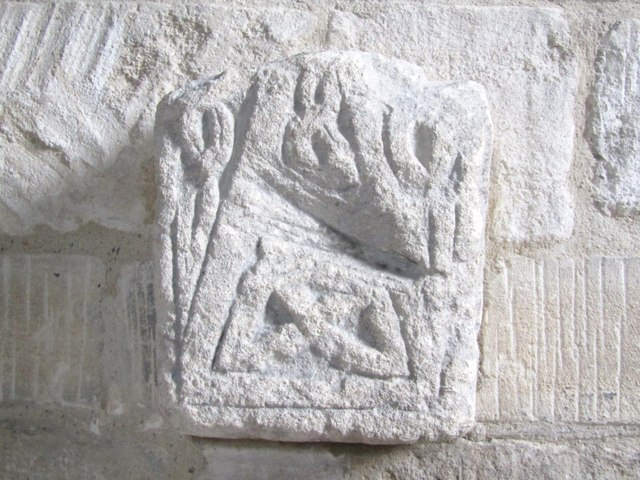
I Nearly Missed St Laurence’s Tiny Saxon Cross
I’ve just stepped into St Laurence in Bradford-on-Avon, Wiltshire, one of England’s rare surviving Anglo-Saxon churches.
I came expecting the tall, narrow building to do all the work. Instead, I stopped at a small carved cross fragment set into the stonework. It is easy to walk past, which somehow made it more affecting.
The church’s surviving fabric is Anglo-Saxon, while its precise origins have been debated. That little worn carving brought the place down to human scale for me: not simply “Saxon architecture”, but somebody shaping stone carefully enough for the marks to survive.
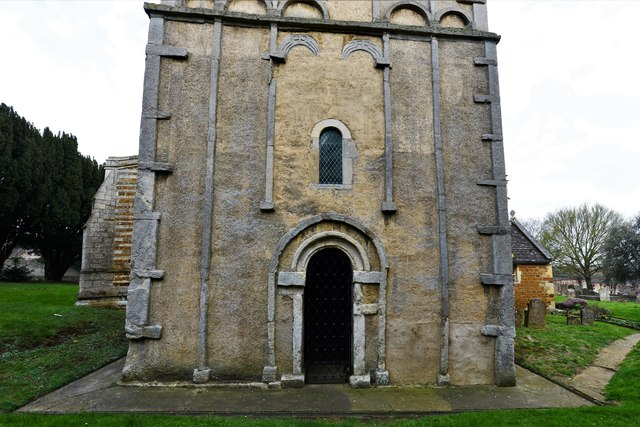
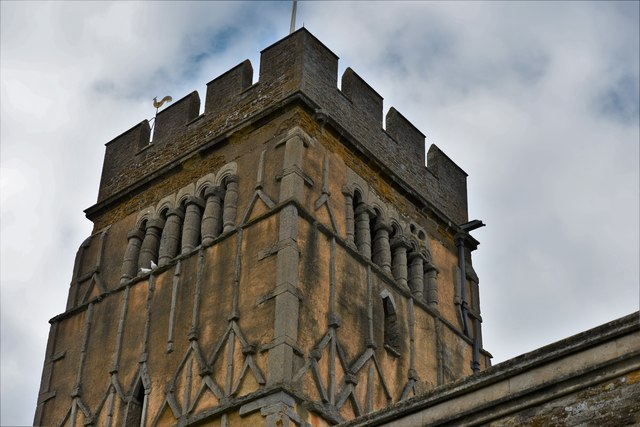
I nearly missed the pattern on this Anglo-Saxon tower
I’ve just walked around All Saints’ at Earls Barton, North Northamptonshire, expecting the Anglo-Saxon part to be the plainest bit. Then I turned back and looked up.
The west tower is the opposite: narrow stone strips climb its faces, cross into diamond patterns and frame little arches. The tower is Anglo-Saxon, while much of the church around it is later.
That distinction made the moment for me. I came looking for age and found deliberate decoration instead. Somehow the period felt less distant once I stopped treating the stone as just old masonry.
In 1939, during the early medieval period, Basil Brown uncovered the Sutton Hoo ship burial in Suffolk with Byzantine silver and Sri Lankan garnets. So much for an isolated “Dark Age”. Retire that myth?
This Anglo-Saxon font once became a farm trough
I ducked into St Mary’s at Deerhurst, Gloucestershire, expecting the building itself to hold my attention. Instead I stopped in the north-west corner.
There sits an Anglo-Saxon baptismal font, carved from one block of limestone with looping spiral decoration. At some point it left the church and ended up being used on a local farm before being brought back and reunited with its base.
That changed the whole visit for me. Early England suddenly felt less like a neat museum timeline and more like an object passing through ordinary hands, nearly losing its meaning, then finding its way home.
This man survived 1066—his grave refuses a simple side
Around 1079, after the Norman Conquest, an older man was buried at St Peter’s Church in Barton-upon-Humber, North Lincolnshire, with Scandinavian-style grave goods inside a church entering a Norman world.
The face here is a digital reconstruction from his skull—not a surviving portrait. His bones put him at about 50–60, stocky and muscular, with several fractures that had healed during his lifetime.
Then his teeth and DNA complicate the story further. DNA points to substantial continental European ancestry. Strontium in his teeth fits the Barton area, while oxygen values could indicate time in a colder climate when he was young. None gives him a neat label.
What stays with me is the burial itself. His head rested on a grass pillow, steadied with pieces of local chalk. Three apple-wood staffs were laid beside him, a practice associated with Scandinavian tradition. The oak for his coffin was felled around 1079.
We cannot know whether he thought of himself as Saxon, Scandinavian, Norman—or in terms that fit none of those boxes. What survives is a man whose body, movements and burial crossed the categories we find convenient a thousand years later.
I paid £24 for an Anglo-Saxon village that felt half-finished
Jarrow Hall in South Tyneside is meant to bring Bede’s Anglo-Saxon Northumbria to life through a reconstructed village, farm and museum. The village buildings are reconstructions based on archaeological sites in Northumbria.
I just took Will expecting the village to be the bit that made the period click. Instead, the animals were lovely and the volunteers enthusiastic, but the reconstruction itself looked tired and badly in need of attention.
By the time we had spent £24, we were done in roughly 90 minutes. That was the frustrating part: I wanted to leave thinking about how people cooked, worked and survived here thirteen centuries ago. Mostly I left thinking how much potential the place still has.
Jarrow Hall itself acknowledges that donations help with repairs to the Anglo-Saxon village, and admission currently gives visitors twelve months of return visits.
I hope they get the investment it needs, because Bede’s world deserves more than a visit where the goats are the memorable bit.