Angular Finance is a cross-chain money market powered by @Picasso_Network that allows DeFi developers and end-users to create isolated lending pairs consisting of any assets, similar to how anyone can create an AMM pair across different chains.
https://t.co/R2tregHuI1
Permissioned assets:
- Can only be accessed and traded by approved parties
- Often more centralized (controlled by a specific group or entity)
- May not have the same level of transparency (access to information may be restricted)
Gm anon, what do you choose❔ Permissionless or Permissioned❔🤔
Permissionless assets:
- Can be accessed and traded by anyone
- Decentralized (not controlled by a single entity)
- Often highly transparent (e.g. all transactions recorded on a public ledger)
Gm, it's a good day to build on @Picasso_Network. 🎨
With the power of XCVM and Centauri, our mission to allow users to access novel assets across various DeFi ecosystems is turning into a reality. Days of limited DeFi markets are gone. ⌛️
It's time to make history! We're excited to announce the first round of participants for Centauri's testnet – #IBC powered communication is taking off beyond the @cosmos ecosystem 💫
Read more 👉https://t.co/03qDXobmU3
Picasso Release 2 👀, Angular is being positioned to allow users to lend and borrow assets from multiple DeFi ecosystems: @Polkadot, @kusamanetwork, @Cosmos and @NEARProtocol 🌉
Follow us to keep up with the first cross-chain money market to connect these burgeoning ecosystems.
Angular is the permissionless, non-custodial, lending protocol and cross-chain money market for @Picasso_Network and all the connected DeFi ecosystems. 💫
This opens the door for unique pairings and the opportunity for DeFi users to better leverage their specialized tokens, such as receipt tokens, tokens of up-and-coming protocols, and more.
What is the significance of Angular being developed as a pallet? As a cross-chain money market, Angular will support specific token pairings in isolated pools, which allow users to deposit select tokens as a lender and receive select tokens as a borrower.
By creating a malleable isolated lending pool pallet such as Angular opens the floodgate for developers to add newer token pairs in highly innovative ecosystems like Substrate i.e @Polkadot & @kusamanetwork and even @cosmosibc enabled chains.
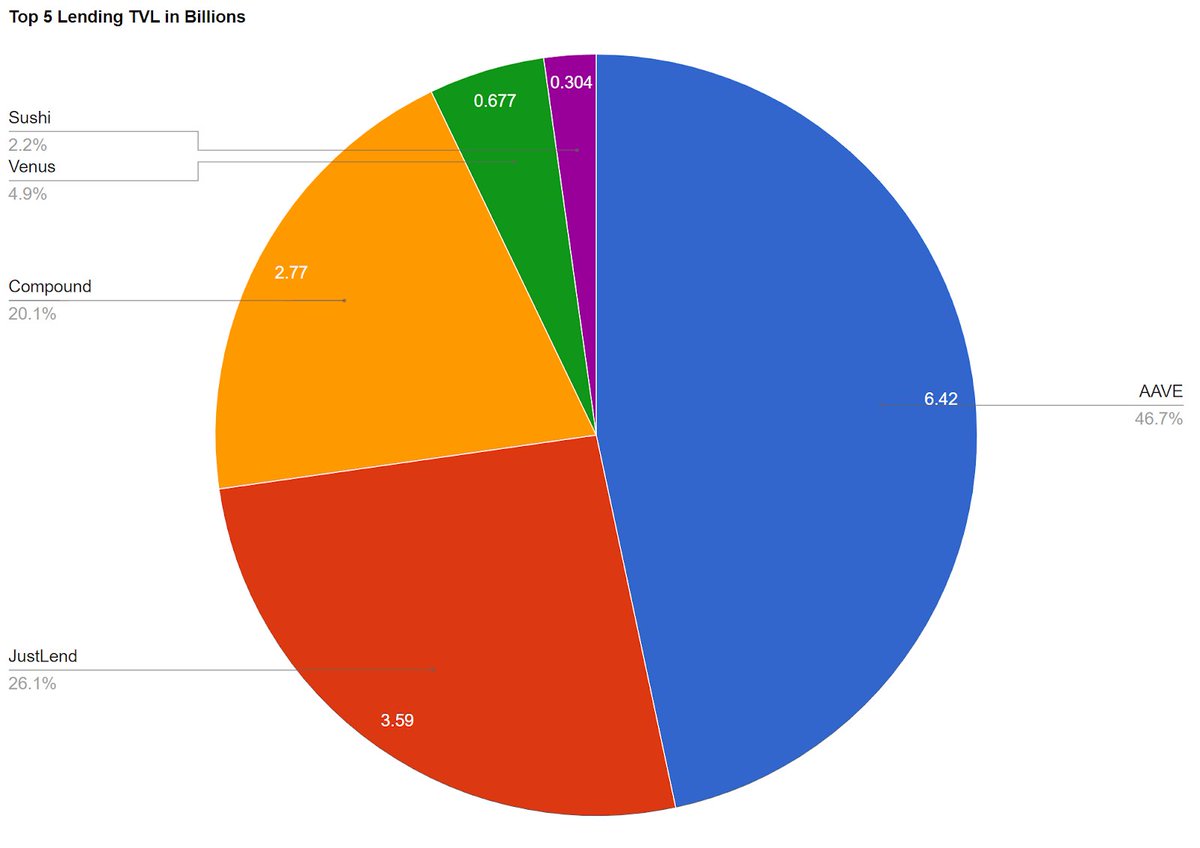
With nearly $14B in TVL across the top 5 DeFi lending platforms alone, the need for a cross-chain money market has become clear. This is our goal at Angular Finance. A short thread 🧵
The advantage here being that a user can better manage their risk across multiple ecosystems. For example if you were to evaluate these 2 pairs the $KSM / $USDC pool is lower risk, while the $KSM / $ATOM pool may offer greater APY.
1/ XCVM aims to refresh the notion of truly decentralized apps through harnessing the power of cross-chain interoperability. We’ve spoken a lot about HOW we will achieve this, but not a lot about WHAT this looks like. Here, I outline some use cases: https://t.co/PiXguDj451
Built as a Substrate-native cross-chain money market, Angular enables fundamental lending and borrowing functionality across any asset pair. We do this through the permissionless creation of isolated lending pairs that remove the threat of systemic risk to the platform.
This capacity for lending niche pairs, secured against risk, means Angular can be instrumented by the XCVM to create numerous new applications. Some examples are when a developer writes cross-chain smart contracts for derivatives, options, leveraged trading, and more.