A new bill seeks to ensure that data centers in the United States pay the full cost of the electricity they consume.
The House Energy and Commerce Committee unanimously advanced the bipartisan Ratepayer Protection Act. The legislation would create federal guidance for state regulators when they evaluate extremely large new electricity customers. It would apply to facilities that require at least 100 megawatts of power, a threshold that covers many large artificial-intelligence data centers.
Under the proposal, data-center operators could be required to offer financial guarantees that cover the cost of new power generation, transmission lines, and related infrastructure needed to serve them. They could also be subject to special electricity rates designed to protect existing customers from bearing the expense of grid upgrades if a data center later scales back operations or abandons a project.
The rapid growth of artificial intelligence has produced unprecedented demand for electricity. Data centers also use substantial volumes of water to cool their servers, raising concerns about higher utility bills, water shortages, noise, and pollution in surrounding communities.
Supporters of the bill argue that the United States must expand its energy infrastructure to stay competitive in artificial intelligence, yet ordinary households should not be forced to subsidize the expansion of some of the world’s wealthiest technology companies. Industry representatives counter that data-center operators are already investing hundreds of billions of dollars in the United States and remain committed to covering the full cost of the energy they consume.
Some environmental organizations oppose the legislation, contending that it does not adequately address water use, fossil-fuel pollution, or rising electricity rates. The bill arrives amid mounting local resistance to data-center construction across the country.
A Gallup poll found that 71 percent of Americans would oppose the construction of a data center in their community, while only 27 percent would support one. More than 525,000 people have reportedly joined local opposition groups in at least 40 states. More than 3,000 data centers already operate in the United States, and over 1,500 additional facilities are in various stages of planning or construction.
A Pennsylvania farmer has rejected a $15 million offer from data center developers, choosing instead to permanently protect his family's land.
Mervin Raudabaugh has lived and worked his farmland in Silver Spring Township, Cumberland County, Pennsylvania, for more than 51 years. He milked cows there for decades, and the property holds deep personal meaning—his mother passed away in his arms inside the family barn.
To developers eyeing the land for a high-tech data center, it represented prime real estate near major infrastructure corridors. To Raudabaugh, every acre is an irreplaceable piece of family history.
Last month, he made a decision that surprised the local market: rather than accept the $15 million+ offer, he sold the development rights to his 261-acre property for about $2 million through a conservation easement held by the Lancaster Farmland Trust (with funding and support from Silver Spring Township's preservation program).
This legal agreement permanently restricts the land to agricultural use only—no data centers, no industrial development. The easement binds future owners as well, ensuring the farmland remains green forever.
The developers' pressure was intense; township officials reported aggressive approaches that led Raudabaugh's attorney to consider seeking a court injunction against harassment.
Silver Spring Township has long prioritized preservation. Since a 2013 voter-approved referendum dedicating a portion of earned income tax to farmland, open space, and forest protection (costing the average household roughly $120 per year), the community has preserved 21 properties totaling hundreds of acres.
Raudabaugh can still sell the land someday, but only as farmland—likely fetching far less than the data center deal would have paid. In total, his compensation will be a fraction of the $15 million on the table.
In an era when farmland is increasingly swallowed by digital infrastructure to power AI and cloud computing, his choice stands out as a deliberate stand for heritage, legacy, and community over maximum profit.
For Raudabaugh, the quiet certainty that his family barn and fields will endure outweighs any fortune a tech giant could provide—a powerful reminder that some values transcend dollars.
["Man turns down $15M to prevent farmland from becoming data center." WFLA, 2026]
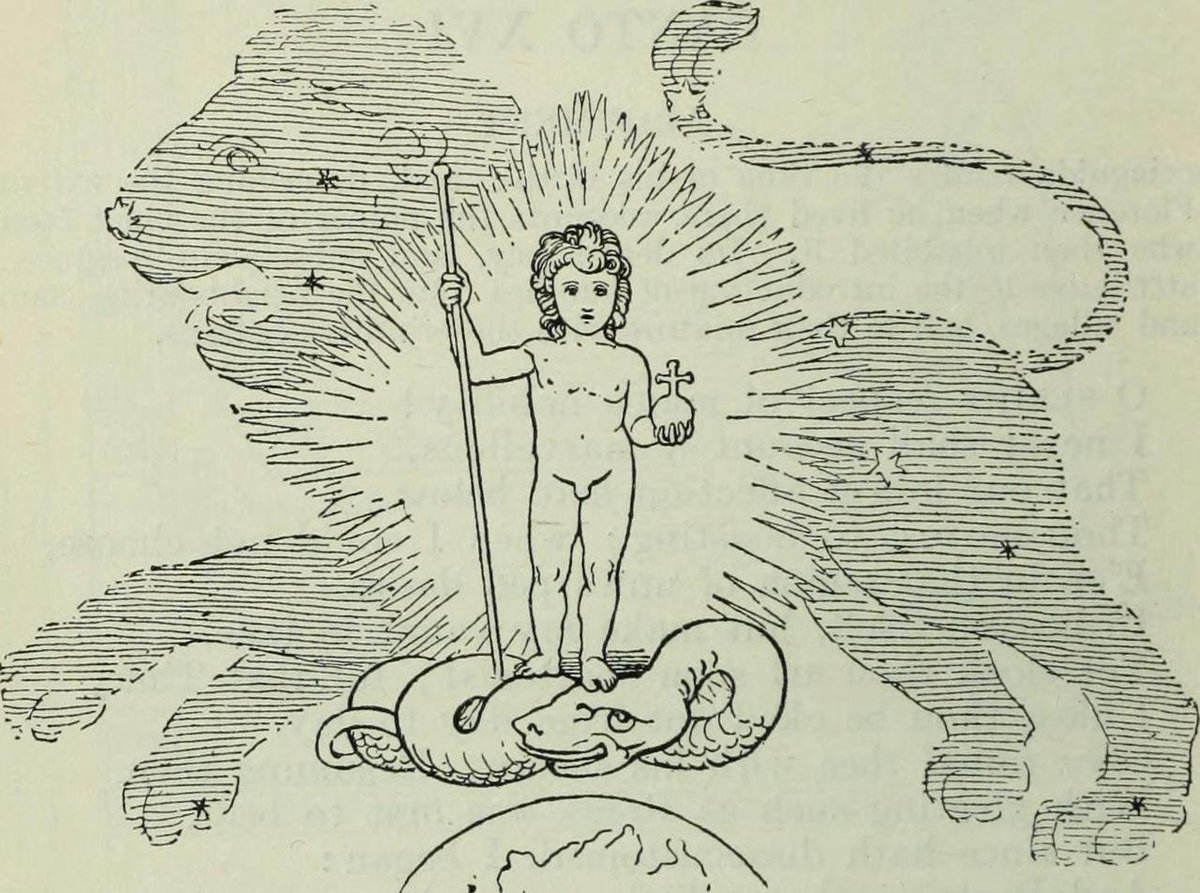
This image is an engraving from a series of illustrations created for Dante’s Divine Comedy. The scene originates from the Heaven section of the work, that is, the Paradiso. In the composition, also known as The Infant Saviour, the child figure in the center is the Infant Jesus. The starry lion behind him represents Leo, the constellation of the Lion.
The illustration is among the Dante designs prepared by the English sculptor and designer John Flaxman between 1792 and 1793. Tommaso Piroli translated these designs into engravings.
Dante’s journey in the Divine Comedy progresses through Hell, Purgatory, and Heaven. This illustration visualizes a celestial and symbolic passage from Paradiso XVI.
In this canto, Dante is in the Heaven of Mars and converses with his ancestor, Cacciaguida. Cacciaguida speaks to Dante of his own family, early Florence, and the time of his birth.
Cacciaguida does not specify the time of his birth using a direct calendar year. Instead, he conveys the time elapsed from the Annunciation to his own birth through a celestial measurement: he states that Mars had returned to Leo, the constellation of the Lion, five hundred and eighty times.
The Skeleton Panda Sea Squirt (Clavelina Ossipandae) is a translucent reef-dwelling creature whose rib-like structures and panda-like markings give it a spooky, animated look. Found in Southeast Asia, it harmlessly filters seawater and helps keep coral ecosystems healthy.
What does the inside of a Pokéball look like? Designer Carlos 3D built a real-life Pokéball based on a concept art drawing - making it big enough to fit a person! It became a cozy gaming room with no phones or internet, just him, his old TV, and his Pokémon games. 🔴
Read the full article to learn how you can prototype and print your own large-scale projects! 🧡 https://t.co/9HDBKW7Cul
Look up on May 31, 2026. The sky's about to put on a show.
A Full Blue Moon is taking over the night, and it's the kind of celestial moment that doesn't roll around often.
Here's the twist most people miss: the Moon won't actually be blue.
The name comes from the calendar, not the color. A Blue Moon is the second full Moon to land inside a single calendar month, and that only happens every few years.
May already had its full Flower Moon on the 1st. Now a second one is sneaking in before the month closes out.
Peak illumination hits at 8:45 UTC on May 31, which is 9:45 AM in the UK and 4:45 AM Eastern Time. But the Moon will look full from May 30 through June 1, so you've got a window.
Here's the bonus detail nobody's talking about: this is also a micromoon. It's the smallest, most distant full Moon of the entire year, sitting around 252,360 miles away from Earth.
A rare Blue Moon and the year's tiniest full Moon, stacked into one night.
No telescope. No special gear. Just step outside after sunset, look east, and let the sky do the rest.
Because the next time the calendar pulls this trick, you'll wish you had looked up.
Source: EarthSky, The Old Farmer's Almanac, Star Walk
When a nuclear reactor powers on for the first time, the core fills with a deep blue glow that feels almost unreal as it rises through the water in a quiet surge of energy.
The light is Cherenkov radiation, created when charged particles move through the water faster than light can travel in that medium, a discovery made in the 1930s that revealed a new way to see high energy reactions.
Every appearance of this glow is a reminder of how powerful atomic reactions can be, showing a rare moment where raw physics becomes something visible and strangely beautiful.
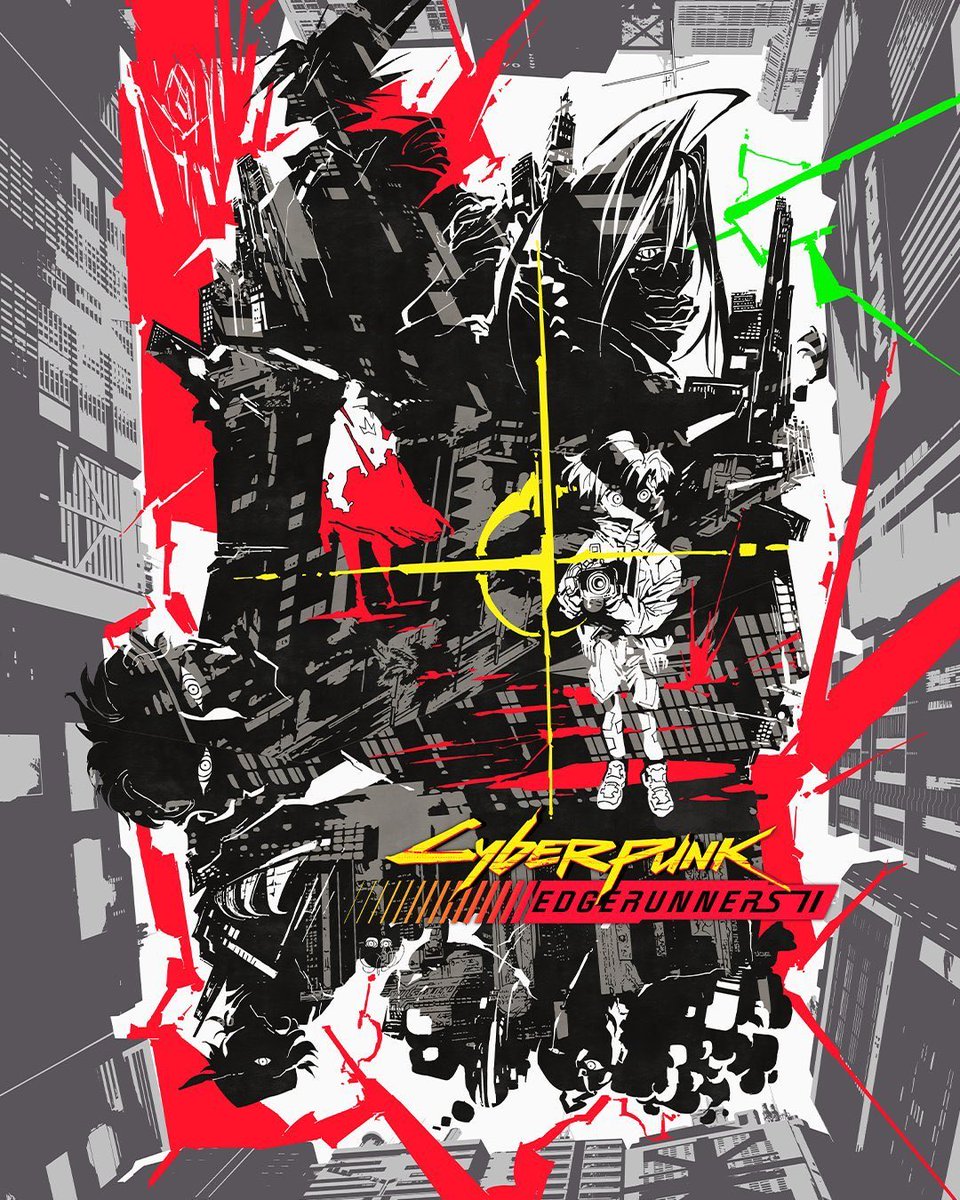
So excited for Cyberpunk Edgerunners 2 and to finally return to Night City. Can't wait to hear the iconic sounds, see 1:1 locations, see cameos and experience a new story that is going to make me cry 😍





![Rainmaker1973's tweet photo. A Pennsylvania farmer has rejected a $15 million offer from data center developers, choosing instead to permanently protect his family's land.
Mervin Raudabaugh has lived and worked his farmland in Silver Spring Township, Cumberland County, Pennsylvania, for more than 51 years. He milked cows there for decades, and the property holds deep personal meaning—his mother passed away in his arms inside the family barn.
To developers eyeing the land for a high-tech data center, it represented prime real estate near major infrastructure corridors. To Raudabaugh, every acre is an irreplaceable piece of family history.
Last month, he made a decision that surprised the local market: rather than accept the $15 million+ offer, he sold the development rights to his 261-acre property for about $2 million through a conservation easement held by the Lancaster Farmland Trust (with funding and support from Silver Spring Township's preservation program).
This legal agreement permanently restricts the land to agricultural use only—no data centers, no industrial development. The easement binds future owners as well, ensuring the farmland remains green forever.
The developers' pressure was intense; township officials reported aggressive approaches that led Raudabaugh's attorney to consider seeking a court injunction against harassment.
Silver Spring Township has long prioritized preservation. Since a 2013 voter-approved referendum dedicating a portion of earned income tax to farmland, open space, and forest protection (costing the average household roughly $120 per year), the community has preserved 21 properties totaling hundreds of acres.
Raudabaugh can still sell the land someday, but only as farmland—likely fetching far less than the data center deal would have paid. In total, his compensation will be a fraction of the $15 million on the table.
In an era when farmland is increasingly swallowed by digital infrastructure to power AI and cloud computing, his choice stands out as a deliberate stand for heritage, legacy, and community over maximum profit.
For Raudabaugh, the quiet certainty that his family barn and fields will endure outweighs any fortune a tech giant could provide—a powerful reminder that some values transcend dollars.
["Man turns down $15M to prevent farmland from becoming data center." WFLA, 2026]](https://pbs.twimg.com/media/HN0OdzTWIAAPsd8.jpg)


![edgerunners's tweet photo. A witness to every gig’s cost, every fall, and every legend. 🎥 🎞️
[CREW UPDATE] // +1 EDGERUNNER // ROMAN CARAX https://t.co/WCnmM8Qyzi](https://pbs.twimg.com/media/HL1mw8kXMAAEVLg.jpg)