Excited to share that our paper: ‘Precision fMRI reveals that the language network exhibits adult-like left-hemispheric lateralization by 4 years of age’ is finally published!
https://t.co/HgfrQq3zcU
https://t.co/pnaUNnmkaP
@Amanda_M_OBrien@ev_fedorenko
I promise this will be the best 20 min you spend today! Robotics: Endgame, the sequel to my last year's Sequoia AI Ascent talk, "Physical Turing Test". I laid out the roadmap for solving Physical AGI as a simple parallel to the LLM success story. Be a good scientist, copy homework ;)
And stay till the end, more easter eggs and predictions for your polymarket!
00:30 DGX-1 origin story at OpenAI, I was there in 2016 signing with Jensen and Elon. Heading to the Computer History Museum!
01:42 The Great Parallel
03:31 Robotics, the Endgame
03:39 Why VLAs fall short
04:32 Video world models as the 2nd pretraining paradigm
06:09 World Action Models (WAM)
07:46 Strategies for robot data collection and the FSD equivalent to physical data flywheel for robot manipulation
11:06 EgoScale and the Dexterity Scaling Law we discovered recently
14:00 Physical RL: bridging the last mile
15:39 DreamDojo: an end-to-end neural physics engine for scaling RL in silico
17:00 Civilizational Technology Tree and my predictions for the near future. Spoiler: it's closer than you think.
Thanks to my friends at Sequoia for inviting me back to AI Ascent this year! I had a blast! Last year's talk is attached in the thread if you missed it.
Exceptional rightward bias and strength relative to phylogenetic expectations in humans is an evolutionary outlier. But, this outlier status disappears when brain size & intermembral index are included, suggesting these factors are central to the emergence of human handedness
In the action-mode, arousal is heightened, attention focused externally, and plans are converted to goal-directed movements and updated based on feedback, such as pain. The brain’s action-mode is created by a dedicated action-mode network (AMN) https://t.co/KUFnXpSyIa. In the brain’s mode continuum, the AMN’s action-mode sits opposite the DMN’s default-mode for self-referential processing, counterbalancing each other as yin & yang. AMN dysfunction might be key in pain, apathy, Parkinson’s, etc. New NRN piece with Marc Raichle & @gordonneuro. Short 🧵 ⬇️
PGS for neurodevelopmental conditions showed only a direct genetic effect. By contrast, polygenic scores for educational attainment and cognitive performance showed no direct genetic effect, but the non-transmitted alleles in the parents were correlated with the child’s risk
Polygenic basis of monogenic neurodevelopmental diseases. Identifying common variant contributions to a collection of heterogeneous rare neurodevelopmental conditions is interesting, but finding it difficult to appreciate the biological basis of this contribution. Fascinating work nevertheless.
Huang, Wigdor, et al. Nature
https://t.co/xjtSgDthJf
I have aphantasia, meaning that I can't form mental images at will. Nor, in my case, sounds, smells, flavors, tactile sensations, or emotions.
When I close my eyes, I enter a blank world.
In this thread I'll try to express what that is like for those who don't have aphantasia.
Really excited to have this new preprint out 😊, with @HenryDPotter: 𝗕𝗲𝘆𝗼𝗻𝗱 𝗺𝗲𝗰𝗵𝗮𝗻𝗶𝘀𝗺 – 𝗲𝘅𝘁𝗲𝗻𝗱𝗶𝗻𝗴 𝗼𝘂𝗿 𝗰𝗼𝗻𝗰𝗲𝗽𝘁𝘀 𝗼𝗳 𝗰𝗮𝘂𝘀𝗮𝘁𝗶𝗼𝗻 𝗶𝗻 𝗻𝗲𝘂𝗿𝗼𝘀𝗰𝗶𝗲𝗻𝗰𝗲
https://t.co/6ZdbB0n1Oj
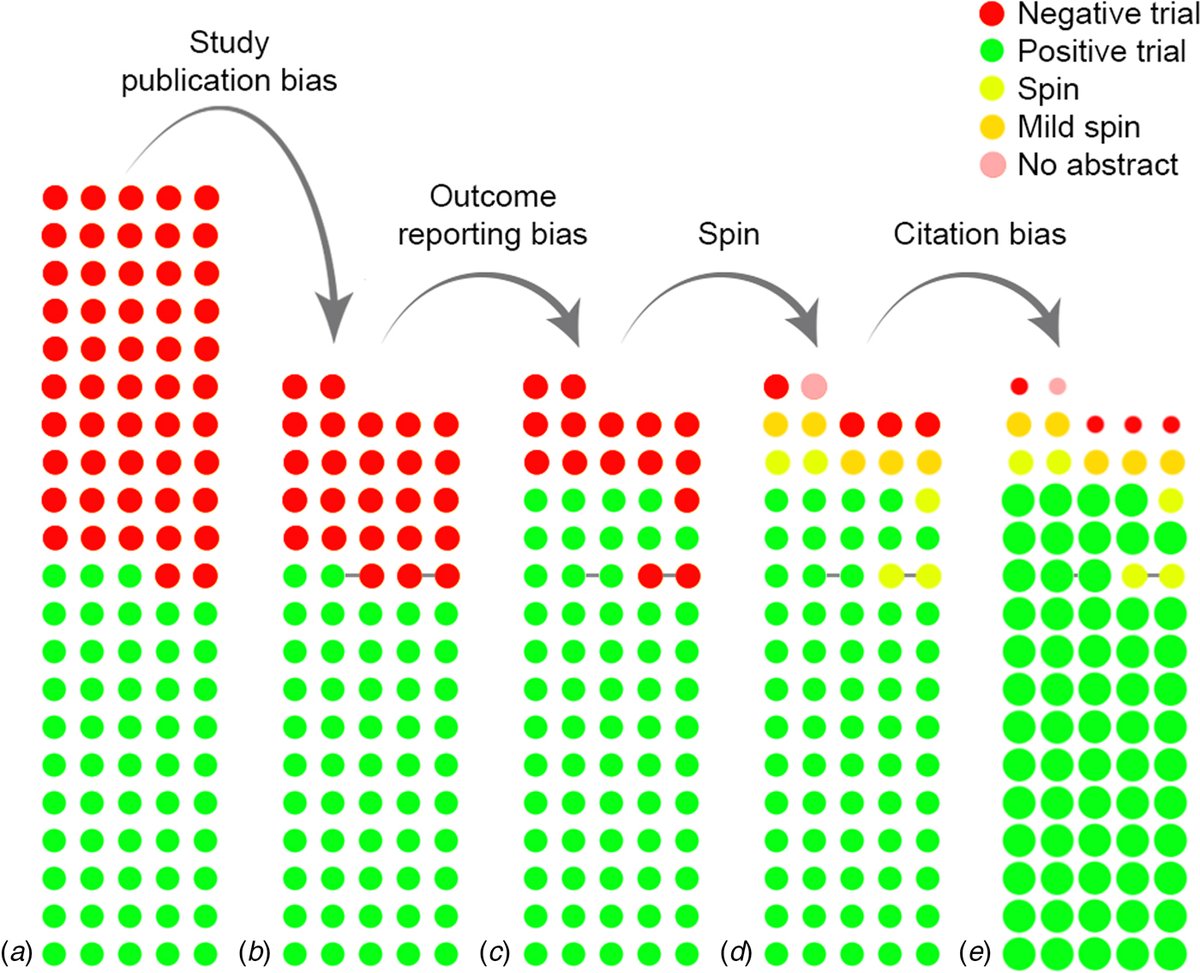
Antidepressant efficacy is inflated by the cumulative impact of publication bias, outcome reporting bias, spin, and citation bias on the evidence base.
🧵1/12
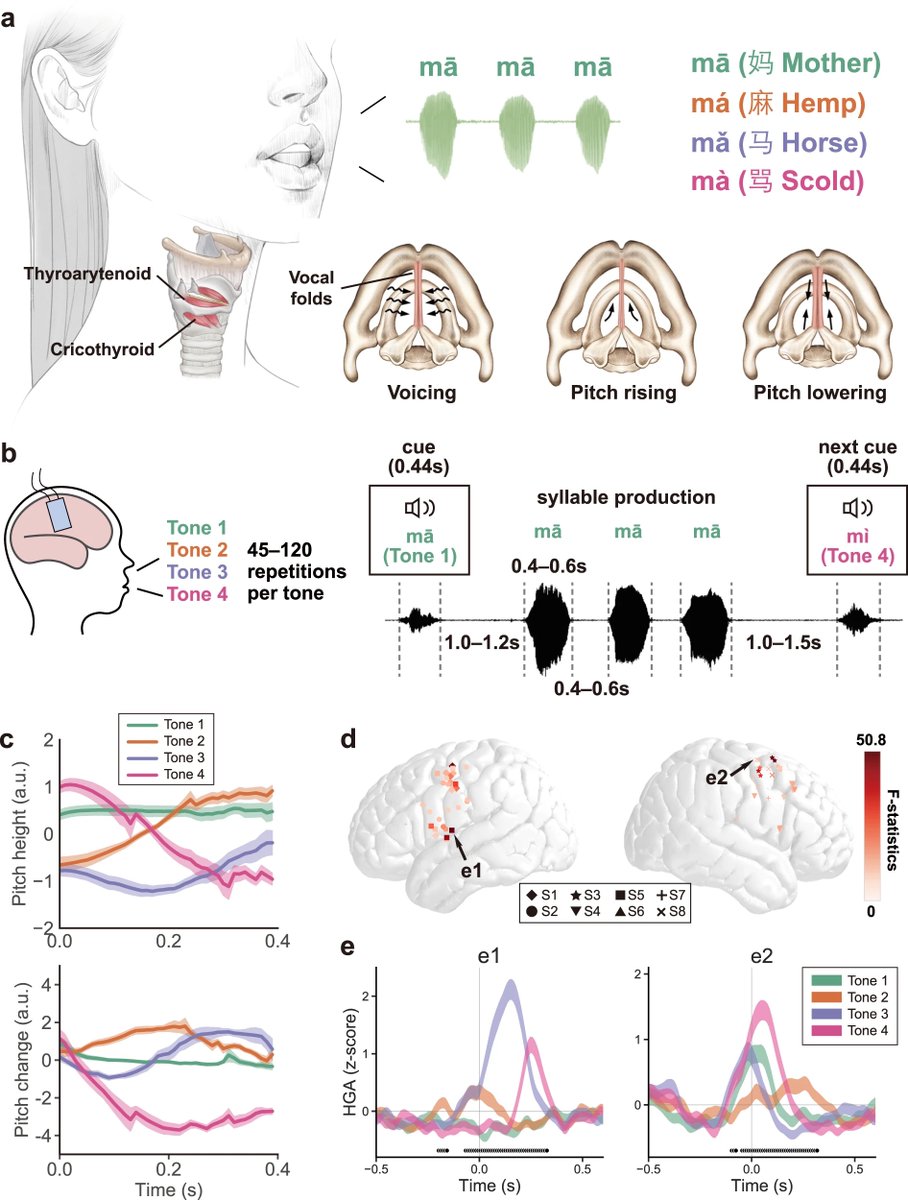
Tonal languages, spoken by a third of the global population, employ vocal pitch variations to convey distinct word meanings. What is the neural mechanism underlying these precise and highly dynamic controls of the laryngeal muscles? Our latest study answers this question. 1/6
Here I repond to Dr. Aftab's complaints about my critique of physical and chemical "treatments" of the brain for mental "illness".
https://t.co/Ba7UitlGms
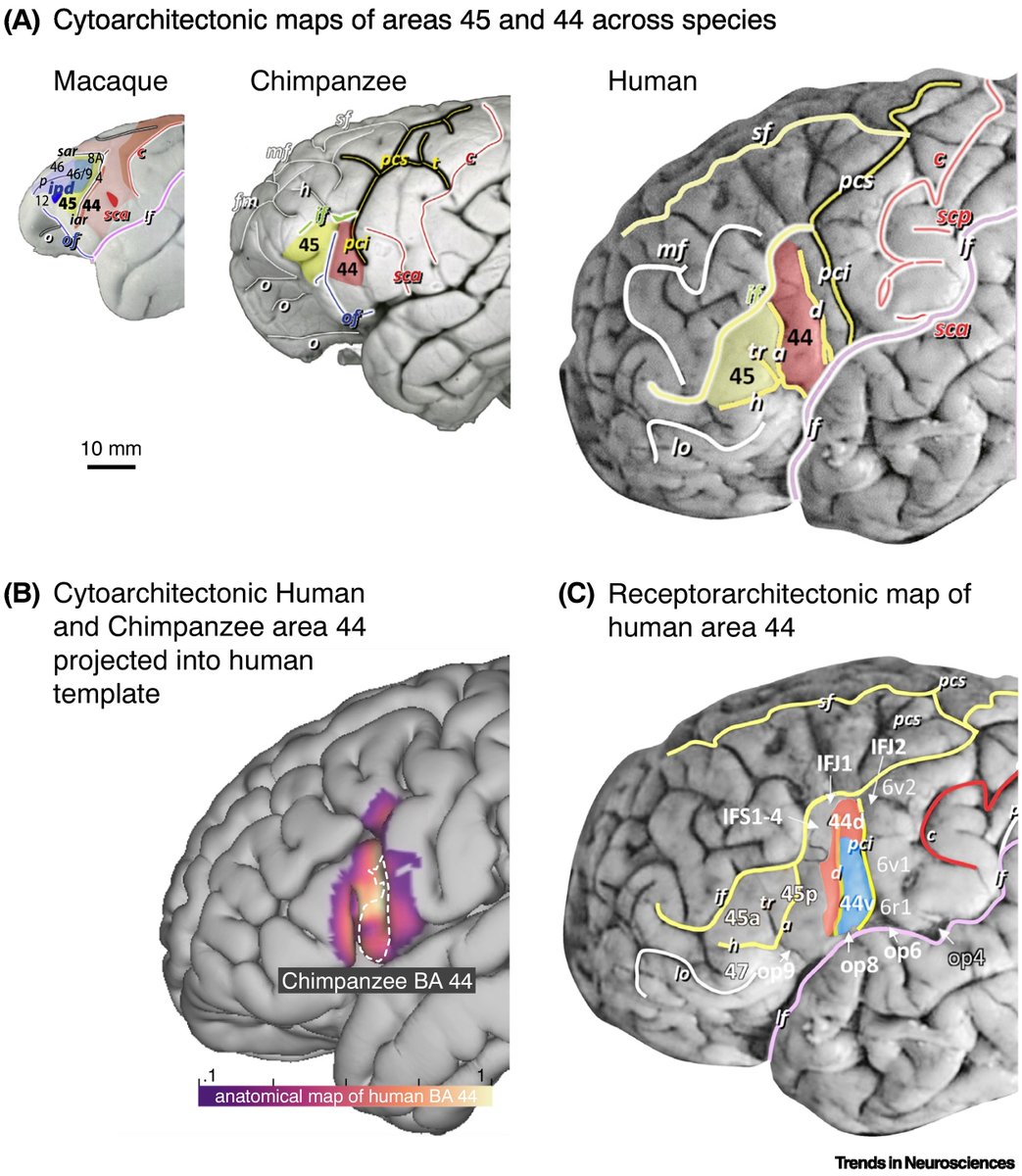
'Evolutionary neuroanatomical expansion of Broca’s region serving a human-specific function'
by Angela D. Friederici, @FriedericiLab@mpi_cbs
https://t.co/MQuz8Oqe1o
What do we actually ‘lose’ in selfless experiences ?
Check out our latest preprint with @V_Becattini
We focus on somatosensory attenuation and homeostatic self-regulation in meditation