Supply chain prfsnal | Sports freak | Music Lover | Dancer at heart | A Traveller | A Foodie | An amateur photographer | Views r personal | @narendramodi for PM
Default on farm loan, State will waive it. Burn rice stubble, State will ignore it. Steal electricity, State will subsidise it. Attack police, State will allow it. Eke an honest salary, State will tax it.
State will reward defaulters, polluters, and rioters, not honest citizens.
High powered task force constituted for NTA examination reforms-
Technology Expert Nandan Nilekani
Former ISRO Chairman S Somnath
Former IB Director Tapan Deka
IIT Chennai Director V Kamakoti
Former Education Secretary Anita Karwal
Logistics Expert Amrit Lal Meena
Ultimate bad journalism is pretending that public welfare becomes illegitimate simply because you dislike the ideological leanings of the volunteers delivering it.
The latest attempt to sensationalize ONGC's CSR allocations is a textbook example of shifting the goalposts. Let's look at the facts instead of the headlines.
First, the premise itself is flawed. The RSS, as a voluntary socio cultural movement, is not the legal recipient of these funds. Organisations such as Sewa Bharati, Ekal Vidyalaya and other affiliated institutions are independently registered trusts and societies with their own governing bodies, statutory registrations, PAN numbers and audited accounts. They are separate legal entities fully eligible to implement CSR projects.
Second, this is not discretionary political funding. Under Section 135 of the Companies Act, CSR spending by a Maharatna PSU like ONGC is governed by a strict legal framework. Funds are tied to approved projects, monitored throughout implementation and subject to statutory audits. If hundreds of crores had genuinely been siphoned off, regulators and auditors would have flagged it years ago. They haven't.
Third, ask where the money actually went.
A significant allocation funded the Swargadew Siu Ka Pha Multi Speciality Hospital in Assam, a 300 bed tertiary care hospital empanelled under Ayushman Bharat that serves tea garden workers, tribal communities and rural families. Other funds support Ekal Vidyalaya's schools in remote tribal regions and Sewa Bharati's hostels, health centres, disaster relief operations and community welfare programmes.
These are measurable outcomes, not political slogans.
There is a reason PSUs partner with such organisations. They have decades of experience delivering services in villages, tribal belts and border districts where many others simply do not operate. Development is not about announcements. It is about execution.
Demand accountability. Demand transparency. Demand better governance.
But branding legally compliant, independently audited CSR partnerships as "criminal" simply because you dislike the ideological ecosystem of the implementing organisations is not journalism. It is ideological prejudice masquerading as investigative reporting.
Your real target was never financial accountability. It was an ideology.
In the process, you are asking people to oppose hospitals treating the poor, schools educating tribal children, hostels housing underprivileged students and disaster relief reaching those in need, simply because you dislike the volunteers behind them.
If narratives like yours succeed, it will not be an ideology that pays the price. It will be lakhs of ordinary Indians who depend on these schools, hospitals and welfare programmes.
Before weaponising journalism to wage an ideological battle, ask yourself one question. Do you even understand what it is you are trying to destroy?
Commendable work by the team at @GalaxEye in pushing the frontiers of space innovation with Mission Drishti, the world’s first OptoSAR satellite. 🇮🇳
By integrating optical imaging with all-weather radar in a single platform, this breakthrough marks a significant advancement in India’s earth observation capabilities and showcases the ingenuity of our young scientists and engineers.
A testament to India’s growing strength in the global space ecosystem, aligned with Hon’ble PM Shri @narendramodi ji’s vision of a space-powered India.
Let me explain what just happened today because it deserves so much recognition.
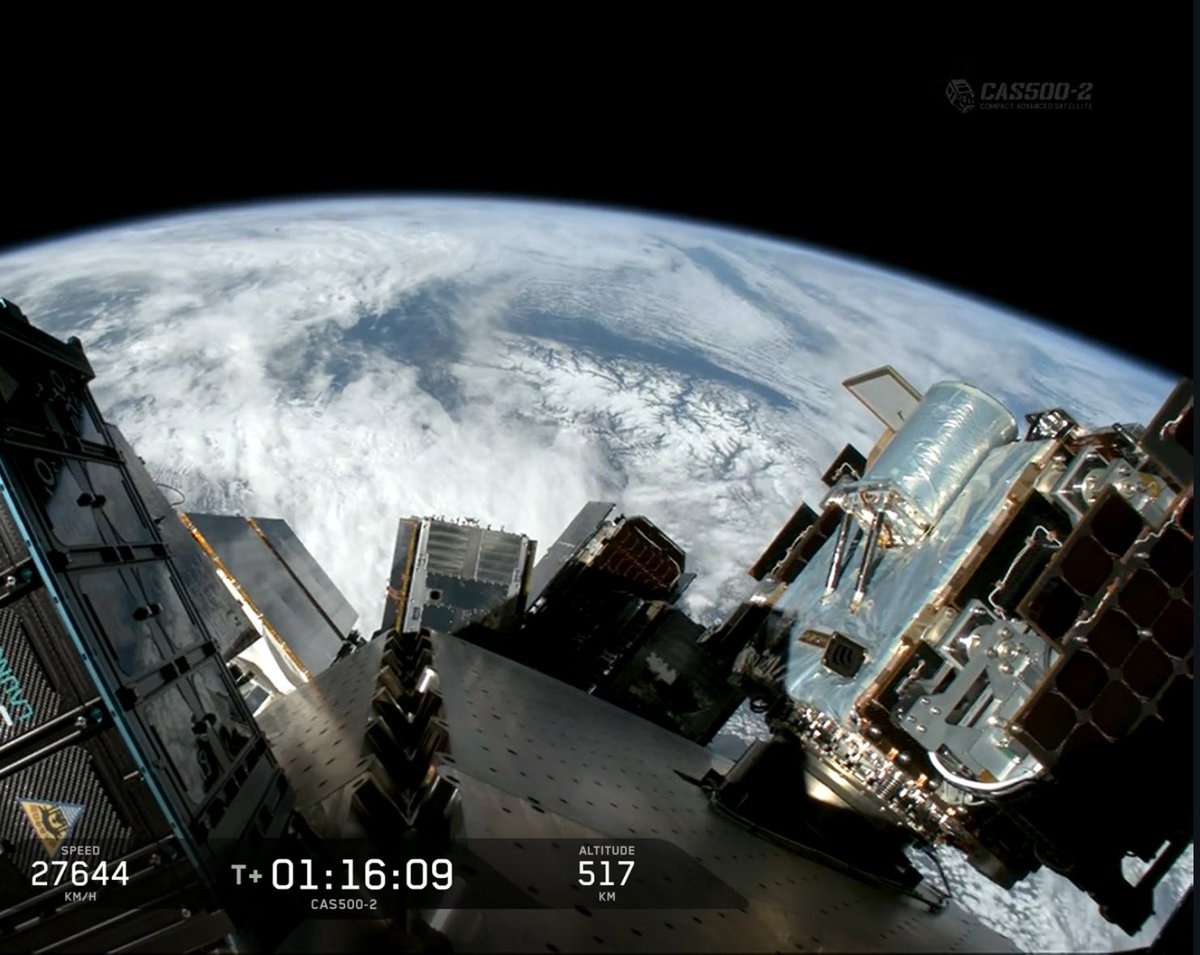
GalaxEye is a Bengaluru startup founded in 2021 by IIT Madras engineers. Today they launched Mission Drishti on a SpaceX Falcon 9. It is India's largest privately built satellite at 190 kg. And it carries a technology that no commercial satellite has ever carried before.
Normal satellites take photos of the Earth using optical cameras. Like your phone camera, but from 500 km up. The problem is obvious. Clouds. Night. Fog. Smoke. If any of these are in the way, the photo is useless. India has monsoon cover for 4 months a year. That is 4 months where optical satellites are partially or fully blind over large parts of the country.
The alternative is SAR. Synthetic Aperture Radar. Instead of taking photos with light, it sends radar waves down and reads what bounces back. Radar goes through clouds, through darkness, through smoke. A SAR satellite can image a flooded village at 2 AM during a cyclone when no optical satellite can see anything.
The problem with SAR is that the images look nothing like photos. They look like grainy black-and-white radar maps. A military analyst or a trained geospatial engineer can read them. A farmer, a disaster response team, or a city planner cannot.
Until today, if you wanted both optical and SAR data for the same location, you needed two different satellites, passing over at different times, at different angles. Then someone had to manually align and fuse the two datasets. Expensive, slow, and the data never perfectly matched because the satellites saw the same spot minutes or hours apart.
GalaxEye put both sensors on one satellite. Optical and SAR, fused into what they call OptoSAR. Three times more information than a single sensor. Processed onboard by an NVIDIA AI chip at 1.8 metre resolution.
Now in practice, during the next cyclone hitting Odisha, one satellite pass gives you a clear image of which villages are flooded, which roads are cut, and which buildings are standing. Day or night. Cloud or clear. In near real-time.
For defence, it means you can monitor a border area 24/7 regardless of weather. For agriculture, it means tracking crop health across an entire monsoon season without a single cloud gap. For infrastructure, it means monitoring construction progress on highways and bridges without waiting for a clear day.
GalaxEye tested their SAR tech on ISRO's POEM orbital platform. The satellite was tested at ISRO facilities. IN-SPACe provided regulatory clearance. NSIL, ISRO's commercial arm, will distribute the imagery globally. And it launched on SpaceX because ISRO's PSLV doesn't have the right orbit slot for this mission.
Yes, four IIT Madras graduates built a world-first satellite in 4 years in Bengaluru.
Take a bow!
Hamare desh me jis tarah ki development ho rahi hai uski mai kadi ninda karta hu aur ye sarkaar ke khilaf is gaane ke jariye silent protest karta hu aur yahi sawal puchta hu-
1- Kya hame sachme highway ki jarurat hai?
2- Aapke banae expressway se ham 5 ghante pahele pahochke kya karenge?
3- Vande bharat jaisi train banakar hamse sleeper coach ki bhid aur hawa kyu chini jaa rahi hai?
8,931 days and counting!
PM Shri @narendramodi has become 🇮🇳’s longest-serving head of government, surpassing former Sikkim CM Shri Pawan Kumar Chamling’s record of 8,930 days in public service.
His inspiring journey of Jan Seva, first as Gujarat CM and three times as the Prime Minister, reflects the immense public trust and enduring connect with the people of India.
#ViksitBharat
#PradhanSevakModi
Rajeev Shukla: Hindi journalist and TV anchor (Amar Ujala, Doordarshan); nominated to the Rajya Sabha in 2000; joined the INC; served as MP and spokesperson.
Pawan Khera: Political editor at NDTV; joined the INC around 2016; became national spokesperson and chairman of the Media Department.
Supriya Shrinate: Executive editor at ET Now (previously CNBC-TV18 and NDTV); joined the INC in 2019; contested the Lok Sabha election from Maharajganj; serves as national spokesperson.
Shama Mohamed: Journalist-turned-politician; joined the INC; serves as national spokesperson.
Priyanka Chaturvedi: TV journalist and anchor; joined the INC in 2010; served as spokesperson; left for Shiv Sena in 2019.
Kuldip Nayar: Veteran journalist (The Statesman, Indian Express); nominated to the Rajya Sabha by the INC in 1997.
Khushwant Singh: Editor (Illustrated Weekly of India, Hindustan Times); nominated to the Rajya Sabha by the INC in 1980.
Feroze Gandhi: Editor of National Herald; associated with the INC before 1947 and active post-Independence as an MP (1952–1960) from Rae Bareli and Pratapgarh.
Devdas Gandhi: Editor of Hindustan Times; son of Mahatma Gandhi; involved in INC activities after 1947.
Lala Jagat Narain: Founder-editor of Punjab Kesari; joined the INC; served as MP in the 1950s.
Shobhana Bhartia: Chairperson and editorial director of HT Media (Hindustan Times); nominated to the Rajya Sabha by the INC in 2006 (served until 2012).
Vijay Darda: Chairman and editor-in-chief of the Lokmat Group; joined the INC; served as Rajya Sabha MP (2004–2010, 2010–2016, 2016–2022).
Akhilesh Pratap Singh: Journalist and former TV anchor; joined the INC; serves as national spokesperson.
Shobha Oza: Journalist; joined the INC; serves as national spokesperson.
Ragini Nayak: TV anchor and journalist; joined the INC; serves as national spokesperson.
Arabinda Das: Senior regional journalist in Odisha; joined the INC in June 2025.
H. K. Dua: Senior journalist (The Tribune, Hindustan Times); nominated to the Rajya Sabha by the INC in 2009.
Meem Afzal: Journalist and diplomat; joined the INC; served as national spokesperson and Rajya Sabha MP (2004–2010).
Ashwini Kumar: Senior journalist (The Tribune); nominated to the Rajya Sabha by the INC in 2010 (served until 2016).
Kumar Ketkar: Senior Marathi journalist (Loksatta, Economic Times); joined the INC in 2018; nominated to the Rajya Sabha (2018–2024).
M. Chalapathi Rau: Editor of National Herald post-1947; closely associated with the INC leadership.
These are just a few names of piddis who pretended to be journalists and peddled their agenda in the name of journalism.
So sit down, Gandhgay
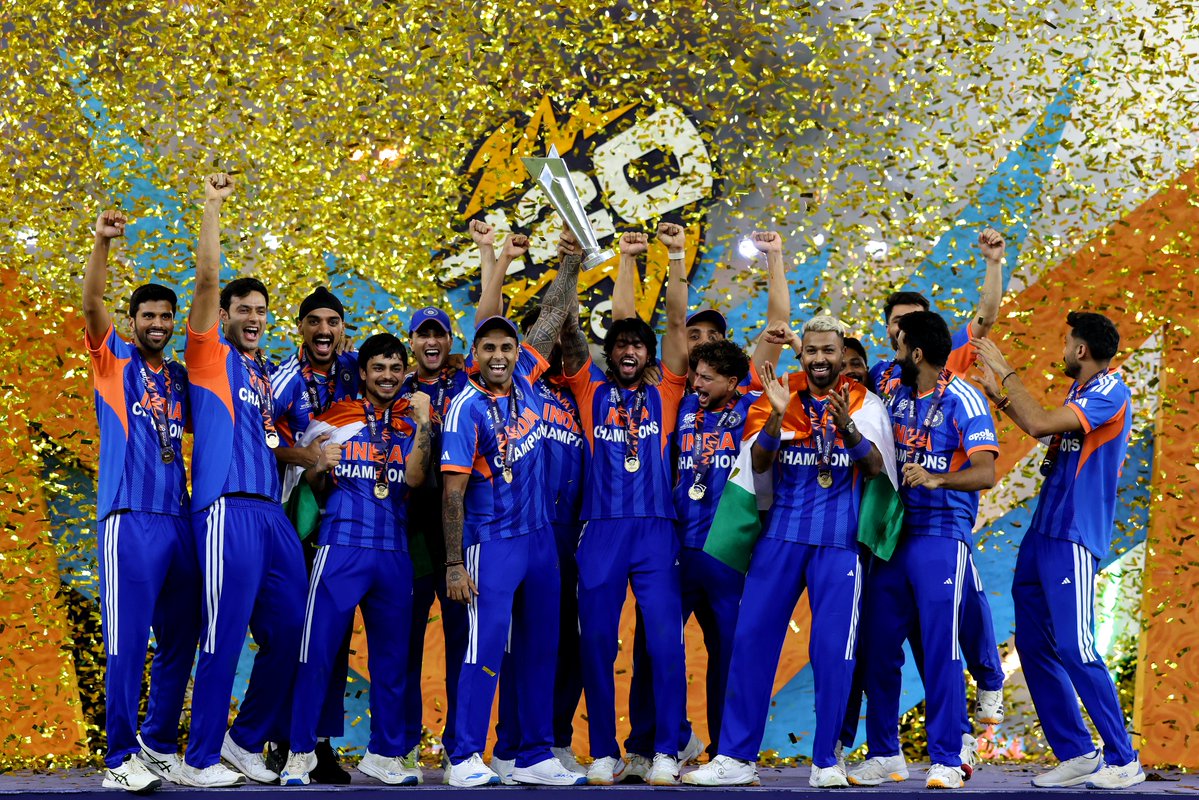
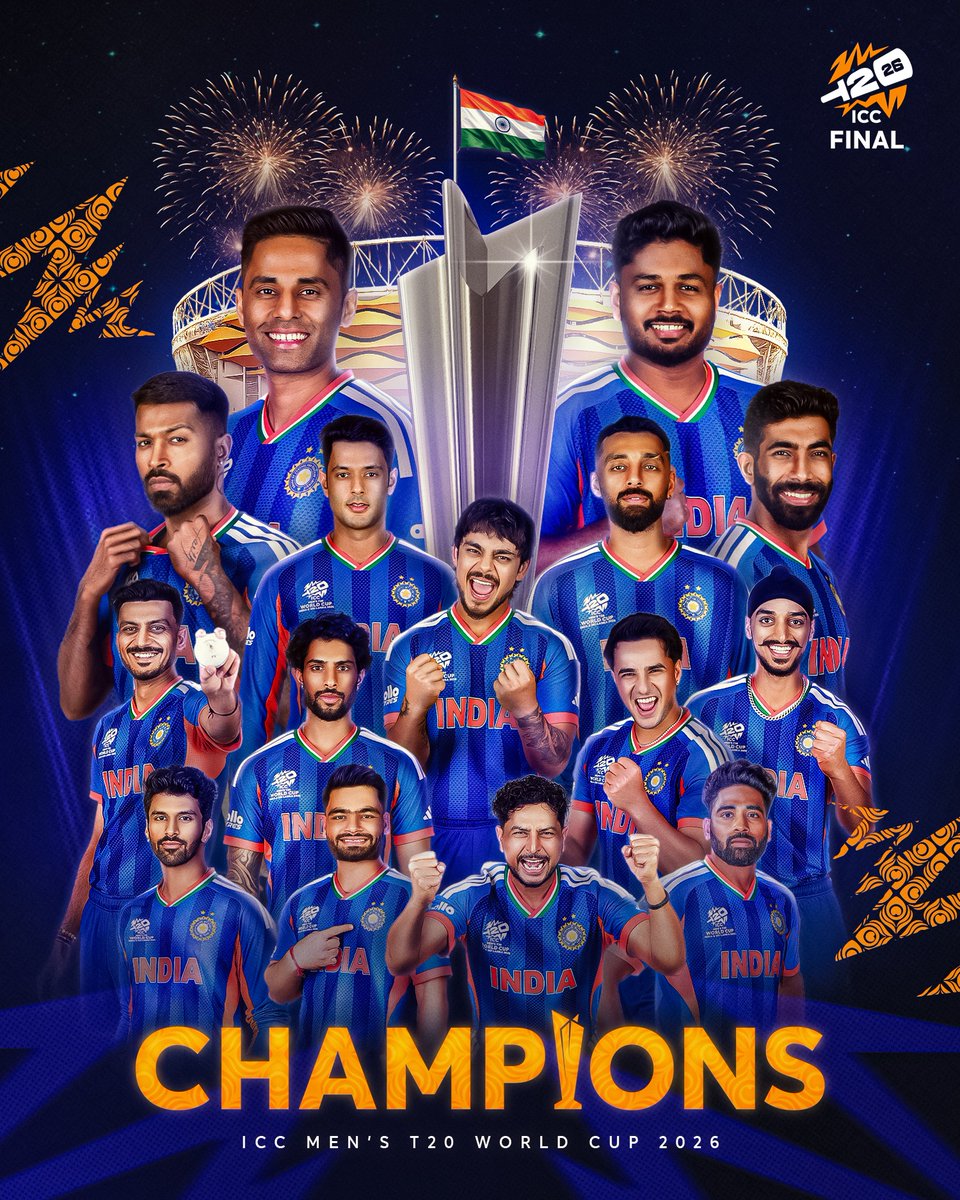
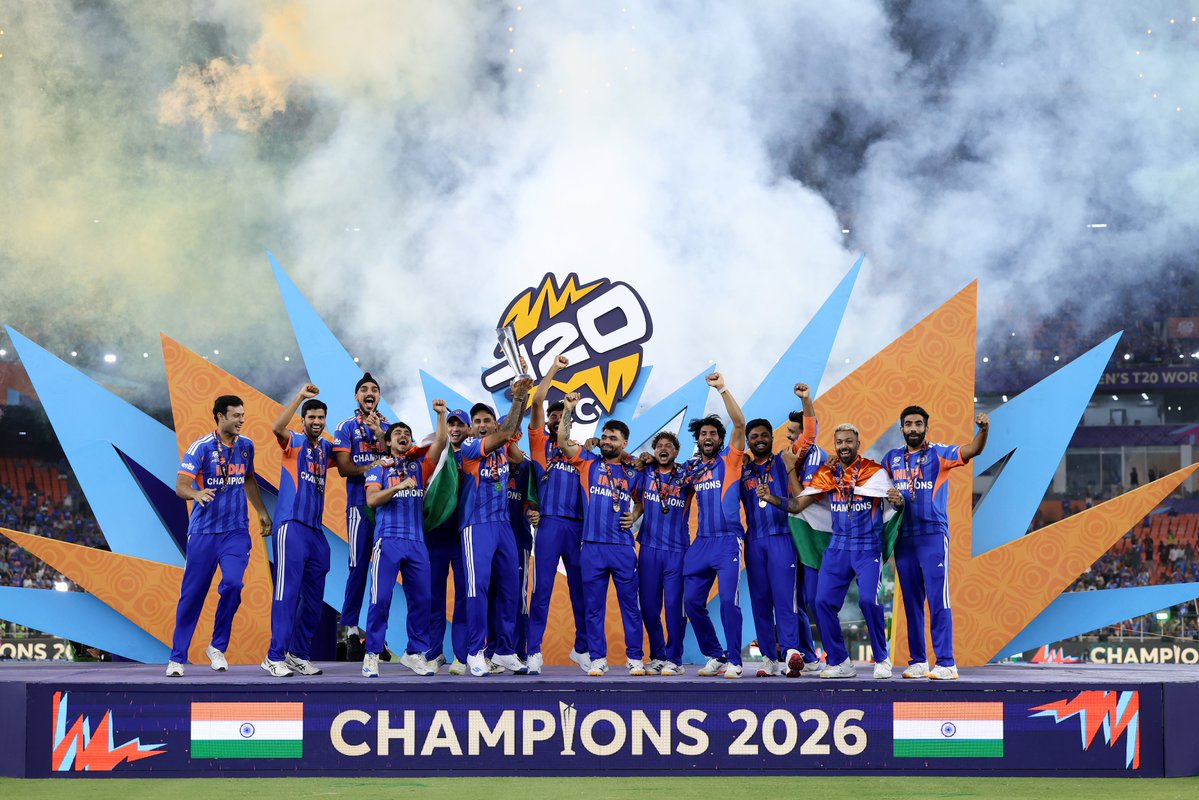
6 consecutive World Cups in last three years show India’s sheer dominance in world cricket.
2024 - Men’s T-20 World Cup,
2025 - Women’s Under-19 World Cup,
2025 - Women’s World Cup,
2025 - Blind Women’s T-20 World Cup,
2026 - Men’s Under-19 World Cup,
& Now
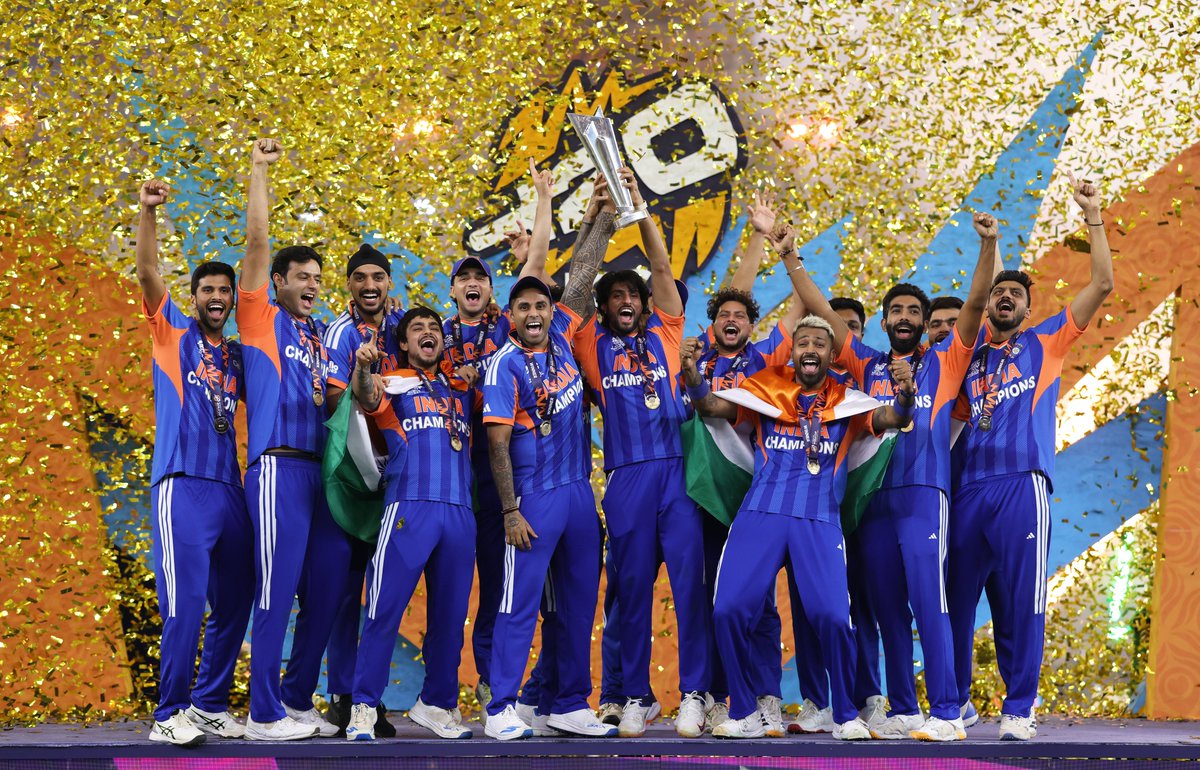
2026 - Men’s #T20WorldCup.
Congratulations to the captains, teams, their management and every Indian.
Champions!
Congratulations to the Indian team on winning the ICC Men’s T20 World Cup!
This remarkable triumph reflects exceptional skills, determination and teamwork. They have shown outstanding grit through the tournament.
This victory has filled every Indian heart with pride and joy.
Well done, Team India!