Bharatiya | Sanatani | Political enthusiast passionate about merging tradition with modern governance. Advocating for thoughtful discourse and cultural heritage
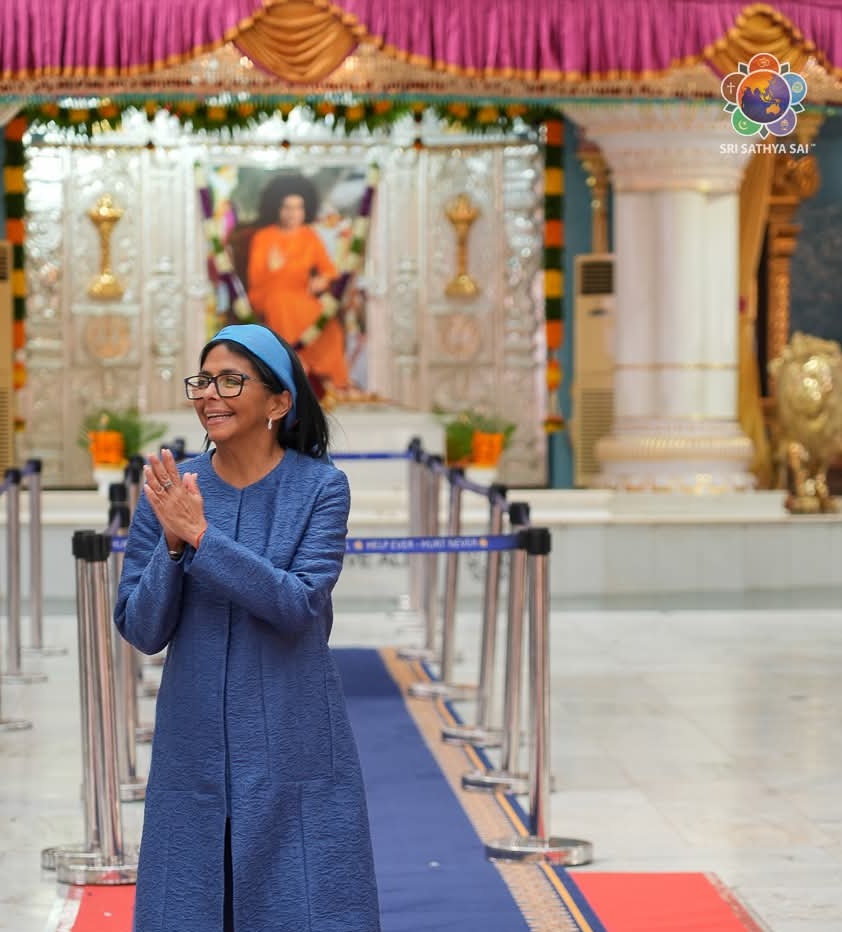
Acting President of Venezuela Delcy Rodríguez visits India's Prasanthi Nilayam, the main Ashram & spiritual headquarters of the revered guru Sri Sathya Sai Baba.
भाजपा को झटका...👇
BBC के अनुसार विश्व में 10 सबसे भ्रष्ट राजनीतिक पार्टियों में भारत की सोनिया राहुल के स्वामित्व वाली कांग्रेस चौथे नंबर पर है... बीजेपी का खाता तक नहीं खुला. मोदी की ये जबरदस्त और शर्मनाक हार है.. 😂🤣
Who's she?
-A Class 9 student.
Why has she come to the CJP protest at Jantar Mantar?
-Because the Israel–USA war is going on.
Who asked her to join the protest?
-Her coaching institute.
I rest my case.....
In The Storm of 'Dhurandhar,' We Didn't Praise 'Baramulla' Enough
“The fragrance of tulips in the air makes one forget all worries and cares.” — Mohammed Peer (A Local Kashmiri Poet)
Baramulla opens by challenging that idea. The film begins with a solitary tulip drawing the attention of a child named Shoaib. It is a deceptively gentle image, one that refuses the postcard version of Kashmir that Hindi cinema has long romanticised. There is no lush comfort here, no lyrical escape. Even the panoramic view of the snow-capped Pir Panjal range looms with indifference. From its opening frames, Baramulla announces a dread that feels real and local to Kashmir.
The storyline runs along two parallel tracks: the investigation into a series of child disappearances—beginning with Shoaib—led by the “controversial” DSP Sayyed, and the unsettling paranormal experiences in his “new” official residence. Another background plot shows local terrorists planning to recruit and brainwash children for terrorism in Kashmir, using the code words fasal and kheti. It so happens that the missing children, before being picked up by terrorists, start disappearing. This convergence forms the film’s moral core. What might have played out as a routine horror-police procedural instead evolves into a layered convergence of histories, identities, and politics. The connections, when they finally surface, are not designed to shock but to settle in with the weight of recognition—of patterns long familiar but merely rearranged.
I am not approaching Baramulla as a film critic tallying pros and cons. I watched it as someone who has long tried, and often failed, to understand Kashmir’s violent past, its complicated present, and its seemingly gloomy future. What stayed with me was not the cinematic technicalities, but the film’s dense network of undeciphered metaphors—symbols that scream messages yet to be heard and meanings still not understood.
Take the tulip. Across cultures, it has stood for love, resistance, revolution, and even forgiveness. In new Kashmir, it represents the thriving “tourism”—a seasonal spectacle meant to signal normalcy. Baramulla challenges this symbolism through the White Tulip.
The film refrains from spelling out its meaning, allowing the symbol to evolve as the narrative unfolds. At first, it becomes a quiet indictment of how “tourism”—built around the beautiful tulip gardens of Kashmir—functions as a cosmetic narrative, a hoax that hides the innocent blood beneath Kashmir’s “heavenly” whiteness. This flower does not invite; it forewarns. It appears on the cusp of each child’s disappearance, registering less as an image than as a premonition. As Baramulla progresses, the image gathers additional weight, revealing meanings that extend beyond spectacle and into inheritance, erasure, complicity, and betrayal—threads the film continues to unravel with unsettling patience.
Click the link in the next tweet to read the full review 👇
🔴 #BreakingNews | Rail Minister @AshwiniVaishnaw announces bullet train project for Bengal
▪️Bullet train to connect national capital Delhi with Siliguri
▪️Travel time to be reduced to six hours
पंजाब में अपना हक़ माँग रहे GenZ students को केजरीवाल जी और भगवंत मान की सरकार बेरहमी से लाठी डंडे मार रही है और सड़कों पर घसीट रही है।
ये लोग अपनी नौकरी के लिए शांतिपूर्वक प्रदर्शन कर रहे थे। इस प्रकार से बच्चों को मारना पीटना केजरीवाल-भगवंत मान जी का असली चेहरा उजागर करती है।
केजरीवाल जी रोज़ वीडियो बनाकर GenZ को सड़क पर आने के लिए बोलते हैं और ख़ुद अपनी सरकार से उन्हें डंडे पड़वाते है। SHAME