I love my country. Being an American woman means embracing freedoSurgeons|Making Healthcare More Transparent|Sharing Surgical Knowledge and Health Education🇺🇸
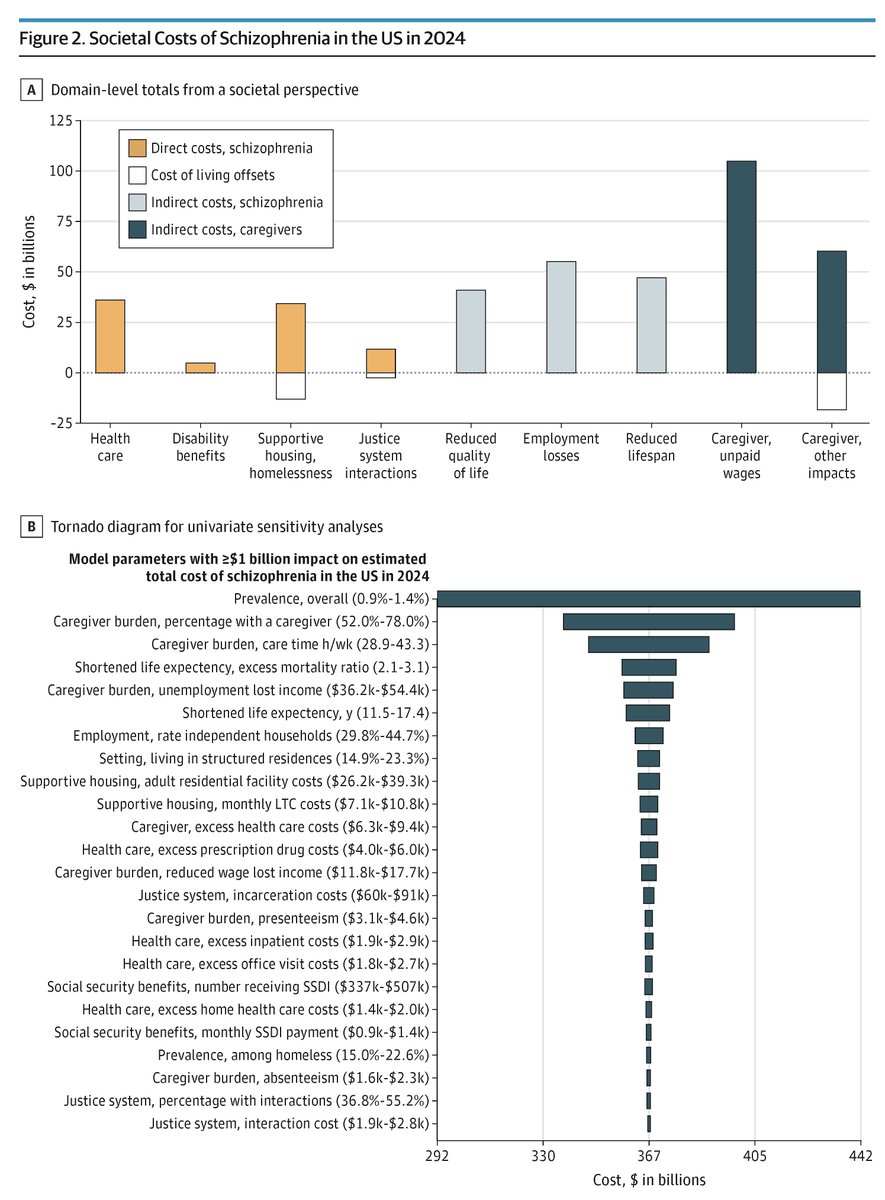
The 2024 US societal cost of #Schizophrenia was $366.8 billion, with unpaid caregiving, lost wages, and reduced quality of life accounting for over 75% of total costs.
https://t.co/7YyVf76R9k
@P_McCulloughMD@McCulloughFund Just learned another super useful move! Tried it yesterday, and today after sitting at my desk all day, my back actually isn't as sore. Seriously, thanks for the demo video!
💪 Muscle cells merging in real time
You’re watching one of [in my opinion] the coolest things your body does without you ever noticing
(muscle precursor cells literally fusing into one long, powerful fiber).
🔵 Alignment: individual myoblasts migrate and line up like they’re preparing for formation
🟢 Recognition: cells “sense” compatible neighbors through surface proteins
🟡 Contact: membranes begin to thin and synchronize their signaling
🟠 Fusion: boundaries dissolve and nuclei gather inside a shared cytoplasm
🔴 Strengthening: the new multinucleated fiber becomes the machinery that lets you lift, run, and repair
The glowing green nuclei are each a tiny command center contributed by a merging cell.
The red signal traces the membranes as they stretch, touch, and finally blend into a unified structure.
This is how muscles grow and regenerate - i.e. this is "strength" engineerednat the cellular level
Credit: Yue Lu, Elizabeth Chen Lab
Your hips called. They want their power back. Most people sit, slump, and wonder why their back hurts. This one move rebuilds your glutes, stabilizes your core, and unlocks your energy. Take breaks throughout the day to do this simple exercise and watch your glutes become stronger in 4 to 6 weeks.
#GluteBridge
#FunctionalFitness
Should we rethink how risky deep brain stimulation (DBS) really is? What does reframing mean? Reframing means changing the way we look at something by putting it into a clearer and more accurate context. Lucas Philipp and colleagues describe in a new paper in Annals of Neurology whether the risks of DBS should be viewed differently when compared to other common elective surgeries.
Key points:
- DBS had lower overall complication rates than many widely performed elective surgeries, even though it involved the brain.
- Rates of serious neurological complications such as stroke were not higher for DBS compared to other procedures.
- Most folks undergoing DBS were discharged home, highlighting a favorable short term recovery profile.
My take: This paper challenges some of the long standing fears around DBS surgery. When we step back and compare apples to apples, DBS does not look as much like a high-risk outlier. It looks like a carefully refined procedure that has quietly become safer than many operations we rarely question. Context matters, and this study delivers it.
Here are 5 points that resonated w/ me:
1- Perceived risk has frequently outpaced actual data when it comes to DBS.
2- Comparing DBS to everyday elective surgeries helps ground conversations in reality, rather than fear.
3- Brain surgery does not automatically mean higher complication rates.
4- Accurate risk framing may help health care providers refer appropriate folks earlier.
5- Better education around real world safety data could expand access to a therapy that may meaningfully improve quality of life.
https://t.co/RRN2rtNpwv @DBSThinkTank@ParkinsonDotOrg@movedisorder #parkinson
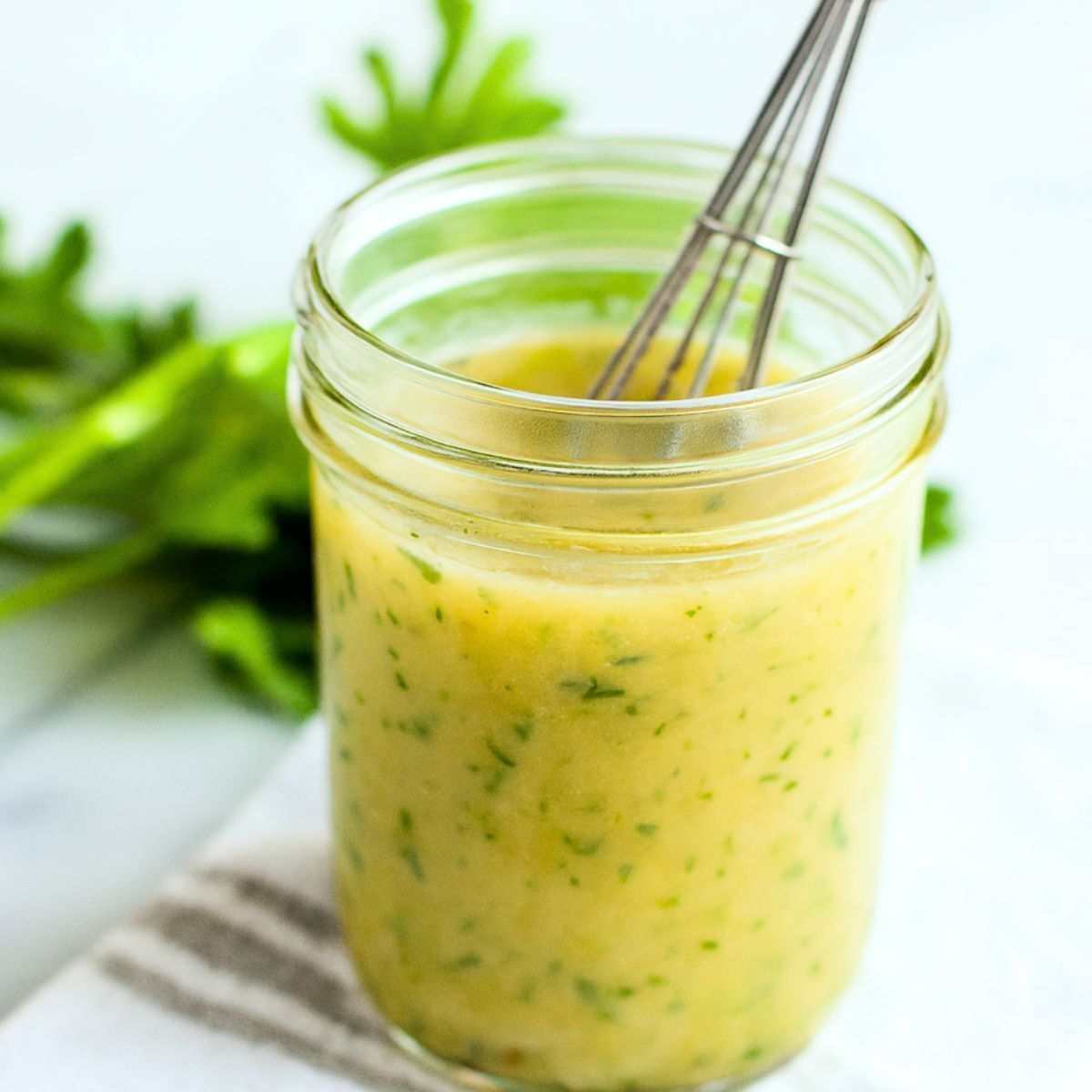
Skip the bottled dressing and enjoy this fall/winter salad dressing that's light and nutritious. Some of you follow a low-histamine diet, and this recipe is safe for you too. If you have questions about histamine intolerance and what foods are safe, visit my blog: https://t.co/euv3r9N8CT.
Apple‑Herb Dressing
Ingredients:
2 tbsp unsweetened applesauce (for gentle tang)
2 tbsp olive oil
1 tsp fresh parsley, chopped
1 tsp fresh dill, chopped
Pinch of salt
Instructions:
Whisk until smooth. Works beautifully on mixed greens or roasted root veggie salads.
#LowHistamineDiet
#FoodIsMedicine
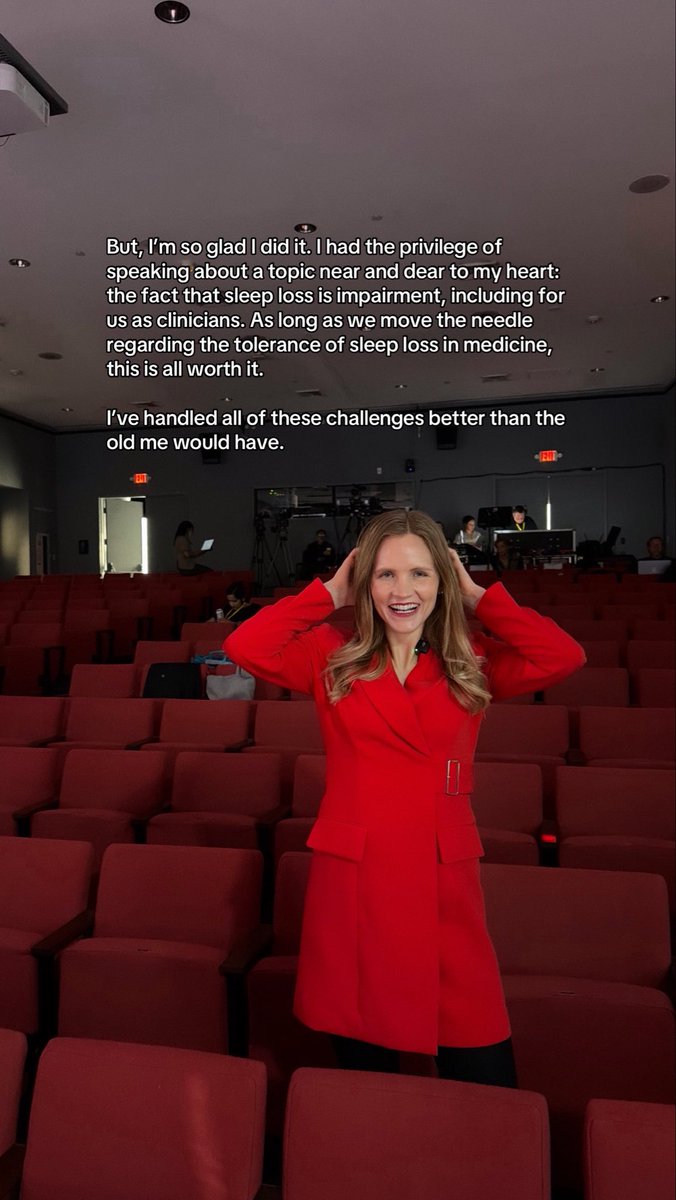
To all the young doctors out there, sometimes you just have to do it afraid. We simply cannot let fear keep us out of the places where our voices are heard.
Dairy rich diet and the liver-brain-axis: a new pathway to Parkinson’s risk in GBA1 carriers? Liver-brain-axis means signals and disease processes can travel between the liver and the brain through nerves and through blood related pathways. Chen and colleagues describe in a new paper in NPJ Parkinson’s Disease how a dairy rich diet may trigger alpha synuclein pathology in the liver and spread it to the brain in GBA1 related Parkinson’s.
Key points:
– A dairy rich diet induced alpha synuclein aggregation in liver immune cells in GBA1 mutation models and in liver samples from two patients w/ high dairy intake.
– Casein and calcium drove mitochondrial stress and impaired autophagy, creating an environment that accelerated alpha synuclein buildup.
– Liver alpha synuclein pathology propagated to brain regions linked to Parkinson’s and contributed to motor and cognitive impairments in animal models.
My take: Dairy is tricky to understand, particularly w/ the potential buildup of pesticides in some dairy cows. This paper offers us more breadcrumbs.
Here are 5 points that resonated w/ me:
1- Gene environment interactions matter and GBA1 mutations may amplify dietary risks.
2- The liver may be an early origin site for Parkinson’s related pathology, rather than just the brain.
3- Calcium and casein emerged as key drivers of oxidative stress and impaired protein clearance.
4- Neural pathways such as the vagus nerve may transmit pathology from liver to brain.
5- Dietary modification could become a precision prevention strategy for genetically susceptible folks.
https://t.co/1GbifHw9Re #parkinson @ParkinsonDotOrg@FixelInstitute@Nature
What does environmental decision neuroscience mean? Environmental decision neuroscience studies how brain systems are involved in value based social thinking, and how self-control shapes choices that may affect the environment around us. Knoch and Wyss describe in a comment in Nature Reviews Neuroscience how brain science is beginning to explain why some environmental choices stick, while others fail.
Key points:
- Environmental decisions engage brain systems for valuation perspective taking and for self-control, rather than for simple habit or knowledge.
- Sustainable choices frequently involve immediate personal costs w/ delayed uncertain benefits which makes them cognitively demanding.
- Studying decisions w/ real consequences reveals mechanisms that self-reports and surveys frequently miss.
My take: This paper reframes environmental choices as a brain challenge and not just a policy or technology problem. If we want lasting change, we must understand how decisions are actually made under conditions of uncertainty, cost and delay. Neuroscience offers tools to design smarter interventions that may better fit how folks think, feel and decide. Here are 5 points that resonated w/ me:
1- Knowledge alone rarely changes behavior when decisions involve sacrifice and delayed reward.
2- Brain systems for empathy and future thinking may be central to sustainable action.
3- Self-control matters when short term convenience conflicts w/ long term benefit.
4- Interventions will work best when matched to how different folks process value and social impact.
5- Understanding the brain may help health care providers, policymakers and communities design approaches that lead to the best choices for our environment.
https://t.co/nfyHYP0D0A @ParkinsonDotOrg@movedisorder@FixelInstitute@SfNtweets
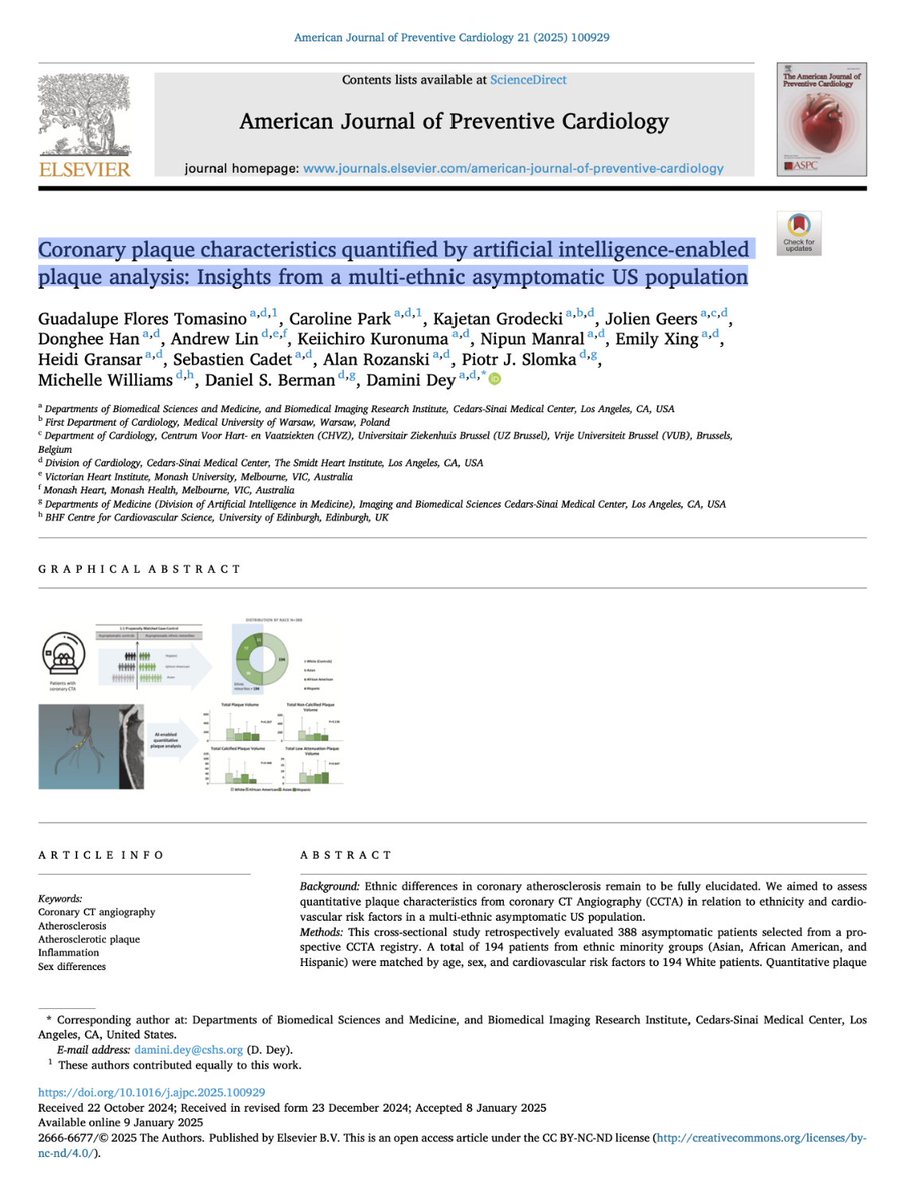
🫀🧠 AI-powered CCTA reveals hidden differences in coronary plaque across ethnicities
This 2025 study in the American Journal of Preventive Cardiology uses artificial intelligence–enabled coronary CT angiography (CCTA) to explore how coronary plaque burden, composition, and inflammation vary across ethnic groups in an asymptomatic, multi-ethnic U.S. population—moving beyond calcium scores toward true atherosclerotic phenotyping .
👥 Who was studied
The investigators analyzed 388 asymptomatic adults (mean age ~60 years, 68% men), drawn from a larger CCTA registry and propensity-matched by age, sex, and traditional risk factors:
White (50%)
African American (20%)
Asian (25%)
Hispanic (5%)
All underwent AI-based quantitative plaque analysis (total, calcified, non-calcified, and low-attenuation plaque) and pericoronary adipose tissue attenuation (PCAT)—a CT marker of coronary inflammation.
📊 Key findings
Atherosclerosis was common: ~63% had coronary plaque despite being asymptomatic.
Men had higher plaque volumes across all plaque types than women.
After multivariable adjustment, African American patients had lower total, calcified, and non-calcified plaque volumes compared with White patients.
Paradoxically, African American patients had higher PCAT, suggesting greater pericoronary inflammationdespite less plaque.
No significant quantitative plaque differences were observed among Asian or Hispanic patients compared with Whites.
🧠 Why this matters
This study highlights a critical concept: plaque burden and plaque biology are not the same thing. Lower plaque volume does not necessarily mean lower risk if vascular inflammation is higher. AI-enabled CCTA allows simultaneous assessment of:
plaque quantity 🧱
plaque quality ⚠️
inflammatory milieu 🔥
⚠️ Limitations
Single-center, cross-sectional design; limited Hispanic representation; no outcome data.
🔮 Bottom line
AI-powered CCTA reveals that ethnic differences in coronary disease may lie more in biology than burden.
👉 Precision prevention will require looking beyond calcium—and beyond averages.
Raspberries improved cognition, neuroinflammation, and insulin in older, overweight adults in single meal:
https://t.co/TE3CKLjPDp
Evidence grade Moderate 6/10.
Similar findings with blueberries, both short- and long-term:
https://t.co/oitpSC4OTo
Art: T Jones
@DrKristieLeong Super practical! Especially the “press your palms against the wall for 10 seconds” and “take 10 slow steps”, I tried them today and instantly felt calmer. Thanks for sharing these low-effort, high-impact tips!
Narcan maker lobbied for pain patients to be required to purchase a medication they will never use.
This was done to make the pain pt look like an addict.
There are millions of expired Narcans in peoples homes
This is known as the Narcan scam
Pain thrives in stillness. It loves stagnation, tightness, and shallow breathing. The moment you move, even gently, you change the entire internal landscape. Blood flows, nerves calm, and your brain releases chemicals that say, “You’re safe.” Exercise is the closest thing we have to an internal reset button, and it’s free.
#MovementIsMedicine
#ChronicPain