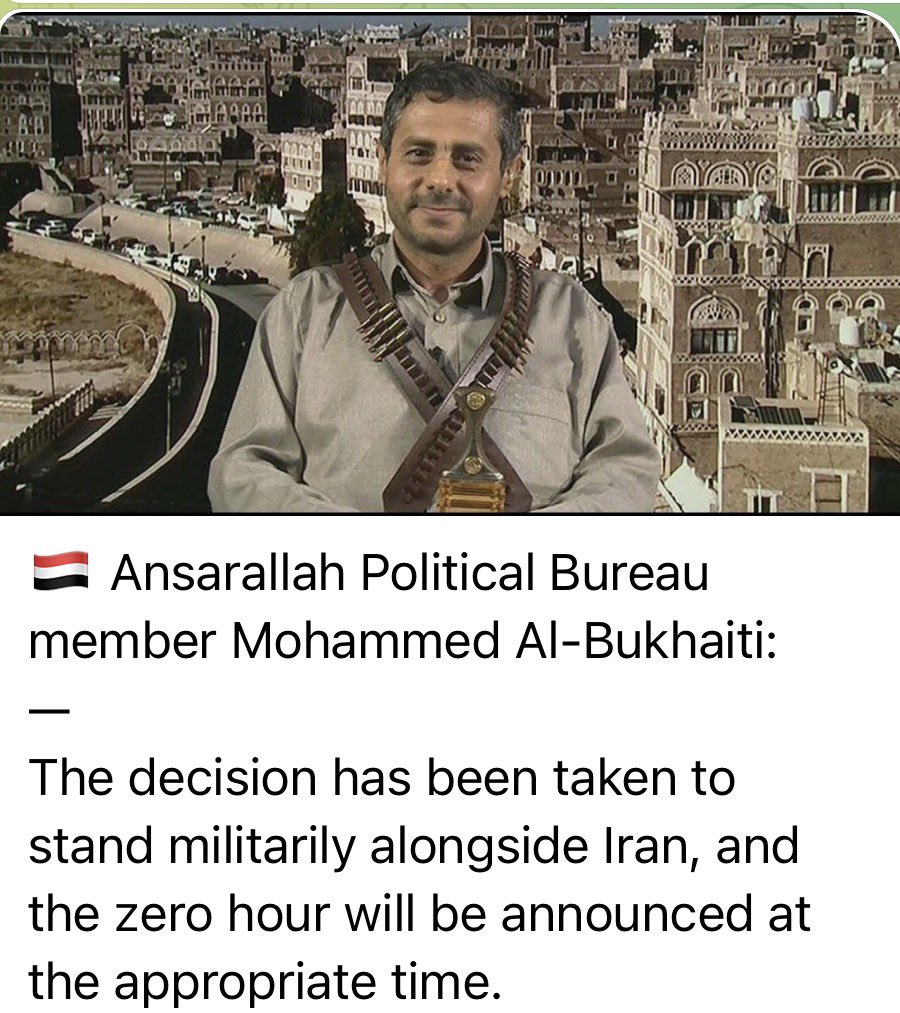
When a military superpower finds itself turning to an adversary's ally for assistance, it reveals a fundamental shift in strategic leverage. The United States, despite its technological superiority, cannot defeat Iran through conventional military force alone. Iran’s ballistic missile capabilities and nuclear advancements are now entrenched realities, facts on the ground that cannot be bombed or sanctioned away. If Trump is serious about resolving this, he must accept that the only viable path forward is through direct, pragmatic negotiation.
⚡️BREAKING
IRAN'S FOREIGN MINISTER ON THE STRAIT OF HORMUZ:
The Strait of Hormuz is open
It is only closed to the tankers and ships belonging to Israel, USA and their allies
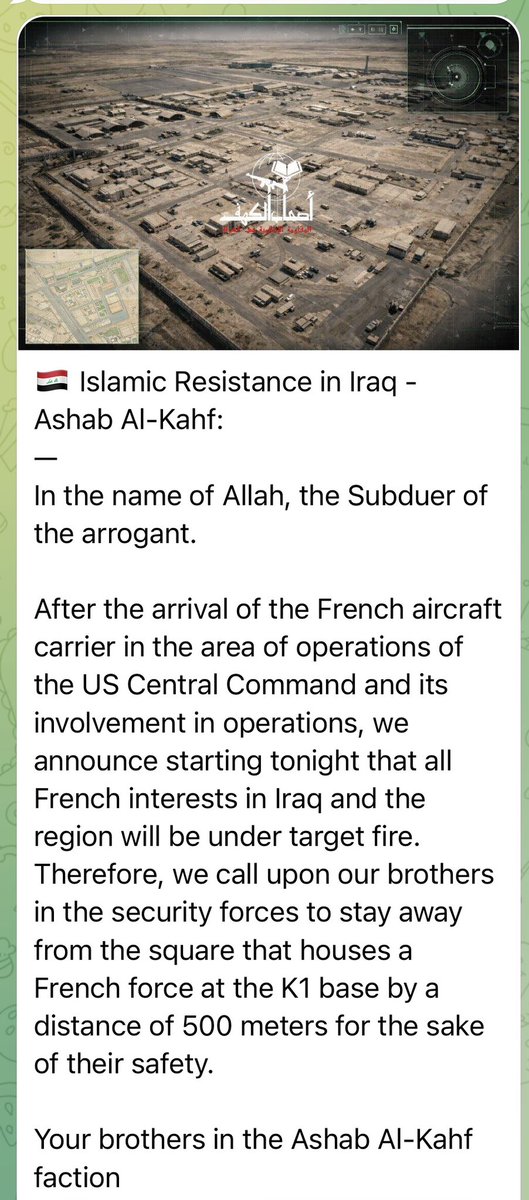
Yesterday, the Islamic Resistance in Iraq warned that French soldiers in the country would be targeted.
Today, Washington’s French poodle confirmed that a French officer was killed and several French soldiers wounded in an attack in Iraq.
#France#Iran#Iraq
On Saturday, March 14 at 10:30 AM EDT, Reason2Resist will hold its next livestream.
We'll discuss the latest developments in the Epstein Regime's war on Iran.
You can watch us here on X or on YouTube at:
https://t.co/TSkoejRIx5
@IbrahimMajed Haven't Al Jawlani's terrorists already moved against Lebanon in that recent failed incursion (ans subsequent revenge bombing) into Lebanon's eatern border with Syria?
𝗔𝗠𝗘𝗥𝗜𝗖𝗔 𝗖𝗢𝗡𝗧𝗔𝗖𝗧𝗦 𝗜𝗥𝗔𝗡 𝗧𝗢 𝗘𝗡𝗗 𝗧𝗛𝗘 𝗪𝗔𝗥
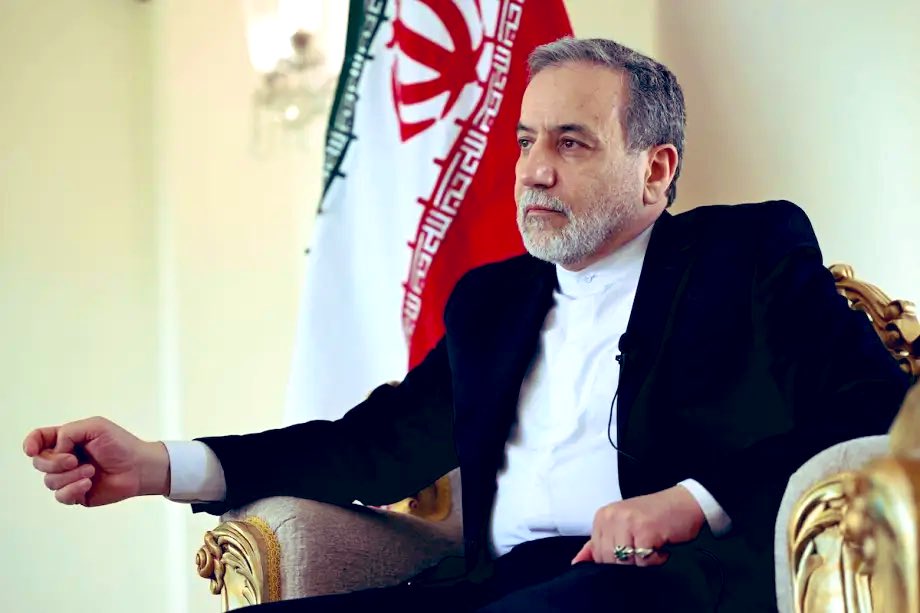
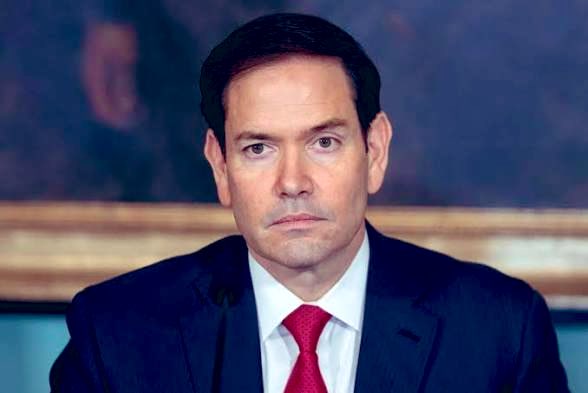
According to diplomatic sources, Marco Rubio reached out to Iran’s foreign minister Abbas Araghchi through Oman as part of an American effort to explore a path toward ending the war.
The message carried a single direct question: what does Iran want in order to stop the war?
Tehran initially gave no response.
Shortly afterward, France was tasked with delivering the same question in an attempt to reopen the diplomatic channel.
This time the reply from Tehran was explicit:
“We are not seeking to stop the war. There are objectives that must still be achieved.”
Despite the public rhetoric from Donald Trump and officials in Washington claiming battlefield success, the quiet diplomatic outreach suggests a far more cautious calculation behind the scenes.
The United States appears to believe that sustained military pressure will eventually force Iran to accept terms favorable to Washington for ending the conflict.
Tehran, however, is signaling the opposite.
Iranian officials indicate they are prepared for a prolonged confrontation and will not concede under pressure.
The war has therefore evolved into a strategic contest of endurance, a test of which side can sustain the greater cost, absorb the escalating pressure, and ultimately compel the other to recalibrate its position.
Behind the battlefield narratives and public declarations of victory, the real struggle is becoming clear: not who strikes harder, but who endures longer.
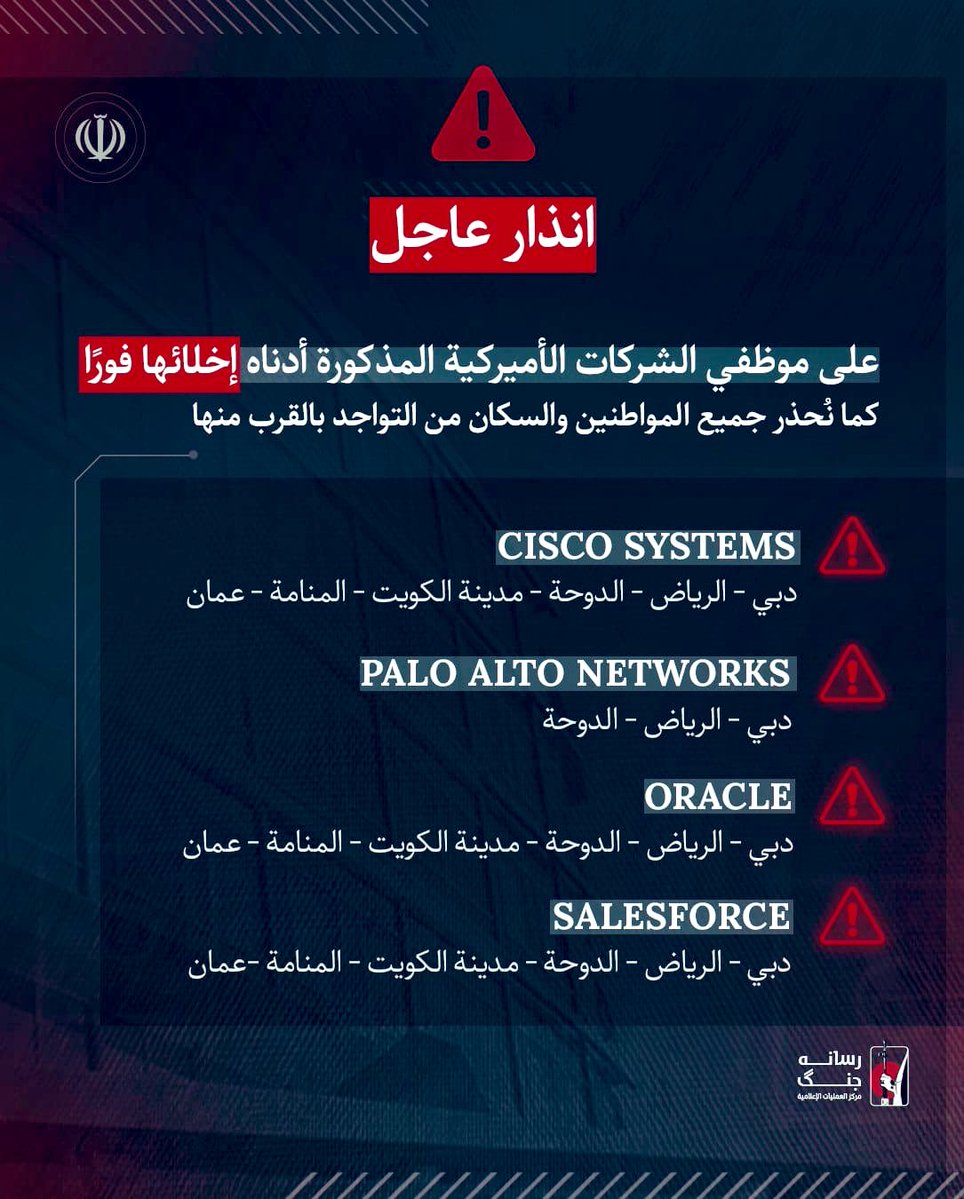
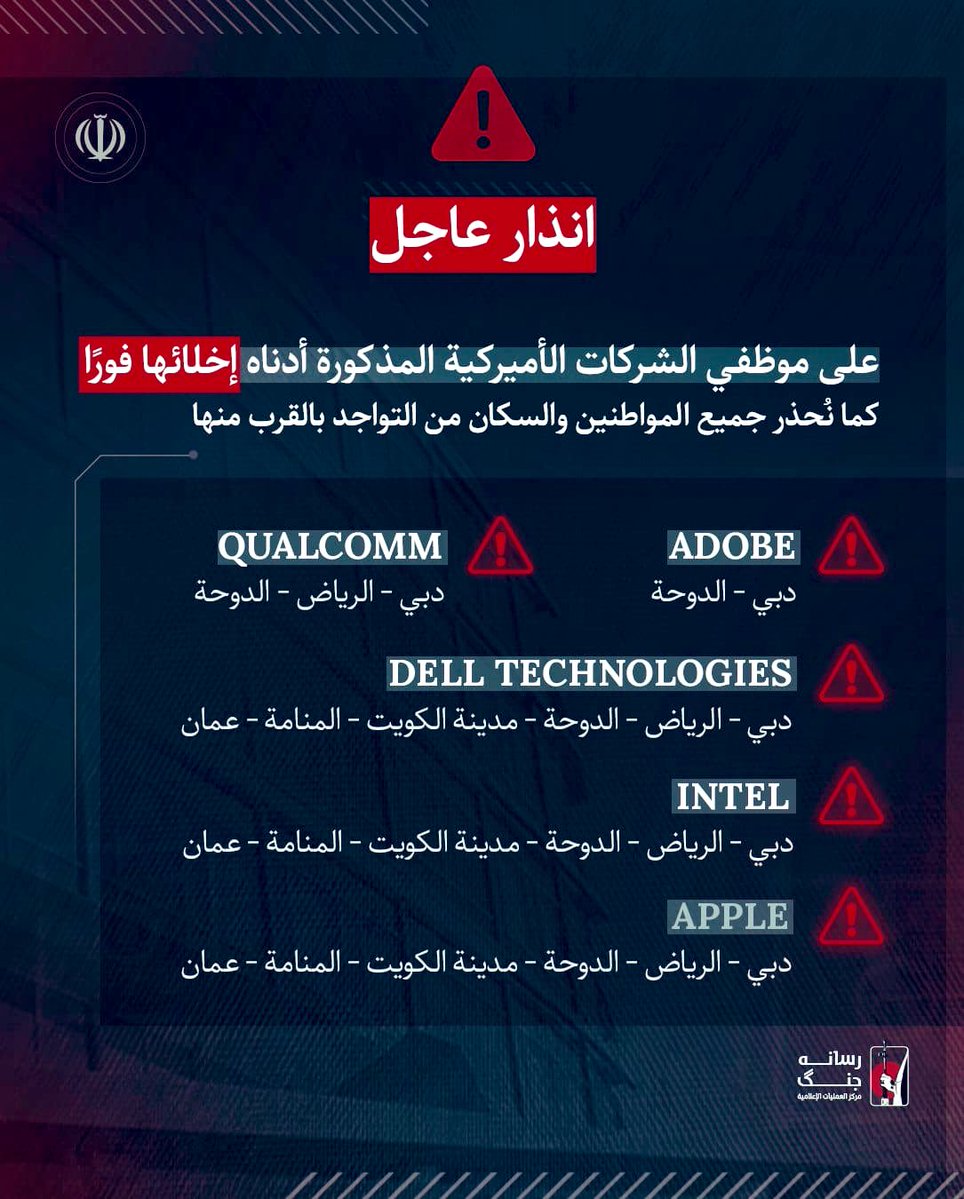
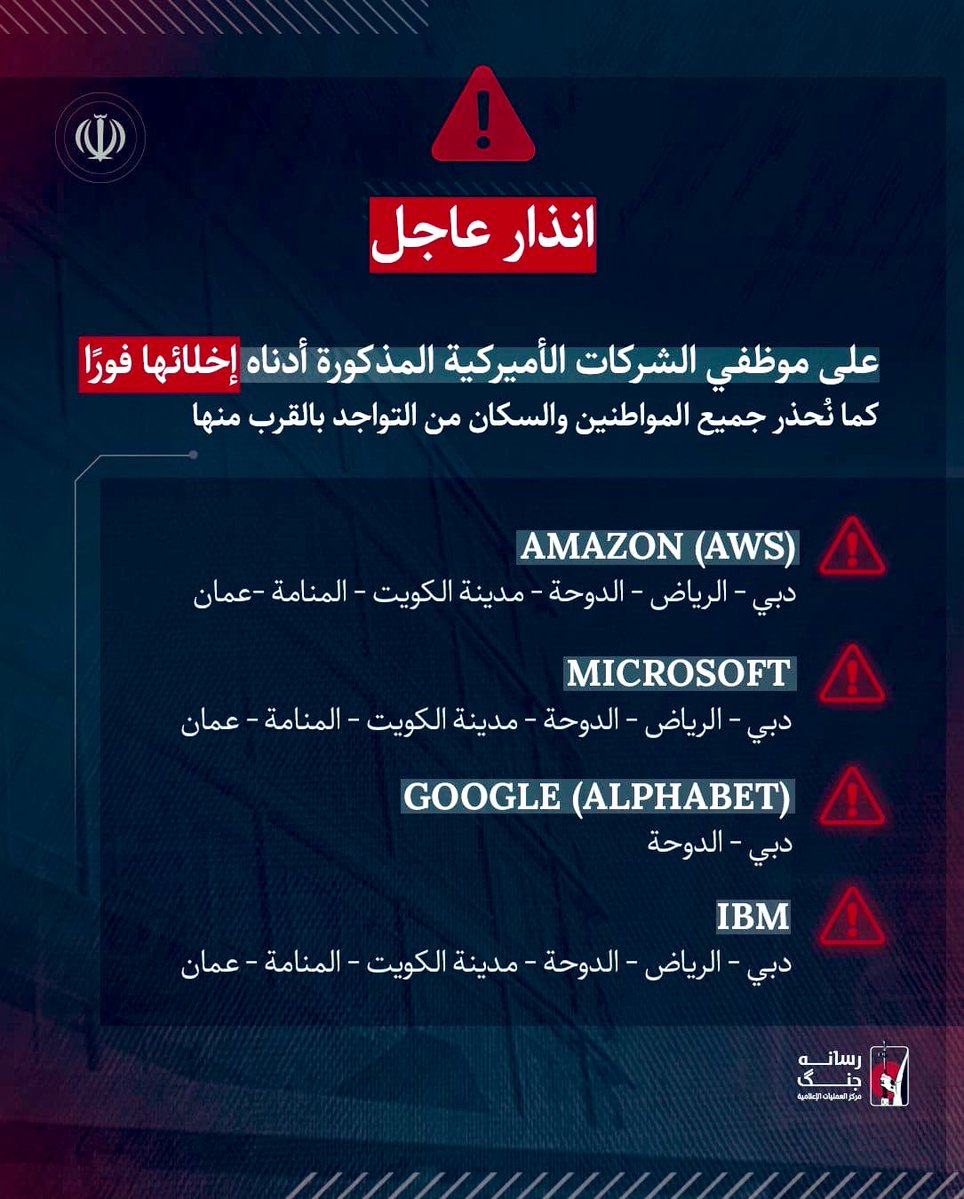
𝐈𝐑𝐀𝐍 𝐈𝐒𝐒𝐔𝐄𝐒 𝐓𝐇𝐑𝐄𝐀𝐓𝐒 𝐀𝐍𝐃 𝐄𝐕𝐀𝐂𝐔𝐀𝐓𝐈𝐎𝐍 𝐎𝐑𝐃𝐄𝐑 𝐅𝐎𝐑 𝐀𝐌𝐄𝐑𝐈𝐂𝐀𝐍 𝐓𝐄𝐂𝐇 𝐂𝐎𝐌𝐏𝐀𝐍𝐈𝐄𝐒 𝐈𝐍 𝐖𝐄𝐒𝐓 𝐀𝐒𝐈𝐀
Iran has issued threats and an evacuation order for American technology companies operating in West Asia, warning that their offices, data centers, and critical infrastructure could become potential targets amid the escalating conflict. The companies specifically mentioned include:
- IBM : regional enterprise services and cloud infrastructure in UAE and Israel
- Google : offices and cloud platforms in UAE, Israel, and other Gulf states
- Microsoft : data centers and corporate hubs across UAE and Israel
- Amazon / Amazon Web Services (AWS) : cloud operations and data centers in UAE and Bahrain
- Cisco Systems : networking and security infrastructure in Israel and Gulf states
- Palo Alto Networks : cybersecurity operations in UAE and Israel
- Oracle : enterprise software and cloud services in UAE, Israel, and Saudi Arabia
- Salesforce : CRM and cloud offices across UAE and Israel
- Adobe : digital solutions and offices in UAE and Israel
- Qualcomm : technology and R&D partnerships in Israel and UAE
- Dell Technologies : enterprise and data solutions in UAE and Israel
- Intel : chip and tech partnerships in Israel
- Apple : retail, corporate, and cloud partnerships across UAE
The implications are profound both technologically and economically.
These firms form the backbone of cloud computing, networking, enterprise software, cybersecurity, and digital communications in the region.
Evacuating employees and scaling down operations disrupts local services, hampers critical infrastructure, and sends shockwaves through global supply chains and investor confidence.
Modern conflicts now extend beyond physical battlefields into the digital and economic arenas, where tech companies and their human capital are key strategic assets whose disruption can ripple across the global economy.
Can Strategic Petroleum Reserve Releases Offset the Shock Caused by the Closure of the Strait of Hormuz?
An Economic Assessment of the Largest Government Intervention in Oil Markets in Decades
The closure of the Strait of Hormuz amid the ongoing war between the United States and Israel on one side and Iran on the other has triggered one of the most severe shocks to global energy markets in decades. The strait represents the most critical chokepoint in the international oil trade: approximately 20 million barrels of oil pass through it every day, accounting for nearly one-fifth of global petroleum consumption.
As military operations intensified and commercial shipping came under attack, many tanker companies began avoiding the route altogether, significantly reducing maritime traffic through the strait. The resulting disruption has sharply curtailed the flow of crude exports from the Gulf to international markets. Energy market estimates suggest that the disruption has removed at least 10 million barrels per day from global supply, a scale of disruption that some analysts describe as the largest supply shock in modern oil market history.
Faced with this sudden deficit, industrialized countries moved rapidly to deploy an extraordinary emergency measure: the release of large volumes of oil from their strategic petroleum reserves. The objective was to stabilize markets, reassure traders, and prevent an uncontrolled surge in global oil prices. The response was coordinated through the International Energy Agency (IEA), which organized a collective release of strategic stockpiles held by member states.
The Strategic Reserve Release Plan
The International Energy Agency announced a coordinated release of 400 million barrels from global strategic petroleum reserves, intended to mitigate the impact of the supply disruption and restore confidence in energy markets. This decision represents the largest emergency release of strategic oil stocks since the reserve system was created in the 1970s following the Arab oil embargo.
Within this coordinated plan, the United States contributed the largest share. Washington announced that it would release 172 million barrels from the U.S. Strategic Petroleum Reserve (SPR) over a period of approximately 120 days. This translates into a supply injection of roughly 1.4 million barrels per day into the market.
The remaining volumes will come from the strategic reserves of other IEA member states, including Japan, the countries of the European Union, South Korea, and the United Kingdom. These countries collectively pledged to release approximately 228 million additional barrels over a similar timeframe, equivalent to roughly 1.9 million barrels per day.
When these contributions are combined, the coordinated intervention results in an estimated 3.3 million barrels per day of additional supply entering global markets during the implementation period of the program.
Comparing the Reserve Release to the Actual Supply Loss
A comparison between these figures and the scale of the supply shock caused by the Strait of Hormuz disruption reveals the limits of this intervention.
If the closure of the strait has indeed removed roughly 10 million barrels per day from global markets, the 3.3 million barrels per day released from strategic reserves offsets only about one-third of the missing supply.
In practical terms, even after governments began injecting emergency oil stocks into the market, the global oil system continues to face a structural deficit of approximately 6 to 7 million barrels per day. This persistent imbalance helps explain why oil prices have continued to rise despite the announcement of the largest coordinated stock release in the history of the energy market.
Some estimates suggest that the 400 million barrels being released correspond to only about twenty days of the disrupted supply if the Strait of Hormuz remains effectively closed. This highlights the fundamentally temporary nature of the measure. Strategic reserves are designed to cushion short-term shocks and buy time for policymakers—not to replace long-term production losses.
Impact on Oil Prices
Market behavior over the past several days illustrates the limited ability of strategic reserve releases to reverse price momentum in the face of a major geopolitical disruption.
Instead of declining following the announcement, crude prices continued to rise sharply. Brent crude climbed above $100 per barrel, while West Texas Intermediate (WTI) reached approximately $95 per barrel, with daily gains approaching 9 percent in some trading sessions.
The market response reflects the fact that traders understand the difference between temporary supply injections and structural restoration of oil flows. Strategic petroleum reserves can mitigate immediate panic, but they do not resolve the underlying disruption affecting one of the world’s most critical energy corridors.
Moreover, continued attacks on shipping in the Gulf and the immobilization of dozens of oil tankers have heightened concerns that the crisis could persist for an extended period. As a result, several financial institutions have revised their oil price forecasts upward.
Some analysts now warn that if the Strait of Hormuz remains closed for several months, oil prices could rise to $150 per barrel or higher, approaching the historic peaks recorded during the global energy crisis of 2008.
The Psychological Dimension of Government Intervention
Despite its limited quantitative impact, the strategic reserve release carries significant psychological importance in global financial markets. Government willingness to deploy emergency stockpiles sends a signal that major economies are prepared to intervene in order to prevent uncontrolled price escalation.
Strategic petroleum reserves were originally created for precisely this purpose following the energy crises of the 1970s. Today, IEA member states collectively maintain more than 1.2 billion barrels of government-controlled emergency oil stocks, which can be deployed during supply disruptions.
Consequently, the release of these reserves is intended primarily to prevent market panic and dampen speculative price surges, rather than to fully compensate for lost production.
Conclusion
The available data indicates that the coordinated release of strategic petroleum reserves constitutes the largest government intervention in oil markets in decades. With 400 million barrels scheduled for release, led by the United States, the operation represents an unprecedented attempt to stabilize global energy markets during wartime.
However, a quantitative assessment makes clear that this measure can offset only about one-third of the supply loss caused by the closure of the Strait of Hormuz. As a result, the intervention has not succeeded in bringing prices down; instead, oil prices have continued to climb, surpassing the $100 per barrel threshold in recent trading sessions.
Ultimately, the decisive factor shaping the future of global oil markets is not the size of strategic reserves but the duration of the disruption in the Strait of Hormuz. If maritime traffic through the strait resumes quickly, the emergency stock releases may prove sufficient to absorb the temporary shock and restore equilibrium to the market.
If the closure persists, however, strategic reserves will serve only as a short-term buffer. The global oil market will remain structurally undersupplied, and prices may rise to levels not seen in nearly two decades. In this sense, the release of strategic reserves is best understood as a crisis management tool rather than a structural solution to the energy disruption triggered by the closure of the Strait of Hormuz.
🚨A horrific video shows Israeli settlers assaulting a Palestinian man in front of his home and his family today in the village of Qusra in the West Bank.
Earlier in the morning, an Israeli settler ran over a 5-year-old girl in Hebron and opened fire at civilians in the town of Sa’ir.
Israeli settler terrorism in the West Bank is reaching unprecedented levels, with full impunity.