2023 Killarney 1st town to phase out single-use coffee cups
bring your own cup or pay a €2 deposit for reusable cup that is returned when cup is given back
to +400 places
https://t.co/DRHkbS240L
Boy George shows amazing support for Israel by releasing song about October 7th 2023
He also sings in Hebrew at the end of the song
"We Will Dance Again"
https://t.co/soqEy21Mbf
Video -Runners vs 100+ robots -half marathon-Beijing 2026 -40% autonomously-rest remote-controlled
Winning robot, Lightning-by Chinese smartphone maker Honor-finished 50 mins 26 secs- beat humans
Uganda's Jacob Kiplimo record 2026 Lisbon 57 mins 20 secs
https://t.co/jVdw6ZTf7n
4 Family Traditions to Celebrate Boxing Day
The Signatry - Blog
15 Dec 2025
"After the abundance of Christmas day, here are a few ways your family could extend that abundance and celebrate generosity on December 26"
https://t.co/xaJOyeExas
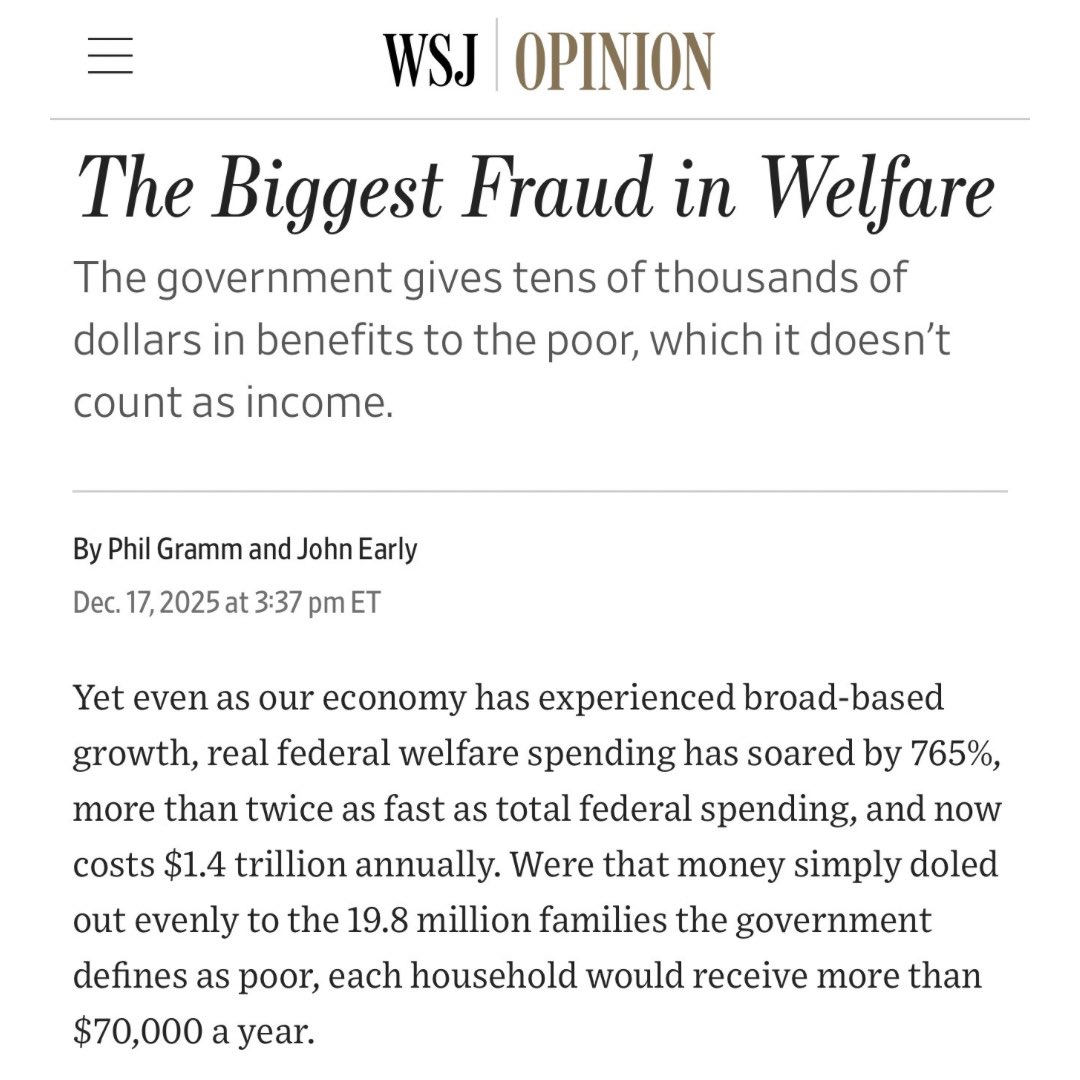
MUST READ from the WSJ: “Something is profoundly wrong with the U.S. welfare system—a problem that runs far deeper and is more dangerous than the shocking fraud in Minnesota that has been making headlines… real federal welfare spending has soared by 765%, more than twice as fast as total federal spending, and now costs $1.4 trillion annually. Were that money simply doled out evenly to the 19.8 million families the government defines as poor, each household would receive more than $70,000 a year.”
From Valour in the face of the enemy;
Christmas in Hell: Ortona, 1943 🕊️🇨🇦
Eighty-two years ago this December, Canadian soldiers celebrated the most extraordinary Christmas dinner of WWII—just blocks away from brutal street fighting.
On December 25, 1943, the Seaforth Highlanders gathered in shifts at the bombed-out church of Santa Maria di Constantinopoli in Ortona, Italy.
They’d scrounged tablecloths, china, roast pork, beer, and wine. An organist played “Silent Night” while machine gun fire echoed through the rubble-filled streets outside.
Meanwhile, the Loyal Edmonton Regiment soldiers on the front lines received their Christmas meal: a cold pork chop and a bottle of beer, delivered under fire.
This was the Battle of Ortona—called “Little Stalingrad” for its savage house-to-house combat. The Canadians faced Hitler’s elite paratroopers who’d been ordered to defend the town at all costs.
The narrow streets were death traps: booby-trapped buildings, concealed machine guns, and rubble barricades turned every block into a battlefield.
The Canadians improvised a brilliant tactic called “mouseholing”—blasting holes through adjoining walls to move building-to-building without exposing themselves to sniper fire. They’d throw grenades through the holes, then clear each house from the top down.
The fighting lasted eight brutal days. On December 28, the Germans finally withdrew. Victory came at a terrible price: 2,300 Canadian casualties, including over 500 dead—nearly a quarter of all Canadian losses in the entire Italian Campaign.
December 1943 became known as “Bloody December.” But that Christmas dinner in the church, with carols sung amid the chaos of war, remains a legendary moment of humanity and resilience in Canadian military history.
For some of those young soldiers, it would be their last meal. They fought, they sang, they remembered what they were fighting for—then returned to the hell of Ortona’s streets.
🇨🇦 Lest we forget 🎄
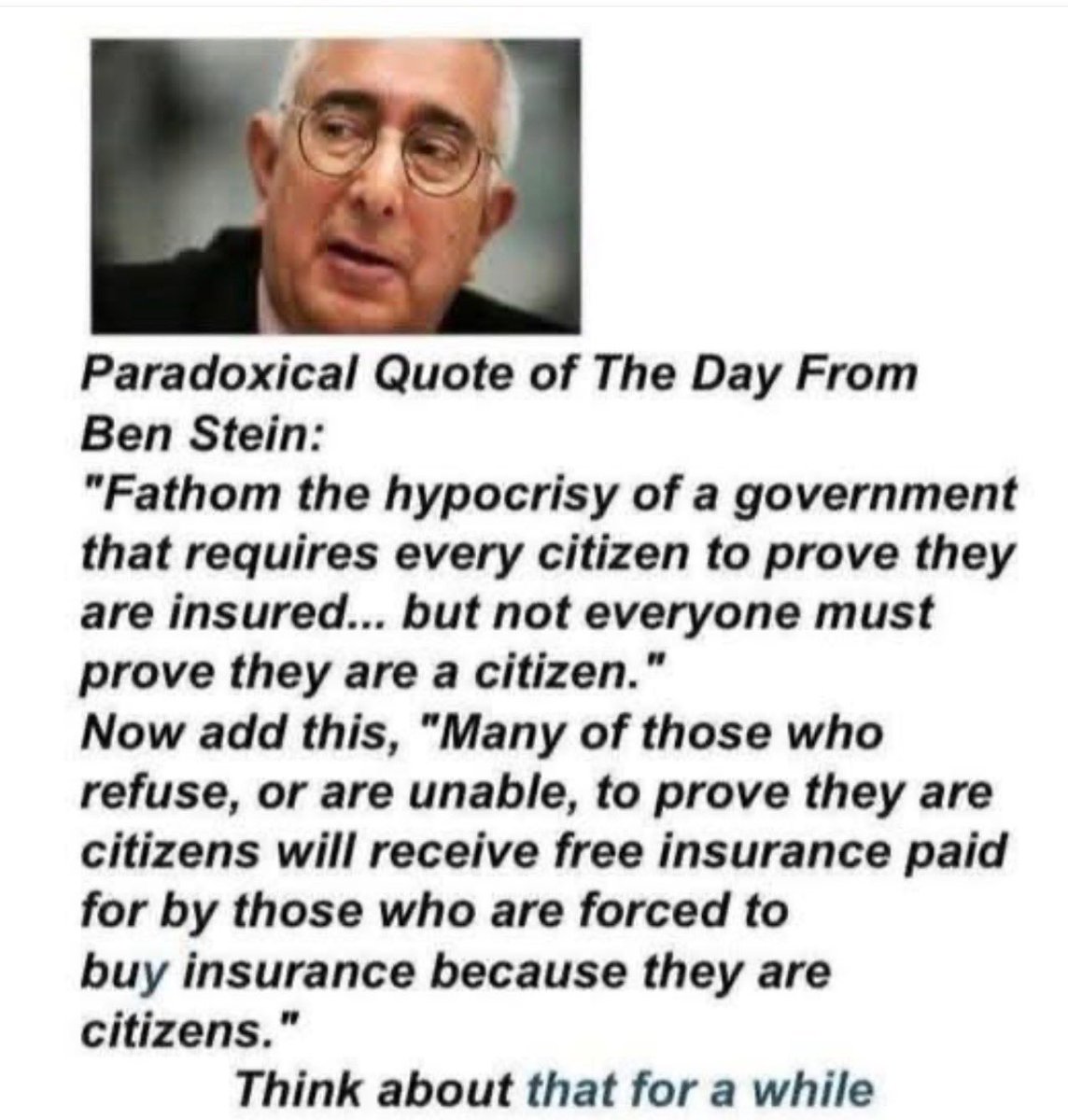
Read this Ben Stein quote a few times and let it sink in.
It makes me sick just thinking about the damage Democrats and RINOs have done to our great Republic!
In the early modern period, France followed quite a different trajectory than other Catholic nations at this time.
There was civil war and Protestants nearly took over - but the country remained officially Catholic.
But the French allied with the Ottomans and, especially in the 17th century, financially supported Protestant nations like Sweden.
I think the one overriding concern of the French state was not religion but geopolitics.
Kings of France were horrified at being surrounded by Habsburg possessions (Netherlands, Spain, Lombardy, HRE) so they were willing to side with anyone to fight this hegemonic power.
Despite France being the "eldest daughter of the Church" they could not put aside their fear for the sake of broader Catholic unity.
The religious history of Europe could have been so different if there was a secure, lasting alliance between France and the Habsburgs.
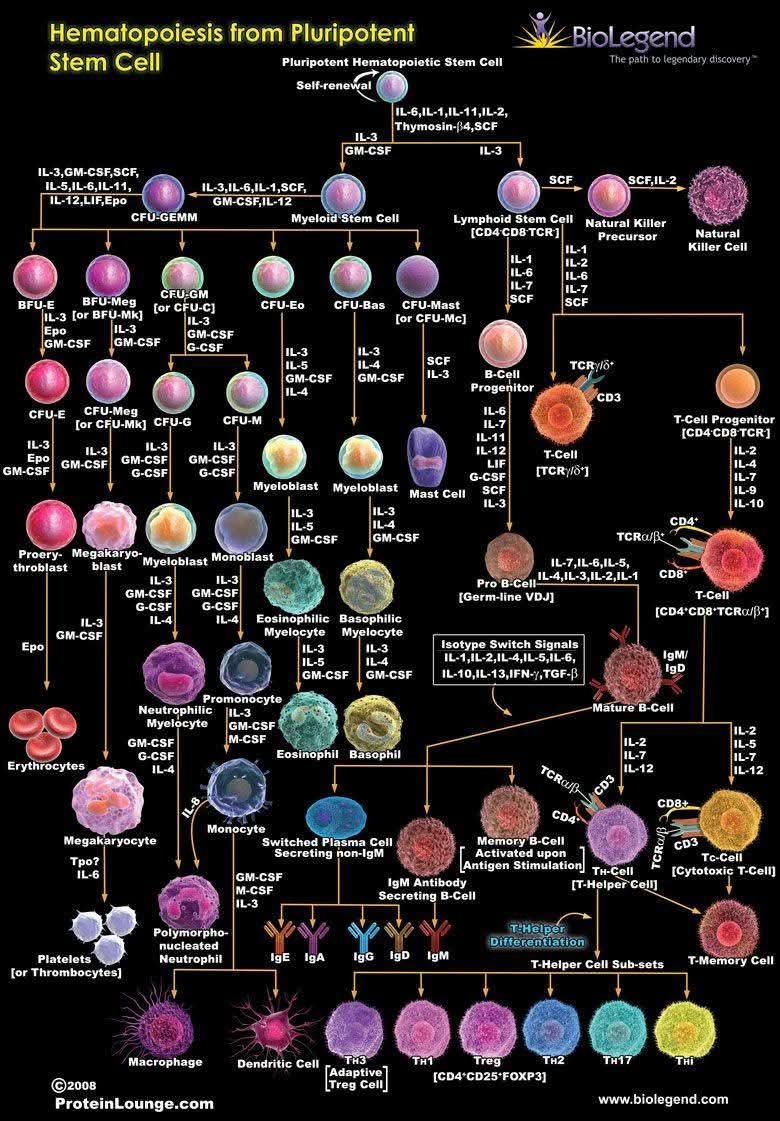
🔥 Your entire immune system starts with one cell.
Every red blood cell that carries oxygen
Every platelet that stops a cut from bleeding
Every neutrophil that attacks bacteria
Every T cell that hunts viruses
Every B cell that makes antibodies
All of them come from the same origin: a single pluripotent hematopoietic stem cell hidden inside your bone marrow.
🩸 What this stem cell can become
With the right signals from molecules like IL-3, GM-CSF, IL-7, SCF, and others, this stem cell divides and chooses a path:
• Red blood cells to deliver oxygen
• Platelets to form clots
• Neutrophils, eosinophils, and basophils to fight infection
• Monocytes and macrophages to clean up dead cells and debris
• B cells that produce IgG, IgA, IgM, and other antibodies
• T cells that orchestrate your immune defense
• Natural killer cells that recognize and destroy infected or malignant cells
Every branch in the diagram is a decision point based on the chemical signals surrounding the cell.
🧪 Why this matters
Your energy, your immunity, your ability to heal, and your resistance to infection depend on how well this system works.
When hematopoiesis is disrupted, it can lead to:
• anemia
• weakened immunity
• autoimmune problems
• slow healing
• susceptibility to infections
• blood cancers
Healthy blood begins with healthy stem cell signaling.
Inside your bone marrow, millions of stem cells are working every minute to build your immune system from scratch.
It is one of the most complex and elegant engineering systems in the human body.
This is the WHITE CARDINAL - A One in a Million Bird!
Native to North America, the White Cardinal isn’t a separate species but a rare color variation caused by leucism, a condition that affects pigment without changing eye color.
Unlike albino birds, these cardinals have dark eyes and normal behavior.
Their pale feathers make them stand out dramatically, but also make survival harder in the wild.
Fun Fact: Fewer than one in a million cardinals are born with this coloration!
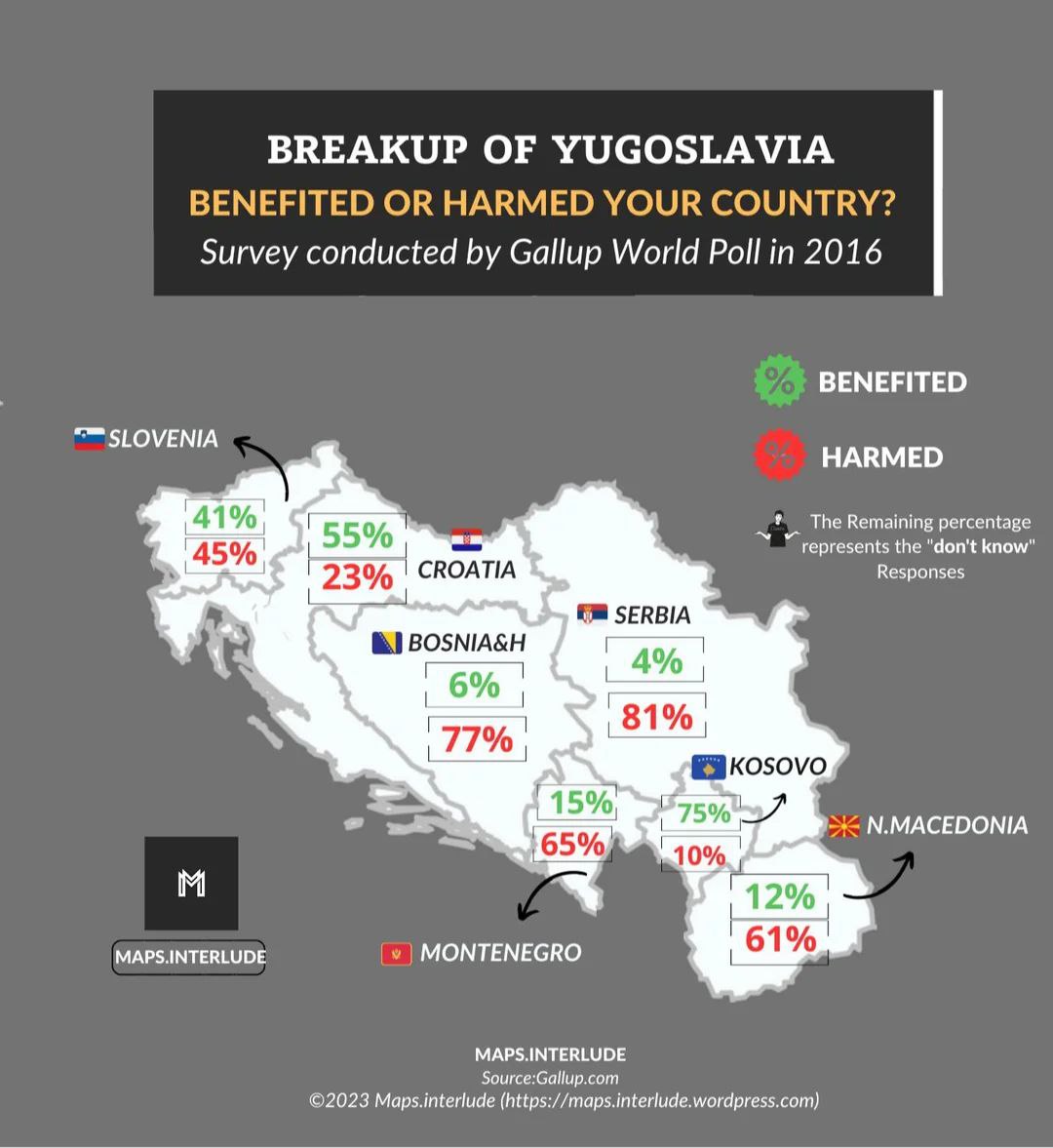
Considering what the people of most of the countries that constituted Yugoslavia think of its break up-
Who benefitted from its destruction?
It was a regional industrial powerhouse, Just before its breakup, Yugoslavia's GDP rivaled that of Switzerland, Belgium, and Austria.
How did solar get cheap?
Phase 1: 1950-1990s - NASA
Solar was invented in the US by Bell labs and pretty much only used by NASA who needed something very lightweight to power their space assets.
Phase 2: 2000 - Energiewind
The German government passed a law where it guaranteed that if you put solar panels on your roof the German government would pay you a high feed in tariff. Demand exploded.
Phase 3: 2005 - 2015 - China
In Europe German manufacturers could not meet their demand at home and Chinese entrepreneurs saw this fixed arbitrage opportunity and went all in. Chinese companies like Suntech took on huge government loans and built vast factories. Spain and Italy joined Germany with solar subsidies. Because of the price fixing in Europe the market arbitrage held as the solar cell manufacturing output in China exploded.
Phase 4 2015-2025 - Swanson’s Law
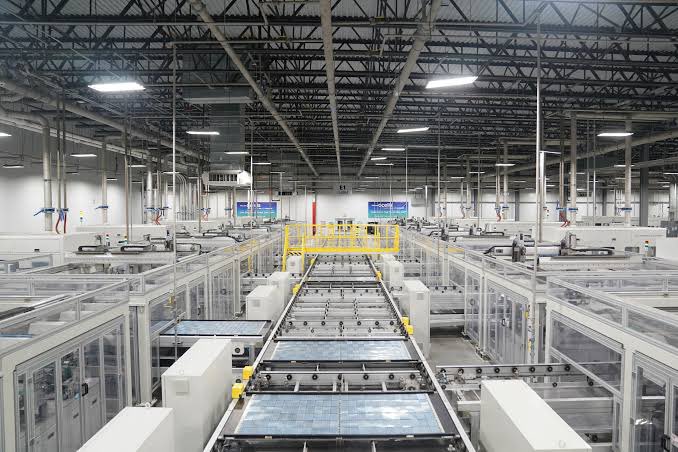
Once the big Chinese gigafactories were built, Swanson’s Law kicked in. This is the learning curve where manufacturers compound marginal gains and accumulate 1,000s of solutions to solved problems.
1. Ingots, originally they grew small Si crystals this was a slow batch process. Later they used continuous Czochralski pulling where you refill the crucible whilst the machine is still running. Saving hours of cooldown per batch. They also learnt how to grow huge single crystals that were 2-3 meters long.
2. Wafers, originally they sliced the crystals into wafers using saws. This was slow and turned 40% of the Si crystal into sawdust (kerf loss). The fix was diamond wire cutting, the wire was razor sharp, fast, much thinner than the saw, easier to keep clean and far less wasteful (4% kerf loss). Wafer costs plummeted.
3. Cells, you have to print silver lines on the back of the wafer to collect electricity. Over 15 years silver printing resolution improved and silver use was reduced by 70% whilst also blocking less sunlight. The mirror backing used to be aluminium which captured some solar energy as heat and was lost, so they added a dielectric passivation layer that captured more photons and improved cell conversion efficiency without changing materials.
4. Modules, engineers realised that by laser cutting panels in half they reduced electrical resistance in the cells. This means the panel runs cooler and produces more power.
Bifacial modules then emerged, instead of plastic backing. Panels were made with glass front and back, this means panels also collect energy bouncing from the ground below the panel which again boosts the panel output in operation.
These gains all compound to make the panels 90% cheaper over the course of 10 years.
Chinese manufacturers are now looking at perovskites as a paradigm switch. It’s essentially a superior crystal to silicon for absorbing light. You can make them from liquid chemistry and you can print them.
Silicon is great at capturing red and IR light perovskites can be tuned for blue spectrum.
You can then go tandem and pair both silicon and perovskites in the same modules.
Now panels are cheap, because they’re simple things to make. They cost around $0.10/watt ex factory. A solar installation costs around $3.00/watt and the panels themselves are now a very small part of the cost of a solar installation which is dominated by land, labour and structures.
Much of industry is like this. If you can consolidate manufacturing under one roof, you learn all the improvement opportunities much faster, because you just see more stuff.
If you pay organizations per homeless person, you get more homeless people and the NGOs fight hard to maximize the homeless population.
Whatever you incentivize will happen.
On December 20, 1522 CE, the gates of Rhodes opened up. After six months of siege, shattered walls, and streets choked with rubble and corpses, the surviving Knights Hospitaller marched out beneath their black banners, Crosses still stitched to their cloaks. Sultan Suleiman the Magnificent, conqueror of Belgrade and future master of much of the Mediterranean, watched them go. He had broken their fortress, but not their order. Impressed by their resistance, he granted terms rare for the age: safe passage, protection for civilians, and freedom to depart with their arms and relics. It was a moment of exhausted respect between enemies who understood war.
Knights were not a kingdom, and now they had no home. Founded centuries earlier in Jerusalem as a brotherhood sworn to care for sick pilgrims, they had long since become warrior-monks—the Knights of St. John—defending Christendom’s eastern frontier. Driven from the Holy Land, they had turned Rhodes into a stone fist clenched against Ottoman expansion, harassing Muslim shipping and sheltering Christian refugees. But that defiance had finally drawn Suleiman’s full attention. Rhodes fell—but the Order survived.
For years the Knights wandered, unwanted guests of Europe’s quarrelsome princes, until in 1530 CE, they were granted a barren rock by Charles V: Malta. From that fortress-island they remade themselves yet again, now known to history as the Knights of Malta. They became the corsairs of Christendom, launching daring sea raids against Ottoman vessels, ransoming captives, and turning the central Mediterranean into a lethal chessboard. Their galleys struck fast and vanished. Their fortresses bristled with cannon. They were small in number, but relentless.
Their defining hour came in 1565 CE, when Suleiman—old now, but still formidable—returned to finish what he had begun. At the Great Siege of Malta, tens of thousands of Ottoman troops descended on the island. The Knights, vastly outnumbered, fought with ferocity bordering on madness. At Fort St. Elmo, defenders died almost to the last man. Grand Master Jean de Valette, wounded and in his seventies, refused surrender. When relief finally arrived, the Ottoman army withdrew in ruins. Europe rang bells. Malta had held. It was a grand day for Christendom.
But time is the enemy no fortress can defeat. The age of crusading orders faded, and the Knights’ power ebbed with the sail and the cannon. In 1798 CE, Napoleon seized Malta without a fight, and the Order was scattered once more. They never recovered their sovereignty. Yet they never disappeared. Today, the Sovereign Military Order of Malta survives as a humanitarian and medical organization, still tracing its lineage to those men who marched out of Rhodes with heads held high.
📷 : a 15th Century CE, French manuscript illumination, invading Ottoman ships fill the harbor at Rhodes as the defiant Knights Hospitallers man the ramparts in defense.
#archaeohistories
On Dec. 21, 1910, four Royal North-West Mounted Police officers left Fort McPherson to deliver mail and parcels to Dawson City.
They never reached their destination. All four died in the wilderness.
This is the story of the Lost Patrol.
For 17 years, the Royal North-West Mounted Police conducted supply and mail runs between Dawson City and Fort McPherson, a distance of about 700 km through difficult and harsh terrain.
The trip was vital to keep both locations running.
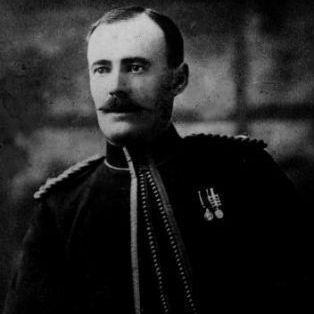
The man leading the patrol in December 1910 was James Fitzgerald.
He served in the Boer War and reached the rank of sergeant. In 1903, he established a NWMP post on Herschel Island in the Arctic. Earlier in 1910, he attended the Coronation of King George V.
Joining Fitzgerald were Constables Richard O'Hara Taylor, George Francis Kinney and guide Special Constable Sam Carter.
They also took 15 dogs, food for a month and 20 kg of parcels.
The first leg, apart from a missed turn, was relatively easy. For the second leg, they hired First Nations guide Esau George. After that leg was complete, they told George they didn't need him anymore. They began the third leg on their own. It was a fatal mistake.
George was the last person to see the group alive.
Over the next 10 days, the patrol became lost. By Jan. 12, 1911, they were struggling to find the right creek to follow. On Jan. 13, they chose to return to Fort McPherson but couldn't find the right path back.
Supplies ran out on Jan. 15. With no food, the patrol began to eat the dogs. From Jan. 18 to Feb. 5, 10 dogs were killed for food.
Fitzgerald made his final entry in his journal on Feb. 5.
By the middle of February, officers in Dawson City were getting worried.
The patrol was now a month late in arriving. Typically, the journey took 20 to 40 days.
On Feb. 28, a relief patrol was sent out to find the men, led by Corporal William John Dempster.
As they journeyed towards Fort McPherson, they found clues of the patrol.
Items such as dog bones, harnesses, a cached toboggan and mail bags were found.
In mid-March, the searchers found the patrol.
Kinney and Taylor were both dead in front of an old campfire. Kinney had starved to death, Taylor shot himself.
On March 22, the searchers found the bodies of Fitzgerald and Carter 40 km away from Fort McPherson. Both men had starved to death. They also found Fitzgerald's diary. Fitzgerald was the last to die. He had put a cloth over the face of Carter.
All four were buried at Fort McPherson on March 28, 1911. All future patrols had a First Nations guide, cabins with supply caches and marked trails.
Learn more about the patrol in my episode here 👇
https://t.co/mypQa9E8Ey
I hope you found the story of The Lost Patrol interesting.
If you enjoy my Canadian history content, you can support my work with a donation at 👇
https://t.co/ori5TwxQs3
Sources:
Explore North: https://t.co/PUYm3UkyPj
RCMP Pipes and Drums: https://t.co/Kk02awwjqR
NWT Timeline: https://t.co/H5tQOyVahA
Mysteries of Canada: https://t.co/tOpKK7mMyX