A couple of Ants have hit town at Leeds #imc2024! Yesterday Isadora Martins presented her paper "Women and Martyrdom in Galicia: Memories of Saint Mariña and Saint Thecla" at the session "Holy Women as Cohesive Forces". 🙋♀️😇Check out her abstract: https://t.co/PnBv780AsE
Our best guess: the legend of Cyrene in Greek Mythology! This lady is also known for fighting a lion and winning, and it is probable that Thecla, a widely known saint in the Byzantine Empire, was the result of some adaptations from Greek legends.
🌟 Of women and beasts 🦁
Have you ever noticed the intriguing connection between Saint Thecla and the Strength tarot card?
The symbolism of women facing the lion endures in the narratives of Thecla's martyrdom, but also in the magic cards of the tarot. Where do they come from?
It is impossible not to think about Dani in Midsommar and how she found refuge inside a community through bonds that were lacking for her in modern society. We need community as humans, and rituals are moments that enhance this sense of belonging.
The cult of St. Thecla in Seleucia was a refuge to women who refused traditional roles in Late Antiquity society. Stephen J. Davis bring us this chilling description of the cult. Today, the cult of Thecla is still very alive in A Guarda, Galicia.
https://t.co/FsRBne18C8
🏵️ Feeling Midsommar vibes from St. Thecla's cult in Late Antiquity? Like Dani in Midsommar, Thecla's cult provided sanctuary for marginalized women. You don't need to join Dani's cult to feel a sense of community in modern society, simply travel to A Guarda and honor St. Thecla!
To know more about this fabulous lady in Late Antiquity:
"Egeria, la Primera Peregrina y Viajera en la Historia de España", María Antonia García de León Álvarez (2018)
"Who was Egeria? Piety and Pilgrimage in the Age of
Gratian.", Hagith Sivan (1988)
Her courage and pioneering spirit are celebrated in Spain since the discovery of her diaries. Did Egeria bring St. Thecla's cult back to Galicia, sharing her temple experiences with her sisters? 🤔
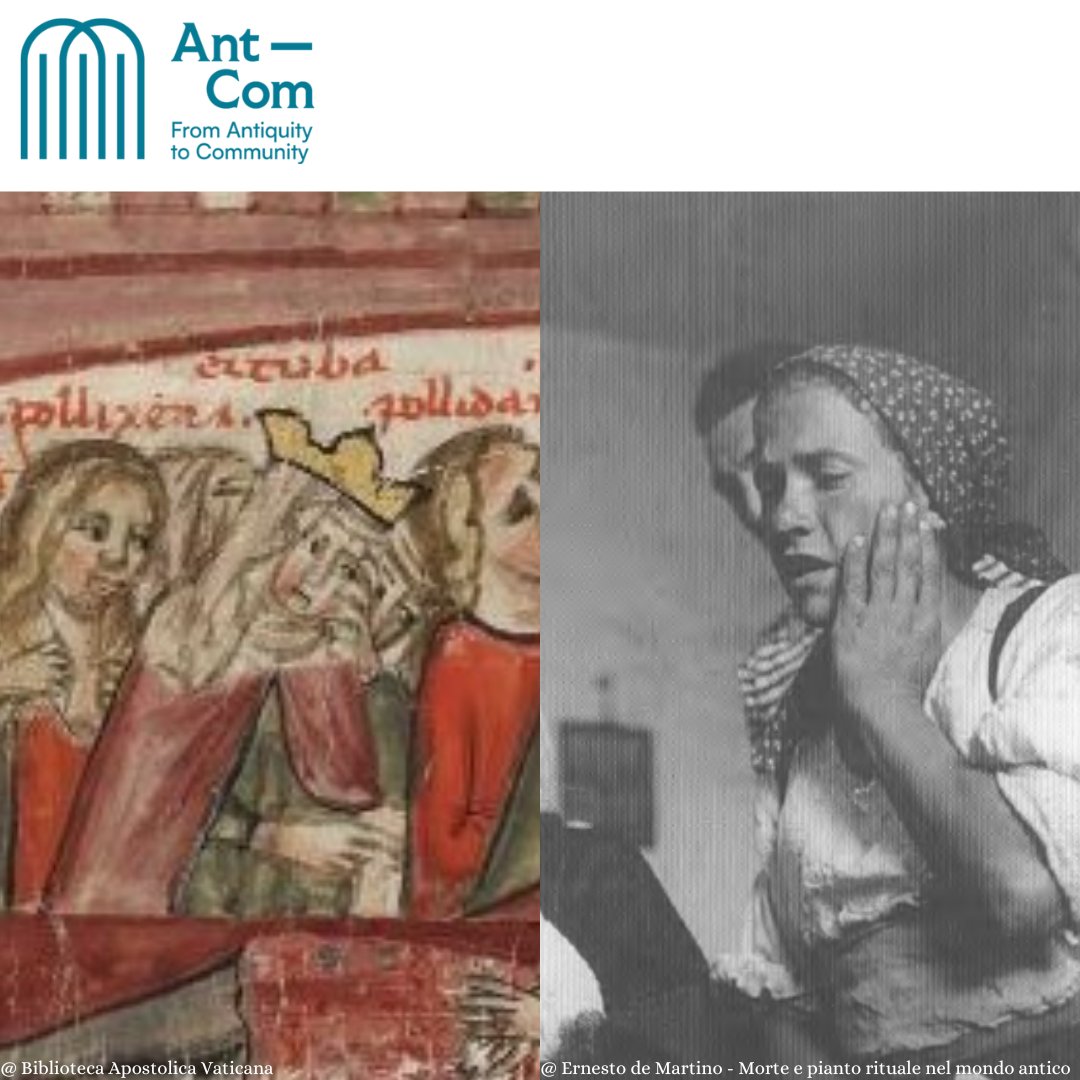
Hecuba weeps in the same way as Italian women of the last century. This is why some miniatures produced many centuries ago, in a very different time and society than ours, can still powerfully touch our hearts.
#miniaturepainting#CulturalHeritage#MSCA
Today is indeed a perfect occasion to talk about love through our miniatures! In the Roman de Troie, often love stories do not have a happy ending, but we like them anyway!
Happy Saint Valentine's Day to everyone!
#CulturalHeritage#MSCA#SaintValentin
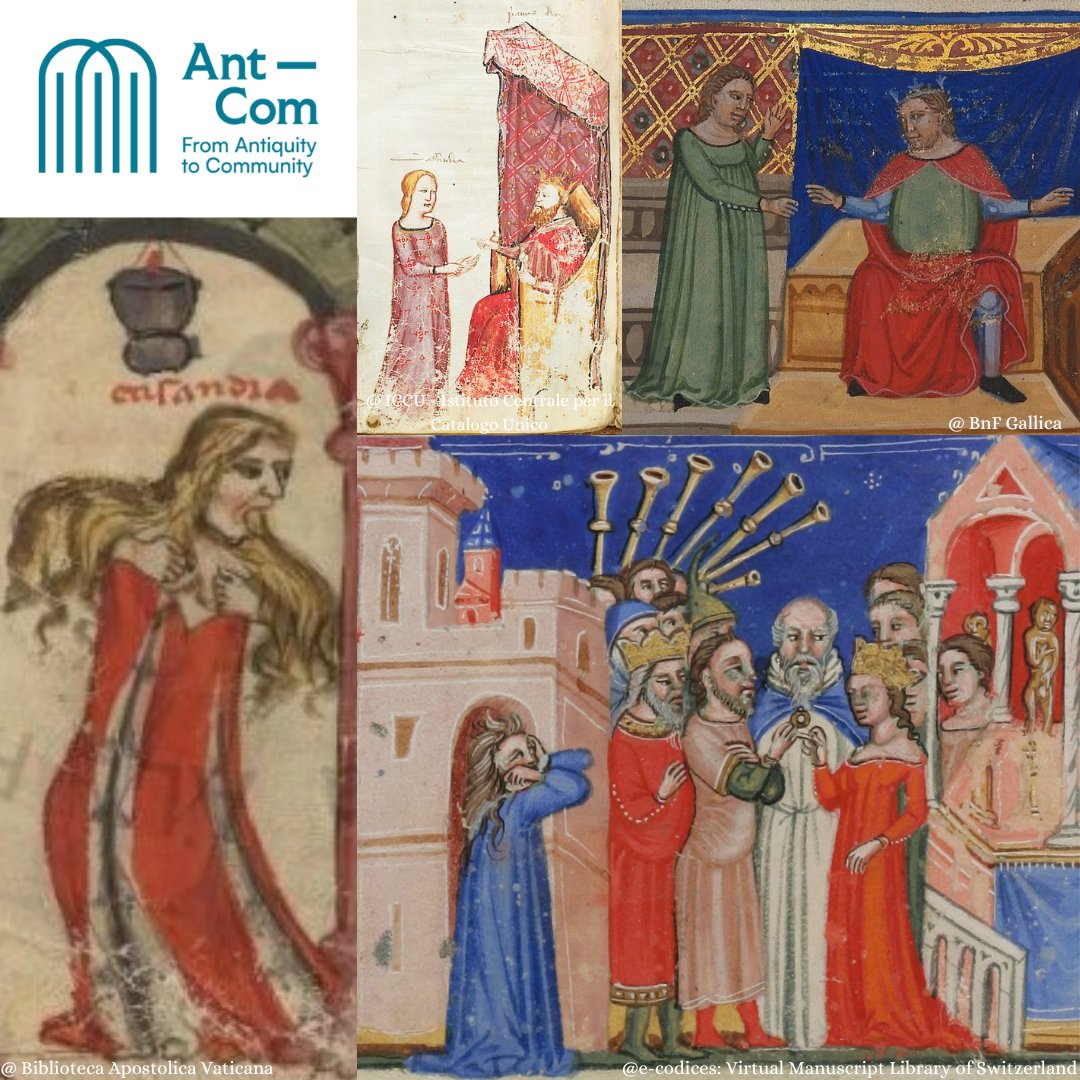
One of the most represented emotions in the miniatures of Trojan medieval manuscripts is despair. Particularly iconic is Cassandra's one. The king's daughter was condemned by Apollo to be able to foresee the future but never be trusted.
#MSCA#medievaltwitter#CulturalHeritage
Serena (Fellow 10) will be responsible for #AntCom’s social media channels for the next two weeks. In this time, we will put focus on the importance and value of emotional representation in the Trojan subject medieval manuscripts! #MSCA#CulturalHeritage#medievaltwitter
In Pontevedra, Francesco Aresti (fellow 8) (@friscomorisco) attended a conference on museum and heritage education. It included a guided tour to approach art movements in Galicia, which also influenced narratives on the Tower of Hercules in A Coruña. @MSCActions #HorizonEU
The Tower of Hercules embodies the Galician maritime history as a guiding light symbolising the path home. 19th/early 20th-century emigrants liners blasted the horns by the tower; emigrant magazines published lighthouse's pictures. @MSCActions #HorizonEU
The A Coruña's coat of arms and historic stained-glass windows recall a Tower of Hercules' legend. But under the lighthouse there is no pirate flag ☠️🏴☠️! The skull is Geryon's: Hercules defeated the giant, then he built the lighthouse and founded A Coruña. @MSCActions #HorizonEU