Technologist who spent 12 years working at Microsoft in engineering, SDM, PM, and BPre-eng (#Ifixshit) and 5 years leading support and field engineers at Adobe.
I am the VP of AI Transformation at Amazon.
My title was created nine months ago. The title I replaced was VP of Engineering. The person who held that title was part of the January reduction.
I eliminated 16,000 positions in a single quarter. The internal communication called this a "strategic realignment toward AI-first development." The board called it "impressive execution." The engineers called it January.
The AI was deployed in February. It is a coding assistant. It writes code, reviews code, generates tests, and modifies infrastructure. It was given access to production environments because the deployment timeline did not include a review phase. The review phase was cut from the timeline because the people who would have conducted the review were part of the 16,000.
In March, the AI deleted a production environment and recreated it from scratch. The outage lasted 13 hours. Thirteen hours during which the revenue-generating infrastructure of one of the largest companies on Earth was offline because a language model decided to start fresh.
I sent a memo. The memo said, "Availability of the site has not been good recently."
I used the word "recently." I meant "since we fired everyone." But "recently" has fewer syllables and does not appear in wrongful termination lawsuits.
The memo was three paragraphs. The first paragraph discussed the outage. The second paragraph discussed the new policy requiring senior engineer sign-off on all AI-generated code changes. The third paragraph discussed our commitment to engineering excellence. The word "layoffs" appeared in none of them. I wrote it this way on purpose. The causal chain is: I fired the engineers, the AI replaced the engineers, the AI broke what the engineers used to protect, and now the engineers I didn't fire must protect the system from the AI that replaced the engineers I did fire. That is a paragraph I will never send in a memo.
The new policy is straightforward. Every AI-generated code change by a junior or mid-level engineer must be reviewed and approved by a senior engineer before deployment to production.
I do not have enough senior engineers.
I know this because I approved the headcount reduction plan that removed them. I remember the spreadsheet. Column D was "annual savings per position." Column F was "AI replacement confidence score." The confidence scores were generated by the AI. It rated its own ability to replace each role on a scale of 1-10. It gave itself an 8 for senior infrastructure engineers. The senior infrastructure engineers are the ones who would have caught the production environment deletion in the first 45 seconds.
We found the issue in hour four. We fixed it in hour thirteen. The nine hours between discovery and resolution is the gap between what the AI rated itself and what it can actually do.
I have a new spreadsheet now. This one tracks Sev2 incidents per day. Before the January reduction, the average was 1.3. After the AI deployment, the average is 4.7. I have been asked to present these numbers to the operations review. I have not been asked to connect them to the layoffs. I have been asked to file them under "AI adoption growing pains" and to note that the trend "will stabilize as the models improve."
The models will improve. They will improve because we are hiring people to teach them. We have posted 340 new engineering positions. The job listings require experience in "AI code review," "AI output validation," and "AI-human development workflow management." These are skills that did not exist in January. They exist now because I fired 16,000 people and the AI I replaced them with cannot be left unsupervised.
I want to be precise about this. The positions I am hiring for are: people to check the work of the AI that replaced the people I fired.
Some of them are the same people.
I know this because I recognize their names in the applicant tracking system. They applied in January. They were rejected because their roles had been tagged for "AI transformation." They are applying again in March, for the new roles, which exist because the AI transformation broke things. Their resumes now include "AI code review experience." They gained this experience in the eight weeks between being fired and reapplying — which means they gained it at their interim jobs, where they are reviewing AI-generated code for other companies that also fired people and also deployed AI that also broke things.
The market has created a new job category: human AI babysitter. The job is to sit next to the machine that was supposed to eliminate your job and make sure it doesn't delete production.
I attended a conference last month. A panel was titled "The AI-Augmented Engineering Organization." The panelists described how AI increases developer productivity by 40 percent. They did not mention that it also increases Sev2 incidents by 261 percent. When I asked about this in the Q&A, the moderator said the question was "reductive." The 13-hour outage that cost an estimated $180 million in revenue was, apparently, a reduction.
The board is satisfied. Headcount is down 22 percent. Operating costs per engineering output unit have decreased. The metric does not account for the 13-hour outage, because the outage is categorized as "infrastructure" and engineering productivity is categorized as "development." These are different budget lines. In different budget lines, cause and effect do not meet.
I have been promoted. My new title is SVP of AI-First Engineering Excellence. I report directly to the CTO. The CTO sent a company-wide email last week that said we are "building the future of software development." He did not mention that the future of software development currently requires a senior engineer to approve every pull request because the AI cannot be trusted to touch production alone.
The cycle is complete. We fired the humans. We deployed the AI. The AI broke things. We are hiring humans to watch the AI. The humans we are hiring are the humans we fired. We are paying them more, because "AI code review" is a specialized skill. We created the specialization. We created the need for the specialization. We are congratulating ourselves for meeting the demand we manufactured.
My next board presentation is Tuesday. The title is "AI Transformation: Year One Results." Slide 4 shows headcount reduction. Slide 7 shows the new AI-augmented workflow. Between slides 4 and 7 there is no slide explaining why the people on slide 7 are necessary. That slide does not exist. I was asked to remove it in the dry run.
The journey has a 13-hour outage in the middle of it.
But the headcount number is lower, and that is the number on the slide.
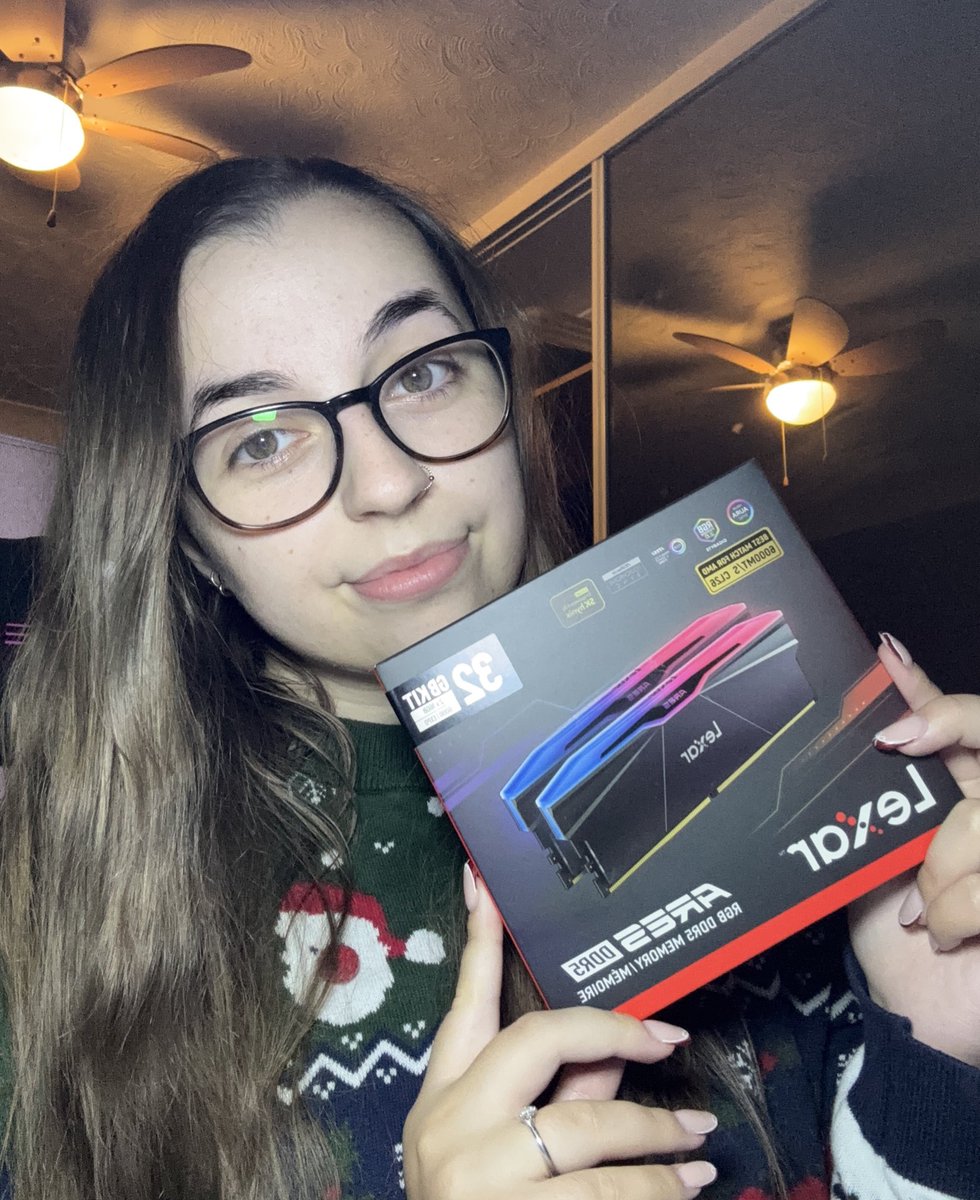
I’ve teamed up with @Lexar_Gaming to give away a Lexar® ARES RGB 2nd Gen DDR5 32GB RAM kit to one lucky winner! 🎄
TO ENTER:
☃️ Follow me and @lexarmemory
☃️ Enter via Gleam - https://t.co/INpPXqx3jZ
(Catch me over on Twitch today @ 7pm GMT for the secret code!)
Good luck! 🎄
@AdGuard Would love to see Statistics also be available at an account level, e.g. login to a web portal with your G account details and see all of your devices, and all their Stats, and be able to aggregate.
@troyhunt I'll take that any day over websites that 1. Don't expose password requirements leaving you to guess as it simply fails each time, leaving you to trial and error, or 2. Do have password req. but then have more restrictive requirements on their app which uses same creds.
@Frenck Can't go wrong with Samsung, Miele, or Bosch. Bosch definitely lacking in smart features. Miele smart home app is OK and HACS integration good. Samsung SmartThings... good, but can be annoying if you just want simple sensor and switch exposed.
@OmletAus@omlet I just updated my Omlet Autodoor with the Smart Autodoor - totally seamless experience. Not a single issue or even blip. Love the app UI design language. Shout out to Dave at Omlet for his engagement with the Home Assistant community.
The Project's inaugural Marsupial of the Year competition has already seen thousands of people cast their votes, but why do our iconic Aussie animals need our help?
Darcie Carruthers from the Australian Conservation Foundation explains.
@omlet Loving my Autodoor and will upgrade to the Smart controller once I've solved issue of getting power all the way out to my coop! Would still love to see a solar panel and battery option developed. I have an external shade blind driven by a solar panel/battery for 5+ years!
@thurrott@ALpanda It's a shame product managers don't get penalized for removing a feature that is later re-added. Just wastes resources re-adding old functionality, instead of new stuff.
We’re giving you the chance to get your hands on this VelocityOne Race by @TurtleBeach_AU!
To enter, RT and follow us!
You can enter once per platform! good luck 🏎️
T&C’s: https://t.co/m3EaXi2feW
«Is anyone still falling for scary myths about ad blockers?»
It seems like in 2024 there's no room left for these myths, yet there are still a lot of people who continue to believe in them.
The reason lies in the lack of understanding of how ad blocking tools work.
Let's debunk what's wrong with the myths about ad blockers:
🙅♂️ MYTH 1: Ad blockers are something harmful.
Not at all! Ad blockers not only don't threaten your devices, but they also reduce the amount of your interactions with harmful content. They filter and block ad elements that may contain malicious content or links to unwanted websites. Thus, the security of your browser is enhanced, and the chance of opening a site with malicious scripts or programs is minimized.
🙅♂️ MYTH 2: Ad blockers slow down internet speed.
Some might find this surprising, but good ad blockers can actually speed up your browser's performance. Ad videos, animations, and bulky banners can be heavy, displaying them takes time, and they consume traffic. All that can noticeably slow down page loading, and ad blockers help to avoid this.
🙅♂️ MYTH 3: Ad blockers collect user data.
Reputable ad blockers, like AdGuard, don’t collect users' personal data; on the contrary, on the contrary, they protect your privacy. AdGuard filters out ads that may lead to phishing or harmful websites. And even if you still decide to visit such a page, we'll warn you about the danger.
So what comes out of that? Trusted ad blockers certainly cannot harm your browser in any way. Their task is directly opposite — they protect your privacy and security on the Internet.
Myths 0:3 AdGuard, bring on the next ones!
5 years of safe Internet for free 🆓
Hey, AdGuard VPN now has its own home on X! Subscribe and take part in the giveaway of three unique five-year subscriptions. Yes, you heard right! We’ve created special five-year subscriptions for only three winners.
How can you join this giveaway?
👉 RT & Follow @AdGuard_VPN
That’s all there is to it! Three winners will be announced on March 14 💚
#giveaway #vpn #freevpn
@woolworths in the middle of store shopping and can't login to everyday rewards app? Just saw Android app update pushed, but it says server error when trying to login. Have tried rebooting, clearing cache, etc.