@DZY_USVN@alexshams_@viroraptor Oh yeah I remember hearing this wacko wannabe “emperor” was once a military officer for the ARVN before 1975 plus recent terrorist bombings under his name. He definitely owed you guys blood debt from that.
Dragić & Chan analyze 57,583 respondents across 43 countries, finding that traditional media use is associated with less favorable attitudes toward homosexuality and digital media use with more favorable ones, conditional on polarization & press freedom.
https://t.co/F77Q7sbWx0
Published an article showing that voters in Japan, South Korea, and Taiwan punish democratic norm violations more strongly than U.S. voters, with little evidence that partisanship or affective polarization weakens accountability. https://t.co/PxPGVByrIT
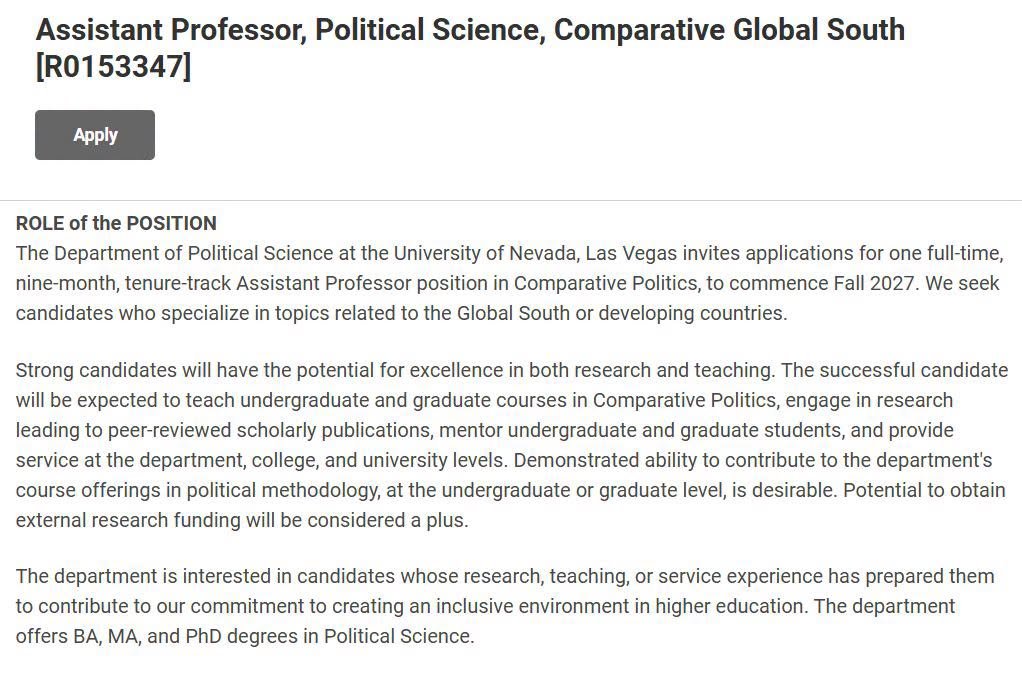
My department @UNLPoliSci is hiring! We are looking for a comparativist focusing on the Global South to join our department. If you are interested in this position or have any question, please contact the search committee chair, which is me. @UNLV
https://t.co/O5PhXwjz8s
Reform Party Leader Lee Jun-seok Resigns: A Sign of the Decline of South Korea’s Third-Way Conservatism?
After being pushed out of the People Power Party, Lee Jun-seok founded the Reform Party as a more moderate conservative alternative and won around 8% of the vote in the last presidential election, backed in part by younger voters dissatisfied with both major parties. He has now resigned as party leader.
Lee said that after the party’s heavy defeat in the recent local elections, he proposed several plans to rebuild and strengthen the party but failed to win enough support internally.
His remarks also suggested that disagreements over the party’s future direction, not just responsibility for the election loss, were behind his resignation.
The Reform Party’s future as an independent third-way conservative force now looks increasingly uncertain.
At the same time, the People Power Party, led by hardline conservatives supportive of former President Yoon Suk Yeol, may gain an even stronger voice within South Korea’s conservative bloc.
A male couple in Iga City, Mie Prefecture, has submitted a marriage registration. Japan doesn't legally recognize same-sex marriage. Iga City Hall didn't accept the registration but hasn't rejected it, and Mayor Inamori Toshinao says he wants to accept it "no matter what."
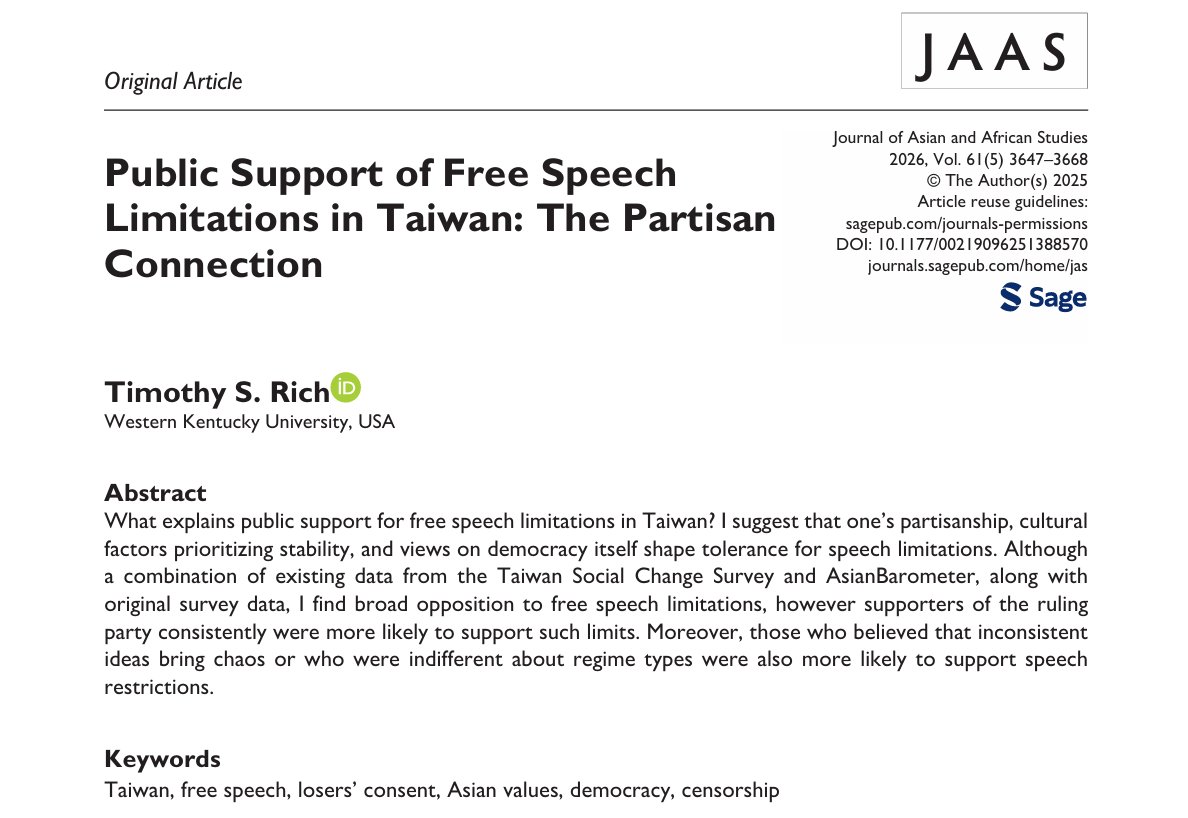
Rich shows that Taiwanese broadly oppose government limits on speech, yet ruling-party supporters are more accepting of them. Across five surveys, social-order concerns and indifference toward regime type also predict greater support for restrictions.
https://t.co/qJVRx0YtCR
PRESIDENT Online argues that PM Takaichi’s falling approval ratings are not primarily due to ideological issues, but a collapse in trust over economic management. Voters who liked her personally are beginning to separate “liking the politician” from “trusting the government.”
**ACADEMIC JAPAN JOB OPPORTUNITY**
IU is hiring a new visiting assistant prof of JAPANESE DOMESTIC POLITICS!
Apply by August 9!
A great opportunity for someone starting out. Significant perks.
Please share with any recent/soon-to-be PhDs. Thanks!
https://t.co/coaAlU4e9h
📢Call for Papers!
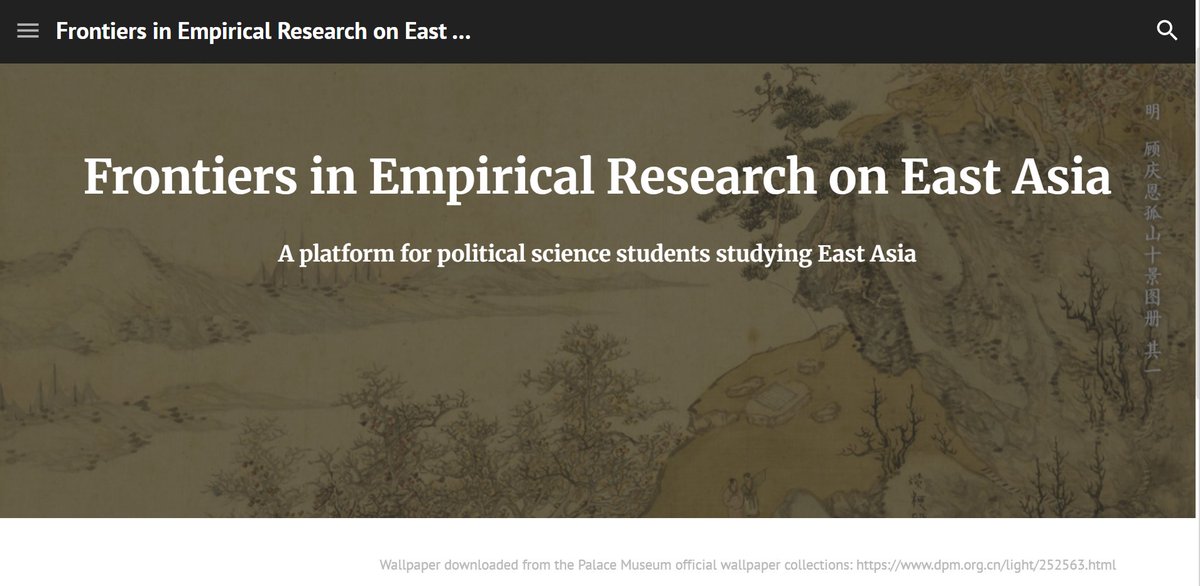
NYU Politics will host the fifth "Frontiers in Empirical Research on East Asia" conference on Jan. 14–15, co-organized by @EHWpolisci, @amycatalinac, and me. Please submit your application by Aug. 17: https://t.co/DsE6FeDDtw. Look forward to your submissions!
The change was made because when members of the upper house traveled overseas and introduced themselves as members of the House of Councillors, foreign dignitaries often did not understand what the title meant. By adopting “Senate,” the internationally recognizable term for an upper house, members can now introduce themselves as senators and be immediately understood.
Ginsburg (2003, ch. 3) argues that courts build power strategically rather than simply apply law. By anticipating compliance, override, punishment, and attack, courts can move from low to high equilibria, especially where political power is fragmented.
https://t.co/3gctcJHtak
Jiang finds that in Taiwan religious attendance, not affiliation or belief intensity, predicts political participation across Buddhist, Taoist, folk, and Christian traditions. This supports the generalized social capital over civic skills or mobilization.
https://t.co/vv6XKHraC8
Guo & Lei explain Asia's newspaper-online news trust gap through political trust transfer and alternative information orientation, showing how press freedom and polarization condition these mechanisms across 14 societies.
https://t.co/u5oKIAwTHy
Excited to announce that jpmap + jpmapdata are now ready on CRAN! 🇯🇵🗺️📦
From initial idea to CRAN submission took less than 24 hours with OpenAI Codex running GPT-5.5 in Extra High Intelligence mode. 🤖⚡
https://t.co/MN8K1ZXrJI
Version 1.1 (July 7, 2026) adds 2025 national elections to 15 countries and 2026 elections to 13 more, alongside various other minor fixes. All geocoded, most at the polling station-level! Explore on the map today: https://t.co/XMW9IqKbgx
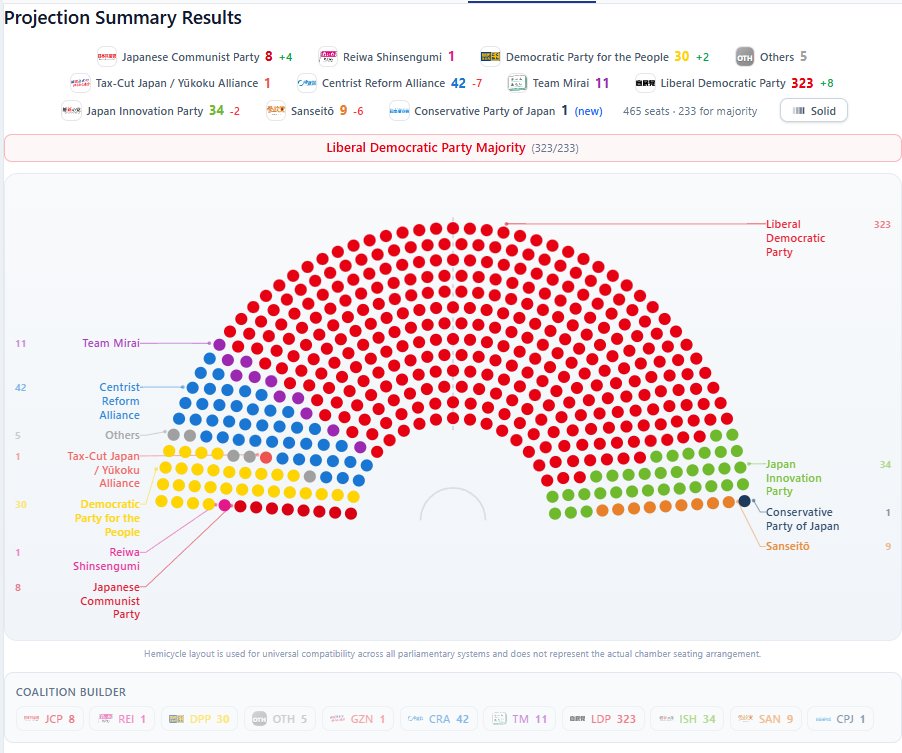
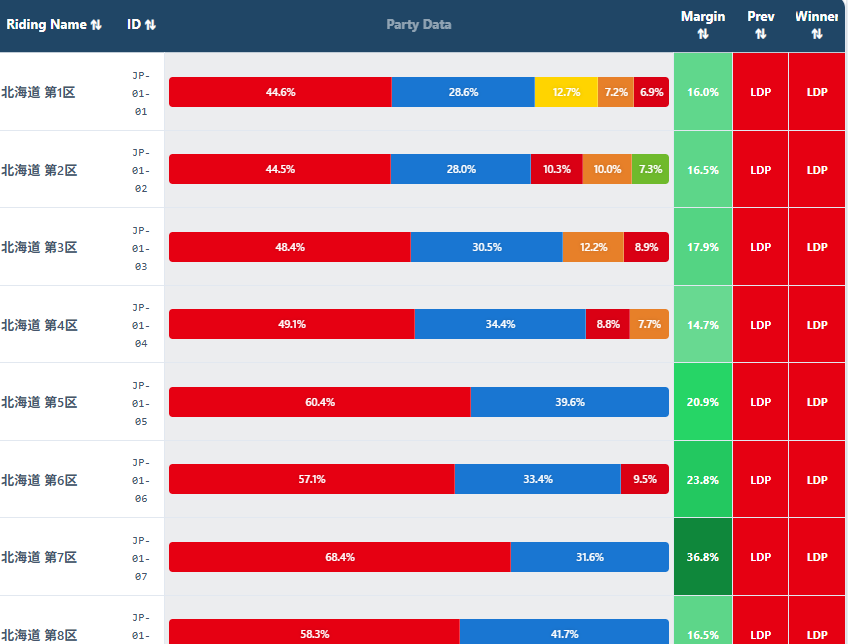
I have made the world's first Japanese electoral simulator, it includes maps, constituency tables, PR blocks etc; The LDP is still winning big, it would be great if any Japanese can test it!
Link in the comment
Moravcsik (2014) argues qualitative rigor requires transparent evidence, interpretation, and choices. Active citation links contestable empirical claims to annotated excerpts, creating a practical framework for data, analytic, and production transparency.
https://t.co/ZEm916oRVe