My paper on invasive molluscs in the River Thames is out in #lethaia now! Take a look at how the benthic community has been almost completely restructured by just two species across the last 200 years https://t.co/stS6FMMITw
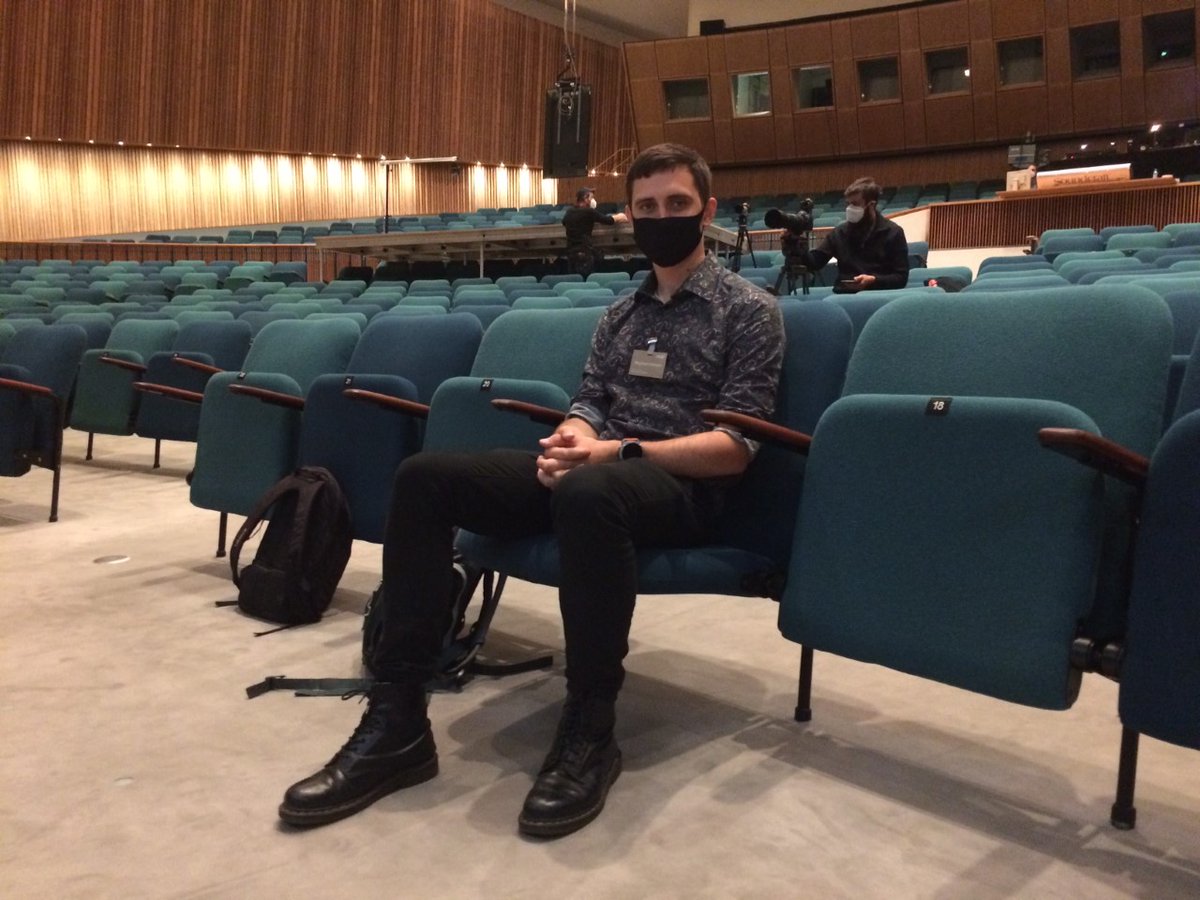
Stephen Himson @GeologyLeics preparing for his talk on 'Extinction, past present and future' @HKW_Berlin in the session 'Memory and oblivion in times of extinction' https://t.co/fRCdXkiEj0
I am presenting at #vEGU21 in the session: “The physical record of the Anthropocene in geological archives” this afternoon! I will be talking about the stratigraphic record of the Anthropocene in San Francisco Bay @GeologyLeics@LeicesterPalaeo https://t.co/u4pncN40Yp
For any French-speakers out there, a review article on #Anthropocene biosphere change has just been published featuring work from my PhD. Check it out below!
https://t.co/aHzrVOnWUF
Local Anthropocene signature in Paris? An estimated 1 ton of Pb was deposited within 1km of Notre Dame Cathedral as a result of the spire collapse
https://t.co/1S4Z1imnWv
Musings in the @LeicesterPalaeo lab group on what the #geological legacy of #COVID19 may be, depending on the reactions of global governments and business, have made their way to print! Short read on some hypothetical future records...🪨😷🗺️
https://t.co/ZferLSiMcp
An interesting read about cultural and historical perceptions of waste that have led us into the situation we currently find ourselves in of mindless consumption...
The idea of ‘disposability’ is a new and noxious fiction – https://t.co/O2cpLzOiL7 via @aeonmag
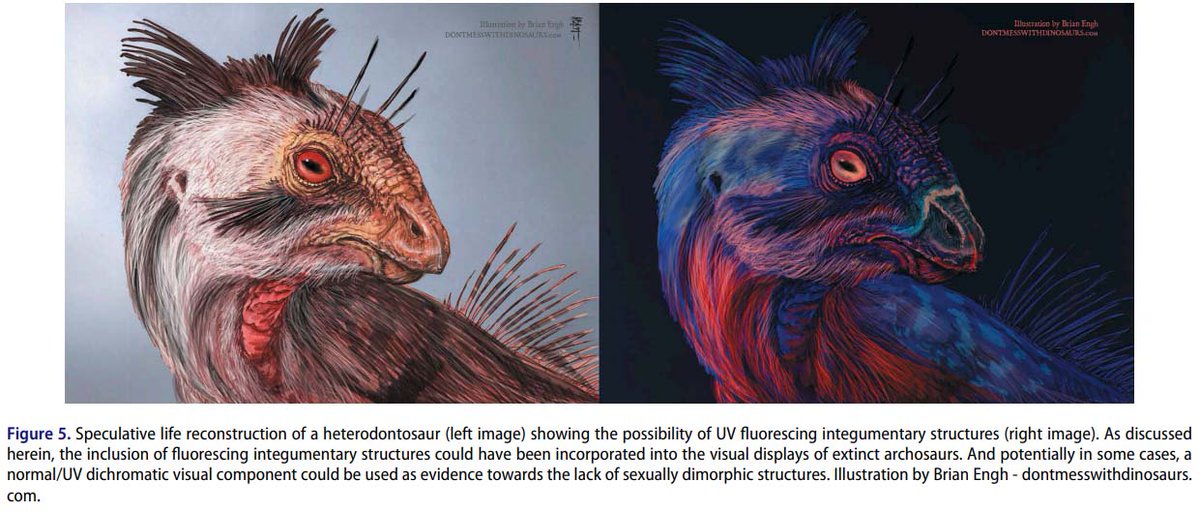
NEW PAPER! @TetZoo, @JamieDunning & I have a new paper on "glowing dinos". Well, not "glowing" per se, but photoluminesce of their keratinous structures. Potentially contributing towards visual communication including sexual dichromatism.
Take away: dinos were probably ravers ;)
A brief intro to our research on the Anthropocene and the importance of understanding that humans are now a geological force @LeicesterPalaeo@GeologyLeics
Check out this article for an overview of our current research at @LeicesterPalaeo with myself, @AnthropoSteve and Prof. Mark Williams
https://t.co/z8c5aNCot4 👾 👾 👾
Mark Williams from the University of Leicester delivers an entertaining, astonishing and frightening lecture on the Anthropocene as the #IGRM2020 keynote.
I will be at my poster board from 2-4pm, come and have a chat about invasive species, the Anthropocene and the complete reconfiguration of San Francisco Bay’s biota by humans! #AGU19
Check out @AnthropoSteve 's research at #AGU19. Visit him at Moscone South poster board 1232 today and chat about invasive species and the #Anthropocene: "The invasive foraminifera Trochammina hadai as a biostratigraphic marker of the Anthropocene in San Francisco Bay."
Absolutely thrilled to be joining the @Palaeo_Bham team next year to reconstruct the diets of the earliest dinosaurs and their relatives. Can't wait to get started!
Stephen Himson (@Anthroposteve) is a PhD student focusing on the #anthropocene. His project investigates “Are invasive species (‘neobiota’) a biological and biostratigraphical marker of the Anthropocene?”
Jan has collaborated with Mark Williams and international colleagues to develop the Anthropocene as an epoch of geological time characterised by humans. Jan researches potential stratigraphic markers of the epoch including invasive species and technofossils.
Jan Zalasiewicz is a Professor of Palaeobiology investigating the #anthropocene, Early Palaeozoic and Quaternary stratigraphy and sedimentology, mudrock processes and graptolites.
Mark has collaborated with Jan Zalasiewicz and international colleagues to develop the #Anthropocene as an epoch of geological time characterised by humans. Mark researches potential markers of the epoch including agricultural, pollutant and technological appearances.