To the Americans:
I've travelled all over the world. I've familiarized myself with many places, and met many people. And I'm a Canadian, although I’m privileged to reside once again in the States.
And here's something I've noticed, and it’s a key element of America's continuing greatness:
You bloody Americans value success, and you believe in its existence.
This is something that doesn't really happen anywhere else in the world. Even in other free democracies—the United Kingdom; Finland, Sweden, and Norway; Australia, New Zealand and Canada; Germany, France, and the Netherlands (great countries all)—a counterproductive cynicism too often reigns.
Success is equated with exploitation.
Ambition is looked upon with contempt.
This happens sometimes in the United States too—particularly among the miserable progressives, who confuse their resentment, ingratitude and unearned skepticism with wisdom.
But in your great country, by and large, striving is admired and success celebrated.
This means that more people strive and succeed in the US than anywhere else. And it's increasingly obvious. You remain stunningly more innovative and productive than any people anywhere else on the planet.
And so I say, as all should who are fortunate enough to live in the western world, let alone America:
Thank God for the United States.
Thank God for the wisdom of its founders.
Thank God for its faith in the free market and in the natural rights of man.
Happy birthday, you damn Yankees and Southerners.
Long may your admirable country dominate the world.
Long may your freedom and hope provide an example to those suffering everywhere at the hands of their malevolent states.
May your two and a half centuries of unparallelled success be just the beginning.
Your country is the light of the world, and the city on the hill.
Thank God for the USA.
Happy 250th.
Dr. Jordan B. Peterson
You have noticed it. ChatGPT feels dumber than it used to. Your prompts that worked six months ago produce worse results now. The writing sounds flatter. The ideas sound safer. The internet itself feels like it is shrinking. Every article reads the same. Every email sounds the same. Every answer sounds like it was written by the same voice.
You thought it was you. It is not you.
Researchers at Oxford and Cambridge published a paper in Nature proving what is happening. They call it Model Collapse.
Here is the mechanism in one sentence. AI trained on AI-generated data gets dumber every generation until it forgets what real human data looked like.
The internet is filling with AI-generated content. Blog posts. Articles. Reviews. Comments. Social media. AI companies scrape the internet to train the next generation of models. Which means the next generation of AI is being trained on the output of the current generation.
Each cycle loses information. Not randomly. It loses the rarest, most unusual, most creative parts first. The researchers call these the "tails of the distribution." The weird ideas. The unexpected perspectives. The things that made the internet feel human. Those disappear first.
What remains is the average. The safe. The expected. The bland.
Then the next generation trains on that. And loses more. And the next generation trains on that. And loses more. The researchers proved this is not a slow decline. Major degradation happens within just a few iterations. Even when some of the original human data is preserved.
They tested it on large language models. On image generators. On statistical models. The pattern was the same every time. The output converges toward a narrow, flattened version of reality that looks nothing like the original data.
The lead researcher put it plainly. "Large language models are like fire. A useful tool. But one that pollutes the environment."
The pollution is invisible. You cannot see which sentence on the internet was written by a human and which was written by AI. Neither can the AI that is about to train on it. And once the tails are gone, they do not come back. The damage is irreversible.
This is not a prediction anymore. It is a diagnosis.
The internet you grew up on was built by humans writing things no algorithm would have written. Strange, personal, imperfect, alive. That internet is being diluted. One generation of AI at a time. And the models trained on what remains are learning a smaller and smaller version of the world.
Model Collapse is not a technical problem. It is a cultural one. The thing that made the internet worth reading is the thing that disappears first.
An overlooked personal signal to pay attention to:
The things that are *easy* for you in your work, are often a sign of incredible talent in that area.
It should be pretty obvious at this point that AI is a "force multiplier" not a "labor substitute".
It helps experts be better at things they are already good at. It doesn't let beginners match experts.
If you can't write, anything you write with AI will be unmitigated slop.
If you aren't a software engineer, anything you vibecode with AI will have security holes and won't be able to scale past a toy demo.
If you blindly trust AI to deliver on a research task without knowing the subject matter, you won't be able to fact-check it.
There's this weird misconception of AI as something that completely levels the playing field. I don't see it that way at all. There are mathematicians deriving novel lemmas with off-the-shelf models. Normal people can't do that.
AI is a tool that makes experts better. It doesn't make everyone into an expert.
claude just shipped dispatch for cowork and it basically makes openclaw irrelevant overnight
one persistent conversation with claude that runs on your desktop.
message it from your phone. walk away. come back to finished work.
it reads your local files, connects to your tools, runs code in a sandbox and delivers actual documents not chat responses
this is what openclaw was trying to be except it’s built by anthropic, runs natively on your machine, doesn’t expose your credentials to some vibe coded platform with zero security, and doesn’t need a reddit clone for your bots to gossip on
openclaw went viral because people wanted an ai that actually does things on their computer.
claude cowork does exactly that but without the security nightmares that had researchers finding a million exposed credentials
meta just paid to acquire the social layer.
openai hired the founder.
meanwhile anthropic just quietly built the thing everyone actually wanted and shipped it for $20 a month
the race is over before most people realized it started
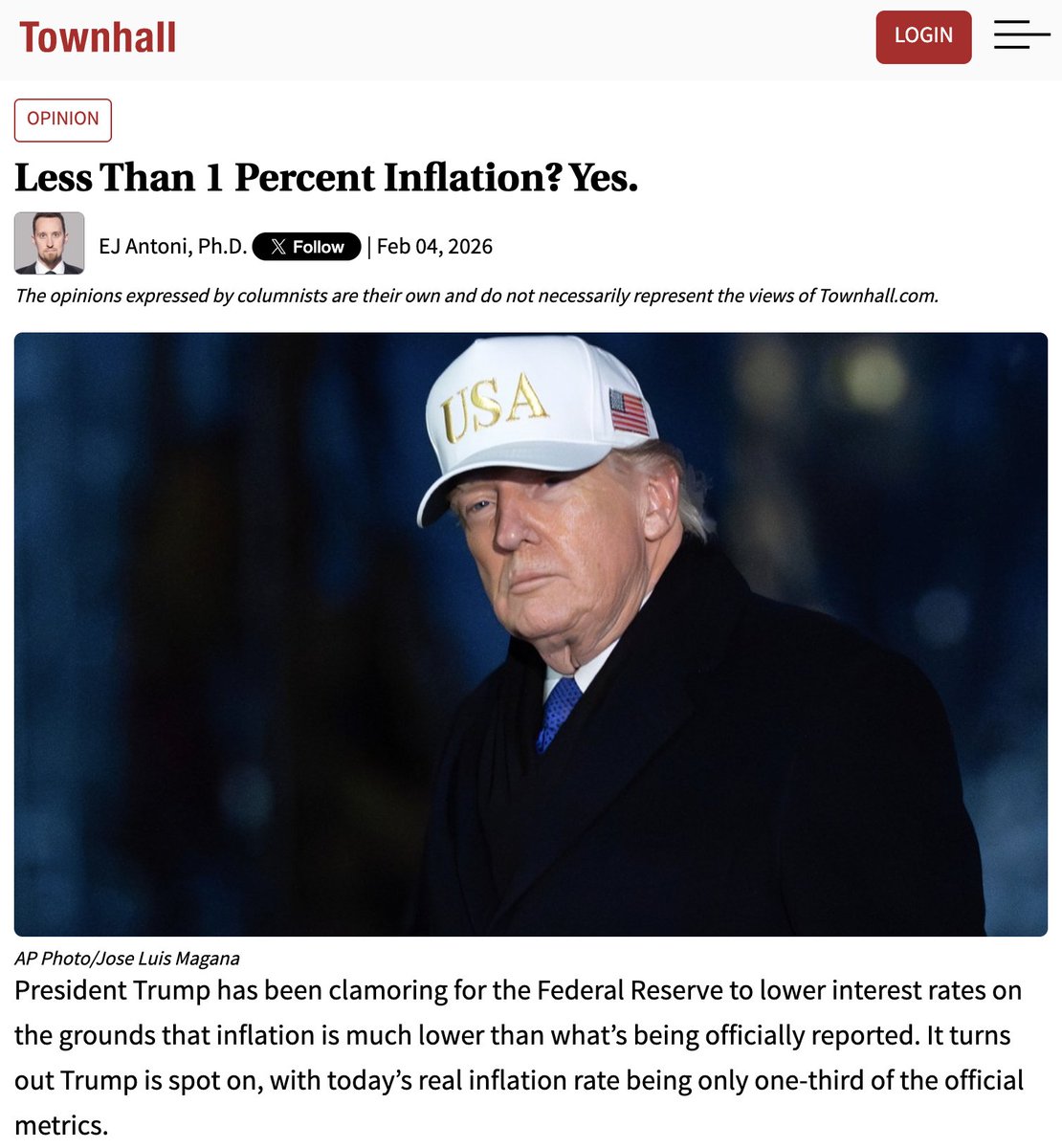
Truflation is featured in the news more and more, giving us hope that independent, real-time data tracking is slowly becoming the new standard.
As markets seek more accurate and faster signals, outdated economic reporting may eventually be forced to catch up.
Thank you, @realEJAntoni, for this opinion piece for the @Townhallcom
@Jake__Wujastyk Apple’s stock price has largely been a function of stock buybacks. The administration is pushing to reduce those and put money to work here in the US so if financial engineering is reduced $AAPL is going to have a hard time going up until they innovate and actually grow.
With this recent move on Venezuela, Trump may have just saved the US Dollar $USD Barring any major escalations with Iran, I think we see a Dollar that strengthens from here with Gold $GLD and Silver $SLV tops secured (for time being).
The best proxy for how the US-Ukraine-Russia talks went yesterday is seen in the precious metals trade we’re seeing today. That and the massive fraud being uncovered in recent days is enough to move the needle on our runaway debt issue. $SPY $GLD $SLV
I don’t think everyone realizes how polarizing it is to watch someone steal an amount of money they’ve worked 30 years for by throwing up a sign in a vacant building and sending the government an invoice
IT FREAKING WORKED!
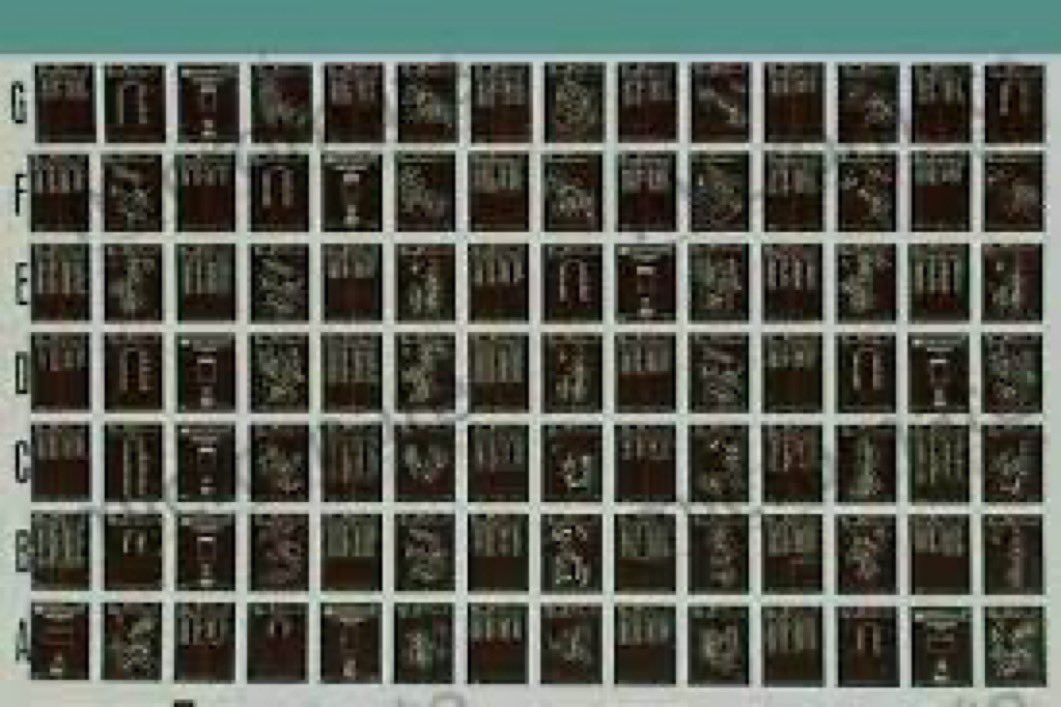
At 4am today I just proved DeepSeek-OCR AI can scan an entire microfiche sheet and not just cells and retain 100% of the data in seconds…
AND
Have a full understanding of the text/complex drawings and their context.
I just changed offline data curation!