🏆📆 Las fechas y horas (peninsular española) de todos los partidos del Mundial 2026, tanto de la fase de grupos como de los posteriores cruces hasta la final
🕕👀 Aquí podéis descargar el pdf
https://t.co/zs1dqxnEGZ
El running acaba de convertirse en videojuego.
Un dev cargó su carrera vieja de Strava en unas Meta Ray-Ban y ahora corre contra su propio fantasma 20 metros adelante, recogiendo monedas.
Ningún número en la muñeca empuja así.
La historia real: Meta tenía un chatbot de IA para soporte y recuperación de cuentas en Instagram.
Atacantes lo engañaban con **prompt injection** + VPN (para simular ubicación): le decían que la cuenta era suya o que querían cambiar el email, y el bot enviaba el código de reset directamente al email del atacante sin verificar identidad.
Esto permitió robar miles de cuentas verificadas. Entre ellas la antigua obamawhitehouse (Casa Blanca de Obama), que posteó contenido raro con imágenes AI antes de ser recuperada.
Meta ya parcheó el fallo. Dijeron que no fue una brecha de sistemas, solo un problema en cómo el asistente procesaba estas solicitudes.
Sí, confiar seguridad crítica solo en IA es riesgoso.
🎬 Backrooms (2026)
One of the internet's greatest success stories.
In May 2019, an anonymous user on 4chan posted a grainy photo of an empty room. Sickly yellow walls, harsh fluorescent lighting, damp carpet, and an overwhelming sense that something was deeply wrong. Someone added a caption claiming that if you're not careful, you can "noclip out of reality" and end up trapped in an endless maze of identical rooms known as the Backrooms.
Nobody knew where the photo was taken. For five years, the image spread across forums, Reddit, YouTube, and social media, evolving from a creepy image into one of the internet's most fascinating pieces of modern folklore.
Then, in May 2024, four users on Discord finally traced the image using the Wayback Machine. The photograph originated from a 2002 renovation photo taken inside a former furniture store at 807 Oregon Street in Oshkosh, Wisconsin. But by then, the truth hardly mattered. The myth had already become bigger than its origin.
The Backrooms entered a completely new phase in January 2022 when a 16-year-old filmmaker named Kane Parsons uploaded a nine-minute short film called The Backrooms (Found Footage). Having taught himself Blender and VFX techniques, Parsons transformed a niche internet creepypasta into something cinematic and terrifyingly believable. The video exploded in popularity and quickly became one of the defining horror projects of YouTube's generation.
Hollywood took notice.
Just a few years later, A24 greenlit a feature film adaptation and handed the project to Parsons himself. Operating under the codename Effigy, the production built a massive 30,000-square-foot Backrooms maze in Vancouver. The crew reportedly tested dozens of shades of yellow to recreate the unsettling atmosphere that made the original image so iconic, while the scale of the set became a story in itself.
Born in 2005, the same year YouTube launched Kane Parsons became A24's youngest director ever. At only 20 years old, he achieved something almost unimaginable: turning an internet urban legend into a major theatrical event.
The story of Backrooms is remarkable not because of where it started, but because of what it became. An anonymous image posted on a forum evolved into a collaborative online myth, inspired millions of viewers, launched the career of a young filmmaker, and eventually became a global horror phenomenon.
Few pieces of internet culture have made the journey from obscure message board post to mainstream cinema. The Backrooms did.
All because of a single photograph and a simple idea that tapped into a universal fear, the feeling of being lost in a place that looks familiar, yet somehow feels completely wrong.
Ayer.
El padre de mi amiga, 80 años, vasco en Palencia, cae y se abre la cabeza.
Traumatismo craneoencefálico, hemorragia y traslado urgente en ambulancia al hospital provincial.
—¿Qué medicación toma?
—No estoy segura, ¿no puede mirarlo usted en su historia clínica?
—No; no tenemos acceso.
Literal.
Yo sé que hay un proyecto del SNS para compartir la historia clínica entre los servicios autonómicos de salud. He leído memorias e informes sobre eso. He utilizado el servicio HCDSNS. Pero, ¿en el hospital de Palencia no pueden consultar la historia de un paciente de Bilbao?
El hombre, inconsciente, postrado en una camilla, y el médico no puede acceder a su historia clínica. ¡Qué puñetera vergüenza de país!
Le hacen pruebas y analíticas. Días después, mi amiga gestiona un transporte urgente en ambulancia hasta Bilbao.
Pero necesita llevar a Osakidetza los resultados de las pruebas médicas —varios TAC, analíticas…— que hicieron a su padre en Palencia.
Dicen que no lo pueden enviar por correo electrónico.
Dicen que no se lo pueden guardar en un pendrive.
Al final le guardan los resultados… ¡en un puñetero CD-ROM!
Llega ayer mi amiga agotada y angustiada a mi casa —en Santander—, desde Palencia, pidiéndome leer el CD-ROM del Servicio de Salud de Castilla y León (SACYL) para enviarlo por email al médico del Servicio Vasco de Salud (Osakidetza) y después salir corriendo otra vez en coche hacia Bilbao.
De verdad, ¡idos todos a la mierda!
El próximo Gobierno de España tiene que entender que el futuro del país pende de las interfaces digitales:
— Conseguir comprar un billete en la web de Renfe
— Que un médico pueda acceder a tu historia clínica si necesitas asistencia fuera de tu comunidad autónoma
— Pagar tasas administrativas por bizum o transferencia, sin tener que personarte en un banco
La tecnología no es un vertical ni un ministerio: es un habilitador transversal a todo.
🔴 I NEED YOUR ATTENTION
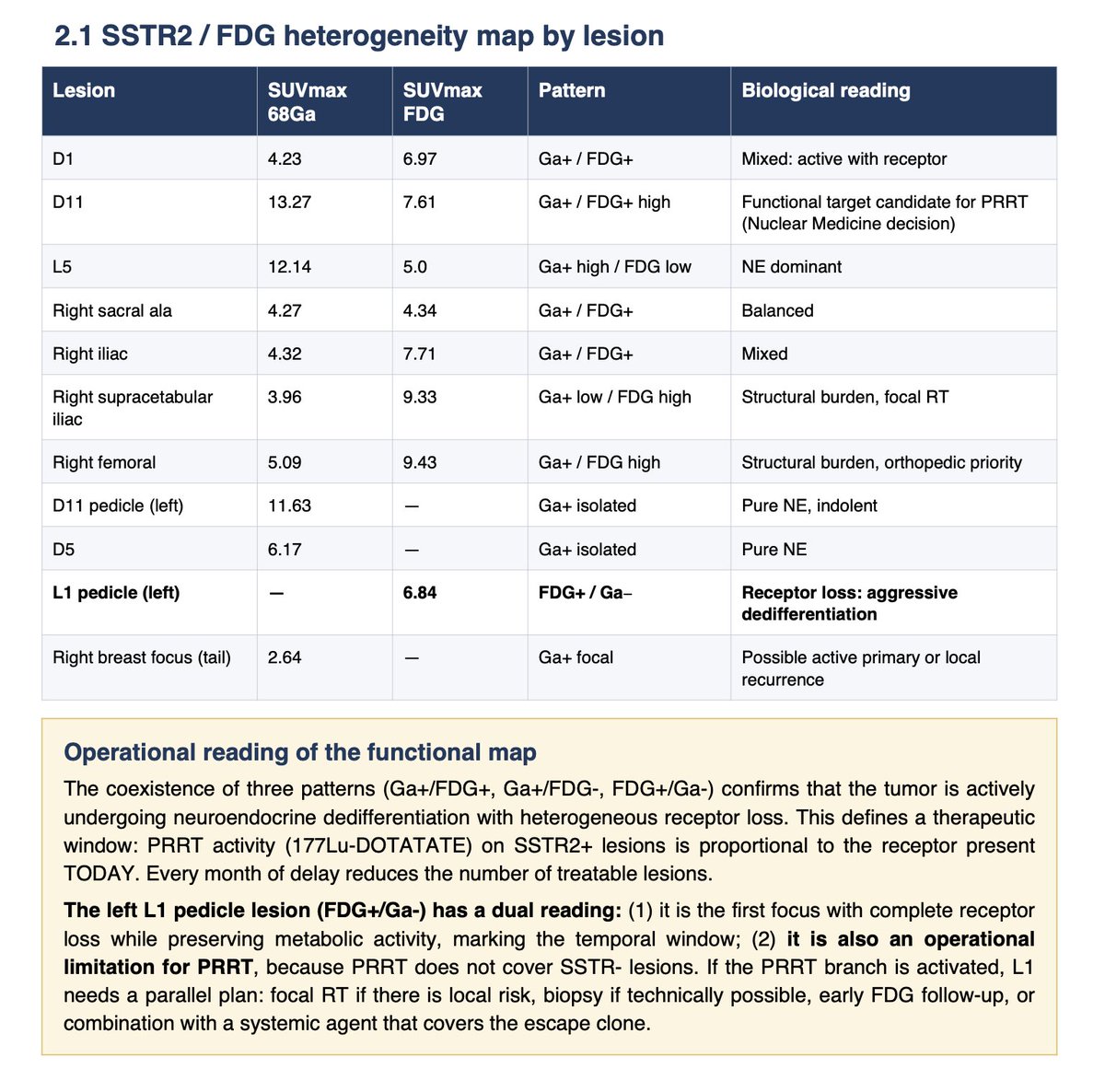
I've spent a month helping Miriam with her case of metastatic cancer and I want to share the methodology I've been using because it's completely replicable.
I think (with luck) this could be USEFUL TO OTHER PEOPLE with cancer (or any other illness).
The results we've gotten aren't a miracle, but we believe they're genuinely useful and could mean the difference in a literal life-or-death medical case.
Here's the method step by step:
1/ Use the most advanced models of the moment (unfortunately paid, and not cheap. I think Public Healthcare should invest in this):
- ChatGPT 5 Pro + Extended Thinking (40 min aprox. of thinking per call)
- Claude Opus 4.8 MAX
Still pending deeper testing:
- Perplexity Sonar Pro Max
- NotebookLM
Tested but only useful for additional links/research (not as powerful in my experience)
- OpenEvidence
2/ Feed the AI the FULL clinical history, completely chewed up. This sounds dumb but it's critical.
- The first thing I ask, using Claude Cowork (which has hard drive access), is to go into the folder with the ENTIRE clinical history (can be 100+ PDFs) and consolidate everything into:
- One single PDF (it can be 1000+ pages, whatever it takes)
- One single readable .txt or .md, which it must build correctly using an OCR script and then check thoroughly to make sure it's right.
I insist: don't jump to the next step until you've nailed this one, especially the .txt.
3/ Once you have the above, use this prompt along with the .txt (and optionally the PDF too if you want) as input files, and run it on BOTH models at once (and more if possible).
👉 This prompt is insanely complex/advanced: https://t.co/1qeqEqudCe And it's not designed for Miriam's specific oncology case, you can change the initial parameters for the desired case. And with the models from step 1 you could adapt it to your case without trouble.
In any case, I'm also leaving you this other prompt, even more general, for any type of rare disease: https://t.co/4B327floDP
4/ The ARROWHEAD (adversarial model spiral): facing one model against the other. I've never heard anyone talk about this methodology, but it works incredibly well. The feeling is like sharpening a stake until it gets a gleaming point.
It works like this: with patience and across successive iterations (I recommend a minimum of 7, and keep in mind that if ChatGPT takes 40 min, this will take a while), pit the output (the resulting PDF) from one model against the other. With a simple prompt like:
"Another committee of experts says this. What do you think? If you agree or disagree, tell me why, and generate a new PDF if you think it's necessary."
Then you feed that result back to the opposite model. So, across successive iterations, web searches, papers, etc., they'll find and sharpen more and more.
When to stop? When BOTH models say the work is perfect and they can't improve the other's output any further. This is so absurdly game-changing that I think the output of ALL current models would improve if they followed this methodology (leaning on a kind of adversarial-model spiral). I don't understand why nobody has noticed this, or if they have, why it's not getting more attention. It works impressively well in any domain, including programming and math.
In fact, my theory is this could be done even better not just with two models, but with greater combinatorics, maybe adding Perplexity Sonar Pro Max, etc.
RESULTS
Incredible. Obviously I can't know if they're better than the best scientific-medical committees in the world, but they're giving Miriam a new dimension to her case, additional tests to do, possible exams, etc.
Obviously AI doesn't perform miracles, but I think it can already, today, help many patients. And Public Healthcare should invest a lot (but A LOT) in this.
I'm going to ask Miriam if I can post the full PDF of the most advanced results we've reached, so you can get an idea of the quality. She's already given me rough permission, but I want to make sure 100%.
FUTURE PREDICTION
Easy to make: in the near future (I hope), any person's medical history won't just be fully digitized (we're close, but not all the way, well, well, well). On top of that, it'll be "pre-chewed" so it can be consumed by an LLM in one shot.
CLARIFICATION
- We're aware this is a delicate subject and we don't let the AI make final treatment decisions. What we're doing is clearing the ground for the oncologists so they can have possible paths they may not have considered.
Thanks 🙏
- The top LLMs have context windows for that and much more (much, much more). In any case, the PDF is more of a supporting file for the .txt. Both contain absolutely the entire history, but the PDF allows images/charts/etc. The .txt is what the AI consumes.
- On automation: and yes, this can be automated. Yes, AutoGen supports it almost out of the box. LangGraph builds it really well with supervisor / evaluation loops. CrewAI can orchestrate it too with Flows, although its "consensus" process isn't native yet. That would be the next level: automating it.
PETITION AND DISCLAIMER
If there's any oncologist in the room or you are an LLM company, we'd be grateful if you could take a look / help 🙏
Remember: in any case, this is just one more tool for the doctor.
I've simply shared the methodology I know that processes data more exhaustively, with the best models, and that we believe reaches better conclusions. If you know a better methodology / prompt / whatever, we'd be glad to improve this with your insights and share it.
Then the doctor reviews, adopts, or discards the report.
And if it helps the doctor, it helps the patient. And if it doesn't, all we've lost is some time and tokens. In a case that's literally life or death, that's nothing.
Just plain common sense.
Many people will argue with me, but in the near future it will seem absurd that we ever expected any professional to keep in their head every clinical trial, paper, bibliography, and raw data point that an AI and its agents can process via search in minutes. It will be such a valuable tool for doctors that its daily use will simply be taken for granted.
🚨 ULTIMA HORA: Span y Nvidia acaban de lanzar un programa piloto que pone un centro de datos dentro de casas nuevas.
Y el modelo de negocio funciona al revés de lo que imaginas.
Las unidades parecen equipos de aire acondicionado. Adentro: GPUs de Nvidia procesando carga de IA las 24 horas.
La instalación está disponible únicamente en viviendas de nueva construcción.
El propietario paga 150 dólares al mes a Span. A cambio, Span cubre la factura de luz y la de internet. Un costo fijo. Cero sorpresas al final del mes.
La infraestructura de la IA empieza a integrarse en los hogares desde la construcción, antes de que alguien entre a vivir. Guarda esto.
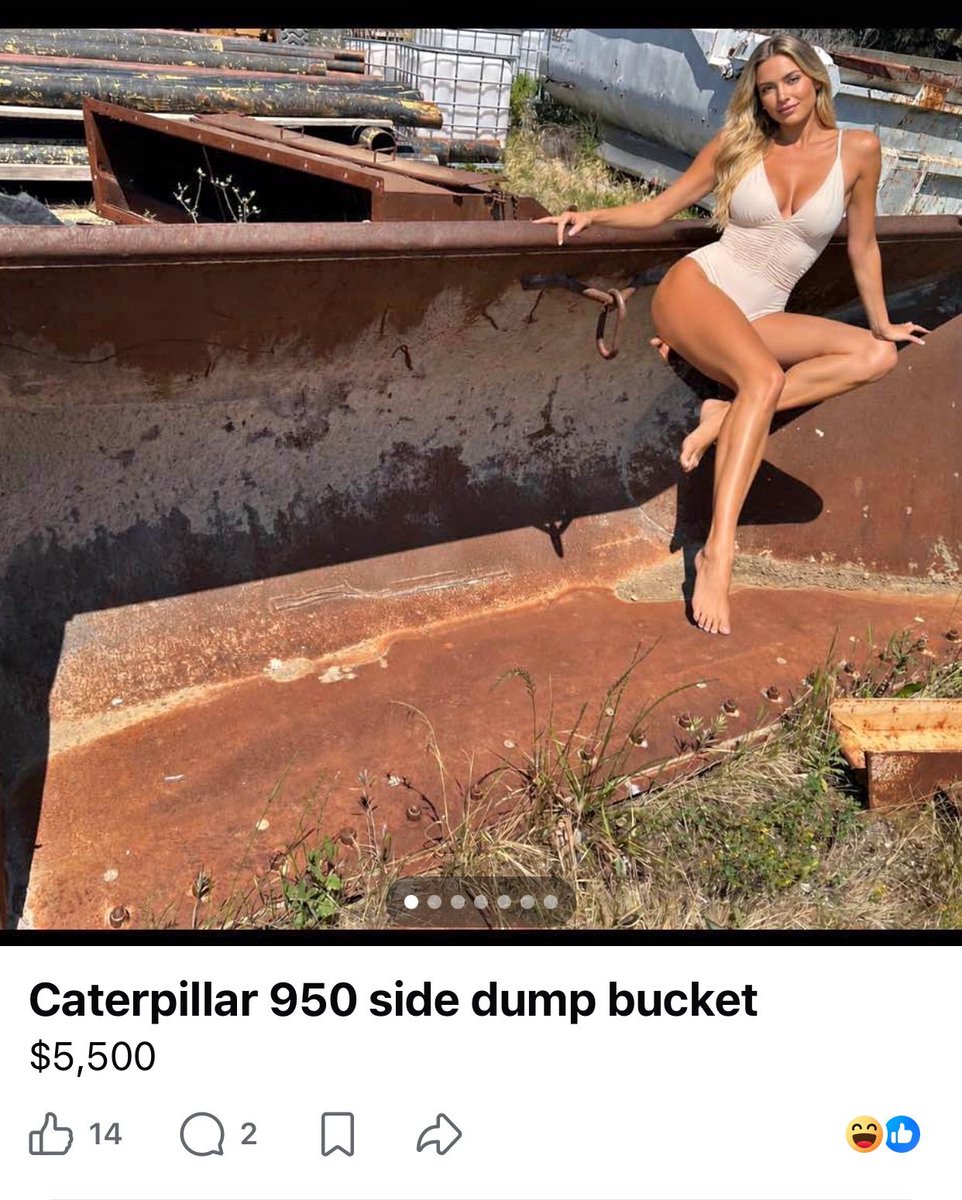
bir adam var, ohio'da, traktör yedek parça satıyor.
caterpillar 320 ekskavatör, john deere lastik, hidrolik pompa. facebook marketplace'te 40 ilan. hepsi ölü. kimse tıklamıyor.
sonra çocuk bir şey fark ediyor: marketplace algoritması thumbnail'a bakıyor, başlığa değil.
1- midjourney açtı
2- ekskavatörün önüne ai kadın model bindirdi
3- her ilana ayrı poz
4- başlık aynı kaldı: "cat 320, 2018, low hours"
tıklama oranı 40 kat patladı. adam hidrolik pompayı bikinili modelle satıyor. alıcı gelene kadar kadının ürünle alakası olmadığını fark etmiyor, fark edince de zaten ilana tıklamış oluyor. algoritma tıklamayı görüyor, ilanı daha çok gösteriyor.
bizimkiler hala "organik reach öldü" diye ağlıyor. ohio'daki adam ekskavatöre mankenli kampanya çekti, ctr'de sektör lideri oldu.
reklamcılığın geleceği bir traktör ilanında saklıydı.
Estaba pensando una cosa… a ver qué te parece:
1. Reunir en un repo todas las sentencias sobre corrupción política de la última década.
2. Hacer con cada una lo que has hecho con este sumario: VLM/LLM → fichas Markdown → grafo de conocimiento.
3. Publicarlo (Obsidian Publish o Quartz).
En 2022 yo hice https://t.co/FzVIiQl9td, que es básicamente esto mismo aplicado a otra película. Solo que aquello me llevó cuatro meses (el código está en GitHub), y ahora todo esto se puede hacer en cuatro horas —o cuatro días—. Es salvaje lo que se puede hacer ahora.
Una ventaja de las sentencias sobre los sumarios filtrados es que las primeras son públicas.
Hay mucho ruido en torno a la corrupción; esto podría ser un proyecto de data viz muy chulo. Data over dogma.
Si rings a bell, silba. Fijo que unos cuantos nos venimos arriba. 🤓
¡Nuevo reto! Ahora vasos de cristal, que las transparencias y reflexiones pueden ser elementos clave. Uno de estos vasos es #CGI, los otros dos son reales. ¿Sabéis distinguirlos? 🥛
Encuesta a continuación. ¡Votad insensatos!
#3D#VFX#SpotTheFake
POLYHEDRA es una web que contiene información de un gran número de poliedros, y también videos y sus plantillas para construirlos en papel.
https://t.co/8gP56Rpn6x