A home is a place which can put us at ease. One may feel at home in different places but only a handful have the distinction of being called home.
My New substack post is Up do read and give feedbacks.
Conversations are welcome.
https://t.co/TLYemnpEyJ
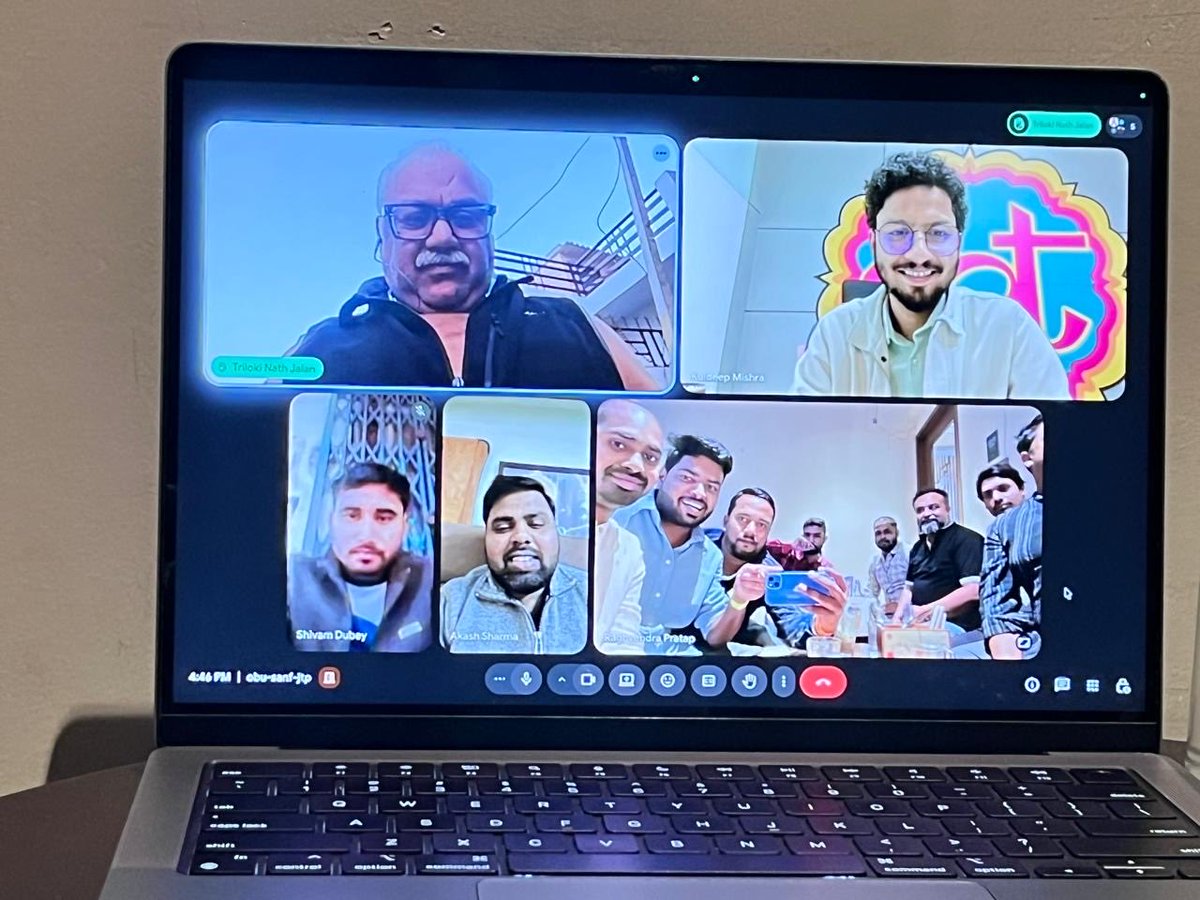
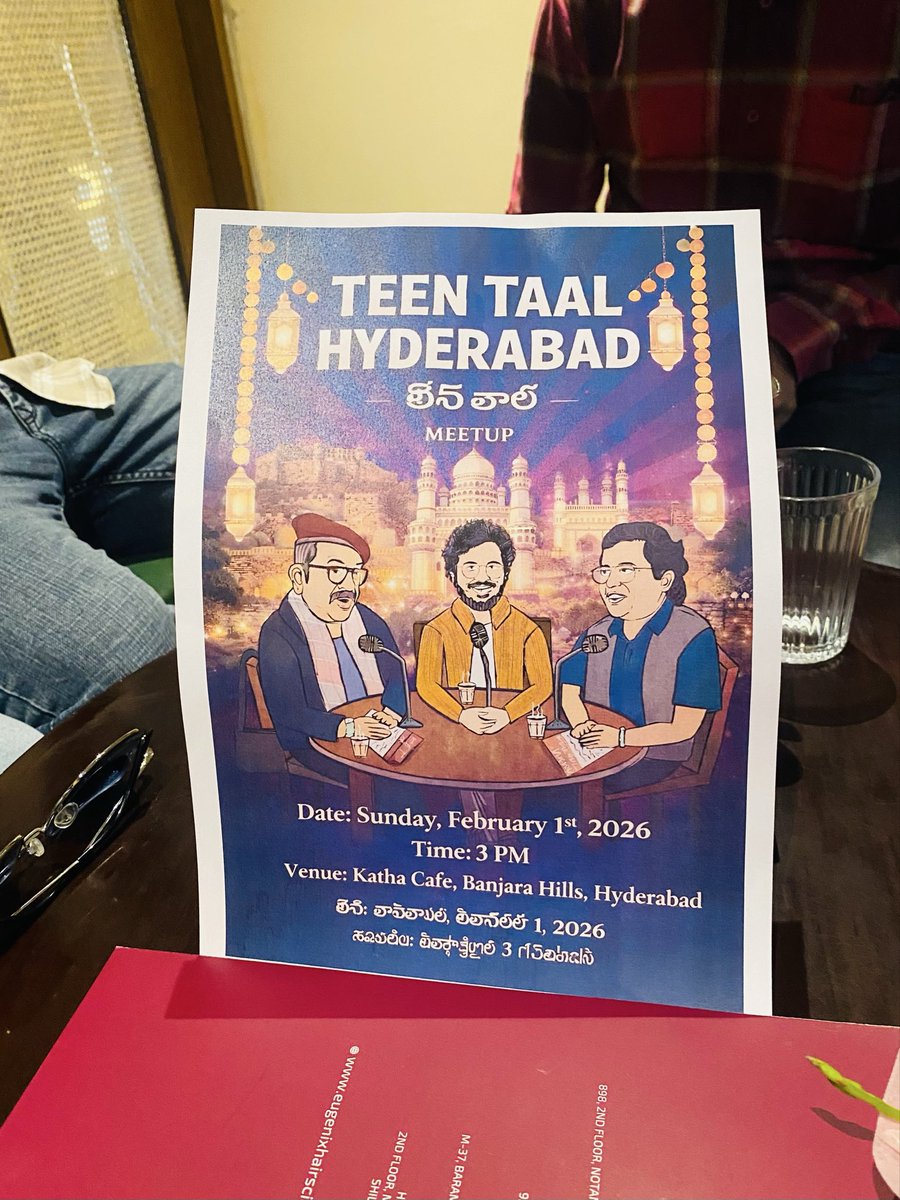
आज की महफ़िल… निज़ामों के शहर में।
तीन तालियों के साथ बकैती करने का कार्य किया गया।
Beauty of TeenTaal .
TTStaff Hyderabad Meetup .
@kuldeepmishra@kamleshksingh@007asifkhan
A suggestion from my side is to have a list of contractors and builders who are making subpar infrastructure.
It will let us know and question why they are still getting the contract and how they are related to the official who awarded it to them
@khurpenchh#yethikkarkedikhao
If You are fed up with lack of basic infrastructure and amenities in your area do share them here and tag the relevant officials.
#yethikkarkedikhao@khurpenchh
Here’s the feedback from a semiconductor CEO @PMOIndia. Salient points
• corruption rampant
• obstructionism alive & kicking
• compliance blackmail
• babus clueless & competing with Pvt Sector
The babus who sat on this 2 yrs lose 2 yrs seniority?
@patnanewslive What is this nonsense when, when you make a handful of things one of them will be the biggest. What is this sense of achievement that too over a Mall
On the Bhagavad Gita
— Bibek Debroy
This translation of the Bhagavadgita was published in 2006. If I were to translate it today, would I do it differently? Would I approach it differently? In a pure pedantic sense, the answer probably is—yes. However, the choice of a slightly different word, here or there, doesn’t justify a completely new translation. Therefore, in this reprinted version, the original translation has been left intact, as it was. But there were a few typos in the Sanskrit text and those have been corrected.
In the years since 2006, I have read the Bhagavadgita several times. Over the years, I have come to appreciate the beauty of the poetry much more. Many different kinds of metres (chhanda) were used in Sanskrit texts. In this genre of text, the most common was anushtubh ( ), with four padas (lines) and eight aksharas (syllables) in each line. The entire shloka thus consisted of thirty-two aksharas. There were some additional stipulations for a line to be classified as anushtubh—stipulations pertaining to the distribution of light and heavy syllables within the eight. But we can skip that. More than 92 per cent of the shlokas in the Bhagavadgita are in different variants of anushtubh. Why are alternative metres used in the remainder? For the most part, these alternative metres in the Bhagavadgita are trishtubh ( ) or its variants. Trishtubh has eleven syllables in each line, with forty-four aksharas in the entire shloka. When a poet changed the metre, it was a conscious decision, reflecting a change in mood or sentiment. What were the turning points that made the poet change the metre in these specific shlokas? For instance, here is 11.16.
anekabāhūdaravaktranetraṃ
paśyāmi tvāṃ sarvatonantarūpam
nāntaṃ na madhyaṃ na punas tavādiṃ
paśyāmi viśveśvara viśvarūpa
It is easy to figure out why many such tristhubh shlokas should be in Chapter 11. But why was this switch also done in 2.5?
gurūn ahatvā hi mahānubhāvān
śreyo bhoktuṃ bhaikṣyam apīha loke
hatvārthakāmāṃstu gurunihaiva
bhuñjjīya bhogān rudhirapradigdhān 2.5
Given the nature of the text, it is not surprising that a lot of discussion should revolve around its exposition of dharma. But it seems to me that the literary form is also worth probing.
Why were specific words used? 1.10 tells us
aparyāptaṃ tad asmākaṃ balaṃ bhīṣmābhirakṣitam
paryāptaṃ tvidam eteṣāṃ balaṃ bhīmābhirakṣitam
1.10
This is Duryodhana describing the two armies to Dronacharya. When describing the Kaurava army, he uses the word —that. When using the Pandava army, he effectively uses the word —this. In many translations, these two words are glossed over and not even translated. In between the two armies, where were Duryodhana and Dronacharya standing? Clearly, they were close to the Pandava army and far away from the Kaurava army, not quite what you would expect. You get the same impression from 1.3.
paśyaitāṃ pāṇḍuputrāṇām ācārya mahatīṃ camūm
vyūḍhāṃ drupadaputreṇa tava śiṣyeṇa dhīmatā 1.3
‘These’ again being used for the Pandava army. On the other hand, when Krishna places the chariot between the two armies, in 1.25, he uses the word ‘these’ for the Kaurava army.
bhīṣmadroṇapramukhataḥ sarveṣāṃ ca mahīkṣitām
uvāca pārtha paśyaitān samavetān kurūn iti 1.25
Krishna and Arjuna were in front of the Kaurava army and Duryodhana and Dronacharya were in front of the Pandava army. That tells us quite a bit about the dharma of war followed then. In 1.26–27,
tatrāpaśyat sthitān pārthaḥ pitṛn atha pitāmahān
ācāryān mātulān bhrātṛn putrān pautrān sakhīṃs
tathā 1.26
śvaśurān suhṛdaś caiva senayor ubhayor api
tān samīkṣya sa kaunteyaḥ sarvān bandhūn avasthitān
1.27
1/3