Key Banana Growing Areas:
Central Kenya: Murang'a, Kiambu, Nyeri, Kirinyaga
Eastern Kenya: Meru, Embu, Tharaka-Nithi
Western Kenya: Kisii, Bungoma, Kakamega
Popular Varieties:
Cavendish (dessert bananas)
Plantains (cooking bananas)
Apple bananas (sweet and small)
Uganda green (matoke)
Fruit seedlings ready for transplanting.
Click this link to message us on WhatsApp: https://t.co/bHJfPuSqPI
Climate & Soil Requirements:
Altitude: 0–1800 meters above sea level
Rainfall: 1000–2500 mm annually
Temperature: 20–30°C
Soil: Well-drained, fertile, loamy soil with a pH of 5.5–7.5
Why Grafted fruit Seedlings?
Grafted fruit seedlings are strongly preferred over non-grafted ones (typically grown from seed, often called seedlings) in most commercial, small-scale, and home gardening situations, especially for popular fruits like mangoes, citrus, apples, avocados, peaches, and many others common in regions like Kenya.
Here are the main reasons why grafted seedlings are preferred:
True-to-type fruit (consistency and quality)
Grafted trees are essentially clones of a proven, superior parent tree (the scion). You get the exact same fruit characteristics—taste, size, color, sweetness, texture, and market quality—every time.
Seed-grown (non-grafted) trees result from cross-pollination, so they show genetic variation. The fruit can be very different (often poorer quality, smaller, less tasty, or even inedible) from the parent.
Much faster fruit production (earlier bearing)
Grafted trees bypass the juvenile phase and often start fruiting in 3–4 years
Seed-grown trees can take 5–10+ years (or longer for some species) to produce fruit, making them impractical for most growers who want quicker returns.
Better disease and pest resistance
The rootstock (lower part) is often selected for strong resistance to soil-borne diseases, nematodes, root pests, or environmental stresses (e.g., drought, poor soils, salinity). This reduces losses and chemical use.
Seed-grown trees usually lack this targeted resistance.
Higher yields and better productivity
Grafted combinations frequently produce higher yields (up to 40% more in some studies), larger fruit, and more consistent production due to optimized scion-rootstock pairing.
Adaptability to local conditions
Rootstocks can be chosen to suit specific soils, climates, or challenges (e.g., tolerance to wet/dry conditions or certain pests common in East Africa). This makes grafted trees more reliable in varied environments.
Tree size control (dwarf/semi-dwarf options)
Many grafted trees use dwarfing rootstocks, resulting in smaller trees that are easier to manage, harvest, and fit in small spaces or home gardens—while still producing well.
Economic and practical advantages
Faster returns, predictable quality (important for markets), lower risk, and reduced long-term maintenance costs make grafted seedlings more cost-effective for farmers and gardeners.
Non-grafted (seed-grown) trees do have some niche uses—like breeding new varieties, creating genetic diversity, or very low-cost wildlife/forestry plantings—but for reliable fruit production, they are rarely the first choice.
In summary, grafting gives growers predictability, speed, quality, and resilience—key factors for successful fruit farming or gardening.
Fruits seedlings ready for transplanting.
Click this link to message us on WhatsApp: https://t.co/bHJfPuSqPI
Visit https://t.co/2D5fDQLffI
Strawberry 🍓 150/=
Grafted Hass Avocado 🥑 200/=
Grafted Fuerte Avocado 🥑200/=
Grafted Tommy mango🥭 200/=
Grafted Apple Mango 🥭 200/=
Grafted Van dyke mango 🥭 200/=
Grafted Ngowe mango 🥭 200/=
Alphonso Mango 🥭 400/=
Grafted Macadamia Muranga ( 20) 350/=
Grafted purple Passion seedlings 200/=
Loquats 300/=
Giant granadilla 600/=
Sweet granadilla 200/=
Grapes seedlings 350/=
Grafted pixies Orange 🍊 300/=
Grafted Washington orange 🍊 200/=
Grafted Valencia Orange 🍊 200/=
Grafted Tangerine 🍊 200/=
Minneola Tangelo orange 🍊 250/=
Kumquat Oranges 🍊 sh 600/=
Blood Orange 🍊 500/=
🍊🍊 lime 250/=
Sudachi lemon 2500/=
lemon 🍋 200/=
Variagated Pink Lemon 🍋- 800/=
Sweet lemon 350/=
Paw Paw 150 /=
Grafted Tree tomato 200/=
Apple 🍎🍏 seedlings 1000/=
Golden Dorsette Apple 600/=
Pink lady Apple 600/=
Anna Apple 600/=
guavas ksh 150/=
kiwi 🥝 500/=
Dragon fruit 1000/=
Pomegranate 500/=
Plums -500/=
Tissue culture banana 500/=
Pears -600/=
Custard Apple 250/=
Blue berry 3000/=
Higher yields. Stronger savings. Diversified incomes.
The Kitongo Maize Growers Group in Kyegegwa District is building real resilience through collective action, financial literacy & climate-smart #agriculture, under @urri_danida funded by @DKinUganda. @EUinUG@JMakohaOfficial
Happy New Week!✨
Wishing you a fresh start filled with strength and purpose.
May you approach this week with dedication and hope for better days ahead.
#Farmersfirst#Agriculture
💡FARMING LESSON:
ORGANIC FARMING (Definition, Principles, Types, Examples and Advantages):
a). DEFINITION:
Organic farming is a sustainable agricultural system that uses ecological pest control and biological fertilizers derived mainly from animal & plant wastes and nitrogen-fixing cover crops.
It limits the use of chemical pesticides and Synthetic fertilizers.
b). PRINCIPLES OF ORGANIC FARMING:
1. Health: Organic farming should improve soil health, thus sustaining plants, animals, humans as well as the planet.
2. Ecology: Organic farming should support natural cycles and living systems and help in sustaining them.
3. Fairness: It should be built on strong relationships that encourage fairness concerning the environment, social justice, and fair trade.
4. Care: Organic farming should be done with responsibility, considering the environment and future generations.
c). TYPES OF ORGANIC FARMING:
1. Pure Organic Farming (POF).
Pure organic farming completely avoids inorganic chemicals as these chemicals harm the crop, soil, crop, and people who consume it.
Organic fertilizers and bio-pesticides derived from natural sources are used.
2. Integrated Organic Farming (IOF).
This is a cyclical, zero-waste procedure, where waste products from one process are cycled in as nutrients for other processes. This allows the maximum utilisation of resources and increases the efficiency of production.
In IOF, there is no need to use chemical fertilisers for crops, as cattle excreta (dung) are used as manure. Crop waste is used to create compost, which can be used as a natural fertiliser or can be used to generate natural gas for satisfying the energy needs of the farm.
d). EXAMPLES OF ORGANIC FARMING PRACTICES:
1. Crop rotation. This is the practice of planting one crop, season after season, on the same piece of land.
2. Use of organic manures such as compost, farmyard and green manure.
3. Use of local crop varieties and local animal breeds adapted to the particular area conditions.
4. Use of biological pest control methods such as use of natural enemies, trap crops and repellent crops.
5. Avoiding any use of Genetically Modified Organisms (GMOs) as well as products produced by or with GMOs.
e). ADVANTAGES OF ORGANIC FARMING:
1. Organic foods are free of harmful pesticides, antibiotics, and additives.
2. Farmers can reduce their production costs since they don’t have to spend a lot of money on chemicals and fertilizers.
3. In the long term, organic farms save energy and protect the environment.
4. More animals and plant can be integrated in the same place in a natural way which increases biodiversity.
5. The nutritional value is higher in organic foods than in GMOs.
6. Organic foods have a high market value which increases the farmer's income thus improving the standards of living.
*Practice Organic Farming today. You will not regret.*
Was this post helpful to you?
If yes, ♥️ Like and 🔁Repost/Share so that your network can benefit too.
Planting a tree is only the beginning. Its survival depends on how well it is cared for in the early stages.
This practical guide explains how to improve survival and growth through simple, effective practices.
Download:🔗 https://t.co/FmHy6VkLSU
#QualityTreeSeed #TreesPeoplePlanet
Soursop are drought tolerant and very beneficial health wise .
All its parts from the root to leaves are edible or have medicinal value. It is a fast growing tree that starts producing fruit in the third year.
For seedlings,
Click this link to message us on WhatsApp: https://t.co/bHJfPuSqPI
Visit https://t.co/2D5fDQLffI
People consume it a lot and use its fruit for treating parasite infections because they believe it contains chemicals that might help fight against cancer, as well as bacteria, viruses and parasites.
There are no named varieties in Kenya however these are the some of the internationally named varieties which include Bennet, Cuban fibreless and Morada which is of Brazilian origin
Soybean is valued for several reasons:
High protein content makes it an affordable source of nutrition for households, especially where access to animal protein is limited.
It is a key ingredient in livestock and poultry feed, supporting rapidly growing poultry industries across countries such as Nigeria, Zambia, and Uganda.
Soybean improves #soilfertility through biological nitrogen fixation, reducing dependence on expensive nitrogen fertilizers.
It also serves multiple markets including edible oil, soy flour, soy milk, animal feed, and industrial processing.
This month we are highlighting soybeans, food safety and celebrating two years of IITA and its partners helping communities improve their soil health and fertility across several countries in Africa through the Regional Hub for Fertilizer and Soil Health for West Africa and the Sahel.
#Soybeans #FoodSecurity #Legumes #Valueaddition #FoodSecurity #SoybeanxSoilFertility #Nodumax #IITAMandateCrops
Diversification:
Never rely on a single commodity. Combine food crops, cash crops, & livestock to spread your risks & guarantee continuous income streams throughout the year. Seasons aren’t the same this season you might win, & next season, you might lose.
#Agro$
#mudumenwemari
Many farmers believe the work ends at harvest, rushing to get produce to market with little to no focus on quality control.
Through @omiafoods , we empowered Nakuru farmers group with knowledge, guiding them to adopt best practices such as sorting, cleaning, storage & packaging to turn hard work into maximum financial reward.
#Farmersfirst #PostHarvestHandling
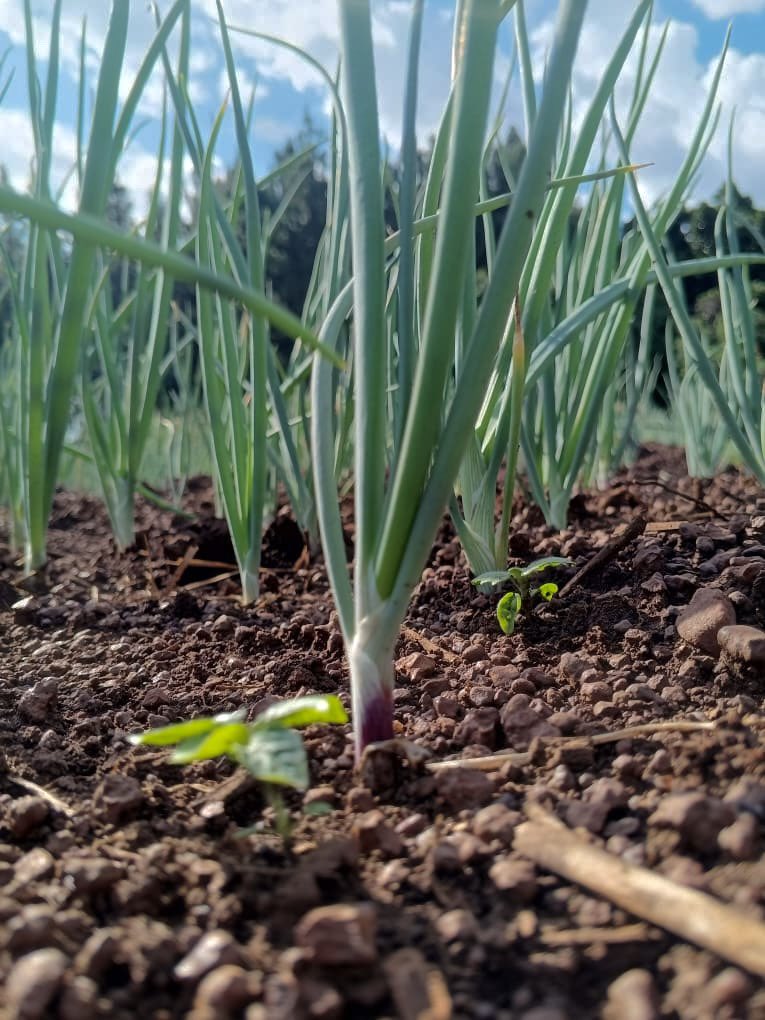
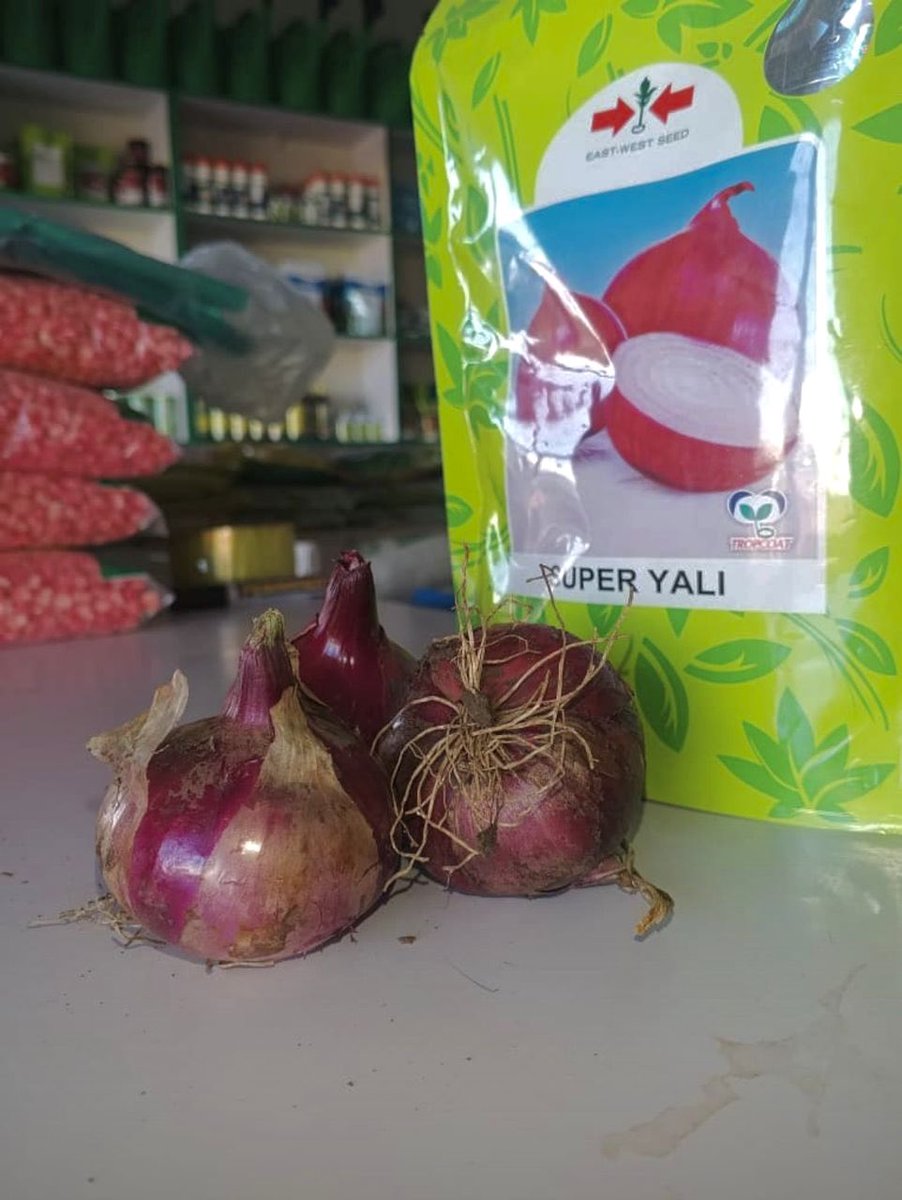
Achieving maximum yields requires quality seed.
With recommended spacings of 30cm × 10cm or 15cm × 10cm, you can establish approximately 135,000–270,000 plants per acre for Super Yali onions depending on your production target.
Grow quality bulbs and increase your profits.
#Farmersfirst #SustainableFarming
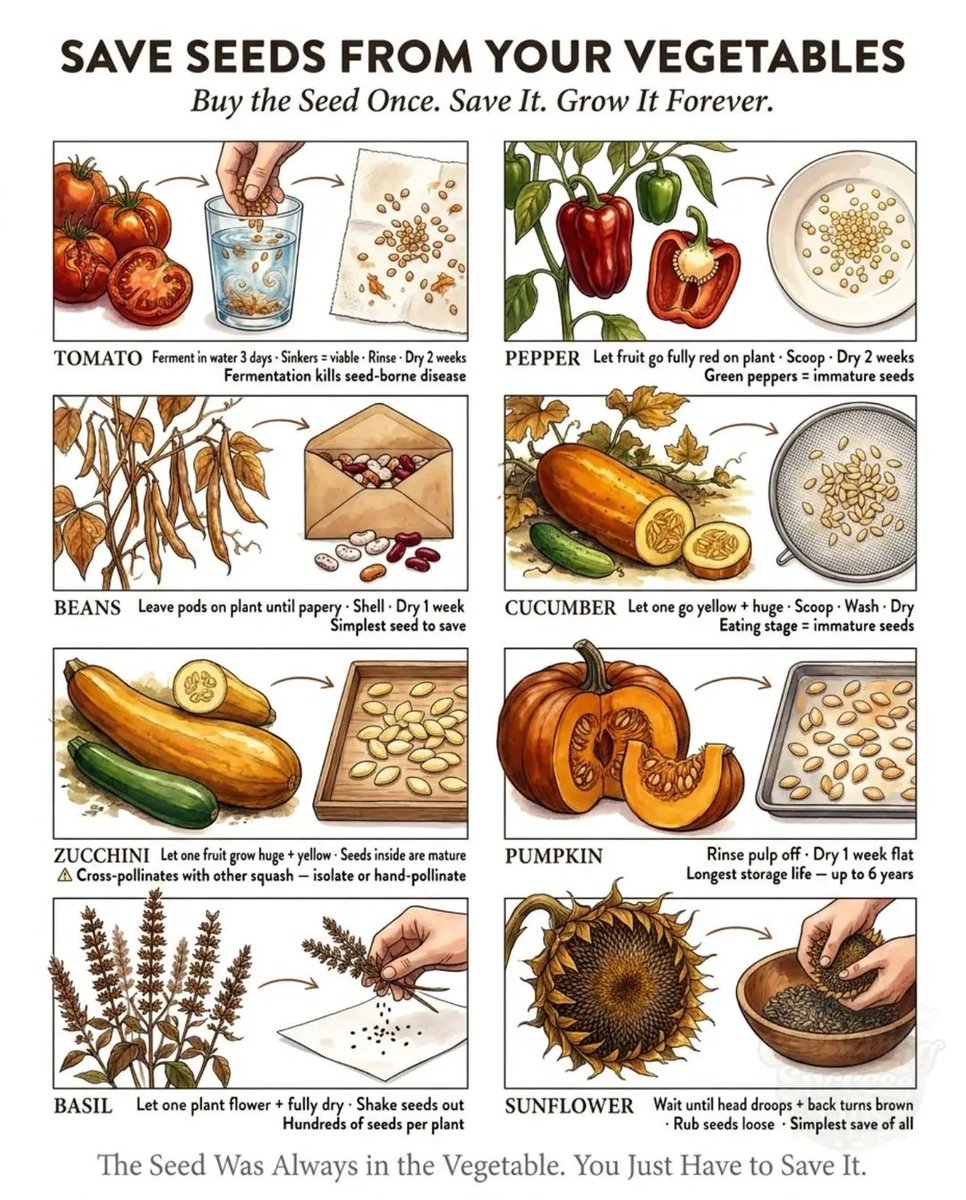
Seed saving converts a one-time seed purchase into a permanent free supply.
One tomato holds enough seeds for fifty plants. One bean pod holds next season's row. You just have to let the fruit go past the eating stage and save what's inside.
One rule: only open-pollinated and heirloom varieties grow true from saved seed. If the packet says F1 or hybrid, the seeds won't match the parent.
🌿 Eight crops, eight methods:
- Tomato — scoop seeds into water, let ferment three days. Viable seeds sink. Rinse and dry two weeks. The fermentation also kills seed-borne diseases.
- Pepper — leave fruit on the plant until fully red and starting to wrinkle. Green peppers have immature seeds. Dry on a plate two weeks.
- Beans — leave pods on the plant until brown and papery. Seeds rattle inside when you shake them. Shell and dry another week.
- Cucumber — let one fruit stay on the vine until fat, yellow, and past eating. That's when seeds mature. Scoop, rinse, dry.
- Zucchini — let one fruit grow enormous and yellow. One warning: zucchini cross-pollinates with other squash types. Seeds may not come true if you grew multiple varieties.
- Pumpkin — rinse seeds clean of pulp, dry flat one week. Longest storage life of any common vegetable — up to six years kept cool and dry.
- Basil — let one plant flower and dry on the stem. Shake the brown spikes onto paper. Hundreds of seeds per plant.
- Sunflower — wait until the head droops and the back turns brown. Rub and seeds fall out.
Store in paper envelopes, not plastic. Label with variety and year. Cool, dark, dry. Most stay viable three to six years
Healthy seedlings are the first step toward healthy forests.
This guide explains how to properly prick out seedlings to improve survival rates and strengthen nursery management for restoration efforts.
Read: 🔗 https://t.co/LuiQD8Ekq1
#TreesPeoplePlanet
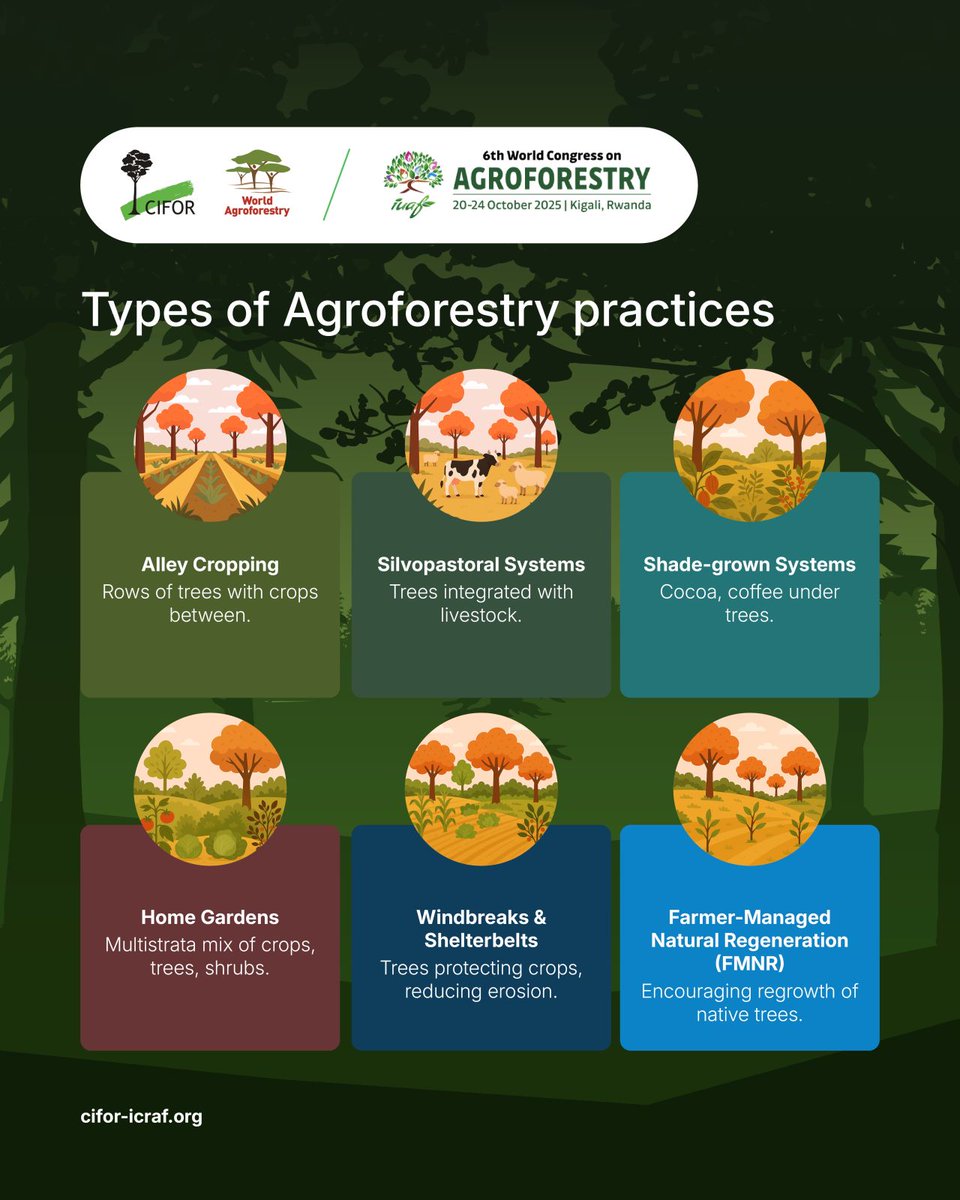
Agroforestry is more than planting trees, it is a set of practical solutions that support climate action, biodiversity, and rural livelihoods.
Check out this infographic for a snapshot of the most widely used #agroforestry practices.
🔗: https://t.co/fFrHefCrFU
#Trees4Resilience
Rooted in Resilience
Regenerative agriculture isn't just a farming method; it’s a restoration movement. Whether you’re a hands-on steward of the soil or a community builder connecting people to their food, every role is vital to a sustainable future.
What is your calling?
Let us know in the comments!
Let’s grow a healthier planet together. 👇
#RegenerativeAgriculture #P4FP #RA_PURE #Sustainability