Books and bits
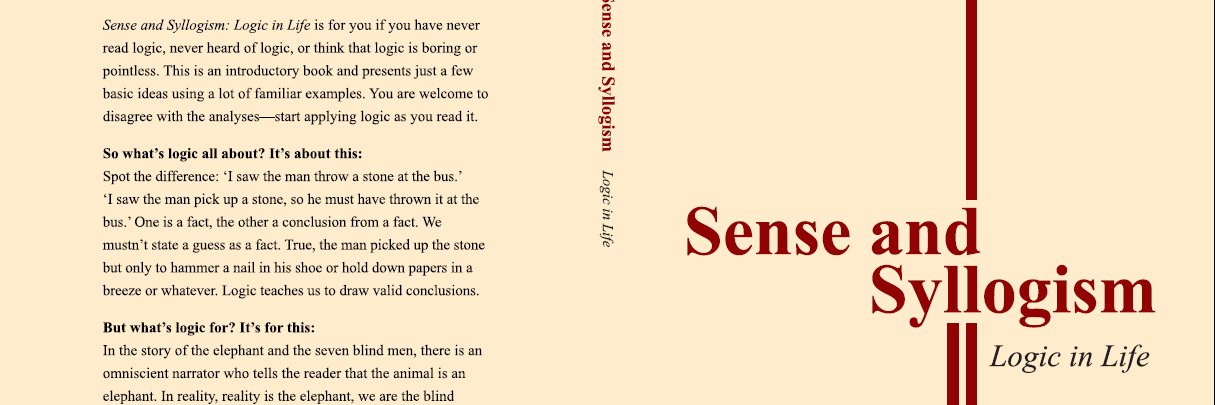
Sense and Syllogism: Logic in Life
https://t.co/3XVPYMG7hl
Right and Wrong: An Ethics Primer (free)
https://t.co/68EO4pP9XU
Something Rotten (free)
https://t.co/CIUNj0T6FT
The Curious Case That Solved Itself (free) https://t.co/5p9AA0RlKF
At the end of Louis Theroux's documentary he has to hide from the IDF as they are hunting Palestinians and he suspects they might kill him too.
Theroux says, "Can we ring the Police."
And the Palestinian laughs, there is no one who will protect them from Israel.
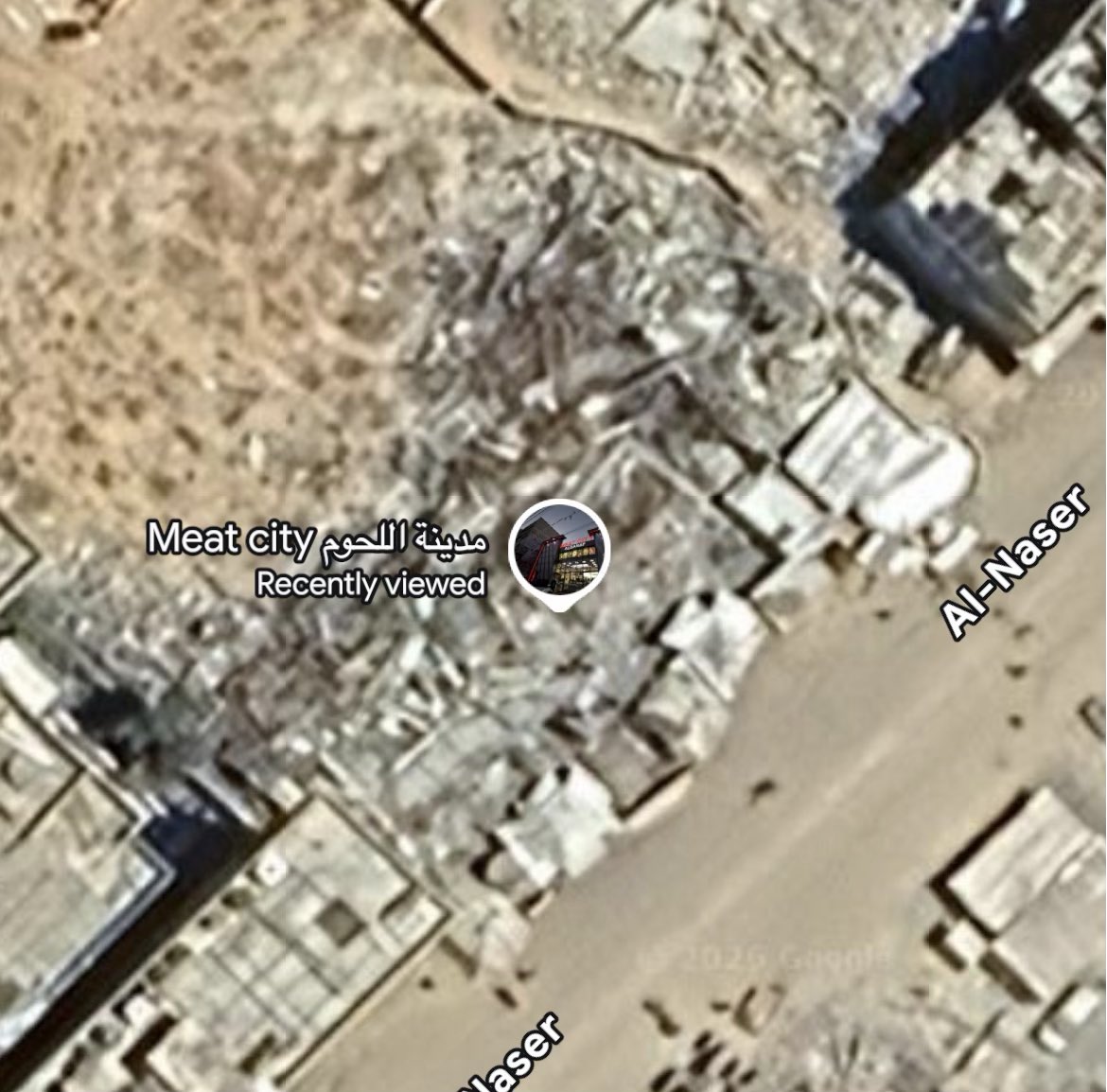
Google Maps shows photos and reviews for thousands of places in Gaza that don’t exist anymore. You can scroll through an entire world that Israel destroyed.
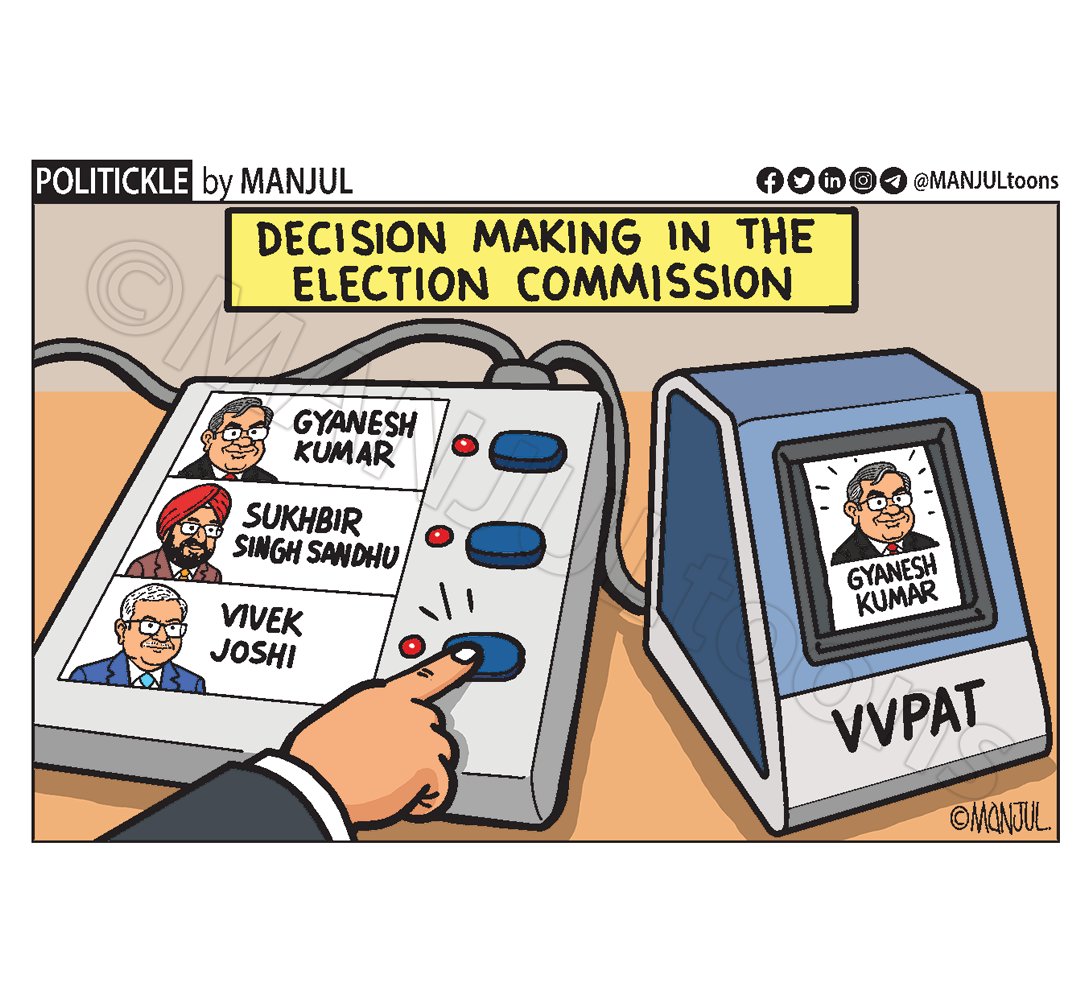
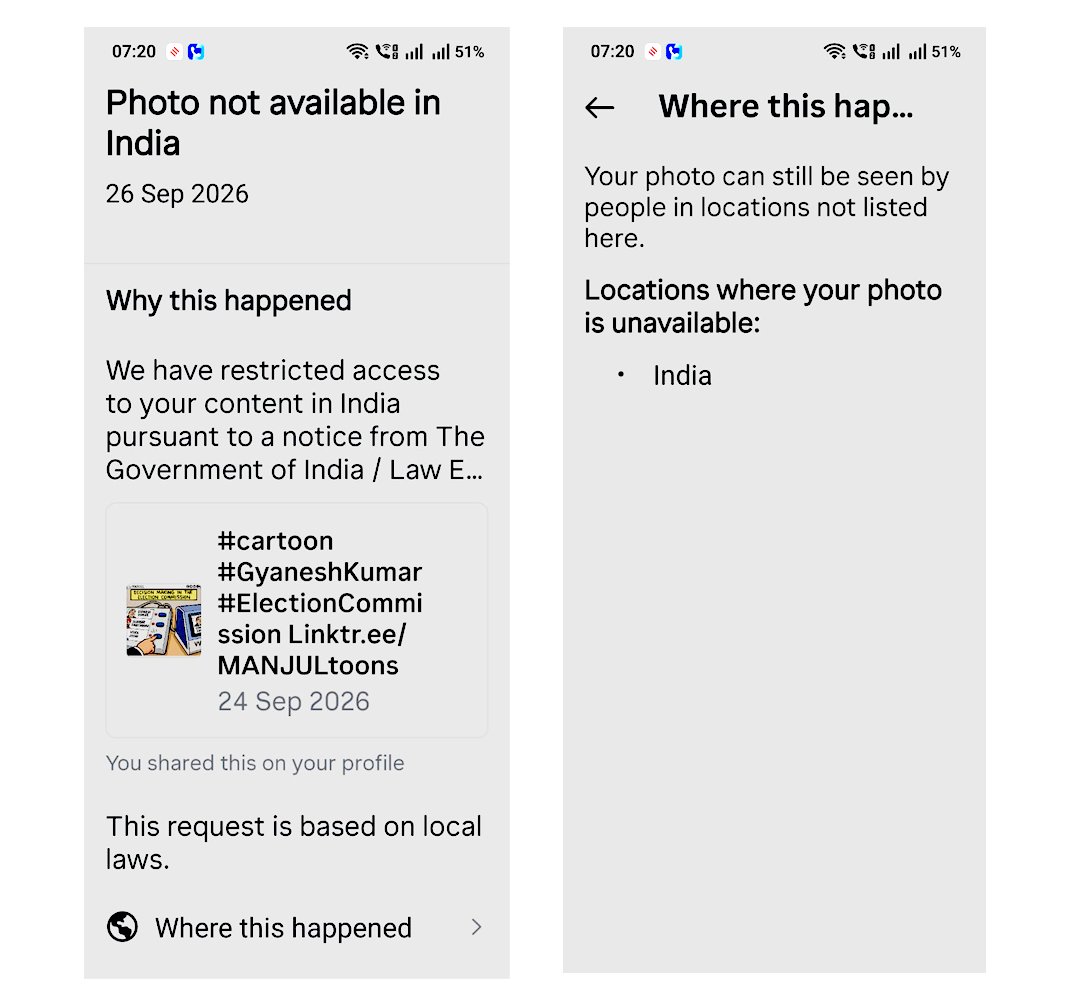
Instagram has restricted this cartoon in India.
I am posting the cartoon again, along with the notice I received from Instagram.
According to the notice, access has been restricted in India “pursuant to a notice from the Government of India / Law Enforcement” and based on local laws.
The cartoon is still visible outside India.
A cartoon about the Election Commission has been stopped from being seen by Indians. When satire gets censored, perhaps the cartoon has made its point. 🇮🇳
#Censorship #FreeSpeech #Satire #PoliticalCartoon #FreedomOfExpression #ElectionCommission #MANJULtoons
I’ve seen NAZA. It is not about Gaza or even about IDF rules of engagement. It is 100% a film about Israeli society. It is about how the most liberal, educated and enlightened socioeconomic elites among us could carry out such mass killing, some even while being well aware of it.
في الهند، ظهرت امرأة ترتدي البرقع وهي تحمل قطعًا من لحم البقر، ثم قامت بإلقائها داخل معبد هندوسي.
أمسك بها المسلمون الموجودون في المكان...
واتضح انها لم تكن امرأة أصلًا، بل رجل هندوسي متنكر بزي امرأة مسلمة، في محاولة لإلصاق الحادثة بالمسلمين.
🇳🇪 Niger at the UN:
"Ladies and Gentlemen, as I speak to you, at our northeast borders stand the proxies led by France, backed by Ukraine and 2 other countries."
"And you know full well which countries I mean."
"These proxies are armed, guided, directed, about to attack our military positions and our oil installations. But they will get what they deserve, inshallah."
"Our Sahel is at war. A war of liberation against a conspiracy aimed at its recolonization."
"What some call terrorism in our region is a cynical scheme of recolonization dressed in extremist rags."
"Niger's uranium, the gold of Mali and Burkina, lithium, gas, oil and so many other riches keep the old powers salivating."
"This perfidious destabilization of the central Sahel, led by France with Ukraine's active complicity -- documented, very documented."
"Niger's uranium lit up Europe's cities while ours stayed in darkness. This injustice has now ended. It is over."
"A people that has decided to be free cannot be recolonized, not by fear, nor by cunning, nor even by savage violence."
Jewish MP Gerald Kaufmann in Parliament in 2009.
"My Grandmother was ill in bed when the Nazis came to her town, a German soldier shot her dead."
"My Grandmother did not die to provide cover for Israel to murder Palestinian Grandmothers in Gaza."
"If it's worth doing, it's worth doing right." If it takes ten years to clean up the electoral rolls, so be it. But do it right. Automated digitisation, transliteration, matching - all without human checks is unforgivable.
A long post!
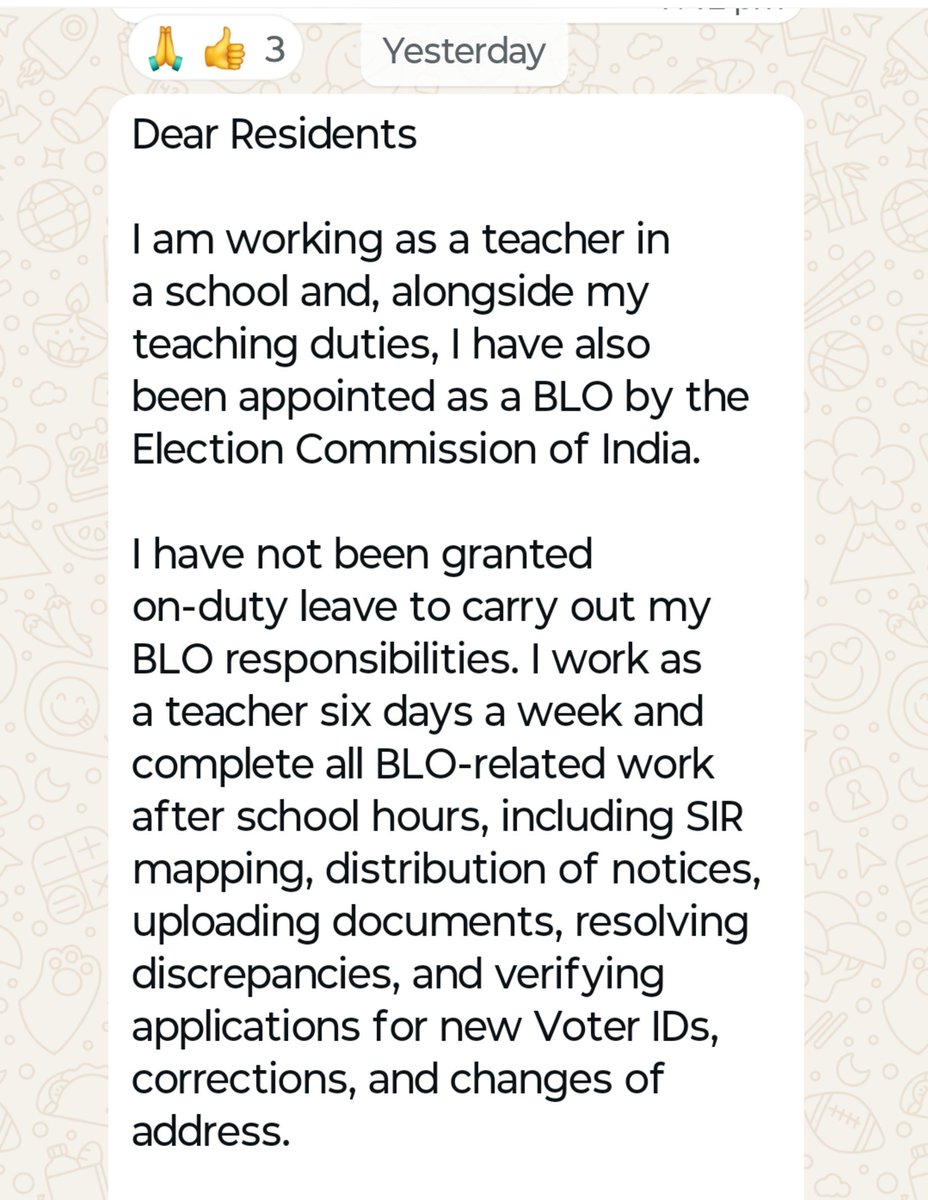
The Election Commission never had the bandwidth or manpower to carry out such a gigantic clean up of the electoral rolls. It instead relied on an AI-powered application called ERONET.
It uses AI to identify Photo Similar Entries (PSE) and Demographic Similar Entries (DSE) to flag potential mismatches between current voter rolls and legacy databases, like the 2002 base rolls.
The software is essentially a black box, with little to no publicly available information about the AI models actually used in deployment. We do not know the model specs, similarity threshold used, its performance metrics, evaluation benchmarks, false positive rates, how it was trained or evaluated for Indian languages, whether it was developed indigenously or based on a known model/provider. We simply do not know enough.
Anyone with even a basic understanding of AI will tell you that these systems are prone to hallucination errors, and out of distribution (OOD) problems. Even the best large language models, vision models, state-of-the-art OCR technology in the market still struggle to peform with perfect accuracy, particularly on non-Latin scripts.
The 2002 electoral rolls were in native languages and scripts across different states, such as Kannada, Telugu and Bengali. Many AI systems continue to have substantially weaker performance on low-resource languages and scripts compared with English. For ex, a model trained on English will generalize poorly to a low resource language like Telegu or Odia. The old electoral rolls were not originally structured digital databases. They had to be digitised and processed, including through automated conversion into English in some workflows, before they could be compared against contemporary electoral data.
Effectively, it creates multiple points where errors can enter the pipeline through scanning, OCR, transliteration, and finally the AI based matching itself.
That means some level of rigorous human oversight is essential to keep such a system robust and control false positives. We do not know whether adequate human oversight was actually in place, or whether the entire workflow, from OCR and data extraction to AI based matching and automated notice generation, was effectively handed over to the system. The ECI needs to be completely transparent about how this entire workflow was carried out and make the relevant technical documentation, evaluation results, and human-verification procedures publicly available.
There is also a major question around the system's access control and privilege architecture. We do not publicly know the role-based access control (RBAC) structure of ERONET, who has read/write access to the underlying electoral databases, whether EROs or other field level officials can directly modify records, what privileges are available at each administrative level. The Indian Express report seems to indicate that EROs, who have the statutory authority to add/ delete voters, were denied this privilege through the software.
We also need to know whether there is a complete, immutable audit trail recording who accessed, modified, approved or deleted a record, when the action was performed, and what changes were made. Without this information, it is difficult to independently establish the chain of custody and accountability for changes made to electoral roll data.
A long post!
The Election Commission never had the bandwidth or manpower to carry out such a gigantic clean up of the electoral rolls. It instead relied on an AI-powered application called ERONET.
It uses AI to identify Photo Similar Entries (PSE) and Demographic Similar Entries (DSE) to flag potential mismatches between current voter rolls and legacy databases, like the 2002 base rolls.
The software is essentially a black box, with little to no publicly available information about the AI models actually used in deployment. We do not know the model specs, similarity threshold used, its performance metrics, evaluation benchmarks, false positive rates, how it was trained or evaluated for Indian languages, whether it was developed indigenously or based on a known model/provider. We simply do not know enough.
Anyone with even a basic understanding of AI will tell you that these systems are prone to hallucination errors, and out of distribution (OOD) problems. Even the best large language models, vision models, state-of-the-art OCR technology in the market still struggle to peform with perfect accuracy, particularly on non-Latin scripts.
The 2002 electoral rolls were in native languages and scripts across different states, such as Kannada, Telugu and Bengali. Many AI systems continue to have substantially weaker performance on low-resource languages and scripts compared with English. For ex, a model trained on English will generalize poorly to a low resource language like Telegu or Odia. The old electoral rolls were not originally structured digital databases. They had to be digitised and processed, including through automated conversion into English in some workflows, before they could be compared against contemporary electoral data.
Effectively, it creates multiple points where errors can enter the pipeline through scanning, OCR, transliteration, and finally the AI based matching itself.
That means some level of rigorous human oversight is essential to keep such a system robust and control false positives. We do not know whether adequate human oversight was actually in place, or whether the entire workflow, from OCR and data extraction to AI based matching and automated notice generation, was effectively handed over to the system. The ECI needs to be completely transparent about how this entire workflow was carried out and make the relevant technical documentation, evaluation results, and human-verification procedures publicly available.
There is also a major question around the system's access control and privilege architecture. We do not publicly know the role-based access control (RBAC) structure of ERONET, who has read/write access to the underlying electoral databases, whether EROs or other field level officials can directly modify records, what privileges are available at each administrative level. The Indian Express report seems to indicate that EROs, who have the statutory authority to add/ delete voters, were denied this privilege through the software.
We also need to know whether there is a complete, immutable audit trail recording who accessed, modified, approved or deleted a record, when the action was performed, and what changes were made. Without this information, it is difficult to independently establish the chain of custody and accountability for changes made to electoral roll data.
It's important to learn math not because you may need to do long division as an adult, but because it promotes rigorous thinking. IMO, history and causal inference are among the most important subjects a young person can study — math being central to the second.
A significant problem in public discourse right now is people's inability to critically evaluate causal claims (e.g., vaccines cause autism, deporting immigrants will solve the housing crisis, etc.). The less able people are to critically evaluate causal claims, the worse our democracy functions because people can be preyed upon for votes. You should promote anything that improves rigorous thinking, even if it doesn't have market value. In fact, we should stop thinking of education only in the context of what improves the economy.
IMO, this is distinct from knowing your own address (which Huang can avoid because he's wealthy). Memorizing facts like this may or may not be important, but it's distinct from rigorous thinking.
⚠️Sensitive Content ⚠️
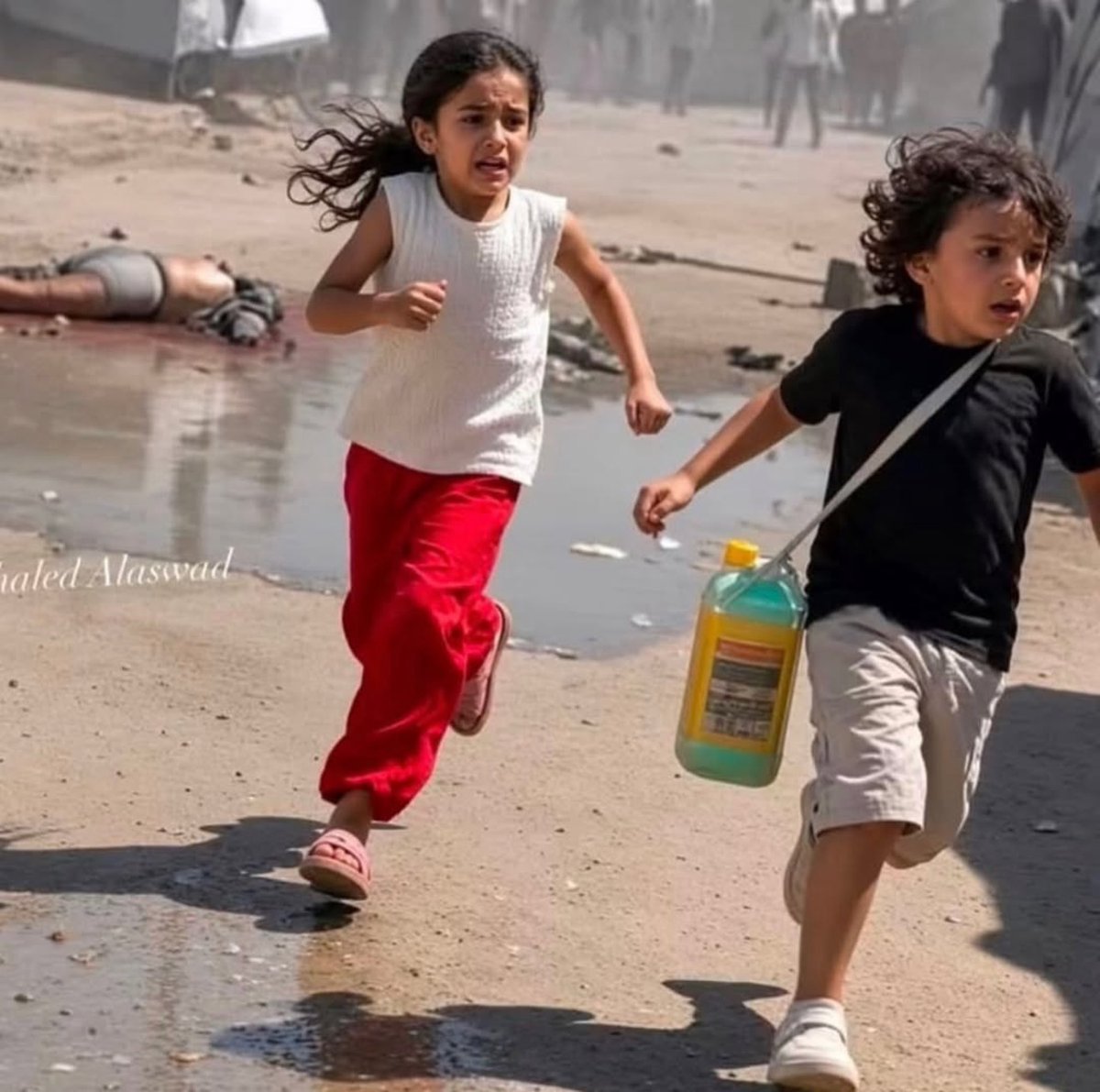
Two terrified children flee after an Israeli strike explodes right beside them in Gaza.
Behind them lies the bloodied body of a Palestinian man killed in the bombing.
The children are carrying a plastic container to collect drinking water.
This is the reality of childhood in Gaza‼️
'The Israelis are worse than the Nazis, at least the Nazis has the decency to try and hide what they are doing. The Israelis boast about it. It's demonically evil.'
- Jewish actor Wallace Shawn doesn't mince words.
ft @kthalps@KatieHalperShow
Very impressed by the courage of the Nalsar students. It’s not easy to do this, not only because of external threats, but even more because this is a profession where that constantly pressurises people to maintain conformity and defer to authority.
https://t.co/68cHDDxr6P