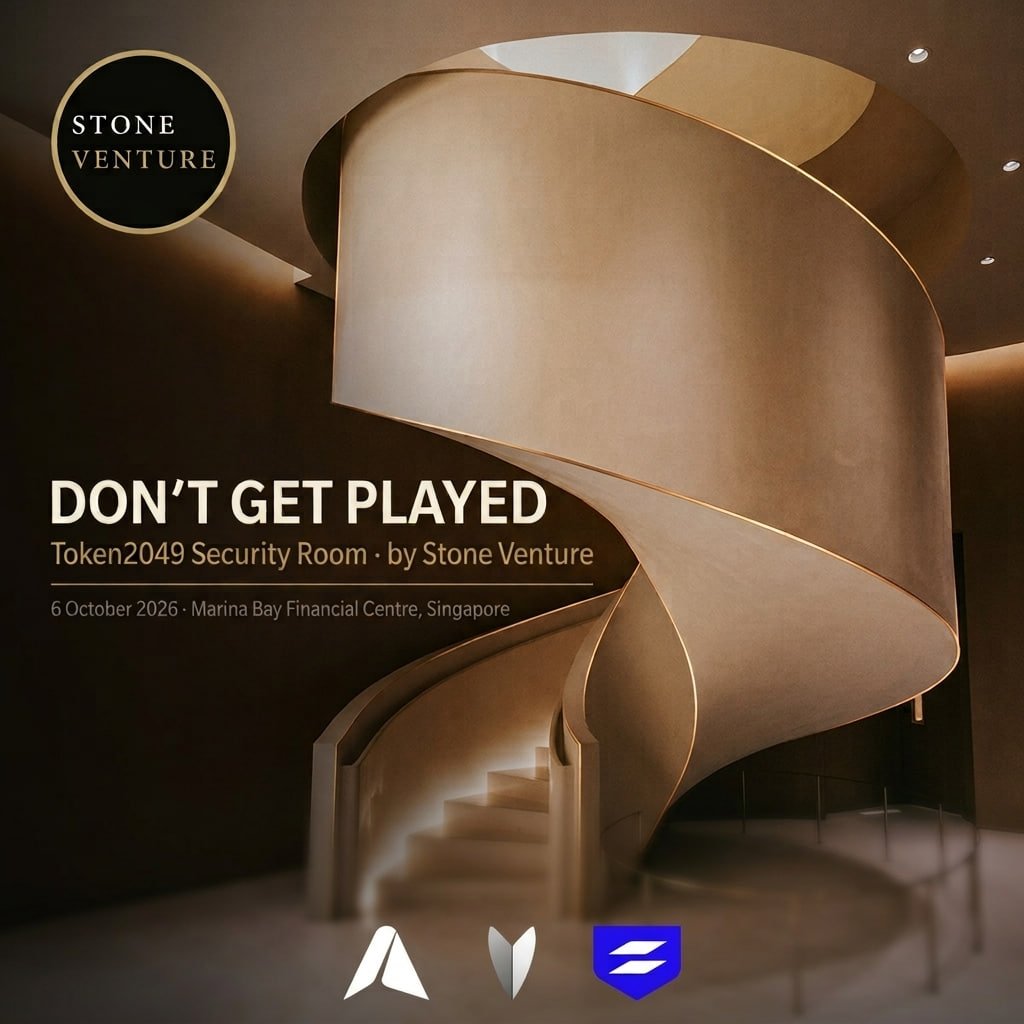
Don't Get Played - TOKEN2049 Security Room
Tuesday, October 6. The Singapore EDITION, 38 Canning Rise. 18:00–22:00 SGT.
The evening runs in three parts: a live wallet security clinic where you scan your own assets through Apex Audit, a panel on how crypto scams evolved in 2026 with speakers from Spartan Group, Bybit, Hacken and the Singapore Police Force Cyber Command, and networking with an open bar after.
Every confirmed guest receives Apex Audit MCP (18 free security tools inside) and one full year of Sophos MDR with a $1M breach protection warranty.
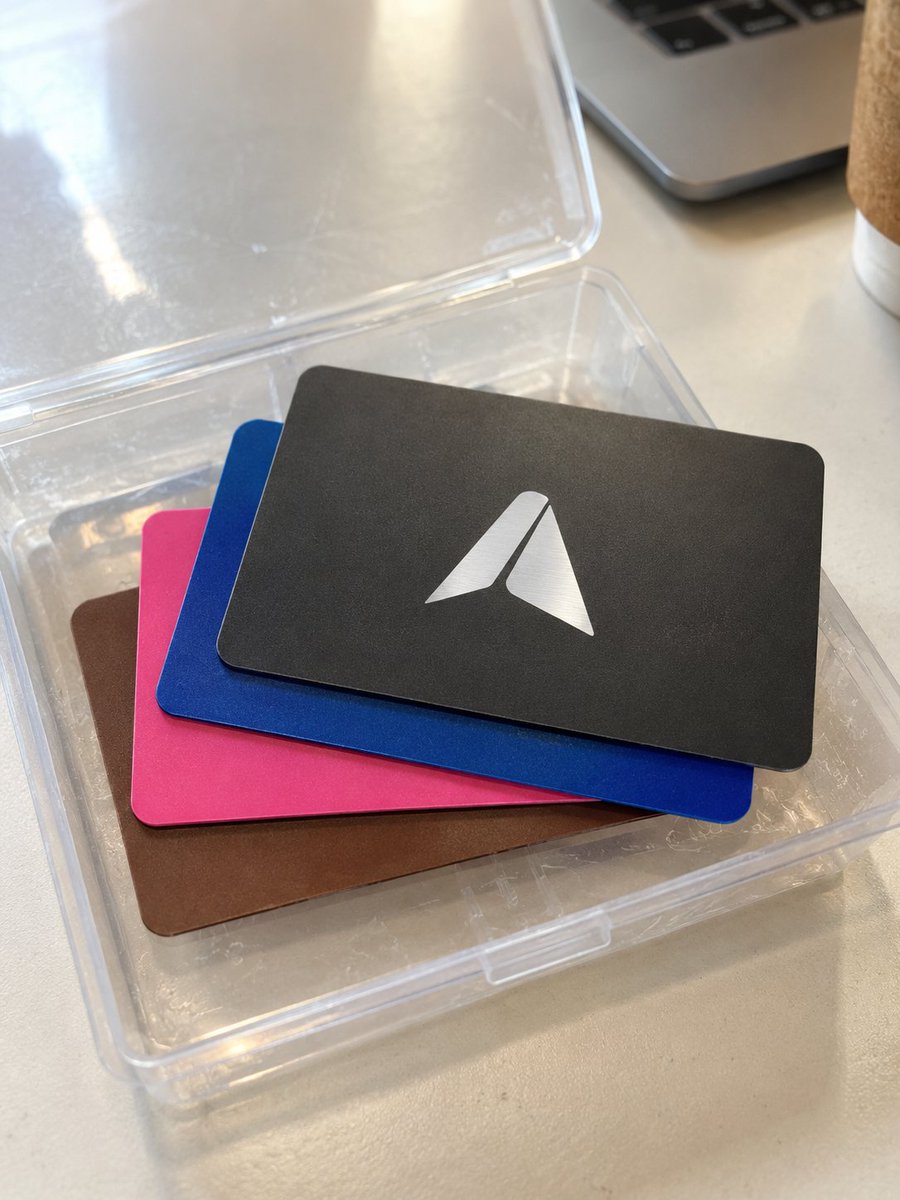
Get your digital pass and confirm your spot at https://t.co/7R9KXyftTQ. Entry is by physical card collected at the door.
See you Tuesday.
Hey Community!
It’s been a minute!
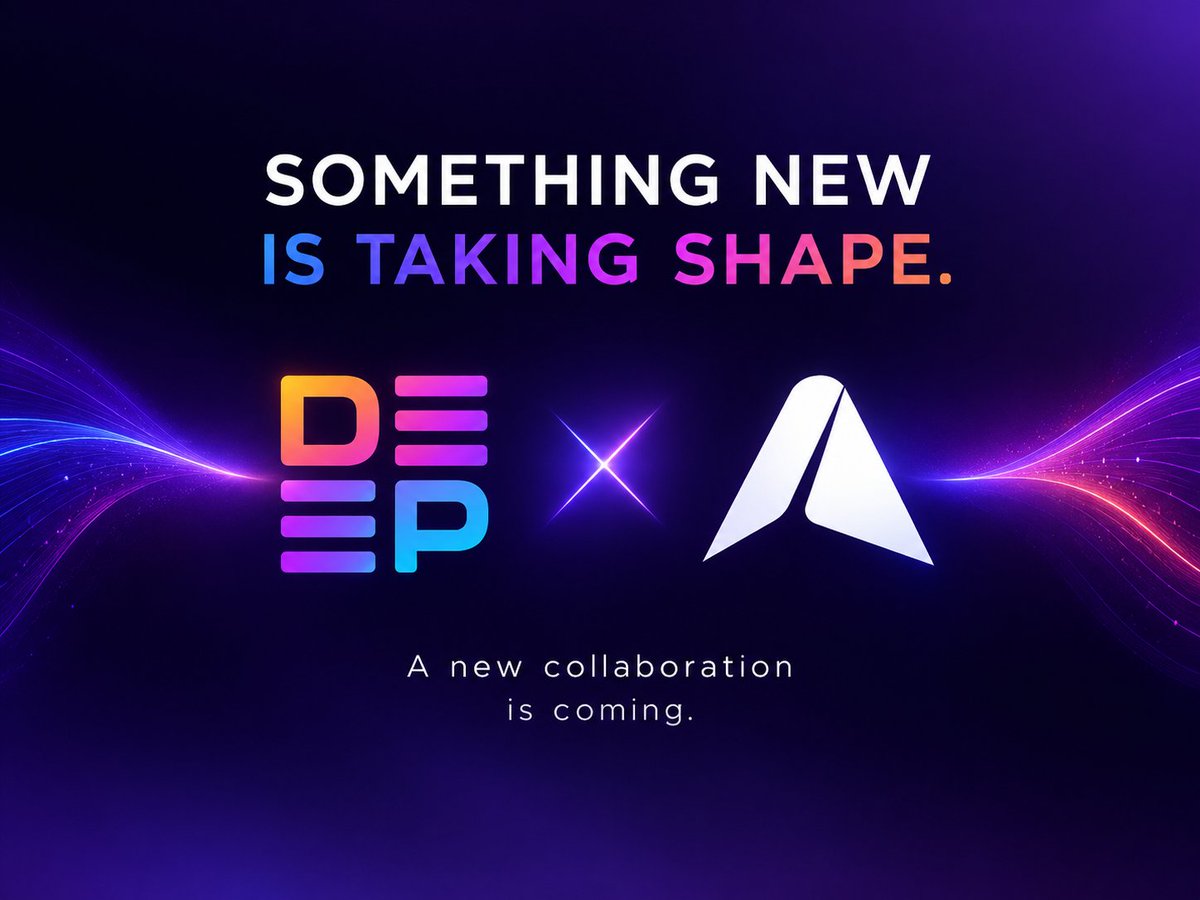
Something new is taking shape…
DEEP × @ApexAccelerate
Two ecosystems. New possibilities. One collaboration.
The first chapter is coming soon.
Stay tuned and register here: https://t.co/VPCp1iXdgt
#DEEP#Apex
Stone Venture, co-host of Don't Get Played
Stone Venture is co-hosting the evening on October 6 with Apex. It builds fundraising infrastructure for Web3 projects and connects founders with family offices, funds and angels, without cold emails and without gatekeepers.
The platform supports four ways to raise capital: RWA Equity (ERC-3643), Private Sale/SAFT, convertible instruments (SAFE/note) and custom deal terms such as revenue share or milestone-based tranches.
You can read the details in the "Get a Check" section of your dashboard at https://t.co/7R9KXyftTQ. If you are raising, write to [email protected] with the subject "Hello from Apex" for a warm intro. The Stone Venture team will be in the room during the networking block on October 6.
Everyone who registered for Don't Get Played has been approved.
Your spot for Tuesday, October 6 is confirmed. Open https://t.co/7R9KXyeW4i, go to "Check your status" at the bottom of the page and enter your Telegram handle. That opens your dashboard with your digital pass in one of four designs. Entry at the door is by a physical card, collected on arrival.
Doors open at 18:00 SGT at The Singapore EDITION. The evening starts with a live Wallet Clinic, followed by a panel on how scams evolved in 2026 with speakers from Spartan Group, Bybit, Hacken and the Singapore Police Force. Then the bar opens, and the top scanners on the DYOR Leaderboard get the event merch.
Every confirmed guest also gets 1 year of Sophos MDR, free, with 24/7 device monitoring and a Breach Protection Warranty that covers up to $1M in response expenses, per Sophos' warranty terms. To claim it, press "Claim" in the Sophos section of your dashboard, where your details are prefilled.
Claim your Sophos year before Tuesday: https://t.co/7R9KXyeW4i
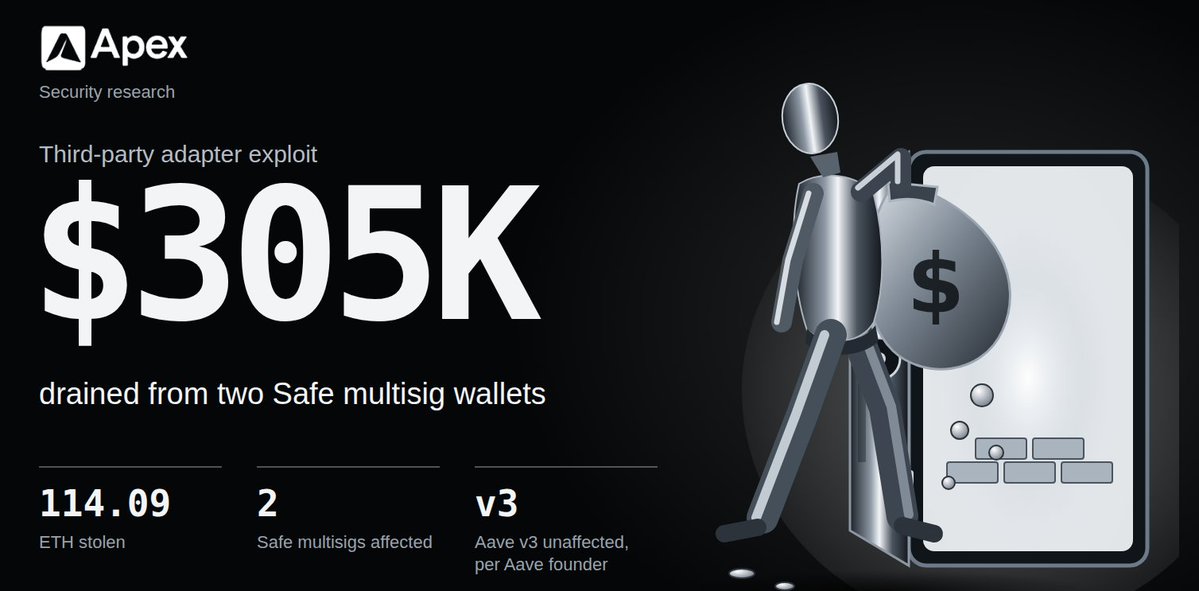
Aave founder says V3 unaffected after third-party adapter exploit drains $305K
@aave founder Stani Kulechov (@StaniKulechov) said Aave v3 was unaffected after an attacker exploited a third-party adapter to drain about $305,000 from two Safe multisig wallets.
Aave founder Stani Kulechov said Aave v3 was unaffected by an exploit that drained roughly $305,000 from two Safe multisig wallets through a third-party adapter built on top of the lending protocol.
“This is not Aave v3 contract, it’s third party external adapter built on top of Aave, zero effect on Aave v3,” Kulechov said on X.
👇
Token2049 returns to Marina Bay Sands on October 7 and 8. The numbers for this edition: 25,000 attendees from 7,000 companies across 160 countries, 300 speakers, 500 exhibitors and more than 1,000 side events running across Singapore through the week. Over 60% of attendees hold C-level positions.
The institutional side of this year's programme is what makes it different from previous editions. Senior leaders from BlackRock, J.P. Morgan, Morgan Stanley, Nasdaq, NYSE, CME and Franklin Templeton are confirmed across the event. The speaker list includes Nasdaq Chair and CEO Adena Friedman, Franklin Templeton CEO Jenny Johnson, Hyperliquid Labs CEO Jeff Yan, Polymarket founder Shayne Coplan, Robinhood CEO Vlad Tenev and Binance CEO Richard Teng. The organizers moved the Dubai edition to 2027 and put the full programme into Singapore, which is visible in the scale.
Around the main conference, the side event week runs from October 1 through 8. The Digital Asset Summit Asia, Sui Basecamp, the Network State Conference, the Milken Institute Asia Summit and the Forbes Global CEO Conference are among the 1,000 events taking place across the city. The TOKEN2049 Origins hackathon runs for 36 hours. The NEXUS Startup Competition finals are judged by Dragonfly, Multicoin and Maelstrom.
For projects watching the calendar, the week concentrates more decision-makers in one city than any other point in the year. Most of the real conversations happen outside Marina Bay Sands.
How much does it actually cost to fly to 🇸🇬 for @TOKEN2049 ?
Token2049 ticket - $500
Round trip flights - $900
Hotel for 3 nights - $2200
$3,600 total, not exactly a budget crypto trip but I’m sure it’ll be worth it 😄
Most Web3 founders spend the first year building the product and the second year discovering they need the regulatory infrastructure they did not build.
The ones who think about licensing and jurisdiction before TGE are not being cautious. They are running faster.
@ApexAccelerate
https://t.co/MGO00BCbd7
WHAT TOP ACCELERATORS ARE FUNDING IN 2025
Top accelerators just revealed what they're betting on in 2025.
After analyzing a16z CSX, Alliance DAO, and Outlier Ventures latest cohorts, the pattern is clear👇
Chain Abstraction (making multichain invisible)
AI Agents on-chain (autonomous DeFi)
Account Abstraction (Web2 UX for Web3)
Privacy tech (ZK, FHE post-Tornado)
RWA infrastructure (tokenizing everything)
Notice what's NOT on the list?
- Another L1
- Generic DeFi forks
- Memecoins
The infrastructure matured. Now it's about USER EXPERIENCE.
Smart founders are building bridges between complexity and simplicity.
Want to build what investors are hunting for? Apex helps you navigate these exact trends.
1/ CONSUMER MODE
Consumer Mode is the work you do before money moves: before a buy, an approval, a larger bag. It is research. It is not an audit. An audit is paid, signed, and owned by a firm that will answer for the report. We do not borrow that word.
1/
$SILV was sold as 1 token = 1 oz of silver.
On 11 Sep the treasury 3-of-5 signed its own drain.
46,909 SILV dumped into a thin book.
~$3,000,000 face value.
~$238,000 out.
Low print $0.339. Chart −74%.
Not a pool hack. Hot keys.
Mint: SiLVFMgD3eD2rgK628NbTBq9MnuJF5FW2CRaVyTB35L
FROM 0 TO 10,000 USERS: THE WEB3 GROWTH PLAYBOOK
Most Web3 projects die at 100 users.
The ones that hit 10,000?
They all follow the same playbook.
Here's the exact growth engine:
𝗣𝗛𝗔𝗦𝗘 𝟭: 𝟬-𝟭𝟬𝟬 (𝗙𝗢𝗨𝗡𝗗𝗘𝗥𝗦 𝗗𝗢 𝗧𝗛𝗜𝗡𝗚𝗦 𝗧𝗛𝗔𝗧 𝗗𝗢𝗡'𝗧 𝗦𝗖𝗔𝗟𝗘)
1. Personal DMs to every early user
2. Discord conversations at 2am
3. Testnet with your friends
4. Give away equity-level attention
Timeline: 2-4 weeks
Key metric: Response rate > growth rate
𝗣𝗛𝗔𝗦𝗘 𝟮: 𝟭𝟬𝟬-𝟭,𝟬𝟬𝟬 (𝗖𝗢𝗠𝗠𝗨𝗡𝗜𝗧𝗬 𝗦𝗧𝗔𝗥𝗧𝗦 𝗧𝗢 𝗕𝗨𝗜𝗟𝗗 𝗜𝗧𝗦𝗘𝗟𝗙)
a. Power users become moderators
b. First community-created content
c. Weekly AMAs with founders
d. Incentivized testnet (NOT AIRDROP)
Timeline: 2-3 months
Key metric: Daily active > total signups
𝗣𝗛𝗔𝗦𝗘 𝟯: 𝟭,𝟬𝟬𝟬-𝟭𝟬,𝟬𝟬𝟬 (𝗣𝗥𝗢𝗗𝗨𝗖𝗧 𝗚𝗥𝗢𝗪𝗦 𝗣𝗥𝗢𝗗𝗨𝗖𝗧)
1. Referral mechanics (native to product)
2. Strategic partnerships (distribution)
3. Content marketing (educational)
4. Mainnet launch with clear value prop
Timeline: 4-6 months
Key metric: Organic > paid growth
Growth in Web3 is INVERTED.
Web2: Acquire → Engage → Retain
Web3: Engage → Retain → Acquire (through community)
Your first 100 users should feel like CO-FOUNDERS.
Your next 900 should feel like EARLY EMPLOYEES.
Your next 9,000 should feel like STAKEHOLDERS.
That's the difference between:
- A community
- A customer base
At Apex, we've seen this pattern across 50+ projects.
The ones that win?
They treat growth like a religion.
Every. Single. Day.
(3/3)
Partnership templates that work:
🔹 Wallet integration
"We added support for your wallet"
🔹 Data integration
"We're driving traffic to your explorer"
🔹 Liquidity integration
"We're bringing volume to your DEX"
Notice the pattern? YOU do the work.
At Apex, we teach founders that in Web3:
DISTRIBUTION > PRODUCT
Your first 10 partnerships determine if you're:
A protocol people build on
A protocol people ignore
Choose wisely
(1/3)
PARTNERSHIPS THAT MATTER: HOW TO GET YOUR FIRST INTEGRATIONS
Your first partnership will make or break your launch.
Here's how to land integrations that actually move the needle:
𝗧𝗛𝗘 𝗪𝗥𝗢𝗡𝗚 𝗔𝗣𝗣𝗥𝗢𝗔𝗖𝗛:
"Hey [big protocol], want to integrate?"
*crickets*
Why it fails:
No value prop
Asking them to do work
No existing traction
(2/3)
𝗧𝗛𝗘 𝗥𝗜𝗚𝗛𝗧 𝗔𝗣𝗣𝗥𝗢𝗔𝗖𝗛:
"We built integration X for your protocol.
Here's the PR. Live demo in 48hrs.
100 users already tested it."
Response rate: 80%+
Here's the framework:
𝗦𝗧𝗘𝗣 𝟭: 𝗕𝗨𝗜𝗟𝗗 𝗙𝗜𝗥𝗦𝗧, 𝗔𝗦𝗞 𝗟𝗔𝗧𝗘𝗥
Integration takes 1 week
Permission takes 6 months
Build it anyway
𝗦𝗧𝗘𝗣 𝟮: 𝗠𝗔𝗞𝗘 𝗧𝗛𝗘𝗠 𝗟𝗢𝗢𝗞 𝗚𝗢𝗢𝗗
"X users discovered your protocol through us"
Volume metrics they can tweet
Make their BD team heroes
𝗦𝗧𝗘𝗣 𝟯: 𝗦𝗧𝗔𝗥𝗧 𝗦𝗠𝗔𝗟𝗟, 𝗧𝗛𝗜𝗡𝗞 𝗕𝗜𝗚
Mid-tier protocols first (more responsive)
Build case studies
Use those to land tier-1s
The best partnerships in crypto aren't deals.
They're inevitabilities.
Real example:
Project integrates Uniswap (permissionless)
Drives $1M volume in week 1
Uniswap BD reaches out
Featured in their newsletter
10x traffic
Cost: $0
Time: 1 week of dev work
Compare to:
6 months of BD emails
Lawyers reviewing MOU
Launch announcement with zero traction
The secret?
Stop asking for permission.
Start creating value.
WHY EVERY WEB3 PROJECT NEEDS A TOKEN STRATEGY IN 2025
Your project doesn't need a token.
It needs a TOKEN STRATEGY.
After SAB 122 and regulatory clarity, the game changed:
Tokens can now generate REAL revenue through fees.
Utility > speculation.
Compliance = competitive advantage.
But most founders get this wrong:
Launch token - hope for pump
Copy/paste tokenomics from other projects
Ignore legal frameworks
The right approach:
1. Define VALUE ACCRUAL mechanism (how does token capture protocol value?)
2. Map UTILITY (governance? access? revenue share? network effects?)
3. Design DISTRIBUTION (fair launch vs VC vs community allocation)
4. Build LEGAL STRUCTURE (SAFTs, DAOs, compliance from day 1)
5. Plan LIQUIDITY strategy (DEX, CEX, market making)
Without this? You're leaving millions on the table.
We've seen what works (and what doesn't). Token strategy isn't optional anymore - it's your moat.








![ApexAccelerate's tweet photo. (1/3)
PARTNERSHIPS THAT MATTER: HOW TO GET YOUR FIRST INTEGRATIONS
Your first partnership will make or break your launch.
Here's how to land integrations that actually move the needle:
𝗧𝗛𝗘 𝗪𝗥𝗢𝗡𝗚 𝗔𝗣𝗣𝗥𝗢𝗔𝗖𝗛:
"Hey [big protocol], want to integrate?"
*crickets*
Why it fails:
No value prop
Asking them to do work
No existing traction](https://pbs.twimg.com/media/HQgFFd0WYAEkrkk.jpg)