How Critical is Your Air?
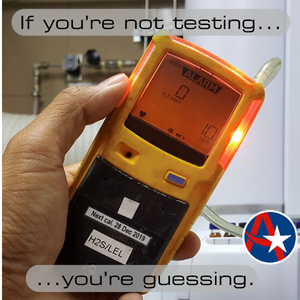
Testing and calibrating your gas detectors before every use could mean the difference between life and death.
Many gas detection users only want to hear what they want to hear, but those serious about the health and safety of themselves and those they are responsible for wanting the facts.
The facts are that you don’t know that you air is safe by simply turning the gas detector on then going straight to work. The sensors must be tested. Is this news to anyone? No it’s not…or at least it shouldn’t be. All gas detection manufacturers clearly state, in their operational and maintenance manuals, that you must test the detector prior to each critical use.
How Critical is Your Air?
Some manufacturers state that the period between calibrations can be as long as six months (not U.S. manufacturers), in an effort to gain market share because they think it’s what we want to hear. Right.
Standard Questions
How often do I have to calibrate?
Answer: When “field” or “bump” testing indicates the sensors do not reach a high percentage of the “bump” gas value on the can, assuming the gas is within manufacturers “good by” date.
How often must I “bump” test then?
Answer: Before each critical use! If you do not use the meter for at least four weeks you are best served by, at the very least, “bump” testing to verify that the sensor have not croaked, as oxygen sensors can do. You also need to make sure that some eager previous user, looking to see the combustible sensor respond, has not applied his disposable lighter to the LEL sensor and voila…the LEL is either dead from over-ranging or has been poisoned. Poisoned by butane gas? That’s correct. The LEL sensor is looking for Lower Explosive Levels which are approximately in the 0-5% range, not 100%, which is what comes out of that disposable lighter. So how critical is your air and more importantly, how can you verify the safety and accuracy of your air? It’s simple. Make sure you “bump” test before each use and calibrate regularly, which, by the way, will assist in keeping the sensors “healthy.” Some sensors have the tendency to “go to sleep.” Regular calibration schedules not only keep your sensors healthy and verified, but it’s the law. OSHA’s confined space rule 20CFR 1901.146 recommends you follow the manufacturer’s calibration and maintenance schedule, all of which recommend “field” or “bump” testing at regular intervals.
It’s a Simple Procedure
I know you’re thinking this expensive and time consuming. After all, you need a Ph.D. to do this stuff don’t you? On the contrary, with today’s technology, the advent of advanced gas detectors, and the low cost of standard calibration gases (approximately $250-$300 per year) you can have the user doing the “bump” testing on a regular basis and keeping a log of their testing. When the “bump” test indicates a response less than 90% of the target gas in the bottle, you simply proceed with calibration, using the same bottle.
All of this takes, with the newer technology available today, about 3-5 minutes. No kidding, it’s that easy and you have given the user a level of confidence which is not conveyed when you hand them a detector that already has a calibration sticker on it from a calibration they didn’t perform.
So, how critical is your air?
John V. Carvalho III is the President and CEO of Apollo Safety Inc.
#GasDetection #WorkplaceSafety #SafetyFirst #IndustrialSafety #OSHA #ConfinedSpace #AirQuality #Calibration #SafetyTips #ApolloSafety #HealthAndSafety #GasMonitor #StaySafe #SafetyMatters #FacilityManagement
How Critical is Your Air?
Testing and calibrating your gas detectors before every use could mean the difference between life and death.
Many gas detection users only want to hear what they want to hear, but those serious about the health and safety of themselves and those they are responsible for wanting the facts.
The facts are that you don’t know that you air is safe by simply turning the gas detector on then going straight to work. The sensors must be tested. Is this news to anyone? No it’s not…or at least it shouldn’t be. All gas detection manufacturers clearly state, in their operational and maintenance manuals, that you must test the detector prior to each critical use.
How Critical is Your Air?
Some manufacturers state that the period between calibrations can be as long as six months (not U.S. manufacturers), in an effort to gain market share because they think it’s what we want to hear. Right.
Standard Questions
How often do I have to calibrate?
Answer: When “field” or “bump” testing indicates the sensors do not reach a high percentage of the “bump” gas value on the can, assuming the gas is within manufacturers “good by” date.
How often must I “bump” test then?
Answer: Before each critical use! If you do not use the meter for at least four weeks you are best served by, at the very least, “bump” testing to verify that the sensor have not croaked, as oxygen sensors can do. You also need to make sure that some eager previous user, looking to see the combustible sensor respond, has not applied his disposable lighter to the LEL sensor and voila…the LEL is either dead from over-ranging or has been poisoned. Poisoned by butane gas? That’s correct. The LEL sensor is looking for Lower Explosive Levels which are approximately in the 0-5% range, not 100%, which is what comes out of that disposable lighter. So how critical is your air and more importantly, how can you verify the safety and accuracy of your air? It’s simple. Make sure you “bump” test before each use and calibrate regularly, which, by the way, will assist in keeping the sensors “healthy.” Some sensors have the tendency to “go to sleep.” Regular calibration schedules not only keep your sensors healthy and verified, but it’s the law. OSHA’s confined space rule 20CFR 1901.146 recommends you follow the manufacturer’s calibration and maintenance schedule, all of which recommend “field” or “bump” testing at regular intervals.
It’s a Simple Procedure
I know you’re thinking this expensive and time consuming. After all, you need a Ph.D. to do this stuff don’t you? On the contrary, with today’s technology, the advent of advanced gas detectors, and the low cost of standard calibration gases (approximately $250-$300 per year) you can have the user doing the “bump” testing on a regular basis and keeping a log of their testing. When the “bump” test indicates a response less than 90% of the target gas in the bottle, you simply proceed with calibration, using the same bottle.
All of this takes, with the newer technology available today, about 3-5 minutes. No kidding, it’s that easy and you have given the user a level of confidence which is not conveyed when you hand them a detector that already has a calibration sticker on it from a calibration they didn’t perform.
So, how critical is your air?
John V. Carvalho III is the President and CEO of Apollo Safety Inc.
#GasDetection #WorkplaceSafety #SafetyFirst #IndustrialSafety #OSHA #ConfinedSpace #AirQuality #Calibration #SafetyTips #ApolloSafety #HealthAndSafety #GasMonitor #StaySafe #SafetyMatters #FacilityManagement
🚨 PUBLIC SAFETY ALERT — Winter Storm Safety Reminder ❄️
A community in Rhode Island is mourning the loss of a young college student who died from carbon monoxide (CO) poisoning while trying to charge his phone in his snow-covered car during this week’s historic snowstorm. Snow obstructed the vehicle’s exhaust, allowing deadly gas to build up inside — and tragically, he didn’t make it.
https://t.co/avwVxxdSqJ
Carbon monoxide is a colorless, odorless “silent killer” that can strike without warning — especially during heavy snowfall and power outages.
📌 Life-Saving Tips:
❄️ Never run a car with the engine on in an enclosed or snow-buried space.
🔥 Keep exhaust pipes, vents, and chimneys clear of snow and ice.
📟 Install and test carbon monoxide detectors in your home.
⚡ Use portable generators only outdoors, at least 20 ft from your house.
Your safety matters — don’t let carbon monoxide become the unseen danger in your winter storm plans. Please share this with friends and family. ❤️
#WinterSafety #CarbonMonoxideAwareness #PSA
🫧Pre-fense is the alcohol-free foam hand sanitizer that kills 99.99% of germs 🦠 without drying your skin and lasts up to 24 hours! 🕒
🙌 Gentle on hands
👶 Safe for kids & families
⏳ Long-lasting protection
Clean hands. No harsh chemicals. Real protection.
👉 Click Here https://t.co/1oFoQkdERA
#Prefense #HandSanitizer #AlcoholFree #StayProtected #ApolloSafety
"🚨 Your CPA's year-end advice: Spend budget NOW to lower your taxes! 💰⏰
Great timing – WE HAVE STOCK and it's READY TO SHIP! 📦🚚
Upgrade your team's safety with in-stock PPE, gas detectors, Davit Systems and more from Apollo Safety. Orders placed now arrive fast – before December 31st!
Invest in safety AND smart tax strategy. Visit us at https://t.co/mD6u3eqH36 or DM for quick quotes.
#YearEndTaxSavings #InStock #ReadyToShip #SafetyEquipment #ApolloSafety"
Stock up on essential safety equipment now with Apollo Safety. From gas detectors and PPE to Davit fall protection systems – ready to ship.
Don't miss this year-end opportunity to invest in safety AND your bottom line.
Contact us today! 📞 800-813-5408| 🌐
#YearEndSavings #TaxDeduction #SafetyFirst #ApolloSafety #PPE #InStockNow"
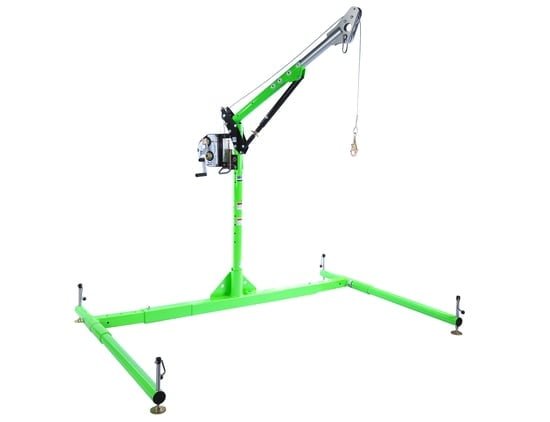
“When every second counts, trust the DBI-SALA Advanced Davit System. Engineered for precision, portability, and maximum safety in confined spaces. Don’t compromise—equip your team with the best.”
Blowout savings - Davit Fall Protection at Tripod System Pricing
https://t.co/I3jWxFj0J6
🇺🇸 Today we honor the brave men & women who’ve served our nation with courage and sacrifice.
From all of us at Apollo Safety, thank you for protecting our freedoms. We salute you! ❤️🤍💙
#VeteransDay#ThankYouVeterans#ApolloSafety
Apollo Safety is proud to support the Arpin Strong's 11th Annual Golf Tournament on Monday, Sept 29 at The New England Country Club. More info can be found here: https://t.co/bByc95OR9Z . We hope to see you there! ⛳
Apollo Safety is proud to support the 15th Annual Williams & Stuart Charity Golf Tournament ran by a Wish Come True. This Gold Tournament will take place this Saturday, Sept 20th at the Cranston Country Club. More info can be found here: https://t.co/BWr0semLDp .
Today we remember the lives lost on September 11, 2001, and honor the bravery of the first responders. We will never forget the courage, sacrifice, and unity shown on that day. At Apollo Safety, we stand with our community in remembrance and gratitude.
Apollo Safety is proud to support the A Wish Come True's 2nd Annual Bob Napolillo Memorial Golf Classic in Warwick, Rhode Island Next Monday, Sept 15th. More information can be found here: https://t.co/BWr0semLDp . Hope to see you there! ⛳