Singapore Airlines is building an AI-first customer journey, here’s how.
Forget AI-first companies.
Singapore Airlines is showing what it means to build AI-first customer experiences.
According to A'bidah Zaid Shirbeeni (via MARKETING-INTERACTIVE), here’s how they’re applying OpenAI tools across the business:
→ Personalizing their virtual assistant to help customers plan travel and self-serve
✓ Self-service drives more revenue than flight recommendations
✓ ChatGPT’s memory enables intuitive, ongoing personalization
→ Building an internal AI assistant for employees
✓ Speeds up decisions in critical moments
✓ Learns from past resolutions to guide future ones
→ Using ChatGPT to manage complex ops tasks like crew scheduling under regulatory constraints
✓ Optimizes planning
✓ Streamlines ops with less manual overhead
Why this matters:
It reframes AI not just as a tech layer—but as a tool for designing radically better customer journeys.
This is applied AI at its best:
Not replacing people—augmenting service.
What ideas spring to mind when you think about AI-first experiences in your business?
#AI #CustomerExperience #AppliedAI #DigitalTransformation #AIFirst
The biggest AI opportunity in marketing isn’t content, it’s product marketing.
Let me explain why PMM is the real goldmine for AI transformation:
→ PMM teams are chronically under-resourced
Even here at Klue, we’ve got one PMM managing two products, AI transformation, positioning rework, pricing, packaging, and constant competitive shifts. It’s a lot.
→ PMMs are strategic—but buried in busywork
They should drive GTM, define ICPs, shape messaging… but too often they’re stuck building decks, one-pagers, and generic enablement assets.
→ PMM work is deeply analytical and content-heavy
Perfect for AI support—from synthesis to first drafts.
→ Sales enablement is broken
One-size-fits-all training doesn’t move deals. Personalized, deal-specific enablement at scale? That’s where AI shines.
So what now?
We’re mapping every PMM job-to-be-done, and matching each to an AI use case. Here's our current roadmap:
🧠 Persona GPTs – Built with ChatGPT Projects to generate tailored insights
🧠 Product Launch GPT – Turns our frameworks into instant draft messaging
🧠 Agentic competitive intel – Using Klue to auto-generate battlecards and win-loss insights
🧠 ICP analysis – Working on pulling patterns from CRM data (open to ideas!)
🧠 Content reformatting – Translating messaging into enablement decks on the fly
Let’s scale PMM, the smart way.
#AI #ProductMarketing #GoToMarket #PMM #MarketingOps #Enablement
The biggest AI opportunity in marketing isn’t content, it’s product marketing.
Let me explain why PMM is the real goldmine for AI transformation:
→ PMM teams are chronically under-resourced
Even here at Klue, we’ve got one PMM managing two products, AI transformation, positioning rework, pricing, packaging, and constant competitive shifts. It’s a lot.
→ PMMs are strategic—but buried in busywork
They should drive GTM, define ICPs, shape messaging… but too often they’re stuck building decks, one-pagers, and generic enablement assets.
→ PMM work is deeply analytical and content-heavy
Perfect for AI support—from synthesis to first drafts.
→ Sales enablement is broken
One-size-fits-all training doesn’t move deals. Personalized, deal-specific enablement at scale? That’s where AI shines.
So what now?
We’re mapping every PMM job-to-be-done, and matching each to an AI use case. Here's our current roadmap:
🧠 Persona GPTs – Built with ChatGPT Projects to generate tailored insights
🧠 Product Launch GPT – Turns our frameworks into instant draft messaging
🧠 Agentic competitive intel – Using Klue to auto-generate battlecards and win-loss insights
🧠 ICP analysis – Working on pulling patterns from CRM data (open to ideas!)
🧠 Content reformatting – Translating messaging into enablement decks on the fly
Let’s scale PMM, the smart way.
#AI #ProductMarketing #GoToMarket #PMM #MarketingOps #Enablement
The biggest AI opportunity in marketing isn’t content, it’s product marketing.
Let me explain why PMM is the real goldmine for AI transformation:
→ PMM teams are chronically under-resourced
Even here at Klue, we’ve got one PMM managing two products, AI transformation, positioning rework, pricing, packaging, and constant competitive shifts. It’s a lot.
→ PMMs are strategic—but buried in busywork
They should drive GTM, define ICPs, shape messaging… but too often they’re stuck building decks, one-pagers, and generic enablement assets.
→ PMM work is deeply analytical and content-heavy
Perfect for AI support—from synthesis to first drafts.
→ Sales enablement is broken
One-size-fits-all training doesn’t move deals. Personalized, deal-specific enablement at scale? That’s where AI shines.
So what now?
We’re mapping every PMM job-to-be-done, and matching each to an AI use case. Here's our current roadmap:
🧠 Persona GPTs – Built with ChatGPT Projects to generate tailored insights
🧠 Product Launch GPT – Turns our frameworks into instant draft messaging
🧠 Agentic competitive intel – Using Klue to auto-generate battlecards and win-loss insights
🧠 ICP analysis – Working on pulling patterns from CRM data (open to ideas!)
🧠 Content reformatting – Translating messaging into enablement decks on the fly
Let’s scale PMM, the smart way.
#AI #ProductMarketing #GoToMarket #PMM #MarketingOps #Enablement
The biggest AI opportunity in marketing isn’t content, it’s product marketing.
Let me explain why PMM is the real goldmine for AI transformation:
→ PMM teams are chronically under-resourced
Even here at Klue, we’ve got one PMM managing two products, AI transformation, positioning rework, pricing, packaging, and constant competitive shifts. It’s a lot.
→ PMMs are strategic—but buried in busywork
They should drive GTM, define ICPs, shape messaging… but too often they’re stuck building decks, one-pagers, and generic enablement assets.
→ PMM work is deeply analytical and content-heavy
Perfect for AI support—from synthesis to first drafts.
→ Sales enablement is broken
One-size-fits-all training doesn’t move deals. Personalized, deal-specific enablement at scale? That’s where AI shines.
So what now?
We’re mapping every PMM job-to-be-done, and matching each to an AI use case. Here's our current roadmap:
🧠 Persona GPTs – Built with ChatGPT Projects to generate tailored insights
🧠 Product Launch GPT – Turns our frameworks into instant draft messaging
🧠 Agentic competitive intel – Using Klue to auto-generate battlecards and win-loss insights
🧠 ICP analysis – Working on pulling patterns from CRM data (open to ideas!)
🧠 Content reformatting – Translating messaging into enablement decks on the fly
Let’s scale PMM, the smart way.
#AI #ProductMarketing #GoToMarket #PMM #MarketingOps #Enablement
The biggest AI opportunity in marketing isn’t content, it’s product marketing.
Let me explain why PMM is the real goldmine for AI transformation:
→ PMM teams are chronically under-resourced
Even here at Klue, we’ve got one PMM managing two products, AI transformation, positioning rework, pricing, packaging, and constant competitive shifts. It’s a lot.
→ PMMs are strategic—but buried in busywork
They should drive GTM, define ICPs, shape messaging… but too often they’re stuck building decks, one-pagers, and generic enablement assets.
→ PMM work is deeply analytical and content-heavy
Perfect for AI support—from synthesis to first drafts.
→ Sales enablement is broken
One-size-fits-all training doesn’t move deals. Personalized, deal-specific enablement at scale? That’s where AI shines.
So what now?
We’re mapping every PMM job-to-be-done, and matching each to an AI use case. Here's our current roadmap:
🧠 Persona GPTs – Built with ChatGPT Projects to generate tailored insights
🧠 Product Launch GPT – Turns our frameworks into instant draft messaging
🧠 Agentic competitive intel – Using Klue to auto-generate battlecards and win-loss insights
🧠 ICP analysis – Working on pulling patterns from CRM data (open to ideas!)
🧠 Content reformatting – Translating messaging into enablement decks on the fly
Let’s scale PMM, the smart way.
#AI #ProductMarketing #GoToMarket #PMM #MarketingOps #Enablement
The biggest AI opportunity in marketing isn’t content, it’s product marketing.
Let me explain why PMM is the real goldmine for AI transformation:
→ PMM teams are chronically under-resourced
Even here at Klue, we’ve got one PMM managing two products, AI transformation, positioning rework, pricing, packaging, and constant competitive shifts. It’s a lot.
→ PMMs are strategic—but buried in busywork
They should drive GTM, define ICPs, shape messaging… but too often they’re stuck building decks, one-pagers, and generic enablement assets.
→ PMM work is deeply analytical and content-heavy
Perfect for AI support—from synthesis to first drafts.
→ Sales enablement is broken
One-size-fits-all training doesn’t move deals. Personalized, deal-specific enablement at scale? That’s where AI shines.
So what now?
We’re mapping every PMM job-to-be-done, and matching each to an AI use case. Here's our current roadmap:
🧠 Persona GPTs – Built with ChatGPT Projects to generate tailored insights
🧠 Product Launch GPT – Turns our frameworks into instant draft messaging
🧠 Agentic competitive intel – Using Klue to auto-generate battlecards and win-loss insights
🧠 ICP analysis – Working on pulling patterns from CRM data (open to ideas!)
🧠 Content reformatting – Translating messaging into enablement decks on the fly
Let’s scale PMM, the smart way.
#AI #ProductMarketing #GoToMarket #PMM #MarketingOps #Enablement
What if B2B brands marketed like Coca-Cola?
Coca-Cola doesn’t dominate because its formula is superior.
It wins because the brand is unforgettable.
In a world where every soda is sweet, fizzy, and cold—Coke sells emotion:
Refreshment. Nostalgia. Human connection.
And that’s exactly what most B2B brands miss.
→ "Real-time dashboards!"
→ "99.999% uptime!"
→ "Secure-by-design infrastructure!"
That’s just the B2B version of bragging about carbonation levels.
LinkedIn’s B2B Institute calls this The Product Delusion: the belief that features win markets.
But customers don’t buy the best product—they buy the most memorable brand.
When options blur together, people don’t search for perfect.
They choose what feels familiar.
Winning B2B brands don’t just promote what they do.
They position what they mean—with:
Simple, emotional narratives
Consistent visual identity
Stories, not feature lists
So if Coca-Cola doesn’t talk about its ingredients…
Why are B2B brands still selling specs?
#B2BMarketing #BrandStrategy #Positioning #EmotionalMarketing
AI isn’t just transforming sales; it’s reshaping post-sales too.
In B2B SaaS, the real battleground for value isn’t the close—it’s what happens after.
Onboarding, support, and expansion decide whether customers stay or churn.
Here’s how the smartest teams are using AI post-sale:
→ Clean and enrich customer data for sharper insights
→ Accelerate onboarding with intelligent workflows
→ Deliver faster, smarter support with AI copilots
→ Predict churn and intervene early to boost retention
→ Surface expansion opportunities at the perfect moment
Small AI tweaks = massive downstream impact.
Think of millions saved in renewals and support response times cut in half.
Post-sales isn’t an afterthought. It’s your growth engine.
#AI #B2BSaaS #CustomerSuccess #Retention #PostSales
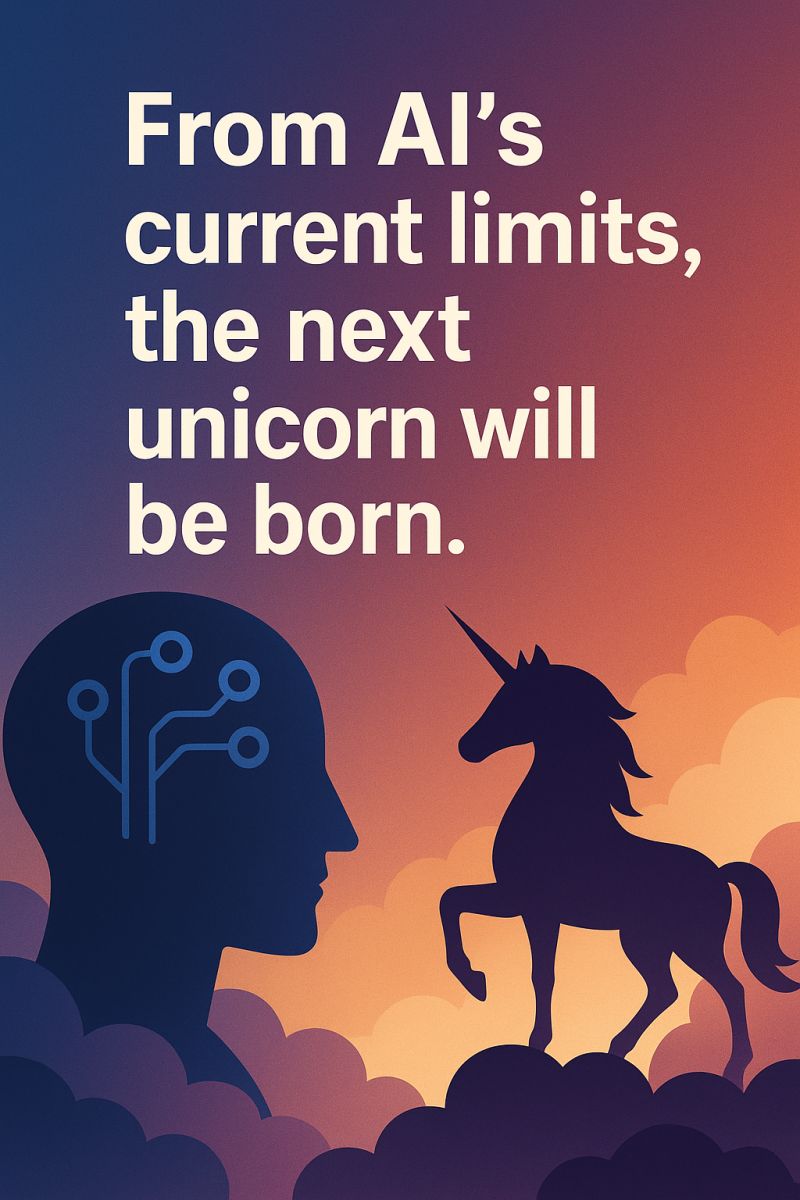
From AI’s limits to startup opportunities
Today’s AI is powerful—but still predictable.
It reasons well, but struggles to create, intuit, or adapt across complex tasks.
Here’s the current AI Reasoning Ladder:
🟢 Easy problems – 90%+ success
🟡 Medium problems – 90%+ with 1,000 fine-tuned examples
🟠 Hard problems – plateau at ~65%, even with massive data
🔴 Extremely hard problems – 0–10%, requires intuition and creativity
⚡ Beyond the ladder – models converge to sameness, unable to invent
Where AI hits a ceiling, startups find open space.
→ New training techniques are waiting to be built
→ Hybrid models (neural + symbolic) could unlock multi-step logic
→ Self-verifying AI may handle ambiguity with more trust
→ Creative reasoning engines are still missing—and needed
The next AI unicorns won’t just use AI.
They’ll fill the gaps where AI still fails.
Summary: AI is brilliant, but rigid.
Startups that build for adaptability, creativity, and abstraction will lead the next wave.
Are you building at the edge? Let’s connect.
#AI #Startups #Innovation #DeepTech #BusinessOpportunities
When Patagonia paused ads, loyalty went up.
In late 2023, Patagonia made a bold move: they stopped traditional ad spend.
Instead, they partnered quietly with micro-creators—especially podcast hosts—to deepen community trust.
And it worked.
→ 76% of podcast listeners trust hosts more than social media influencers (Sounds Profitable)
→ Patagonia’s loyalty score rose 12% in Q4 2023—even during a retail slowdown (Statista)
→ They didn’t script ads—they co-created real stories around sustainability
→ Podcasts created deeper emotional touchpoints without feed fatigue
→ Hosts acted as trusted gatekeepers, not just brand promoters
This wasn’t just a campaign. It was a strategy shift.
Here’s the mini-framework they followed:
Pick purpose-first hosts—value alignment is non-negotiable
Tell, don’t sell—authenticity beats specs
Invest in relationships—not one-off impressions
Would your brand dare to ditch ads?
If so, where would you reinvest your trust budget?
#Marketing #BrandLoyalty #PodcastStrategy #CommunityBuilding
Building authentic connections at scale is marketing’s new superpower.
The Walt Disney Company pushes 50,000 ad creatives per month across platforms—racking up 5 billion impressions every week.
But scale alone doesn’t drive success. Connection does.
→ “We’re targeting our way to oblivion.” — iHeartMedia’s Gayle Troberman
→ “Demographics aren’t enough. Understand who people really are.” — Hallmark’s Darren Abbott
→ “If it doesn’t hit in Brazil, it won’t go global.” — Netflix’s Shelly Gillyard
The smartest marketers are combining reach with resonance:
Using AI for smarter tagging and campaign alignment
Involving creators early (e.g., Warner Bros.’ Minecraft movie)
Testing in global edge markets (like Brazil)
Expanding beyond the obvious audience segments
This isn’t about blasting. It’s about belonging—at scale.
What’s one strategy your team uses to build real connections that grow?
#Marketing #AuthenticBranding #DigitalEngagement
Ever heard about computers that learn just like our brains?
They’re called neural networks, and they’re modeled after how human neurons transmit signals. By recognizing patterns and adjusting themselves over time, these networks can drive everything from accurate speech recognition to cutting-edge medical diagnostics.
The more data they process, the smarter they become; this is the foundation of countless AI breakthroughs.
Know someone who’d find this mind-blowing? Tag them, leave a like if you learned something new, and drop a comment to share your thoughts!
Wish your website would pop up first on Google?
That’s where SEO comes in, the art and science of tailoring your content to rank higher on search engines.
By targeting the right keywords, optimizing page speed, and crafting valuable, user-focused content, you’ll attract more visitors and keep them around longer.
Know someone who needs to boost their online presence?
Tag them, give this a like if you found it useful, and let us know your best SEO tip in the comments!
Listen, learn, delight: the new rules of customer connection.
Engagement isn’t something we do to people. It’s something we build with them.
Clicks and conversions are outcomes. Real connection is the goal.
→ Every email, push, in-app ping, or quiet moment is part of the conversation
→ Trust is earned through attention, not automation
→ Loyalty doesn’t start with a discount—it starts when a user feels understood
→ Great brands listen first, learn fast, and show up better each time
→ "Helpful" beats "hype" every single time
Want to make it real? Start here:
Revisit automations—are they useful or just running?
Treat email like a service channel, not just a promo blast
Make push notifications feel like a friend, not a megaphone
Ask instead of assuming—micro-surveys > silent guessing
Delight in small details: subject lines, success messages, tone
Engagement isn’t about volume. It’s about value in every touch.
Share this with a brand that’s ready to earn loyalty, not just chase it.
#EdTech #CustomerEngagement #Retention
From web visitors to app loyalists, what dating taught me about user conversion.
Would you ask someone to move in after the first date?
Pushing app installs too soon feels exactly like that—rushed, awkward, and likely to backfire.
Here’s how to slow down to scale up and build real loyalty instead of quick downloads:
→ Mind the pop-up size — subtle prompts outperform intrusive ones
→ Time it right — show install nudges on exit intent, not arrival
→ Offer incentives — exclusive perks can tip the decision
→ Mobile matters — design prompts that feel native and frictionless
→ Target smartly — personalize based on behavior, not assumptions
→ Cap the frequency — no one likes a pushy pop-up
→ Test and optimize — refine based on real user feedback
Because this isn’t just about installs. It’s about creating a habit.
Loyalty comes from connection, not pressure.
Share this with a growth marketer who needs to stop ghosting their web users.
#EdTech #MobileMarketing #UserEngagement
Subject lines aren’t what they used to be.
In 2025, writing great subject lines isn’t just copywriting—it’s context, tech, and behavior-aware messaging.
Here’s how the game has changed (and what modern marketers need to adapt):
→ Subject lines must stand alone — assume preview text gets cut
→ But don’t skip the preview text — it still supports opens when visible
→ Contextuality matters — timing, behavior, and segmentation boost impact
→ AI tools now assist with personalization, testing, and tone optimization
→ Emojis? Still effective — when relevant, not random
→ Voice-friendly lines win — more emails are now read via smart devices
The inbox is noisier than ever. Tiny details now carry huge weight.
Nail the subject line, or risk getting buried.
Share this with your email team: tiny lines, big impact.
#EdTech #EmailMarketing #Copywriting
Natural Language Processing (NLP)
Ever wonder how virtual assistants understand your questions so seamlessly?
It’s all thanks to NLP, the technology that helps computers interpret, analyze, and generate human language. From chatbots to voice recognition, NLP powers conversations across the digital world. As models learn from massive datasets, they’re transforming the way we communicate online; no more one-size-fits-all approaches.
Got someone who loves tech innovations?
Tag them, leave a like if you learned something new, and drop a comment to share your thoughts!
The cookie is crumbling; CRM-powered PPC is rising.
Third-party cookies are vanishing.
Privacy laws, browser blocks, and user expectations are rewriting digital marketing as we know it.
→ CRM + PPC = privacy-safe, hyper-targeted ads without third-party tracking
→ Re-engage leads, suppress current customers, and tailor messaging across the lifecycle
→ Build smarter lookalike audiences based on actual customer data—not guesswork
→ But here’s the catch: CRM and Acquisition teams still operate in silos, speaking totally different languages
→ To win, data, strategy, and metrics must align across both teams
CRM data isn’t a workaround. It’s the new foundation of high-performance, privacy-first marketing.
Waiting for a universal ID fix? That ship has sailed.
Stop relying on third parties. The future is already in your CRM.
Tag your PPC or CRM lead—this shift needs both sides.
#EdTech #CRMAdvertising #FirstPartyData