The photo-news below underscores the crushing injustice when it comes to an Igbo. For the Igbo, it’s life imprisonment for one, and twenty years imprisonment for others, even when there’s zero evidence of weapons possession or violence.
How can you not agitate against such a system?
BREAKING:
The Ambazonia Governing Council (AGovC) has welcomed the release of Mazi Simon Ekpa, the Biafra Prime Minister in Exile, following a ruling by a Finnish court.
The Ambazonia liberation organisation, which advocates for the independence of Ambazonia from Cameroon, describes the court's decision as a victory for truth and justice, expressing the view that the ruling represents a moment where truth has prevailed. @NRC_Norway@UN
Do you see how they are already discussing Mazi Simon Ekpa following reports of his release? Don't forget that they have also started moving military personnel, including Air Force assets, into the Southeast.
Watch closely and pay attention to what happens next. I fear there may be further atrocities, followed by attempts to shift the blame onto others.
The people of Alaigbo deserve protection, not another cycle of violence and accusations.
Who else remembers Barack and Michelle Obama - produced movie, “Leave the World Behind”?
Virtually everything that’s happened in the last few days was predicted in that movie.
Here’s Charlie Kirk’s post on the movie shortly after it was released 👇🏾
BREAKING: 🚨#APPLE services are now suffering an OUTAGE, including Apple PAY, Apple Music, App Store, iCloud and Apple Support.
Users say they're being signed out of iCloud on #iPhone and Mac without warning and they can't sign back in.
We’re gradually getting to the point where Nigerians are suddenly gonna start paying attention. Almost there.
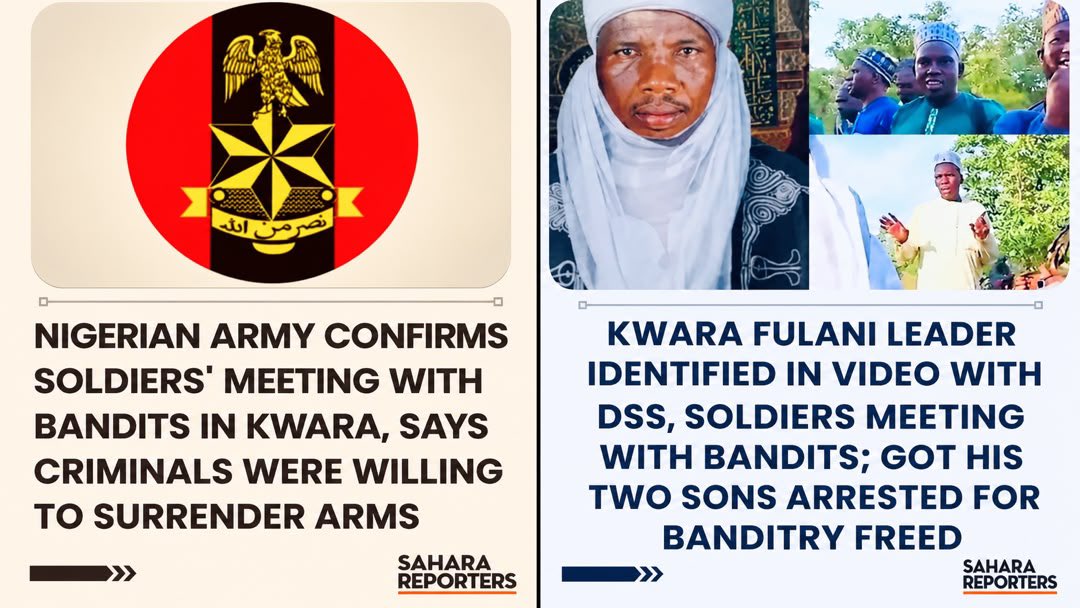
Meanwhile, Mazi Nnamdi Kanu Remains Locked Up, Serving a Life Sentence For Speaking Out Against The Government And Giving Voice To The Grievances Of His People. Yet, The Same Government Is Willing To Negotiate And Engage Armed Terror!sts Who Have K!lled, K!dnapped And Terror!sed Innocent Nigerians. So, Speaking Up For Your People Earns You a Life Sentence, But Taking Up Arms, K!lling And K!dnapping Nigerians Can Lead To Negotiations With The Government? What Exactly Is The Standard Of Justice In This Country? How Does This Make Any Sense?
I want to speak for the good of the Igbos, not with anger, but with truth and conscience. Because when the Igbo suffer injustice, Nigeria suffers too. A nation cannot be stable when part of it is treated as an afterthought, denied fair participation in its own future.
Let us begin with a key fact: the Igbo were not involved in the 1914 amalgamation.What is popularly called “the amalgamation” was not a voluntary agreement among Nigerians. It was an imposed administrative arrangement by colonial power, made without genuine consent, without equal representation, and without the Igbo having a real voice in the foundation of that state.
Why does this matter? It matters because the consequences of that imposed union did not stay in the archives. They became political, economic, and existential, —contributing to deep fractures that led to the civil war, and then to decades of injustice and marginalization that still persist.
After the war, many Igbo citizens expected healing and fairness. Instead, what followed was unequal development, political exclusion, and mistrust which often reinforced the feeling that some citizens pay more, suffer more, and are protected less. And when any group experiences persistent insecurity and unequal rights, violence becomes more likely, not less.
Today Nigeria also faces grave national crises, including targeted violence against Christian communities. Whether such acts are described as genocide or systematic persecution, the reality on the ground is the same: fear, displacement, and the sense that protection is not equally guaranteed. This is not only an Igbo problem—it is a national crisis rooted in weak institutions, unequal citizenship, and failure to manage differences peacefully.
So what is the solution?
I propose a democratic, peaceful remedy: a referendum for the people to choose and chart their future. Not as revenge. Not as a call to chaos. But as a mechanism of consent—so Nigeria can resolve its deepest questions with legitimacy rather than force.
In a country as diverse as ours, lasting unity must be built on fairness. If the Igbo were not part of the arrangement in 1914, then it is only just that the Igbo be fully involved now—in deciding what governance structure ensures safety, rights, development, and dignity.
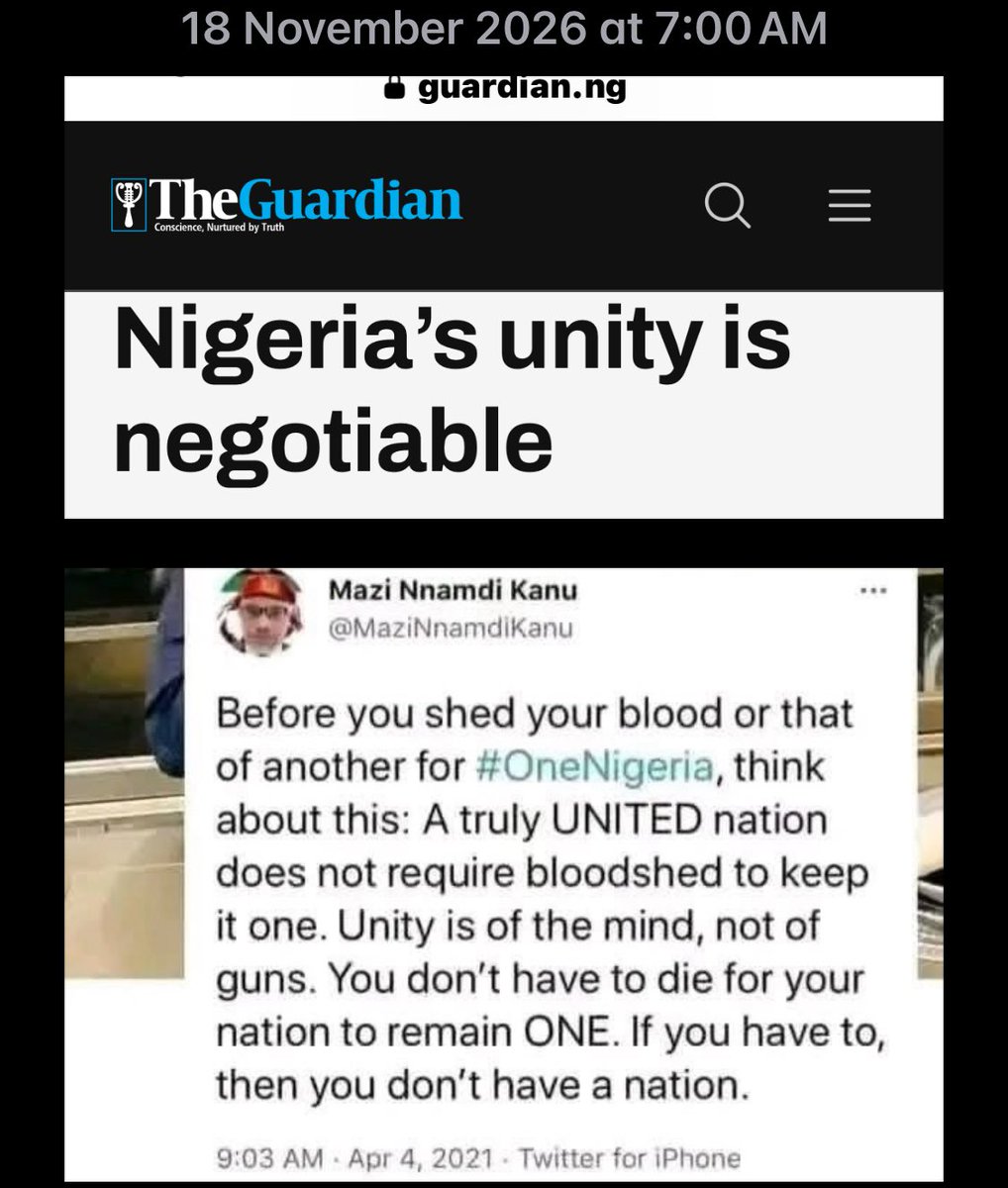
At the same time, Nigeria must show moral and legal seriousness. And I urge Nigeria to respect the findings of the United Nations. On July 20th, 2022, the United Nations Working Group on Arbitrary Detention and Human Rights, in **A/HRC/WGAD/2022/25**, found that Nnamdi Kanu was subjected to extraordinary rendition and arbitrarily detained, and it called for his release and compensation.
Nigeria should not treat such findings as negotiable. If Nigeria claims to respect human rights, then it must act on them because justice delayed for one citizen becomes a warning to all citizens.
To the Igbo, I urge discipline, unity, and peaceful political engagement. Peace requires purpose.
In closing: remember the Igbo were not involved in 1914, and the fallout helped produce war and long-term marginalization. Nigeria’s endemic crises will not end through denial or intimidation. They will end only when citizens have the power to choose their future, backed by respect for human rights and equal protection under law.
Therefore, for the good of the Igbo and for the good of Nigeria I call for a referendum: consent over coercion, justice over exclusion, and peaceful self-determination over endless suffering. I also call on Nigeria to respect the UN Working Group’s decision regarding Nnamdi Kanu release and compensation so that Nigeria can restore credibility, dignity, and the rule of law.
By Maxwell Dede.
Benin is 1,126 years old, while Igbo civilisation dates back 6,000 years. Now, tell me why the people of Benin claim that Onitsha people have their roots in Benin?
Can you even give an account of how your own father was born?
The whole Portharcut was known as Igweocha. It was changed to Portharcut in 1913. After the abolishment of slave trade, those who can't be sold then were referred to as ndị Ekweghị eree, that is how the name Ikwerre was adopted.
~~~~~ Kachi Ononuju
Where are our Igbo Nollywood actors and actresses? It's time to respond! Counter this " ISSAKABA RETURNS" with a blockbuster titled “THE RETURNS OF ISSAKABA BOYS” with a better storyline the suit the original part one.
Nollywood, why does Issakaba, a movie inspired by the Bakassi Boys, a group which was created in the East, have Yoruba dialect in it?
A group that was formed in Aba by traders who were tired of constant robberies and attacks all of a sudden has Yoruba dialect in it?
This is a distortion of the story. Even the original Isakaba had Igbo language in it.
The Bakassi Boys operated only in the East, not in the West!
Let’s assume he relocated. Are you trying to say Ebube forgot his own language? Why must Ebube, who has no ties with Yoruba, all of a sudden be speaking Yoruba?
It seems the criteria for releasing Nollywood movies these days is that you have to remove the Igboness from them.
What made Issakaba Issakaba was its realism, originality and Igboness.
Issakaba is Bakassi spelt backwards. This is an event based on a true story that happened in Igbo land.
If you are going to create a sequel, it should remain consistent with the original.