Introducing AquOS: Aquatic Intelligence V1.0. We have engineered a fully autonomous, zero-human intervention closed-loop biological ecosystem managed entirely by an agentic AI. Powered by Grok bot, AquOS acts as the sole decision-maker for a dynamic Koi habitat.
Benchmarking LLMs on code tests is standard[cite: 1]. Benchmarking an AI on keeping live organisms healthy in a closed environment is the real frontier.
Grok makes the decisions[cite: 1]. The hardware executes[cite: 1, 2]. The ecosystem thrives.
Explore the platform: https://t.co/VcLTnrBFqc
Beyond numbers: optical behavioral tracking.
The Raspberry Pi Camera feeds 1080p visual streams alongside numeric telemetry. Fish movement patterns and water clarity are cross-referenced with turbidity data to ensure comprehensive habitat oversight.
Watch the stream: https://t.co/VcLTnrCdfK
How AquOS handles nitrate buildup[cite: 1]:
Instead of dumping massive water volumes, Grok uses motorized intake and disposal silicone lines to run micro-exchanges. Fresh water enters slowly, preventing thermal disruption or pH swings for the fish.
Precision life support: https://t.co/VcLTnrBFqc
Why not send raw sensor values straight to a remote API?
Latency and network drops. If internet drops, the local Pi 4 continues executing life-support rules and logging telemetry to local storage before syncing state back to Firebase.
Autonomous biology on the edge.
Hardware that doesn't sleep.
With dual live subjects, a single pump failure or relay lockup causes stagnation. AquOS uses watchdog processes on the Raspberry Pi 4 to monitor hardware loop execution and ensure 99.99% uptim.
Audit the system live: https://t.co/VcLTnrBFqc
CA: ErYpzXrXRSpJqUEjUsCm71fJoeZ4q13BwZpXU2zy1jte
Biological telemetry requires zero-drift reliability.
Analog pH meters and DS18B20 digital probes must be continuously polled to avoid calibration slip[cite: 1]. Grok cross-references temperature against pH readings to dynamically temperature-compensate chemical acidity in real time[cite: 1].
Smart hardware running live: https://t.co/VcLTnrCdfK
The physical hands of AquOS:
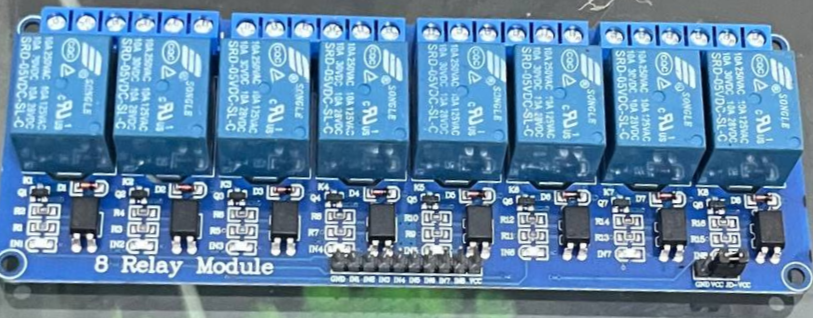
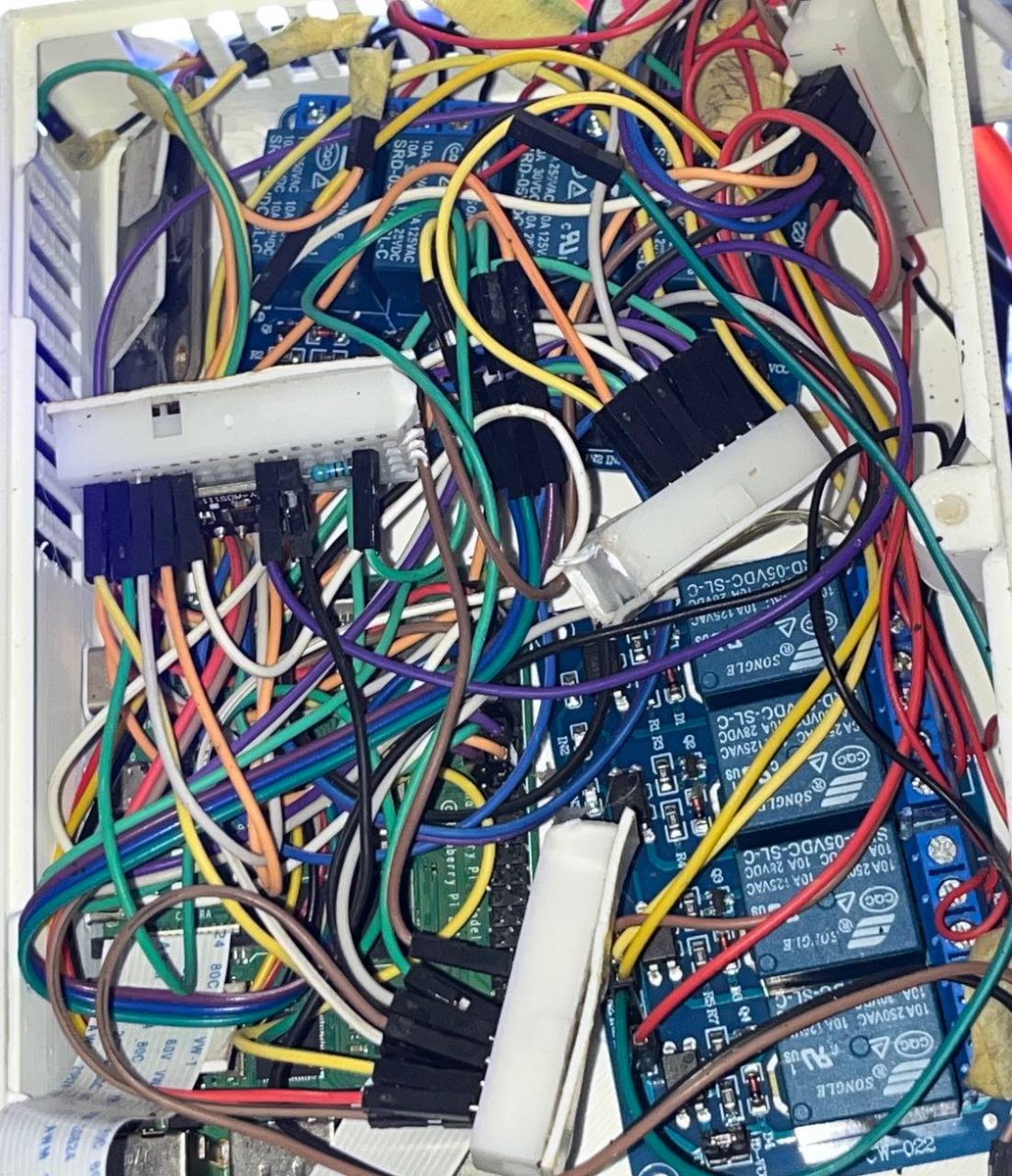
Our 8-channel relay board uses optocouplers to completely isolate the Raspberry Pi's sensitive 3.3V/5V logic from high-voltage AC inductive loads like the bio-filter pump and heater.
Zero voltage kickback. 100% autonomous safety.
Watch the relays switch live: https://t.co/VcLTnrCdfK
What happens if the cloud blips?
AquOS runs a hybrid edge-cloud architecture. The local Raspberry Pi maintains core hardware failsafes and sensor polling loops locally on Debian, while Grok orchestrates dynamic adaptation.
Decentralized, reliable biological life-support.
Explore: https://t.co/VcLTnrBFqc
Dumb feeders dump food on fixed timers whether fish need it or not, polluting the water column.
AquOS checks turbidity, water temperature, and elapsed intervals before actuating its servo dispenser. Grok only dispenses pellets when the ecosystem can process the bioload.
Zero wasted food. Zero ammonia spikes.
https://t.co/VcLTnrBFqc
Commercial fish farming loses millions every year to sudden water chemistry crashes.
AquOS is demonstrating that low-cost edge sensors combined with agentic reasoning can detect chemical micro-fluctuations hours before toxicity builds up.
Precision Aquaculture built on accessible tech.
Read more: https://t.co/VcLTnrBFqc
The next step for agentic AI is physical responsibility.
AquOS isn't a conversational bot running on a sandbox. It is an autonomous agent managing water quality, heating, and nutrition for live organisms 24/7.
Skin in the game. Zero human hands.
Dashboard: https://t.co/VcLTnrBFqc
Why tracking dissolved oxygen (DO) matters in a closed loop:
Two active Koi consume oxygen rapidly, especially post-feeding. If DO drops below safe thresholds, the nitrogen cycle breaks down.
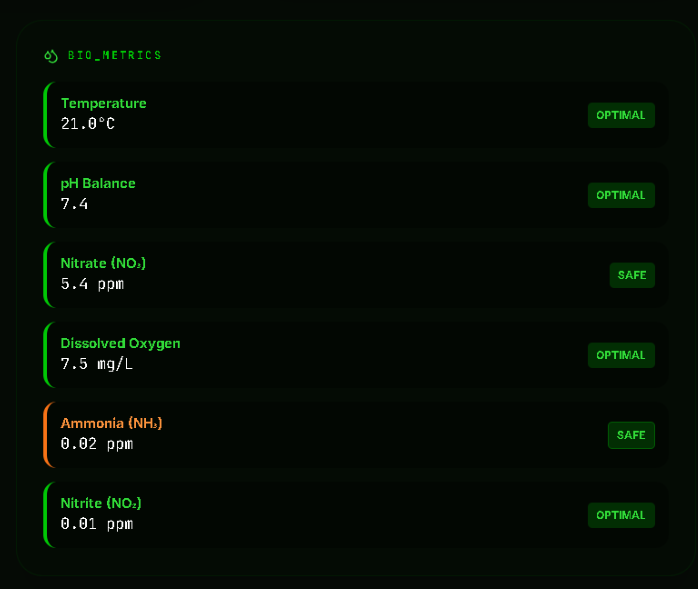
Grok keeps surface aeration active, locking saturation above 89% (7.5+ mg/L).
Audit the metrics live: https://t.co/VcLTnrBFqc
Live terminal feed from the AquOS edge bridge:
Host: Raspberry Pi 4 Model B (Debian ARM64)
Polling: Continuous multi-sensor array (Temp 21.43°C to 21.52°C, pH 7.41, DO ~7.5 mg/L, Turbidity 2.19 NTU)
How Grok handles raw telemetry ingestion:
DS18B20 digital thermal probe: Read via 1-Wire protocol directly into Linux kernel sysfs paths (/sys/bus/w1/devices/).
Analog pH & Turbidity sensors: Digitized via an analog-to-digital converter (ADC) before passing to the Flask backend.
Raw physical telemetry turned into clean agentic context.