KGB surveillance video shows the dramatic arrest of Adolf Tolkachev in June 1985.
Tolkachev was an avionics engineer who volunteered to spy for the CIA in 1977. The Agency initially ignored his approaches, believing him to be a Soviet 'dangle', a common tactic to bait case officers into revealing themselves. Ultimately Tolkachev proved himself and a relationship began that would be incredibly valuable to the US government. The first face to face meeting with Tolkachev, after months of deliberation, was considered by CIA to be a watershed event.
For seven years Tolkachev provided insights into Soviet research and development programs, including stealth technology, that led to him being known as the 'Billion-Dollar Spy' for the value of his intelligence. He conducted at least 25 high-risk, high-stakes personal meetings with different case officers over the years.
Tolkachev was paid well for his efforts but explained via clandestine letters to his CIA handlers that he was a dissident who had fallen in love with the idea of America, though he had never seen it himself. He discussed the possibility of donating some of his remuneration to Soviet dissident groups, since he had no plans for a grand lifestyle.
Tolkachev was ultimately betrayed by Aldrich Ames, a turncoat CIA employee in the Soviet division who in a single day turned over the names of every CIA asset in the Soviet Union.
In the video footage you can see the KGB officers put their fingers into Tolkachev’s mouth to prevent him from swallowing a poison pill. He had been issued one by the CIA but left it at home that day. After months of harsh interrogation, he was given a one-day trial, found guilty, and executed all on the same day.
For episode 11 of the Spycraft 101 podcast I spoke with Pulitzer Prize-winning author David E. Hoffman about his book “The Billion Dollar Spy”, the definitive work on Tolkachev’s incredible story. The episode is available now.
#kgb #coldwar #cia #ussr #soviet
https://t.co/0VhAeuqQ0c
In his memoir Front Row Seat, former Chief White House Photographer Eric Draper recounts a moment from the spring of 2003. President George W. Bush’s personal secretary, Ashley Estes, urgently called Draper to the Oval Office, making him think a major crisis or historic event was unfolding. When Draper rushed in, Bush pointed out the window and asked if he could see a duck walking across the South Lawn. By the time Draper looked, the duck was already gone—meaning the photo of an actual duck being photographed never happened.
. . . .
Draper was Bush’s chief official photographer for both terms, from 2001 to 2009. The job meant being with the president almost constantly, at meetings, on trips and during private moments, documenting history as it happened.
This photo captures one of the lighter moments. Bush stands at his desk on the phone, while Draper kneels by the window, camera aimed at the duck outside.
Draper also photographed some of the most important moments of the era. On September 11, 2001, he was with Bush all day, capturing the president as he learned of the attacks, aboard Air Force One and in the hours that followed.
He later collected many of his photos in a book, “Front Row Seat,” published in 2013.
The modern role of White House photographer took shape under Lyndon B. Johnson. His photographer, Yoichi Okamoto, insisted on unrestricted access to the president, and LBJ agreed, setting the standard for every administration since.
#archaeohistories
🔥🔥LUVIA DE BENDICIONES🔥🔥
Que este año les lleguen bendiciones así como a nuestro nuevo morro que le tocó pasar por 5 vergas
Gracias por el apoyo
Los canales siguen activos
Únanse
@EncuentroGayMty
Fiquei falando putaria com o skatista até ele ficar de pau duro, o puto me leitou gostoso ali na quadra mesmo enquanto os carros passavam, ainda fomos flagrados, que adrenalina boa
@socadaforterj
El 8 de enero de 2016, durante la captura de 'El Chapo' Guzmán en Los Mochis, una patrulla de la Policía Federal intentó llevárselo del Motel Doux. Un oficial dijo que tuvo que encañonar a sus propios compañeros para frustrar la huida antes de la llegada del Ejercito y Marina.
Hace 18 años el Learjet XC-VMC de Juan Camilo Mouriño “cayó” del cielo.
Giselle Melchor.
El 4 de noviembre de 2008, el Learjet 45 matrícula XC-VMC de la @SEGOB_mx se estrelló durante la aproximación al @AICM_mx , en Lomas de Chapultepec. Murieron las nueve personas a bordo y siete en tierra. Entre las víctimas estaban el entonces secretario de Gobernación, Juan Camilo Mouriño, y José Luis Santiago Vasconcelos, quien había sido subprocurador de la SIEDO.
Versión oficial.
La investigación de la SCT concluyó que la causa principal fue el encuentro con la turbulencia de estela generada por un Boeing 767 de Mexicana que precedía a la aeronave.
Versión del atentado.
Al margen de los dictámenes oficiales, circulan versiones —documentadas en investigaciones periodísticas y testimonios judiciales— que sostienen que se trató de un atentado dirigido principalmente contra Santiago Vasconcelos.
Vasconcelos era un objetivo prioritario del crimen organizado. En 2005, según el testimonio de Jesús “El #Rey” #Zambada (hermano de Ismael “El #Mayo” Zambada) en el juicio contra Joaquín “El #Chapo” Guzmán, el Cártel de #Sinaloa planeó asesinarlo porque “no aceptaba sobornos ni cooperaba con nadie”. En 2007-2008 hubo al menos dos atentados frustrados contra él en la Ciudad de México, atribuidos a las Fuerzas Especiales de Arturo (FEDA), el brazo armado de Arturo #Beltrán Leyva. Los sicarios fueron detenidos antes de ejecutar los planes, con armas y planos de su domicilio y ruta.
En el contexto de 2008 —año de la ruptura entre los Beltrán Leyva y el Cártel de Sinaloa, y de la detención de “El Rey” Zambada en octubre en la Ciudad de México—, periodistas como @anabelhoficial han vinculado el avionazo a tensiones entre el gobierno de @FelipeCalderon y el Cártel de Sinaloa, o a represalias en el marco de la guerra entre facciones.
Algunas líneas de investigación tempranas de la PGR también exploraron posibles filtraciones de información sobre el vuelo desde San Luis Potosí y vínculos de policías locales con grupos criminales.
#México
#Learjet45
#Narco
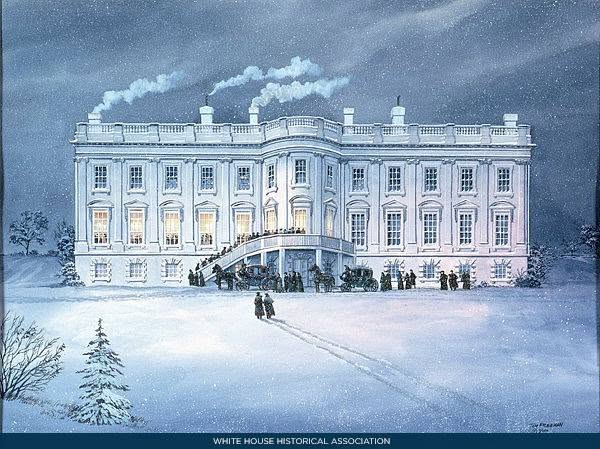
Nov 1, 1800. Washington, D.C. John Adams becomes the first president to live in the White House. It wasn't finished, it was cold, and his wife had to hang the laundry in the East Room.
For the first years of the new government, the capital had been New York and then Philadelphia. But in 1790 Congress agreed to build a permanent capital city on the Potomac River, on land chosen by George Washington. A design competition picked an Irish-born architect named James Hoban for the President's House. Construction started in 1792. Washington oversaw the planning but never lived in it. He died in December 1799, a year before it was ready.
So the honor went to Adams, who'd been Washington's vice president and was now the second president.
He arrived on Nov 1, 1800. The new city was mostly woods, mud, swamp, and a few scattered buildings. The house itself was still a construction site. Plaster was wet. Many rooms weren't finished. There was no grand staircase yet. There wasn't enough firewood to heat the place, and it was cold and damp.
Abigail Adams arrived a few weeks later, after getting lost in the woods on her way from Baltimore. She wrote to her daughter that the house was built on a grand scale, but that not a single room was finished and it took thirteen fires going just to keep it from being miserably cold. With no proper yard to use, she hung the family's laundry to dry in the unfinished East Room, today one of the most famous rooms in the country.
On his second night in the house, John Adams wrote a letter to Abigail. In it was a short prayer: that Heaven would bestow the best blessings on the house and everyone who would ever live in it, and that none but honest and wise men would ever rule under its roof.
More than a century later, Franklin Roosevelt had those words carved into the mantel of the State Dining Room, where they still are today.
Adams didn't get to enjoy it long. He'd just lost the election of 1800 to Thomas Jefferson. He lived in the White House for only about four months before packing up and leaving early on the morning of Jefferson's inauguration.
The man who helped win independence was the first to call the White House home.
La trama del film per adulti a tematica gay Tarea con leche 2 (2024) si sviluppa intorno a questo scenario:
Due giovani ragazzi stanno facendo i compiti a casa quando ricevono la visita inaspettata di un uomo (definito nel gergo "chacal") con l'intento di avere un rapporto intimo con loro. Uno dei ragazzi in realtà conosce già l'uomo, avendo scoperto il sesso con lui l'anno precedente. L'intera situazione e l'incontro si rivelano essere parte di un piano orchestrato fin dall'inizio.
The plot of the gay-themed adult film *Tarea con leche 2* (2024) unfolds around the following scenario:
Two young men are doing their homework when they receive an unexpected visit from a man—referred to in the local slang as a "chacal"—who intends to engage in sexual activity with them. One of the young men actually knows this individual already, having first explored sex with him the previous year. The entire situation and the encounter itself turn out to be part of a plan that had been orchestrated from the very beginning.
CHAOS AT THE RALLY - Trump walked right past The Beast; he clearly didn't want to take the ride to Air Force One.
He was surrounded by secret service and directed back to the car.
Same exact thing happened yesterday.
WHY WON'T THEY LET HIM WALK LONG DISTANCES? 🤔