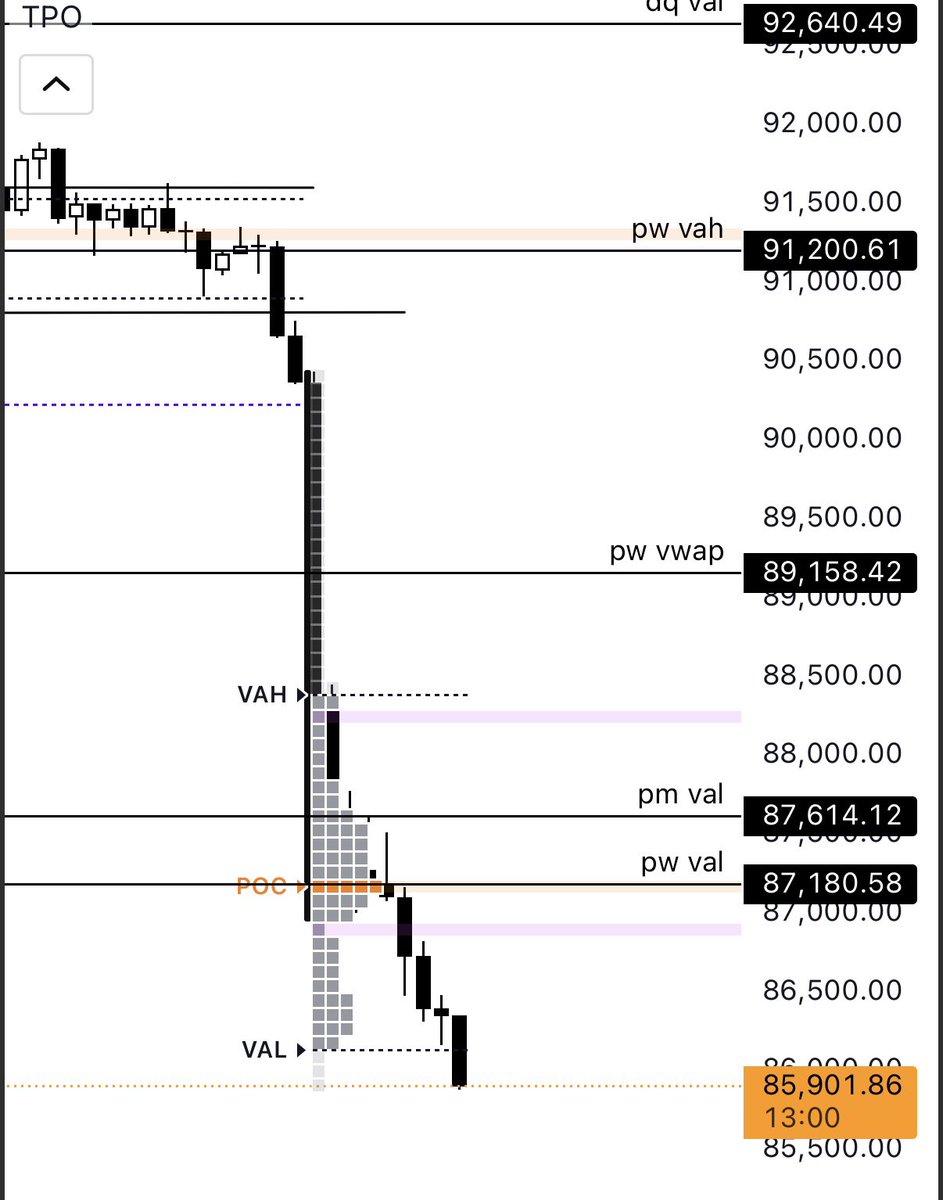
I recorded a 20-min tutorial on how to read the footprint correctly
0:16 - passive/aggressive flow
1:37 - tick sizes
4:02 - clusters vs profiles
6:00 - positioning
11:30 - aggregated data
14:05 - example trade
15:20 - nuances
16:53 - highs/lows
18:52 - context
Do you need to use a stop when trading?
Today I'm going to breakdown how discretionary traders should view stoploss & how managing positions should evolve over time
Why do you hear so many experienced traders say "I don't use a stop"
Intro
The traditional stoploss lessons everyone is taught are both important to understand while being terrible practical advice
The positive of basic stops - Defining a setups acceptable risk allowance is essential because otherwise the inexperienced trader will let the losses balloon. So a stoploss does its job of limiting max loss
The negatives of basic stops - Placing a stop at local swing point means you have a good chance of getting forced out of the trade. This becomes a serious problem when you are forced out of good trades
Fixed Risk
I define Fixed Risk as drawing a setup on a chart with a hard stop and target predetermined. When a trader is starting out this is your home, it keeps you safe from savagery of markets. It provides you a shelter to gain some much needed experience
But as your experience grows you start to notice something
"It seems a lot of my good setups come short of my targets and roundtrip or I get stopped out at the swing point right before price runs"
First solution to this is dynamic risk
Dynamic Risk
The moment you open a trade the value of your setup starts to decay(Time decay)
As a trade plays out and moves away from entry the risk to reward shifts less and less favorable, meaning you need to take profit and move on
This lesson mostly will help to avoid roundtripping
Always remember our take profit levels are just imaginary lines so don't be afraid to close early
Manual risk
Using ones experience gained over many years to decide when to cut and when to let it run
Sharing my simple framework in comment below
This why so many traders say they don't use stops because relying on a market order to force you out means you lose more when wrong than you needed to
Its not about being right or wrong
Its about how we manage being right or wrong
Closing Thoughts
Letting the market force you out when wrong is ok when starting out but we should move towards a discretionary framework as we gain experience
This allows you to keep loses smaller so you have the confidence to let winners run a little more
Survive early on to grow in the future
I have a lot more to share but I'll leave it here for now
If you want more of this style of writing let me know
Presented by @coinbasetraders
Free Alpha
• Open TradingView Watchlist
• Filter by Change %
• Top Gainers = easier to trade longs
• Top Losers = easier to trade shorts
"The trend is your friend until the end."
↓
The new @ExochartsC is great.
I threw on a demo account just to test out the trading and I can't see a reason why with more trading and order features this isn't an absolute go-to for an all in one OEMS and charting / flow software platform.
Well done.
second interview in the series with @DefiSquared
this crypto trader has extracted tens of millions of dollars from the crypto markets completely solo
I enjoyed learning how his edges have evolved over the years
constant iteration and relentless curiosity
Uniswapでスワップをする時、裏側で何が起こっているかを解説します。Swapしたり、流動性提供したりする人にオススメな内容にしました。
Order routingで使われるUniswap APIに関して、0.1% tileの理解まで持っていけると思います。
(わかっている人、途中まで読み飛ばしてね。
Translated by Claude.
This is not an official Uniswap tweet but rather research by an individual.
Understanding Uniswap Swaps: What Happens Behind the Scenes
I'll explain what happens behind the scenes when you swap tokens on Uniswap. This content is recommended for anyone who performs swaps or provides liquidity.
By the end, you should have a thorough understanding of the Uniswap API used in order routing, down to the 0.1% tile level of detail.
(If you're already familiar with this topic, feel free to skip ahead.)