Bro,the BILLIONAIRE you are;HIDING behind 'debts';forcing many months' UNPAID labour slaving to defend your STANDARD headlines 'BOLD' extortion GANGSTERISM driven by GREED;is HEARTLESS to loyal workers, INSULT to journalism and BETRAYAL to free media that STANDARD once belonged.
This is FANTASTIC!
The Judges of appeal give us great hope that there is still even greater hope in project Kenya!
There was bother dishonesty and integrity on the ballot, glad they chose integrity.
WHAT IS STUDIO? Places where Architecture is taught matters as much as the content. @KenyattaUni Architecture Programme will be opening its doors this year to the public to have a glimpse at SPACES + PLACES + FUTURE ISSUES in Kenya's architecture. More details shortly.
Warning long read ...if you are allergic to reading please feel free to go back to TikTok
1/3 The China of Africa Is Rising — And Kenya we are busy politicking at funerals.
I have not been to Ethiopia recently, but I have not needed to. The evidence of what is happening north of our border is everywhere in news bulletins, in industry reports, in the testimonies of business people and diplomats who return from Addis Ababa struggling to describe what they have seen.
When the African Union's own Special Envoy, Liberata Mulamula, tells the Ethiopian News Agency that "two years ago, no one would have imagined Addis Ababa looking like this," you pay attention. When you watch the concrete developments unfold not promises, not feasibility studies, but inaugurations, factory openings, and groundbreakings you are then forced to ask a painful question: what exactly are we doing in Kenya?
Let me lay out what I have been observing.
In Hawassa, a city of roughly 300,000 people in southern Ethiopia, Prime Minister Abiy Ahmed has built one of the most ambitious industrial ecosystems on the African continent. The Hawassa Industrial Park is up and running. It now hosts dozens of factories, employs tens of thousands of young Ethiopians — the majority of them women — and is equipped with Africa's largest Zero-Liquid Discharge wastewater treatment system that recycles ninety percent of its sewage water. This is not a PowerPoint presentation at a Nairobi hotel conference. This is steel, concrete, and humming production lines.
PM Abiy is not resting. In April 2026, he inaugurated three new solar panel manufacturing factories at Hawassa — Toyo Phase 2, Origin, and Lumintech — alongside an industrial gas plant. Together, these solar facilities will produce an annual capacity of 11.3 gigawatts of clean energy components. The story behind this is instructive and worth dwelling on. Abiy visited Vietnam, toured a Toyo solar panel factory, met the company's president, and within 3 months the first facility was operational in Ethiopia. Now this is EXECUTION.
The irony is that the investment required to set up these factories is not even astronomical — it is the kind of money that routinely vanishes in Kenya through corruption, inflated tenders, and deals that exist only in whispered conversations.
The Dangote partnership tells the same story of decisive action. In August 2025, Aliko Dangote and the Ethiopian government signed a $2.5 billion agreement to construct a fertiliser plant in Gode, in Ethiopia's Somali Region. Today Dangote himself with PM Abiy Ahmed were on site for the groundbreaking ceremony. The facility will produce up to three million metric tonnes of urea annually, potentially placing Ethiopia among the world's top five producers. Think about that. The country that was Africa's largest fertiliser importer is positioning itself to become a regional exporter.
The ownership structure 60 % Dangote, 40 % Ethiopian Investment Holdings which ensures the state retains a meaningful stake in its own transformation. This is not charity. This is strategy.
Now consider the energy picture that underpins all of this. Ethiopia had commissioned the Grand Ethiopian Renaissance Dam, a $5 billion megaproject built without a single dollar of foreign financing funded entirely through domestic bonds, salary deductions, and public contributions. With a capacity of 5,150 megawatts, the GERD has effectively doubled Ethiopia's generation capacity. The result is decisive: Ethiopia now has the lowest electricity prices in Africa.
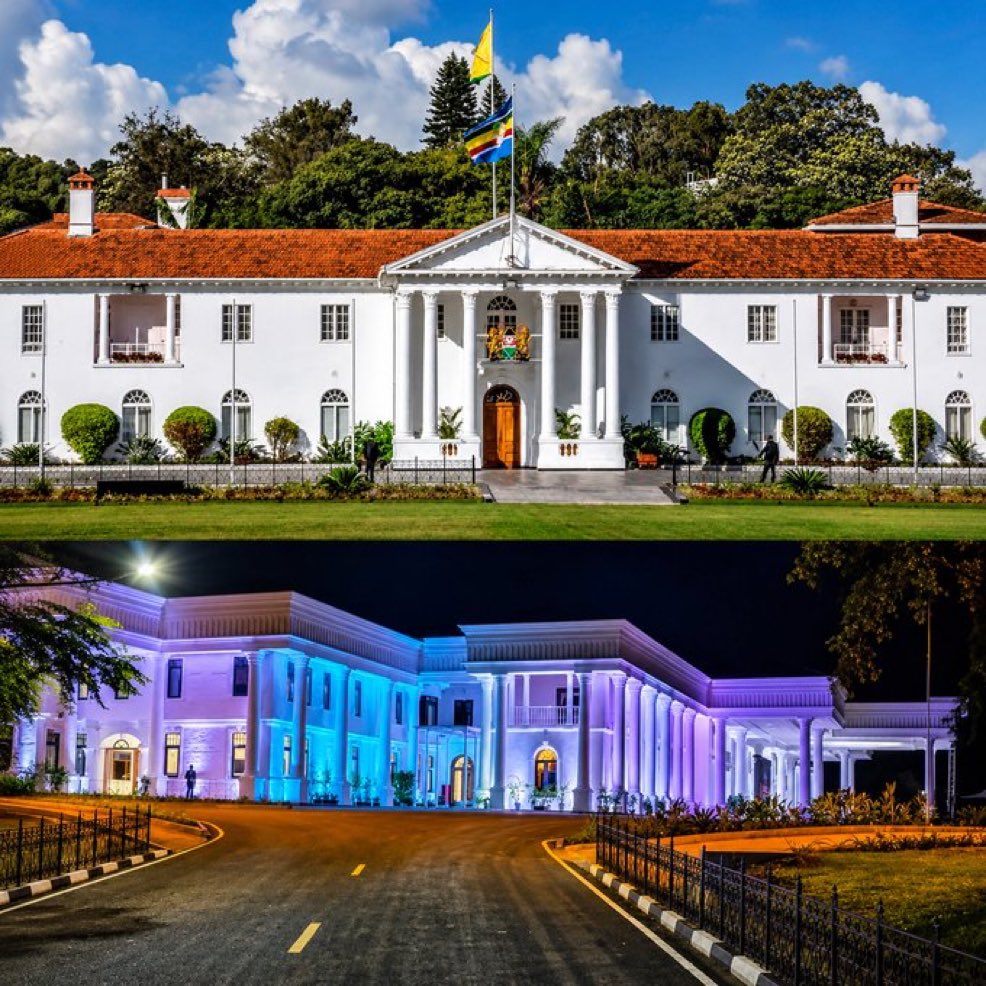
Why the OLD works better architecturally
1 Column proportions:
The columns have a more classical height-to-diameter ratio, giving them visual strength and dignity rather than appearing stretched.
2.Entablature depth:
The architrave, frieze, and cornice are well articulated and sufficiently deep, allowing the façade to “sit” properly on the columns.
3.Pediment scale:
The pediment relates correctly to the portico width and height, creating a balanced triangular crown instead of an oversized cap.
4.Hierarchy & rhythm:
There is a clear base...middle...top reading, which is fundamental to classical composition and civic architecture.
Where the NEW struggles
1 Over-scaled portico:
The portico is excessively deep and tall relative to the main block, making the building feel front-heavy.
2.Slim, elongated columns:
They appear stretched and visually weak, undermining the sense of permanence expected of a state building.
3.Flattened detailing:
The entablature is shallow, reducing shadow play and classical legibility.
4.Loss of human scale:
The building reads monumental, but not dignified....more imposing than proportionate.
Professional architectural verdict:
✔ OLD = better classical proportions and compositional discipline
✖ NEW = larger, cleaner, but proportionally diluted
Why the OLD works better architecturally
1 Column proportions:
The columns have a more classical height-to-diameter ratio, giving them visual strength and dignity rather than appearing stretched.
2.Entablature depth:
The architrave, frieze, and cornice are well articulated and sufficiently deep, allowing the façade to “sit” properly on the columns.
3.Pediment scale:
The pediment relates correctly to the portico width and height, creating a balanced triangular crown instead of an oversized cap.
4.Hierarchy & rhythm:
There is a clear base...middle...top reading, which is fundamental to classical composition and civic architecture.
Where the NEW struggles
1 Over-scaled portico:
The portico is excessively deep and tall relative to the main block, making the building feel front-heavy.
2.Slim, elongated columns:
They appear stretched and visually weak, undermining the sense of permanence expected of a state building.
3.Flattened detailing:
The entablature is shallow, reducing shadow play and classical legibility.
4.Loss of human scale:
The building reads monumental, but not dignified....more imposing than proportionate.
Professional architectural verdict:
✔ OLD = better classical proportions and compositional discipline
✖ NEW = larger, cleaner, but proportionally diluted
I am a Professor of Architecture. I have been a judge for Commonwealth Association of Architects Awards, International Union of Architects Awards, Asia Architecture Awards, AAK-Crown Architecture Awards, etc. Feel free to ignore my opinion. The New State House is plain MEDIOCRE!
Your Excellency @WilliamsRuto when will your government stop lying to Kenyans?
KNBS data shows only 77,000 new jobs created in the entire construction industry since 2023, yet your PS claims the Affordable Housing Programme has created 640,000 jobs since 2022.
Where exactly are these jobs, Mr. President?
Numbers don’t lie.
BREAKING VIDEO: Kenya’s Sabastian Sawe becomes the first person ever to win a regular marathon in under two hours, setting a new world record at the London Marathon in 1:59:30!
Kenyans invented running™