ArchPoints began in 2009 on Facebook, providing archaeology lifestyle tips from a team of experts, each with their own specialist area. Overspill account.
Grubbing out is the process of digging out the wall footings and foundations of a demolished building, archaeological monitoring can often reveal features and deposits underlying or cut by the former building.
If you have trouble putting eye drops in and have no one to help you, sit down and hold the bottle against the bridge of your nose with the nozzle pointing towards the near corner of your eye. Keeping your eye open lean back until the drop falls out or is squeezed out.
OUT NOW!
Coastal Archaeology in Small Islands
Prehistoric Lifeways, Research Perceptions, Biases, Methods and Approaches
edited by Maaike S. de Waal
📚 Read online for free or purchase a printed copy at https://t.co/6dpVjjAYfW
#smallislands#prehistory
Artex is a generic name for a trademarked surface coating first made by Artex Ltd in 1935. Able to receive a hand-textured finish, very popular in 1970s Britain, but impossible to repair seamlessly. Even quite recent Artex can contain asbestos, so precautions should be taken.
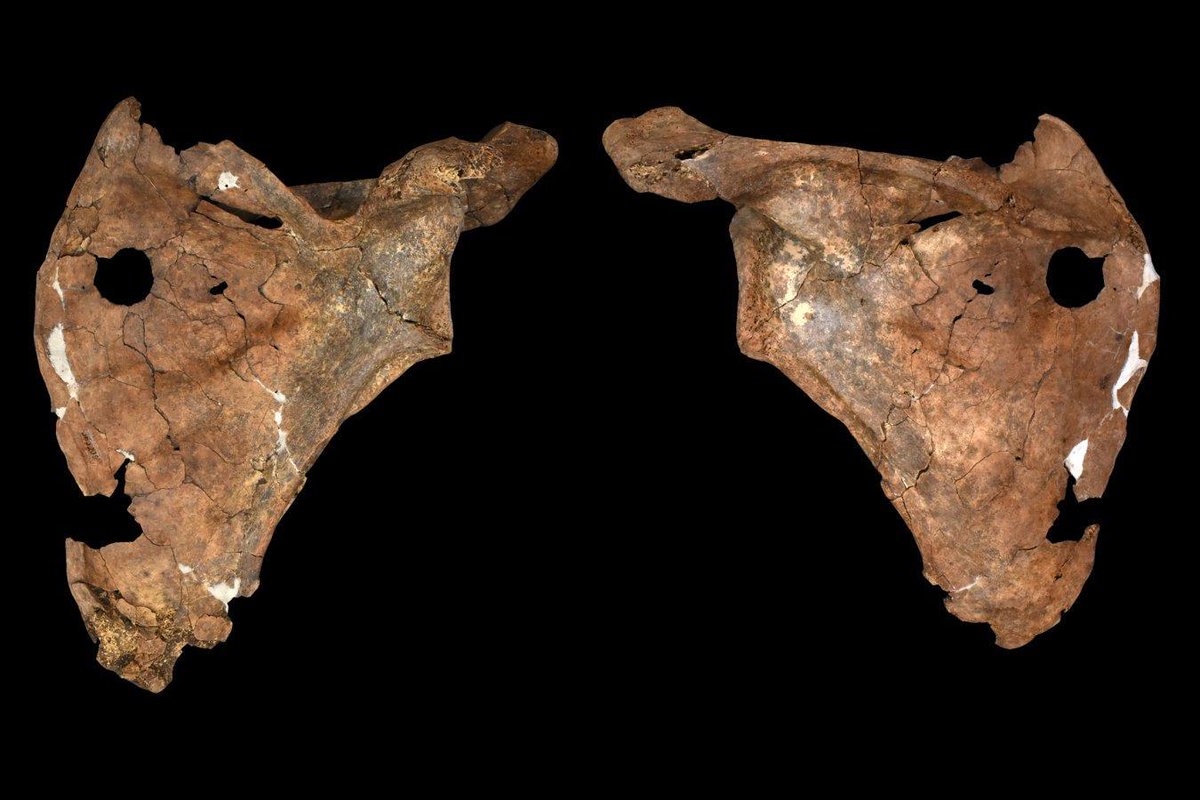
A 75,000-year-old skeleton offers a glimpse into the violent world in which Neanderthals lived, but also offers hints that they cared for one another https://t.co/MbClhWN4MS
Chumash stone craftsman Paciano Guiljahichet carved the exterior statues on the Santa Barbara Mission in sandstone between 1815 and 1820. By 2015, only minute traces of paint remain to show they were ever painted, something confirmed by written accounts.
A 3,500-year-old Egyptian dog had a unique name linked to the underworld god Anubis
A faint name beside a dog in an ancient Egyptian tomb has added a new name to the known list of Egyptian dogs. The name appears in the 18th Dynasty tomb of User...
https://t.co/vVkUy47laP
On a man's three-button suit jacket, the top button should sometimes be fastened, the middle button always fastened, and the bottom button never fastened. This is the sometimes, always, never rule. The top button may sometimes be fastened if it is not hidden by the lapel.
Roman silver hoard with 45 coins and a gold ring found on Sweden’s Gotland
A Roman silver hoard with 45 coins and a gold ring has been found at an ancient farm site on Sweden’s Gotland island. Archaeologists from Gotlands Museum and Arendus found...
https://t.co/DJp4IUd91K
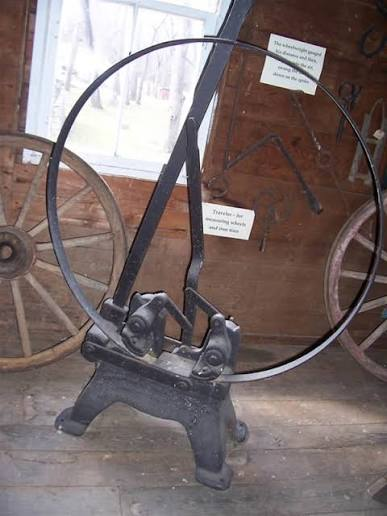
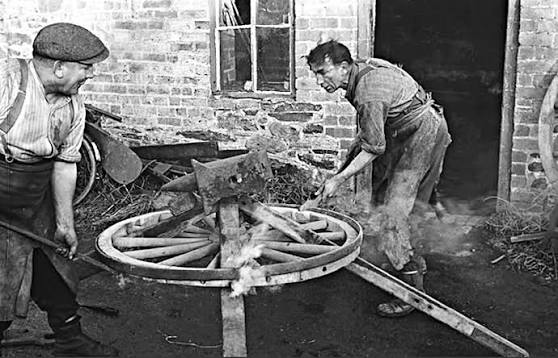
Iron tyres were made smaller in a tyre shrinker, two cams were forced together by a lever, making a section of the tyre thicker and wider, decreasing the circumference, this is recognisable on surviving iron tyres.
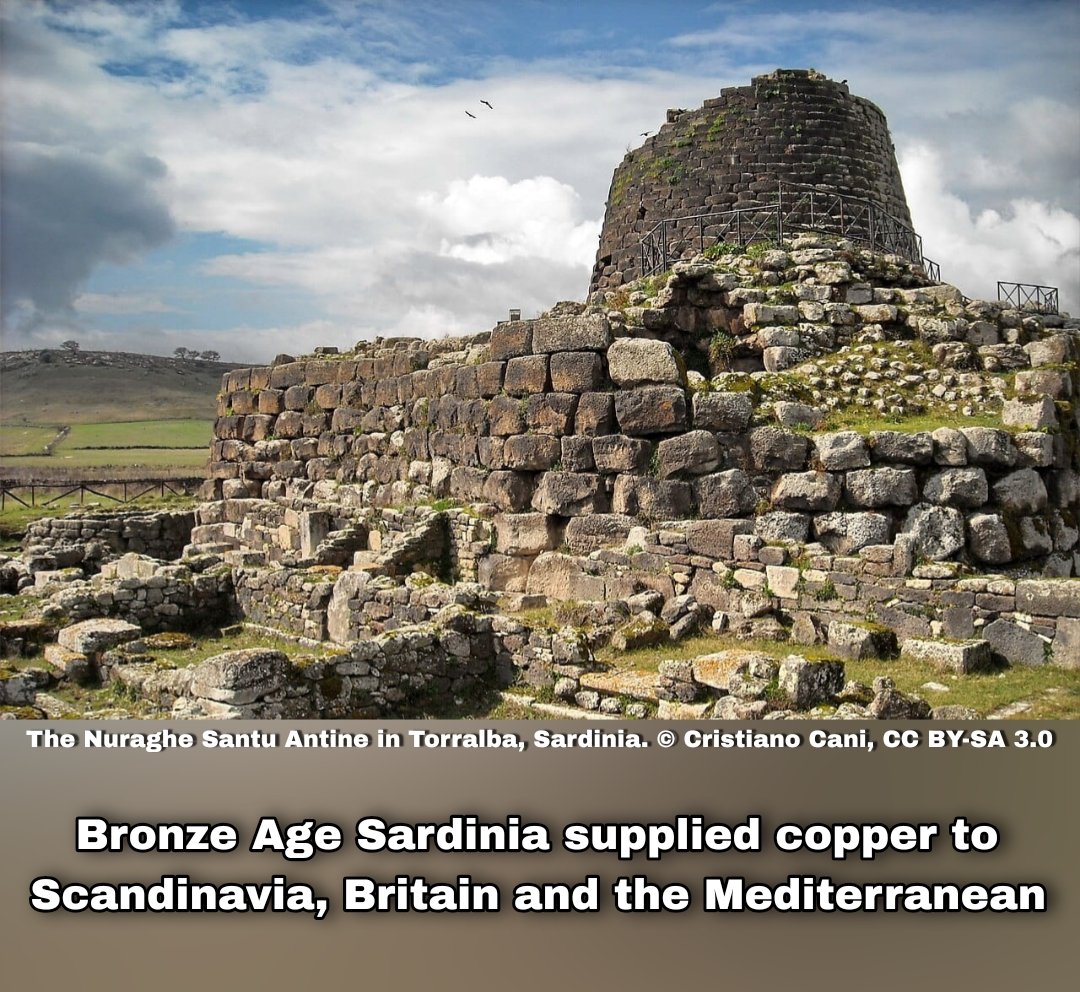
Bronze Age Sardinia supplied copper to Scandinavia, Britain and the Mediterranean
Nuragic Sardinia played a wider role in Bronze Age metal trade than once thought. Copper from the island reached distant parts of Europe and the Mediterranean...
More info: https://t.co/EEItBn2QbK
North Africa’s oldest known defensive system outside the Nile Valley found in Morocco
Archaeologists have identified the oldest known defensive system in North Africa outside the Nile Valley at Oued Beht in northwestern Morocco...
More information: https://t.co/pEK8McEfjU
Ramping one end of an archaeological trench at a 30° angle will allow any animals that stray into the trench at night to climb out again, particularly badgers, otters and hedgehogs.
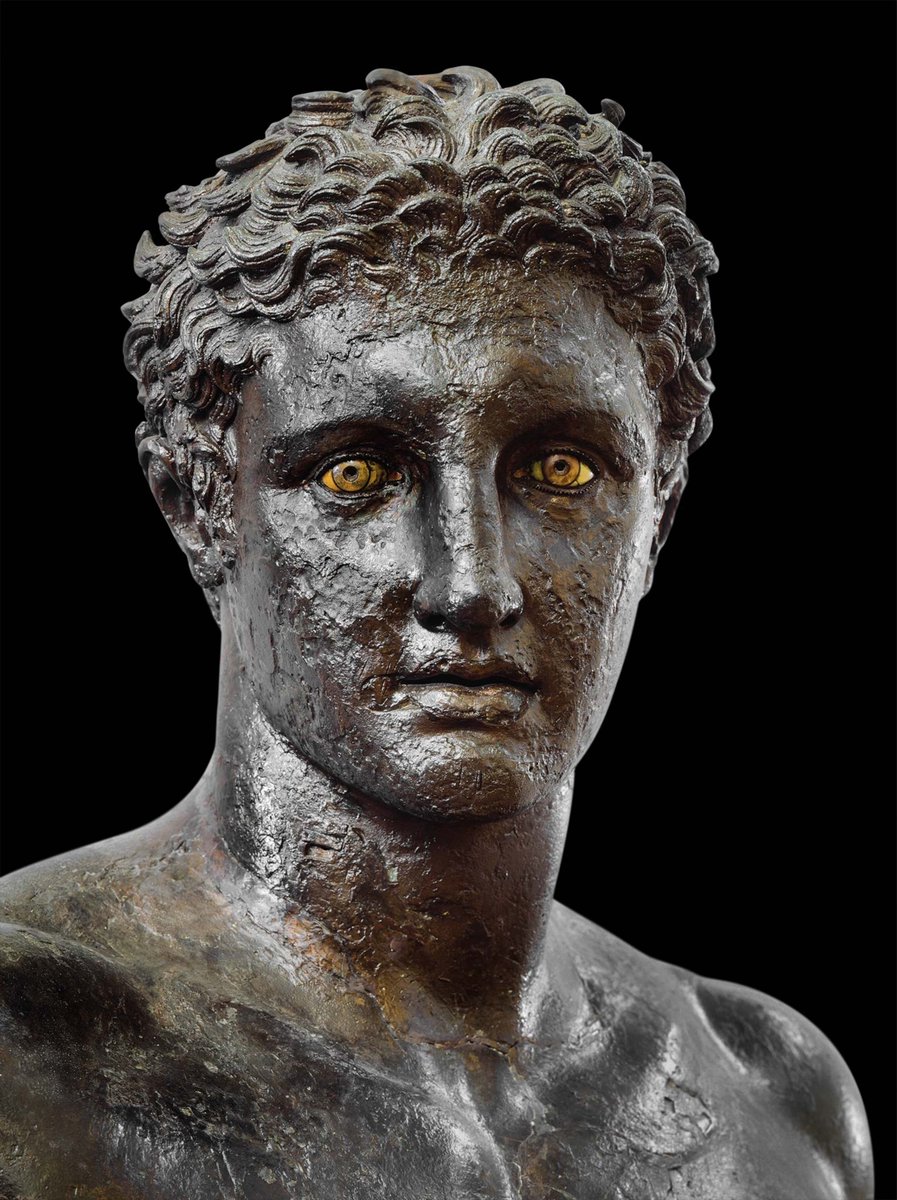
This statue is over 2300 years old.
It's one of the very few ancient sculptures left with its original eyes, and I can’t get over how real they look...
The statue is the Antikythera Ephebe, a Greek bronze of a young man made around 340 to 330 BC, and strangely enough, the reason it survived is because it sank. In antiquity, bronze statues were constantly melted down for their metal, turned into weapons and coins, which is why almost none survive.
This one went to the bottom of the sea in a shipwreck around 60 BC and lay there for nearly two thousand years, until sponge divers found it in 1900.
But let’s go back to my favorite detail: the eyes.
When a bronze statue is made, the eyes are often set separately, inlaid with glass, stone, and colored paste to make them lifelike, and over the centuries almost every ancient bronze has lost them, leaving those hollow, blank sockets we think of as classical.
The Ephebe still has his original eyes, made of glass paste, one of only a handful of ancient Greek bronzes in the world that do. And it changes everything because he does not gaze blankly into nothing, he seems to be looking, intently, at something that vanished more than two thousand years ago...
For #MosaicMonday, a colossal discovery. This is the Great #Mosaic, which I visited last Tuesday beneath the #BathsofTrajan in #Rome. Though fragmentary, this wall mosaic almost defies comprehension due to its quality and vastness. Let's have a look.🧵