I genuinely don't understand why everyone isn't using this yet
Andrej Karpathy, a co-founder of OpenAI, posted a simple idea that hit 16 million views: stop using AI to write code, use it to build a second brain.
You point Claude Code at a folder, drop in any source, an article, a transcript, a PDF, and Claude reads it, links it, and files it into a living wiki of everything you know. It compounds like interest, the more you feed it, the smarter it gets.
Here's the whole thing:
> Install Obsidian, create a vault, open it in Claude Code
> Paste Karpathy's wiki idea file and tell Claude to build it
> Claude makes three folders: raw for sources, wiki for its pages, a CLAUDE.md that runs it
> Drop any source into raw and say "ingest this"
> Ask questions across everything, forever
Five minutes to set up, and you never start from a blank chat again.
Full step-by-step guide with Claude and Obsidian, link below.
Bookmark this
One of the most famous passages in Aristotle's Nicomachean Ethics begins with a question:
Who is truly happy?
Most people would point to the man with wealth, power, influence, and a comfortable life. Aristotle disagrees.
To explain why, he points to a famous story about the Athenian lawgiver Solon and King Croesus of Lydia.
Croesus was one of the richest men in the world. His kingdom was prosperous, his treasury overflowing, and his power seemed secure. When Solon visited his court, Croesus asked him who the happiest man he had ever seen was.
He expected Solon to name him.
Instead, Solon named other men.
Croesus was astonished. How could anyone be happier than the richest king in the world?
Solon's answer:
"Look to the end, no matter what the situation. Count no man happy until he is dead."
What Solon meant was that fortune changes. A life that appears blessed can end in disaster, while a difficult life can end nobly. Until a life is complete, no judgment is final.
Years later, Croesus lost his kingdom to the Persians and became a prisoner of war. Only then did he understand Solon's warning.
Aristotle takes this lesson seriously. Happiness cannot simply mean wealth, success, or pleasure because all of those depend partly on fortune. What matters more is the kind of person someone becomes over the course of a life.
Near the beginning of the Nicomachean Ethics, he writes:
"Human good turns out to be activity of soul in accordance with virtue, and if there are several virtues, in accordance with the best and most complete. But it must also be in a complete life. For one swallow does not make a summer, nor does one day; and so too one day, or a short time, does not make a man blessed and happy."
This is the heart of Aristotle's argument.
A single day cannot make a man happy any more than a single warm day can make it summer. Happiness is not a momentary feeling but the result of living well across an entire life.
For Aristotle, the happiest man is not the richest or the most successful. He is the man who has cultivated virtue and carried it with him through whatever fortune brings.
Today I'm publishing a new essay, Policy on the AI Exponential. AI is progressing extremely fast—much faster than the policy process was built to handle. The essay lays out where I think the technology is now, and the action needed to close the gap: https://t.co/Lh6PWae178
The strategy Spotify used to beat Apple:
“We bet on three things. They were all counter positions to Apple deliberately.
1. Freemium. We believed that if Apple ever did a free product they would struggle to do advertising. We bet they wouldn't do a good free tier. And so we focused a lot on freemium and a really good free tier.
2. Personalization. I would almost say Apple was against data at the time. We bet that they would never get good at personalization recommendations. And we believed that was the future.
3. Ubiquity. We bet that they were
going to prefer their own products and never get to be good on a Samsung TV or an Android phone.
So these were our bets and they panned out really well.”
It’s no longer sufficient to build it and hope they come.
You need to find your core users, and constantly be thinking about distribution and amplification.
- Get your first users through @solanamobile
- Distribute locally through @superteam
- Amplify through podcasts, spaces, livestreams and content creators
- Make friends IRL and online who care about you and your vision
The best place to get distribution in crypto is on @Solana.
Joseph Campbell spent five years in a rented shack with no job, reading nine hours a day. no income, no plan, no publication deal. his sister brought him groceries. he later called it "the most fertile period of my life." the hero's journey was written by a man who spent five years doing nothing the world would call productive. I find this fact more useful than most business books combined.
this is just the most ridiculous AI application i've ever seen lol
a Peter Thiel-backed startup that makes AI collars for cows is now worth $2 billion
and the more I read about it the cooler it gets. here's how it works:
every cow wears a solar-powered collar that talks to a network of radio towers and an app on the farmer's phone
instead of building physical fences, the farmer draws the fence on a map in the app, and the collar keeps each cow inside that invisible line using GPS
when a cow drifts toward the edge, the collar plays a sound to steer her, and a gentle vibration tells her which way to go.
it's like how a car beeps as you back up toward a wall
the cows learn the cues in a few days
so now a rancher can move an entire herd to fresh grass by sliding the fence on a map, without driving out to open a single gate
and that same collar is reading each cow's body the whole time.
it takes five readings per second on every animal, so the AI can catch a cow that's sick, injured, ready to breed, or about to give birth before a person would ever notice walking the field
so it's basically like WHOOP for cows too lol
and they gave the AI behind it the perfect name: the Cowgorithm
it's been trained on more than 7 billion hours of real cow behavior, which is why Halter calls the data its real asset and moat.
they know what a normal cow looks like better than anyone, so they can flag the odd one out instantly
it's already on more than 1M cattle across New Zealand, Australia, and a bunch of US states.
California even used it on public land to graze cattle in patterns that clear dry brush and slow down wildfires
costs about $5 to $8 per cow per month
a job that used to mean barbed wire, gates, and driving the fields all day is now mostly 1 person on their phone
Paul Tudor and Ray Dalio both hit bottom - Tudor lost 60% of client money, Dalio borrowed $4K from his father - now they run two of the greatest funds
- on one couch, together they held a workshop on how to trade right now
they said "the system is broken"
37-min masterclass between two legends who built the best funds in the world
bookmark & watch - one video will teach you more than any course from fake traders
Founder of lululemon on what he'd tell every 25 year old:
"I'd tell them that every person in the world is an individual with a different genetic makeup and a different upbringing and the way that you're thinking is so radically different than every other person in the world and incomparable that if you have an idea and you want to move forward with it, don't worry so much about the competition because nobody will be able to replicate you and the way you think about it."
🚨BREAKING: A cognitive scientist from MIT has mathematically proven that evolution guarantees we see zero percent of true reality, that most consciousness in the universe exists without a body, and that non-human intelligences with a wider window on reality than ours can reach in and manipulate it the way a programmer manipulates a video game.
Donald Hoffman (@donalddhoffman) is a cognitive scientist at UC Irvine who has spent 40 years building a mathematical theory of the observer. His work was cited by John Wheeler in the "It From Bit" paper. He studied under Marvin Minsky at MIT, spent two decades secretly meeting with Francis Crick to study consciousness, and has nine specific mathematical conjectures on the table that would derive general relativity, quantum field theory and the Big Bang from a single framework. The top high-energy physicists in the world, Nima Arkani-Hamed and Nobel laureate David Gross, are already saying spacetime is doomed. Hoffman thinks he knows what replaces it.
This interview is the first time he has publicly laid out what his mathematical model explains about alien life, embodiment and the structure of reality.
It already derives time dilation and quantum wave functions directly from differences in observer window size. Physics has spent a century failing to solve the measurement problem because it has been looking in the wrong place. The observer has to come first, and no physicalist framework can get you there.
A consciousness with a larger observer window has access to the underlying structure of our reality in ways we can't perceive or counter. A craft going Mach 40 instantaneously in our headset could be a leisurely maneuver in theirs.
The implications for UAP and alien life are immense.
Embodiment, being locked into a body with fingers and toes as your only interface with the world, is a probability zero anomaly in the full space of possible minds. He also says current large language models are dumber than cucumbers. His new framework, the recursive trace logic, is a completely different architecture, and some of the biggest names in frontier AI have already come to him about it.
The framework has no ceiling, and the implication is a single unified consciousness exploring itself through an unbounded number of perspectives, each one capable of waking up.
Death, in this framework, is just the closing of an icon on the desktop.
Full conversation is live now.
Ex-Tiger Cub at Julian Robertson's hedge fund - turned $200M into $36B in 8 years, then lost it all in 2 days
- he was the greatest trader you've never heard of, hiding $160B in positions through swaps so Goldman, Morgan Stanley, Credit Suisse never saw his real size
Bill Hwang's Archegos blew up so hard it took down Credit Suisse, cost banks $10B, and erased $100B in market cap
16min documentary about the biggest individual loss in modern financial history
bookmark - it's The Most Spectacular Implosion on Wall Street
How Napoleon learned any subject insanely fast:
When Napoleon began his career, he was put in charge of an army, but knew nothing about warefare. What he did to learn, was brilliant.
One of his generals said:
"He went up to an old general named Krieg, a man with a wonderful knowledge of detail and the author of a very good soldiers manual. He made him take a seat beside him at the table, and began questioning him, pen in hand, about a host of facts connected with the service of discipline. Some of his questions showed such a complete ignorance of the most ordinary things that several of my comrades smiled. I was myself struck by the number of his questions, their order and their rapidity, no less than the way by which the answers were caught up, and often found to resolve into other questions which he deduced in consequence from them."
The pattern continues, the greats of history learn by reading books and talking to people.
If you want to increase your ability to concentrate and have more control over your own mind, try this exercise daily for 5 minutes. It was created by one of the most intelligent men of the 20th century, Rudolf Steiner.
Use an ordinary object (a pencil, clothe spin, clip, book, etc.) and think about it for five minutes every day. You take an object in front of you or in your mind and the first time you describe it to yourself aloud. You can also imagine yourself describing it to a blind person.
Use all your senses and make as many observations as you can in five minutes. Repeat this the next day, you will probably notice new details.
After a while you can ask questions about the object: "What can I do with it?", "What is it made of?", "Why this shape?", "What other shapes could it have?", "Where was it made?", "How did I get it?"," How are the raw materials mined?", etc. You will be able to answer some of these questions. If not, you can search for an answer in an encyclopaedia or on the internet.
Your should be able to determine whether your thoughts are correct, otherwise your thoughts will wander. which is not the intention.
You can repeat what you did the day before and build on your previous thoughts. After some time you will have covered all possible questions, then do it one or two more times until you can really find no more issues to think about. Then follow the same procedure with another object.
When doing this exercise you may notice that your thinking gets clearer and sharper, and that your perception, concentration and objectivity increase. Also, your interest grows.
The difficulty of the exercise is that your mind wanders. The challenge is to be able to think about the object for five minutes, but you will find that your mind wanders to something else very easily, that your thoughts are associative and work automatically. E.g. you think of a pencil and suddenly you see in your mind your grandma with a pencil in her hand, grandma has a budgerigar and suddenly you are thinking about the whistling of this bird. Interrupt such thoughts: you wanted to think about the pencil.
The exercise is called control of the mind. The example just given shows that often there is no control over our thinking. We are thought, our thinking is associative and automatic. We believe that we think, but our thinking is often not focused.
Make sure that you do the exercise every day. You can choose a fixed time. Choose a time when you are awake and clear-headed, so not after dinner, but for example before or after breakfast or at 8 o'clock at night. You can also do it while waiting for the train, in a spare moment. Doing the exercise with two or three objects should be sufficient.
A mathematician at Bell Labs noticed that the scientists who won Nobel Prizes and the ones who never amounted to anything were equally smart, equally hardworking, and equally credentialed, and the only thing that separated them was a single question almost nobody is brave enough to ask themselves before they die.
His name was Richard Hamming.
He spent 30 years at Bell Labs, in the same building as John Tukey, Walter Brattain, and a long list of physicists who took home Nobel prizes for work they did down the hall from his office, including the legendary Claude Shannon.
His invention of error-correcting codes made modern computing possible. He has won the Turing Award. And all the while he was creating his own legacy he was secretly doing a study on the people around him.
The study was straightforward. 2 Teams. The legends and the lost. Same I.Q.s. Degrees same. Same desk hours. Same access to the world’s best resources.
And yet, at the end of 40 years in their careers, one group had changed entire fields, and the other group could not be remembered by their own colleagues five years after retirement. He wanted to discover what the actual difference was.
In March 1986, he stood before 200 researchers in a Bellcore auditorium and told them what he had seen.
He said it all came down to one question. And hardly anyone he ever met was willing to ask it directly.
He called it the Friday-afternoon ritual. He spent years blocking out his Friday afternoons and not doing anything productive with them every week. No experiments. No meetings. No deliverables.
He called it Great Thoughts Time. He sat down with a notebook and asked himself a couple of questions in order. What are the most relevant problems in my discipline? And why I am not working on either of them.”
Most weeks, the answer was the same, he said. For a week now he had marched confidently in a direction he did not think was the most important direction. He was a goer. He worked a bit. He was getting clean results that would publish in respected journals. (
And for five days straight he'd been lying to himself about whether any of it mattered.
The reason almost nobody does this ritual is because the honest answer is unbearable. The thing is that if you sit down on a Friday afternoon and say out loud that you are not working on the most important problem in your field, now you have to do something about it.
You have an immediate change in direction, or you have to keep lying to yourself every week from that point on. Most people choose the lie.
In the short term it’s cheaper, but over a career it’s more expensive.
Hamming took the ritual a step further in the Bell Labs cafeteria. He began approaching scientists he barely knew, asking them what they thought the most important problems in their field were.
A week later he would ask them why they had not worked on these problems. Eventually people wouldn't have lunch with him. “I had to keep finding new tables,” he said.
Nobody had a good answer for that, and being around someone who kept asking it made every meal feel like a performance review.
The line that broke me is the line that most people skim over in the transcript. His words: If you do not work on an important problem you are unlikely to do important work.
That’s not motivational line. It is a rational one. You cannot make a great result from a problem that does not matter. Input restricts the output. The choice of the problem is the ceiling of the career.
The transcript has been freely available on the internet for almost 40 years. Stripe Press published the complete lectures as a book. Naval Ravikant quotes it all the time. It’s still given out to new hires at every serious engineering lab in Silicon Valley.
Most people will not run the ritual this Friday. They will be busy. They always are.
JP Morgan headhunted a trader for $500K/year after he predicted Lehman Brothers' collapse under $600B in debt
Goldman hired the same guy at 20 and gave him $100M to manage in his first week
27 minutes. He explains exactly what strategies he runs
The core answer: he never relies on one signal
He combines weak views into a single high-conviction position - exactly the framework I broke down in the article below.
Watch the video
Then read the article below and you'll understand exactly how he was thinking
The only edge in markets that never gets arbitraged away — from a crypto quant running Sharpe ~4:
Leigh Drogen (@LDrogen), CIO of Starkiller Capital. Sharpe ~4. Started his career as a quant at a NY equity hedge fund.
Drogen:
"If the only thing you ever did was put a 50-day moving average on Bitcoin — long when above, out when below — you would massively outperform everything."
"You would stay out of the massive puke-inducing crashes."
"If you knew nothing — couldn't tell Ethereum from the Nth lending protocol — and just bought the top 20th percentile by 30-day return and shorted the bottom 20th, you'd make a whole bunch of money."
"What is the intrinsic value of Dogecoin? Nothing. You could make the case Bitcoin has no intrinsic value either."
"The vast majority of assets in digital asset space have no intrinsic value — which is why cross-sectional momentum works so well."
"Momentum is the only persistent alpha in all markets. All other alpha gets arbitraged away. Human behavior never will."
Godfather of AI: "If you sleep well tonight, you may not have understood this lecture."
This 47-minute lecture is the best thing I saw about AI in the last few months.
It will definitely help you understand how it actually works and where it's going.
Geoffrey Hinton built the neural networks behind every AI alive, then quit Google to warn the world about it.
The part nobody wanted to hear:
> AI is already developing abilities its creators didn't intend
> in most cognitive tasks it's already ahead of us
> the question is no longer if it surpasses us but when
> the only decision left is which side of that line you're on
Right now the average person opens Claude, types something, gets an answer, closes the tab.
They think they're using AI. they're using maybe 10% of it.
I went through his entire lecture, built a practical system from what he was describing.
18 steps to actually use Claude the right way, with copy-paste prompts that work today.
Full guide in the post below.
A software engineer at Atlassian got laid off in March after 8 years. His response: a 38-minute YouTube video showing how the company's entire tech works, free for anyone to copy. That same quarter, Atlassian's revenue hit $1.79 billion, a record.
His name is Vasilios Syrakis. He worked in Sydney on Atlassian's digital plumbing: the system that handles the company's web traffic, made up of about 2,000 programs running across 13 regions of the world. Every time someone clicks on Atlassian's software, the system Syrakis worked on decides which of those servers answers. Atlassian's own engineering blog wrote about his team's work in February 2025. On Sunday, Syrakis walked through the whole architecture on YouTube, every box on the diagram.
The financial picture doesn't fit the layoff story. Atlassian's cloud business grew 29% year over year last quarter. The company has 350,000 customers, including 80% of the Fortune 500. None of that looks like a company that needs to cut a tenth of its staff to "self-fund AI investment," as the CEO put it in March.
In the six months before the layoffs, CEO Mike Cannon-Brookes sold 866,145 of his own shares for roughly $134 million. Co-founder Scott Farquhar sold exactly the same number on the same schedule. The board also approved spending $2.5 billion to buy back Atlassian stock from the market, a move that props up the share price. The shares still fell 56% this year. Investors think AI lets companies do more work with fewer employees, and Atlassian charges its customers per employee.
Sam Altman called this practice "AI washing" in February. Of the 1.2 million American jobs cut in 2025, only 55,000 blamed AI. The rest had different reasons, or none at all. The engineer who helped build Atlassian's plumbing is now teaching the internet how it works, for free, because he no longer has a paycheck to protect.
you need to be delusionally optimistic
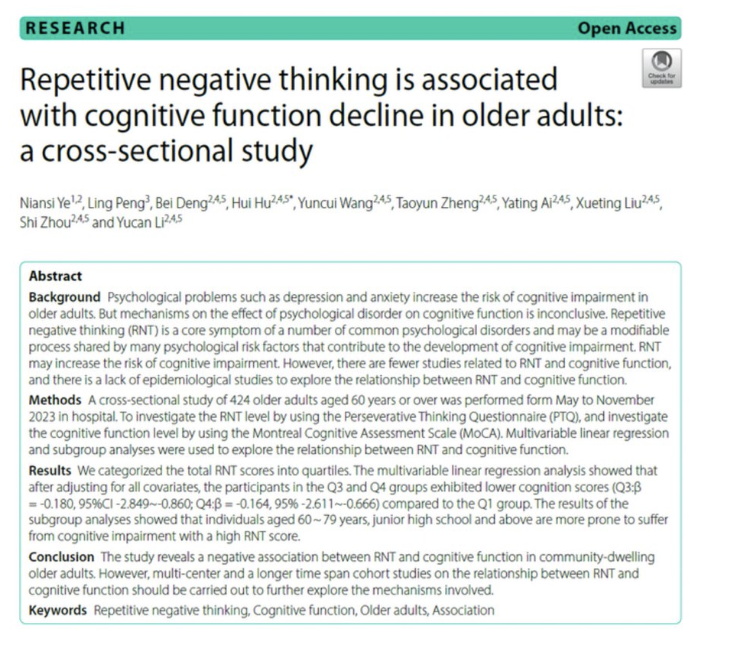
negative thinking poisons your brain and leads to congitive decline
whereas positive thinking, and gaslighting yourself into thinking everything is amazing, ACTUALLY makes your life amazing too.
you must be a silly goose