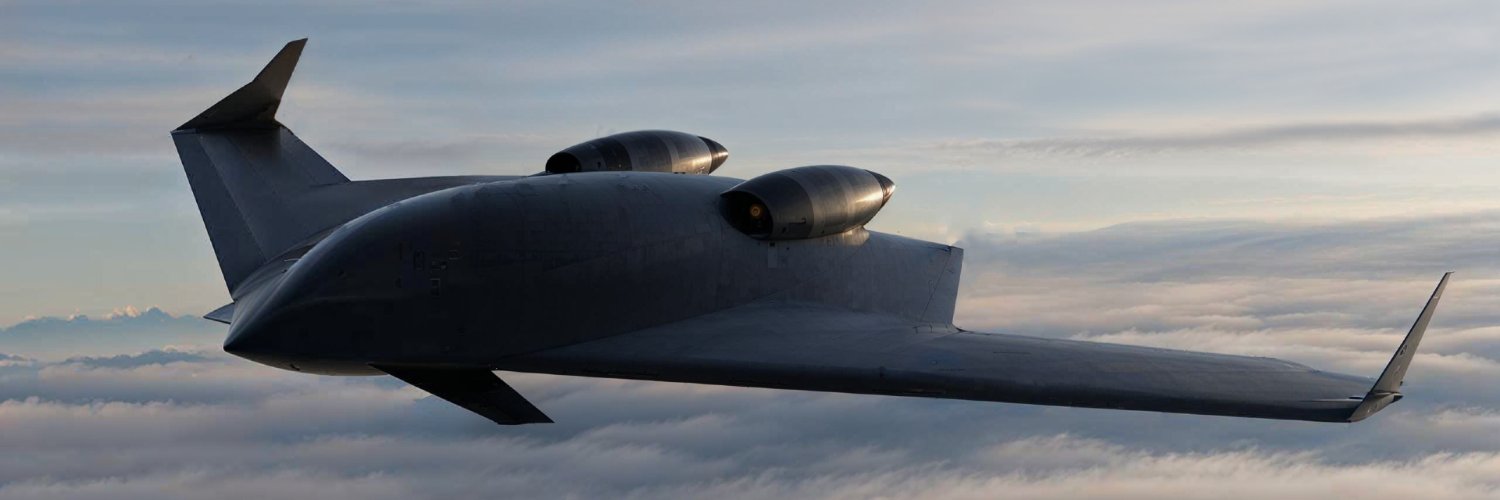
Archon Aerospace takes flight
https://t.co/UUKrFqsJhk
Join the flying wing revolution
https://t.co/pN5jlEDbfa
Testing the waters legal disclosure.
We are 'testing the waters' to gauge investor interest in an offering under Regulation Crowdfunding. No money or other consideration is being solicited. If sent, it will not be accepted. No offer to buy securities will be accepted. No part of the purchase price will be received until a Form C is filed and only through Wefunder’s platform. Any indication of interest involves no obligation or commitment of any kind.
@PWB_007@canalCCore2 Exactly. A good man works. Weak men criticize. He who has built nothing vows to destroy everything.
Ignore the haters. They are worthless
Keep on
Oooohraaaaaa!!!!!!
grok: Much cheaper than certified GA jets but high risk/time. For real aircraft, consider proven kits or turbofans instead. Great for ground demos/experiments!This is a homemade (DIY) turbojet engine with an afterburner, built in a backyard/workshop setting. It uses a centrifugal compressor (common in small DIY designs), combustion chamber, turbine, and extended nozzle section for afterburning. Videos show it producing strong thrust on a red test stand with a force gauge, where activating the afterburner creates a long, colorful exhaust plume and makes the nozzle glow bright red/orange from extreme heat (likely 800–1200°C+ locally).Brief Engineering Diagram Outline (Typical Small Turbojet with Afterburner)A basic cross-section looks like this (axial flow path left to right):Intake/Compressor — Air enters; centrifugal impeller compresses it (high pressure ratio in one stage, common for DIY).
Diffuser — Slows and distributes compressed air.
Combustion Chamber — Fuel injected + ignited (annular or can style); primary burn drives the turbine.
Turbine — Extracts energy to spin the compressor via shaft.
Afterburner Section — Additional fuel injectors + flame holders; secondary combustion reheats exhaust for extra thrust.
Nozzle — Converging (or variable) to accelerate exhaust; glows red under AB due to heat.grc.nasa.govpressbooks.lib.vt.eduyoutube.comyoutube.comKey challenges: Heat management (nozzle melts/glows), balancing, fuel control, and materials (often stainless steel or scrap).Inexpensive ModificationsCeramics on the rear (nozzle/afterburner) is exactly the right idea. Thermal barrier coatings (TBCs) like yttria-stabilized zirconia (YSZ) insulate metal, allowing higher temps without melting/distortion.youtube.com +1
Cheapest route: High-temp ceramic coatings/paints (e.g., Cerakote or DIY refractory cement mixes) applied to nozzle and liner. Plasma spray or even brush-on for amateur level. Bond coat first (NiCrAlY or similar). This can drop metal temps by 100–300°C.cerakoteeu.comOther low-cost mods: Variable nozzle petals (for better AB efficiency), better flame holders, propane/kerosene mix tuning, or added cooling air bleed. Use stainless/inconel scrap where possible. Avoid full redesign—focus on heat shielding and fuel control.
Safety note: These run extremely hot/dangerous; test remotely with proper shielding.Cost to Build One This Size for GA AircraftThis size (small thrust, perhaps 50–200+ lbf estimated from visuals) could suit experimental GA (e.g., ultralight jet or pulsejet alternative), but it's not certified/safe for flight without major work (vibration, reliability, fuel efficiency are poor vs. commercial).
DIY build cost: $200–few thousand USD using scrap turbo parts, stainless cookware, machining. Many backyard examples under $1k–https://t.co/V0XcMJVBD5
For a flyable GA version (reliable, with controls, mounts, fuel system): $10k–50k+ in materials/machining alone for a competent builder. Professional small turbojets (e.g., model/RC scale ups or experimental) run higher due to balancing, testing, and iteration. Full custom from scratch is "awful" project per forums—expect heavy https://t.co/w8TvhfveCC
Have you seen a more beautiful aircraft?
Behold... The StarGate
By: Archon Aerospace
The first flying wing for the civilian world. Zero Pollution, less operating cost. Soon... it won't make sense to buy legacy aircraft. We will make our own fuel, which is better, 3X energy density, ZERO POLLUTION! Its inevitable.
We believe in an all First Class airline, for slightly more then the current price. A private airport experience. No hassle. NO STRESS. Just a true, beautiful experience.
#aerospaceengineering #aerospace #innovation