New paper @EnvSciTech: WHRC staff/colleagues use @Arctic_Rivers data to quantify recent annual & seasonal mercury fluxes in Arctic rivers. This baseline helps understand how changing climate, hydrology, & industrial activity will affect northern ecosystems https://t.co/MlInqlDdUM
New animation shows #LenaRiver discharge is low this summer, but was high last winter (2019 data is provisional). Daily discharge #data available from https://t.co/eitoKk2RNw.
New data. Daily discharge data has been updated through April 26, 2019. Nine additional #Arctic rivers have been added to the study. These #data are free to use: https://t.co/WUuJgU7uzC #ScienceTwitter
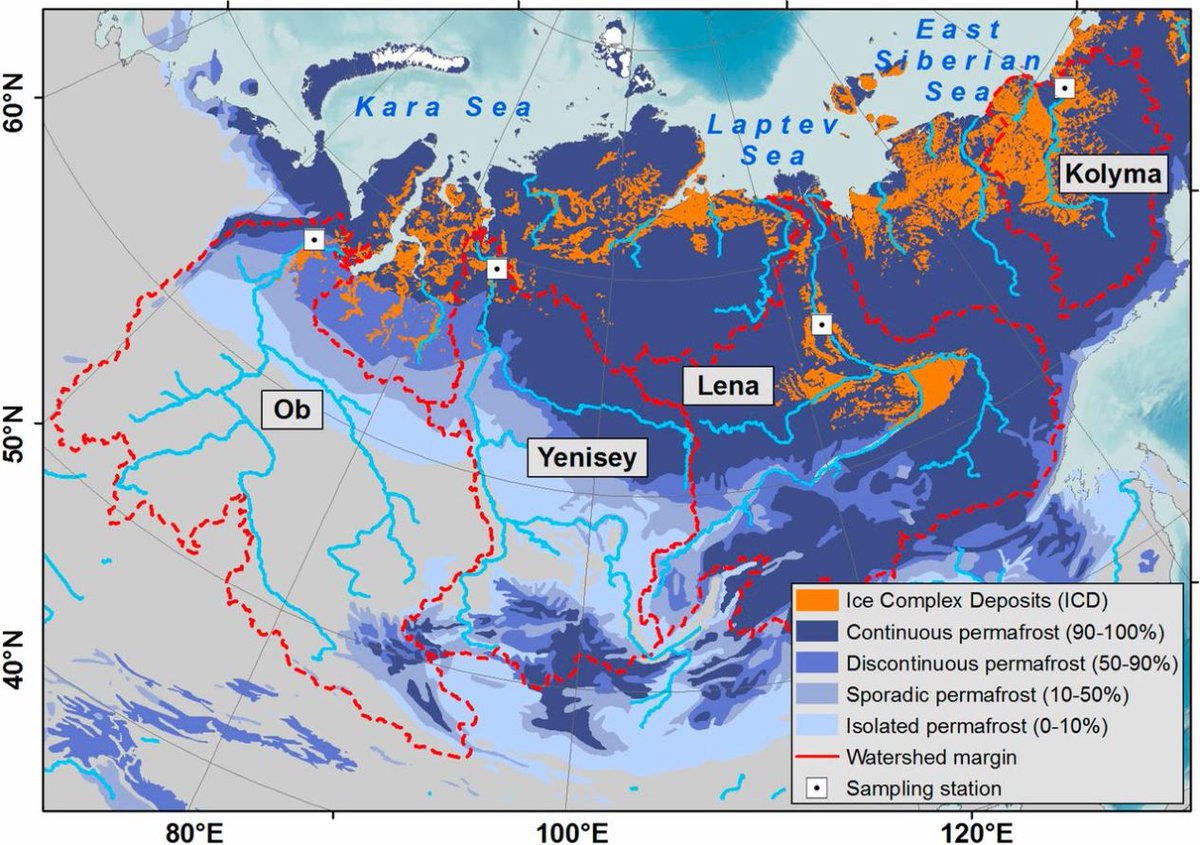
New @PNASNews paper utilizing ArcticGRO data. Radiocarbon signal of large #Arctic rivers was used to understand #permafrost thaw and #carbon mobilization. Permafrost thaw threatens to release huge amounts of greenhouse gases into the atmosphere. Read more: https://t.co/P8ileb06jV
New data. Daily discharge data has been updated through 2/28/19. We're updating the discharge dataset monthly through the winter and every 2 weeks during the open water period (roughly June through October). These #data are free to use: https://t.co/WUuJgTPTI4 #ScienceTwitter
New @IOPPublishing study: Watershed slope can serve as most important variable for estimating spring/summer DOC and DON concentrations, and to a lesser degree nitrate, from drainage areas where field data are lacking. Lead Author: CT Connolly. Read more: https://t.co/J2ejrpHukO
Changes in hydrology associated with landscape alteration that can result in deeper flow paths or longer residence times will likely lead to a greater proportion of aged carbon in riverine exports. Lead Author: @waterbarnes. Read more: https://t.co/Rb6zo6Jji6 #ArcticScience
River discharge can be predicted based only on the #bacteria that are present, according to a study published last year. Read more: https://t.co/6b2zyB7En9. Lead Author: Stephen Good #ArcticScience
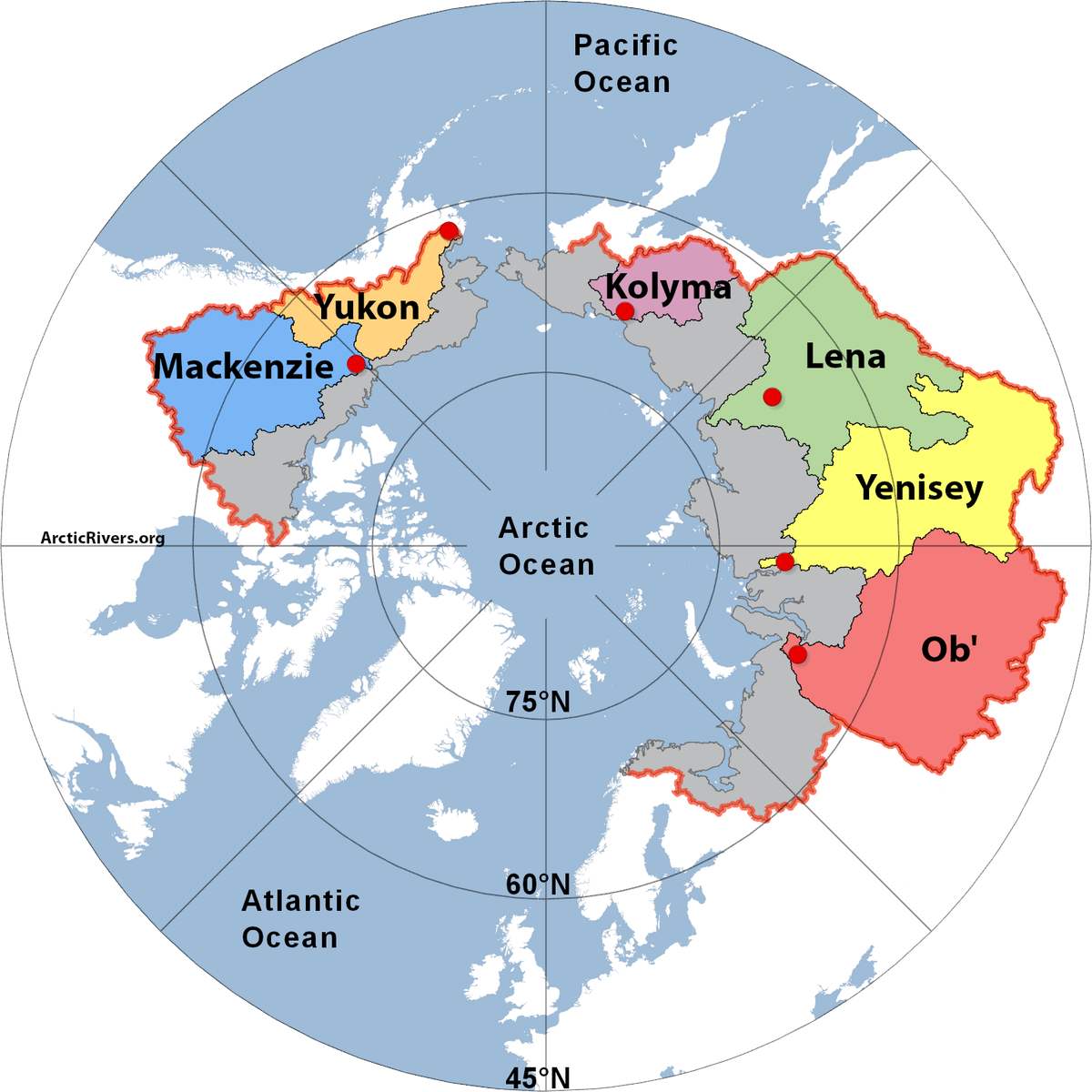
According to the @NOAA-led #ArcticReportCard, in 2018 summer/autumn discharge (July 15-September 30) for the eight largest Arctic rivers was 20% greater than the 1980-89 reference period. Read more: https://t.co/evL8GJkH2i. @MaxHolmes@fromzhigansk#AGU18#ArcticScience
LIVE NOW: Release of NOAA-led 2018 Arctic Report Card at American Geophysical Union Annual Fall Meeting press conference in Washington, D.C. #AGU18#ArcticScience https://t.co/nlED1FK7Gc
Over the past 35 years, the export of alkalinity has increased by 185% from the #Yenisey River and 134% from the Ob’ River. Read more: https://t.co/euB86dniBg. Lead author: @travisdrake. #ArcticScience
We're launching a new account providing information on the chemistry and discharge of the largest #ArcticRivers. Account hosted by ArcticGRO, a component of @NSF's Arctic Observing Network, and @WoodsHoleResCtr. To learn more, visit https://t.co/eitoKk2RNw. #ArcticScience