Ray Church was founded in the 6th Century in County Donegal.
Just a little more than 1000 years later Sunday Mass was interrupted by soldiers of Oliver Cromwell and the entire congregation, men, women and children, were massacred.
Their bodies were laid to rest in a mass grave known as Lag na gCnámh' or 'Resting Place of the Bones' just 200 metres from the Church.
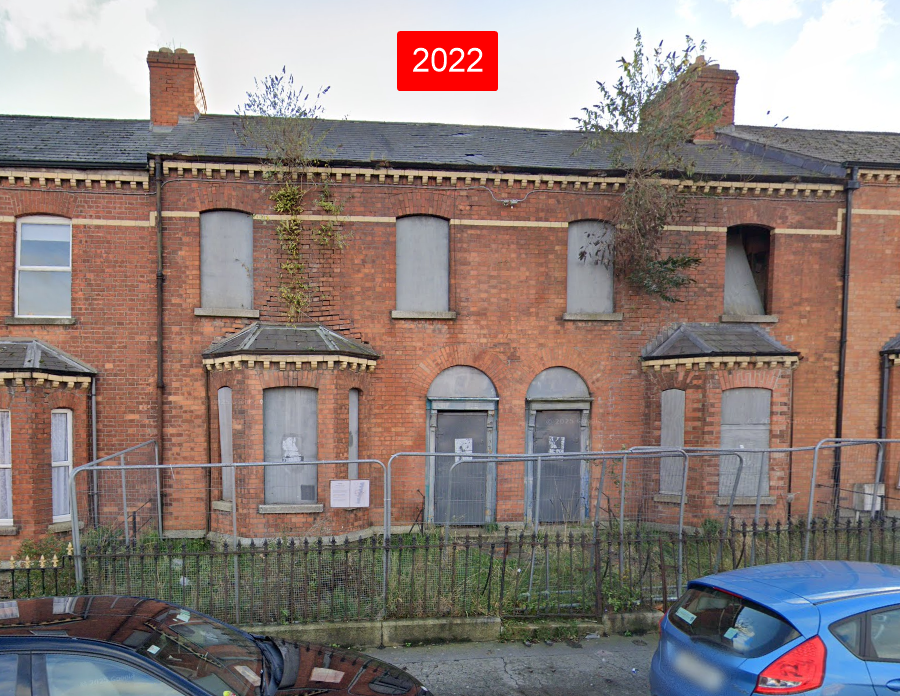
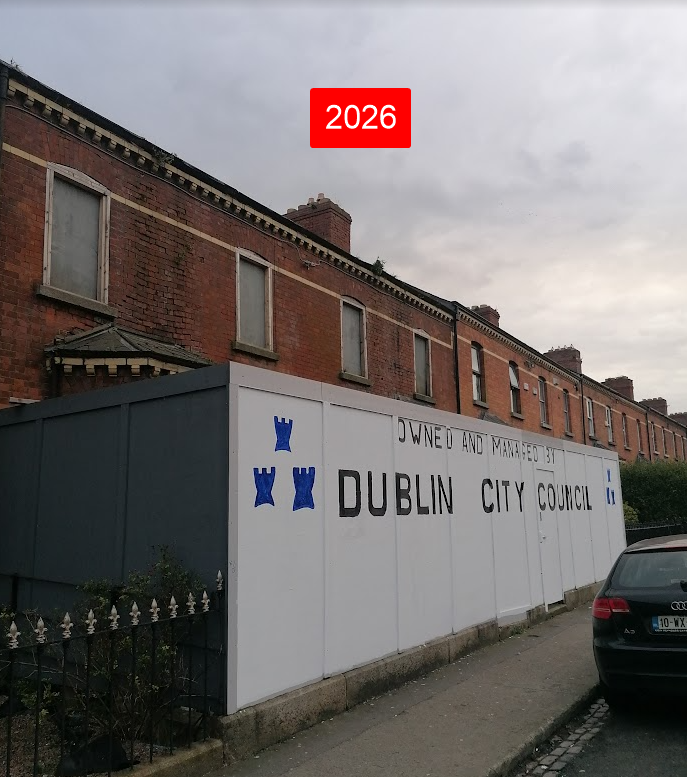
It's frustrating to see how dysfunctional Ireland has become. Here's one example: 19 & 21 Connaught Street, Phibsboro, is a pair of Victorian red-brick houses that have become a long-running symbol of dereliction in Dublin 7.
Here is the timeline:
2009 — Both houses are first added to Dublin City Council's (DCC) Derelict Sites Register — typically an early step toward a possible Compulsory Purchase Order (CPO).
2012 — The then-owner carries out cosmetic repairs to the exterior (tidying up how the houses looked from the street). On that basis, DCC removes both properties from the Derelict Sites Register. The houses remain empty and boarded up behind the facade.
2018 — DCC re-enters both houses on the Derelict Sites Register (the current file references DS704 and DS705), restarting the CPO process.
April 2019 — Compulsory Purchase Order comes into force. DCC buys the two houses for €350,000 each (€700,000 total), with the stated aim of returning them to use as social housing the following year.
2022 — Residents on Connaught Street publicly complain that DCC is too slow. Three years after purchase, nothing has happened on the site. DCC says the council still needs to complete surveys before tendering for a builder.
2024 — Council decides to go back out to tender after further deterioration, including the discovery of a subsidence issue.
March 2026 — DCC scraps the regeneration project entirely. Renovation cost estimate rises to €1.7 million, pushing total project cost to €2.4 million (≈ €1.2 million per social home). Council calls this "excessive" and says value for money cannot be achieved. "There are currently no plans for this building." Council says it is "exploring other options… including selling this type of property to ensure it is reused."
One solution:
Ireland's local authorities lack the resources to restore derelict and vacant properties, so they should place CPO properties on the market with leasehold agreements for the common good. The Scottish Land Commission has proposed Compulsory Sales Orders (CSOs) to give local authorities the power to force the sale of long-term derelict land or buildings via public auction or tender. If the property is truly abandoned and has no known owner, it is then transferred to the state.
#HousingCrisis #DerelictIreland #VacantIreland #Dublin #Ireland
Still amazes me that so many people don't know that Ireland has its own language, aside from English. This is probably one of the single greatest clips of our beautiful native tongue being used.
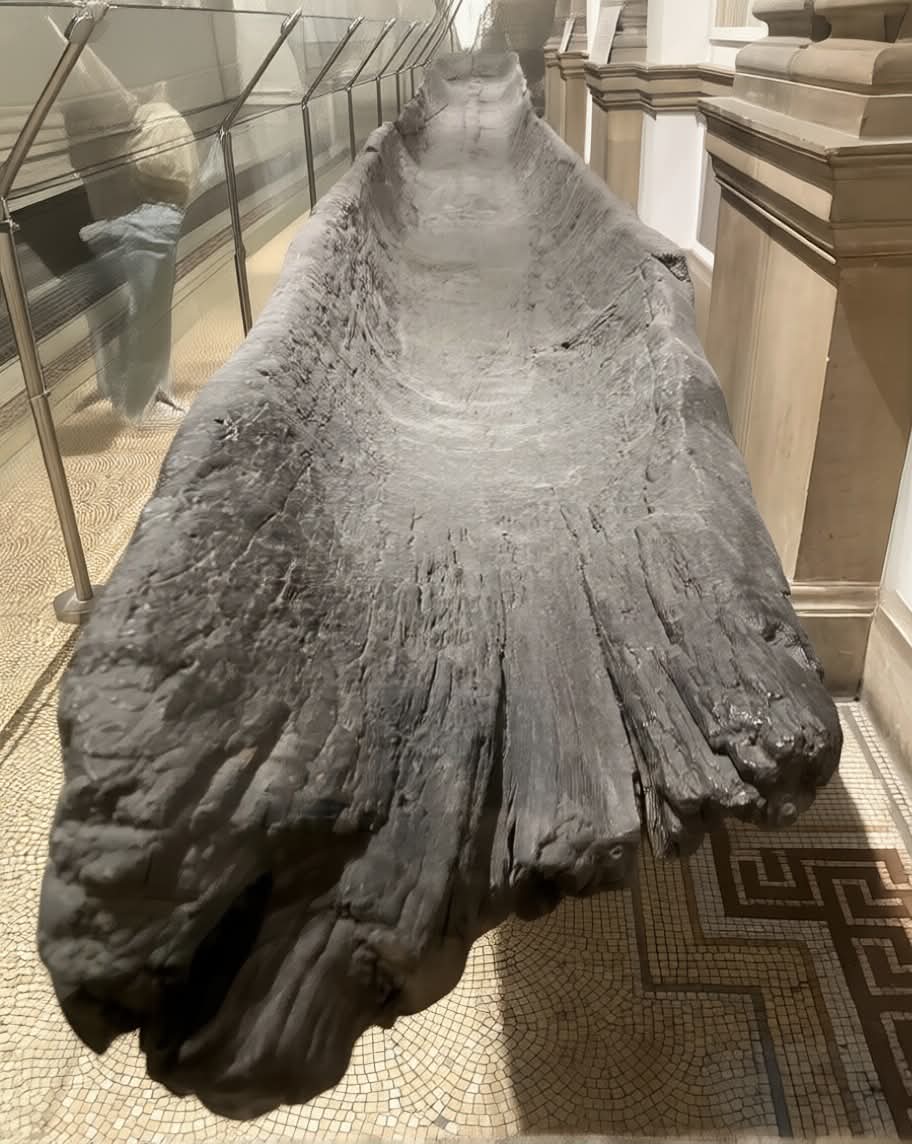
Dating back over 4,000 years, the Lurgan Canoe stands as Ireland's oldest known boat—crafted around 2000 BCE and stretching an impressive 15 meters (49 feet).
Discovered in 1901 within a bog in County Galway, its initially pale, ethereal surface quickly darkened when exposed to the air. Carved from a gigantic oak, larger than any currently found in Ireland, the canoe's location far from any major water source hints at a vastly different landscape and climate than we know today.
Now housed in the National Museum in Dublin, this artifact from the Bronze Age encapsulates the essence of forgotten voyages—its hollow body serving as a reservoir of memories as much as a means to carry water.
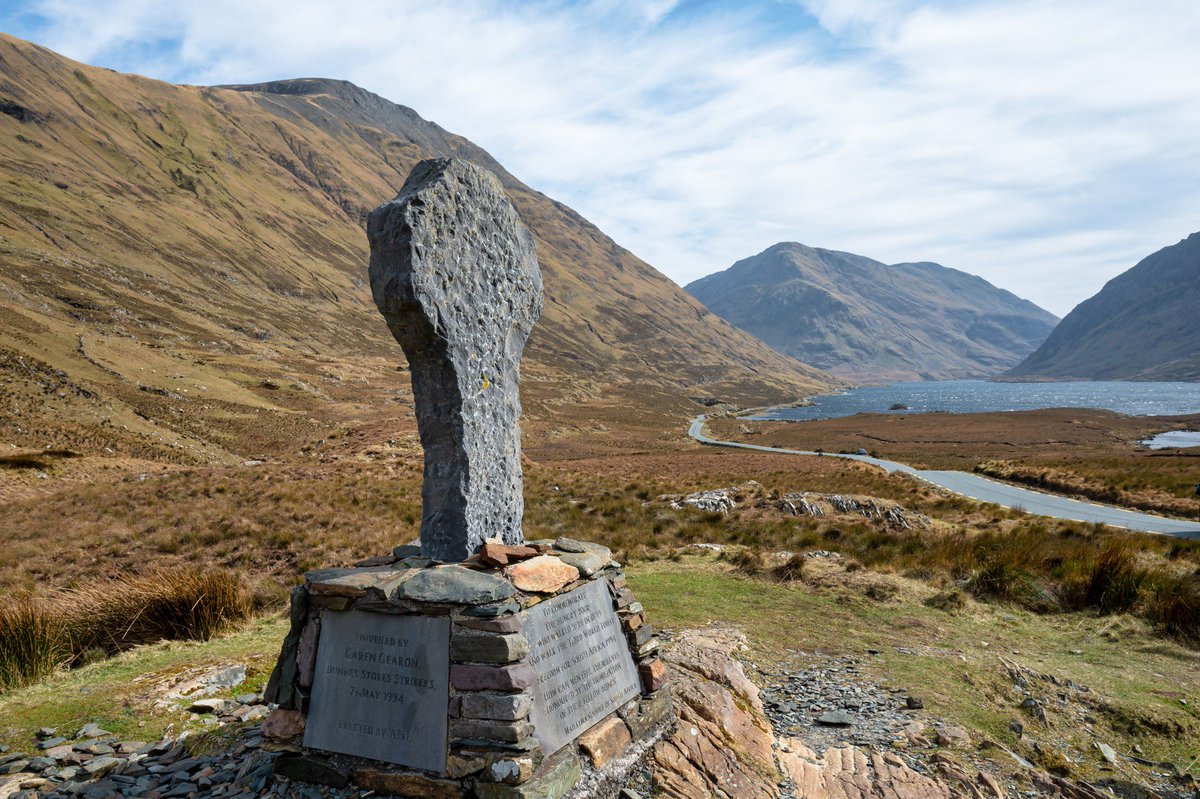
OTD in 1849 in Mayo’s Doolough Valley hundreds of starving souls were forced into a 20mile death march to 'verify' their agony
Refused relief because colonial officials were "at lunch”, families were left to die at the roadside with grass in their mouths
Ná dearmad go deo 🕯️
Well.
This is attracting some angry responses.
Ireland doing trade and being involved in sophisticated networks in the early medieval period seems to drive some people mad with rage.
Who knew?
Here is a clear and jargon-free (coughs) description of the differences between, Britain, Great Britain, the U.K., Ireland, and the British Isles. 🇬🇧 🏴 🏴 🏴 🇮🇪
Scotland, England, and Wales make up Britain (or Great Britain). This is the larger of the two islands. The United Kingdom (UK) is Britain and a country of the island of Ireland (Northern Ireland) together. Ireland is, as we have said, the other island. But Ireland itself is made up of two countries: The Republic of Ireland and Northern Ireland.
This odd situation is compounded by a good many Northern Ireland residents who insist on calling themselves British. (We’ll leave the politics of that out of this post…)
Both the islands of Ireland and Britain combined are called the British Isles in a geographic sense. But this framing is contested by many Irish residents, who dislike the term British, for exactly the same reason that some Northern Irish folk love it.
Following so far?
Scotland, England, Wales, Northern Ireland and the Republic of Ireland all have individual national soccer teams. In rugby, however, Ireland play as one team. Confused? It gets worse.
At the Olympics, athletes from Northern Ireland can represent Team Ireland or Team Great Britain (there is no U.K. Olympic team).
Oh, and let us not forget the Isle of Man. Despite being slap-bang in the middle of Northern Ireland and Great Britain, it doesn’t form part of the U.K., but it is in the British Isles.
Happy to have cleared all that up.
Happy Spring Equinox Eve 🇮🇪
Tomorrow Morning, March 20th, and for the following few days, the rising sun will shine through the entrance of Grianan Of Aileach in Donegal, literally cutting the monument in half.
A Spectacle Of Celestial Worship 🗿
The Church Street Disaster is one of the great forgotten tragedies that occured in the slums of Dublin in 1913. On the night of the 2nd of September tragedy struck. Two decrepit tenement houses, Numbers 66 and 67 Church Street, collapsed without warning, burying men, women, and children beneath tons of rubble.
Seven people died, including three children. All the deaths occurred in No. 66. Among the dead was Hugh Sammon, a teenager who had already saved several family members before returning to rescue his four-year-old sister, Elizabeth. He never came back out. Around a hundred people were left homeless in an instant.
Sadly the disaster was an inevitability. A month earlier, a Dangerous Buildings Inspector had declared the gaffs unsafe and ordered repairs. At the coroner’s inquest, the landlady was exonerated, and no definitive structural cause was recorded. But everyone knew what had killed those seven people. Neglect, poverty and government indifference to a city that had left its poor to rot in the ruins of its own Georgian grandeur.
The disaster came at the height of the Dublin Lockout, when thousands of workers, led by Jim Larkin, were battling employers for the right to unionise. As police clashed with strikers on the streets, the rubble of Church Street became a silent monument to everything they were fighting against.
Dublin in 1913 was, by every contemporary account, one of the worst-housed cities in Europe. The fine Georgian terraces built for merchants and MPs had, by the turn of the century, become rotting warrens of poverty. A third of Dublin’s population, around 20,000 families, lived in single-room tenements.
It wasn’t unusual for eighty, or even more than a hundred people to share a single house built for one wealthy family. In Henrietta Street, one address recorded 104 residents in the 1911 census.
The conditions were medieval. Most tenements had one outdoor tap and a shared water closet in a common yard, if it worked at all. Cooking was done over open fires in the same cramped rooms where whole families slept, ate, and often died. With no money for fuel, tenants tore up banisters, floorboards, and doors for firewood, literally burning their homes around them.
The air of the city’s slums was heavy with the smell of damp, soot, and sewage. And with it came disease. Tuberculosis, the “Dublin disease,” cut through the population with terrible efficiency, feeding on the cold and the hunger. The city’s death rate was 22.3 per 1,000, among the highest in the United Kingdom, and infant mortality in the tenements was appallingly high. In some streets, one in four children died before their first birthday.
The collapse of the Church Street tenements created public outrage led to the Dublin Housing Inquiry of 1914. The report called for sweeping reform, new housing, and state intervention on a scale never before attempted. Unfortunately within months, Europe was at war, so feck all was done and the slums remained for decades.
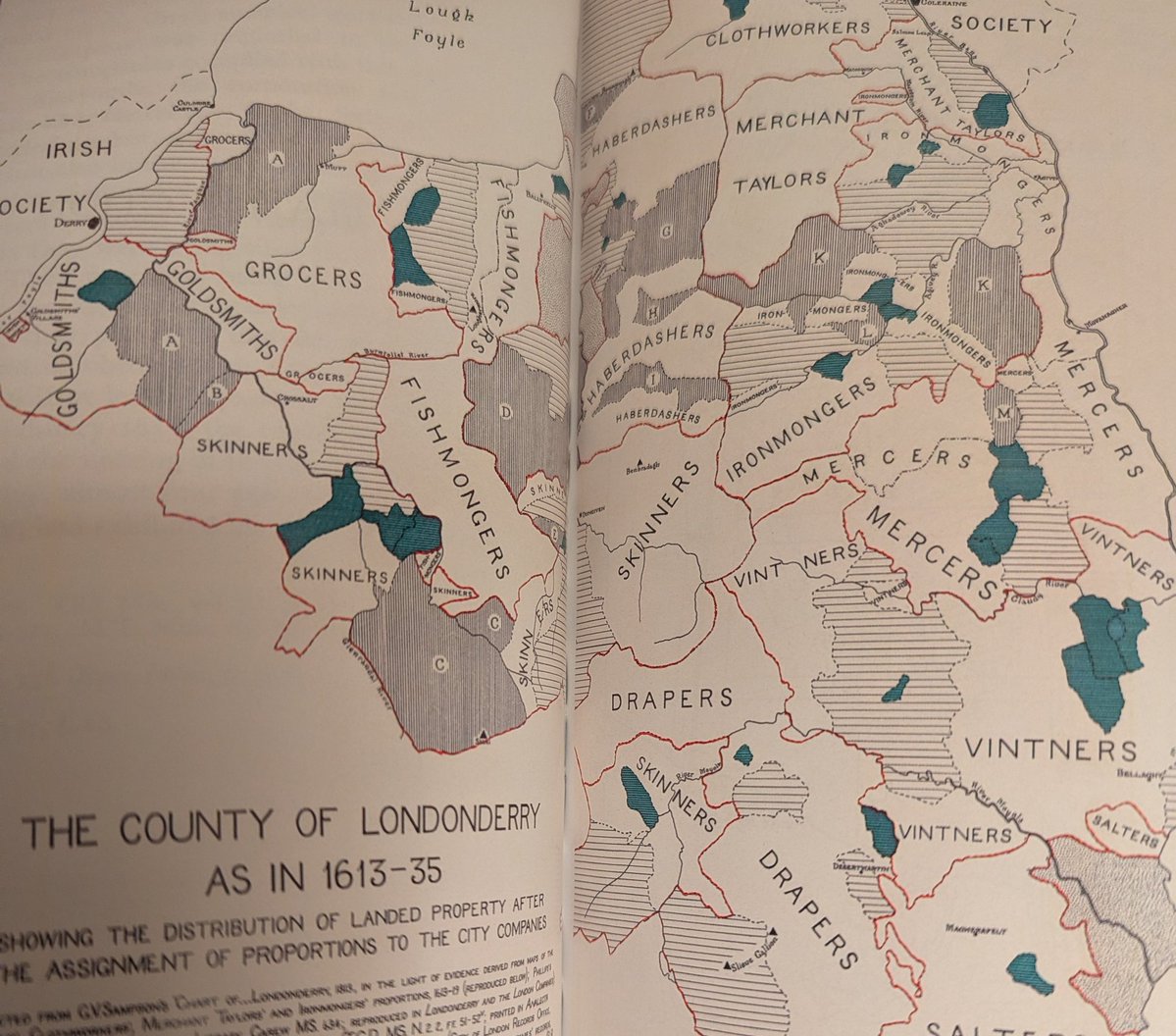
With the age-old argument, 'Derry or Londonderry' in the news again, it may be worth pointing out some history.
The whole reason for London being prefixed to Derry was a colonial construct linked to London companies brought here to take land & extract wealth.
See map:
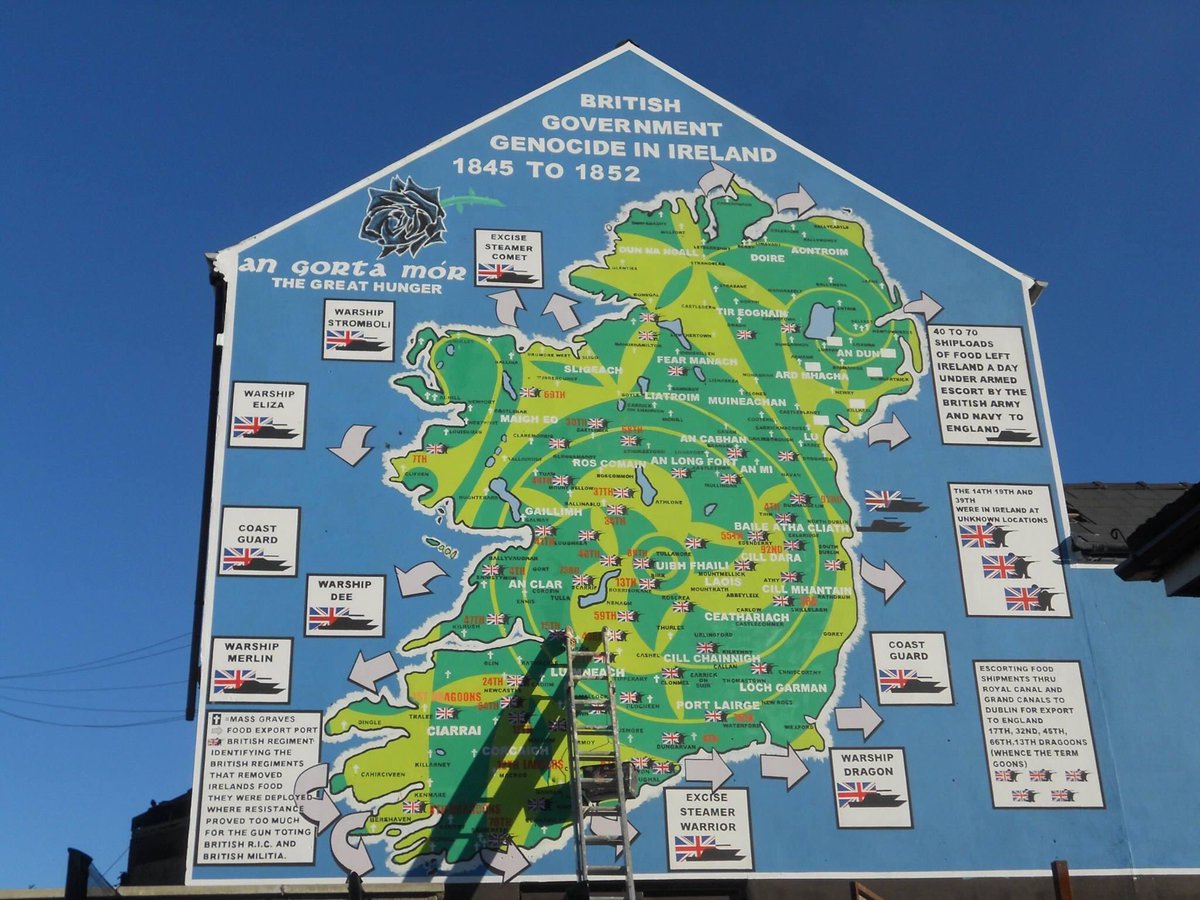
In Scotland, the Clearances are not considered genocide, but the Irish Famine is, which paved the way for the Highland and Lowland Clearances. The motive was the same: some 1,000 Highlanders were hunted and killed.
Perhaps we should consider it genocide.
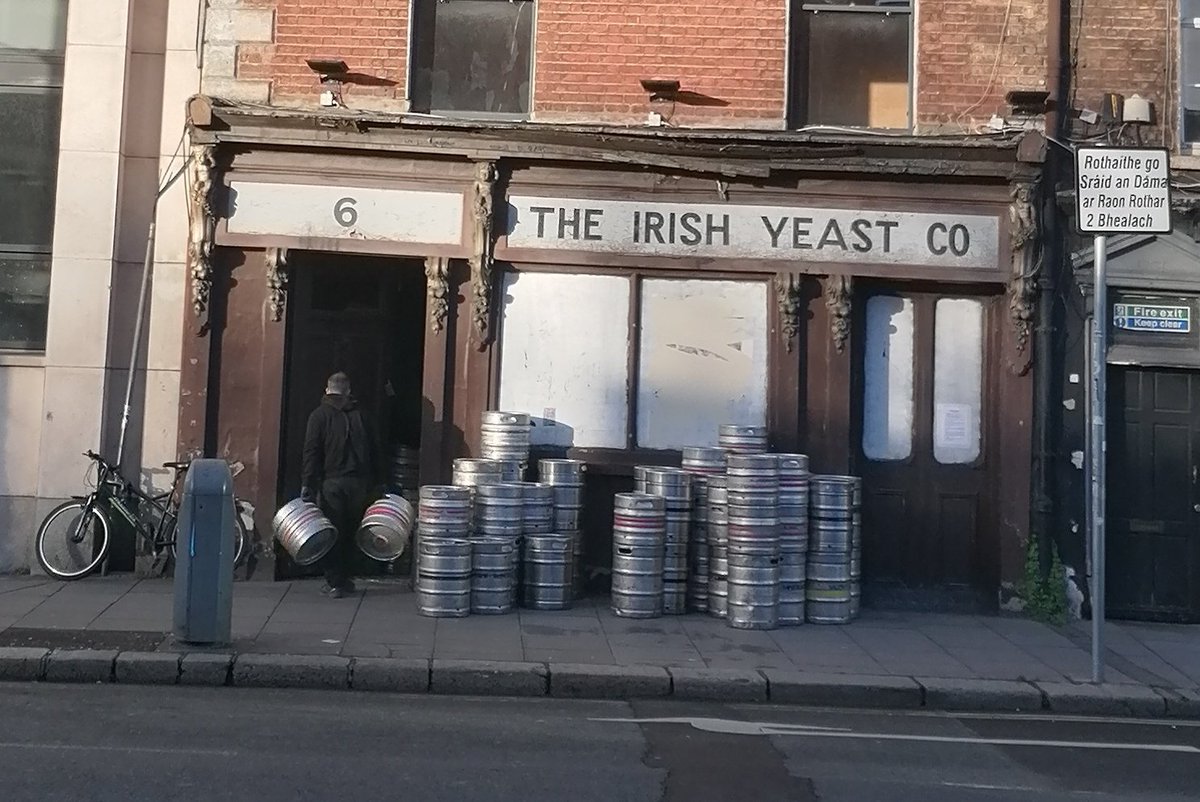
⚠️If the shop is being used primarily as storage of large volumes of kegs, limited retail activity, it may be considered a material change of use from shop to storage/warehouse. This will likely can trigger a requirement for a Fire Safety Certificate and possible planning and building control issues.
@DubCityCouncil@DubFireBrigade
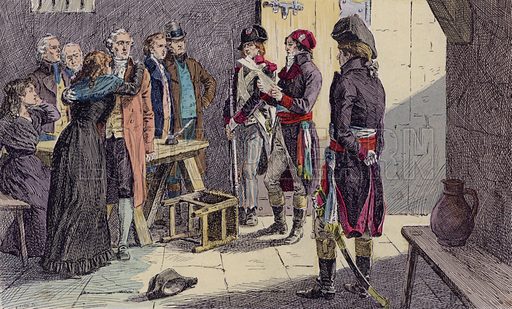
On the eve of execution, the condemned of Revolutionary France were often given paper, ink, and a few hours to say goodbye. No speeches were allowed. No appeals were heard. The blade would fall whether the words were written or not. And so bakers, seamstresses, priests, clerks, soldiers, and widows—people who had never imagined themselves part of history—sat in cold cells and tried to compress a lifetime into a page. Many began the same way: My dear wife, My beloved children, Forgive me. The Revolution that had promised liberty and equality now granted its final mercy only in ink.
I’ve read hundreds of these letters. What makes them so unsettling is how ordinary they are. There is no grand political philosophy, no defiant rhetoric. A father worries about debts and winter coats. A mother apologizes for leaving her children without guidance. A young woman asks that her hair be given to her sister.
One such woman was a Parisian seamstress in her early thirties, arrested after a neighbor denounced her for “lukewarm patriotism.” I don’t know why, but her case struck a chord with me. Her crime appeared to amount to little more than having regularly attended Mass and failing to denounce her brother quickly enough. The night before her execution, she wrote to her sister asking that her scissors be given to their youngest niece and that their mother be told she had died calmly.
Again and again, the writers insist on their innocence—not always of crimes, but of hatred. “I die without bitterness,” one wrote, “and I forgive those who send me to death.” The language is plain, domestic, and heartbreakingly human. The Terror did not slay monsters; but it did produce victims who sounded like us.
Many of the condemned had supported the Revolution at first. Some had cheered the fall of the Bastille. Others had denounced aristocrats, signed petitions, worn the cockade. But revolutions devour loyalty as easily as opposition. A careless remark, a past friendship, a failure to applaud loudly enough could be fatal. In the machinery of suspicion, innocence was not a defense—it was often a liability. As one prisoner wrote, “I do not know what crime I have committed, but I know I am to die for it.”
On execution mornings, carts rolled through Paris streets lined with spectators who had grown accustomed to death as public ritual. The letters were folded, sealed, and handed to jailers or priests, some of whom risked punishment to deliver them. Many never arrived. Others survived by chance, preserved in family trunks or police archives—small scraps of paper that outlived the so-called Republic of Virtue. The guillotine was efficient; memory was not meant to be.
These final letters endure because they expose the lie at the heart of revolutionary extremism: that abstract ideals can replace human bonds without cost. When politics demands total purity, ordinary life becomes treason. In the end, the French Revolution did not silence its victims with the blade alone. It silenced them by convincing enough of the nation that the individual did not matter. History’s task is to read their letters anyway.
#archaeohistories
Another day, another British atrocity. Today marks the anniversary of the Rathcormac massacre in Cork, 1834. The spectre of Famine was beginning to lower itself over Ireland like a dark curtain. Long before the blight, the poor were hungry. Peasants were crushed by debt to absentee British landlords who rarely, if ever, set foot on the land. Yet despite this grinding poverty, Ireland’s Catholic majority was still forced to pay tithe to the Protestant Church of Ireland.
This tax amounted to roughly one-tenth of agricultural produce, extracted from subsistence farms that were already hovering on the edge of starvation. Worse still, the land from which this produce came had once been Catholic land, seized during plantation and conquest. A people stripped of land were now compelled to financially support the church of their conquerors.
The tithe was traditionally paid in kind, livestock, grain, produce, but in the early 1830s the British administration decided cash would be more convenient. For people who rarely saw money at all, this was not merely punitive, it was impossible. What followed was labelled the Tithe War.
In truth, it was less a war than an act of collective desperation.The people simply stopped paying. Not out of ideology, not out of sedition, but because they physically had nothing left to give. In December 1834, that desperation collided with power in a small village called Gortroe, near Rathcormac, County Cork. The man demanding payment was Archdeacon William Ryder, a senior clergyman of the Church of Ireland, fabulously wealthy, impeccably connected, and utterly insulated from the consequences of his authority.
He arrived with a heavily armed escort, a troop of the 4th Royal Irish Dragoon Guards on horseback, infantrymen from the 29th Regiment of Foot, and the ever-present Royal Irish Constabulary. Cavalry, bayonets, muskets, and state power, all mobilised to extract money from starving peasants.
It was a pathetic scene. Ragged, underfed families gathering near Bartlemy Cross, clutching crude wooden spades and sods of turf. Women, children, elderly men. Facing them, well-fed soldiers in formation, snorting horses stamping the frozen ground.
Archdeacon Ryder surveyed the villagers and fixed his gaze on one woman in particular, Johanna Ryan, a widow. He demanded her tithe. She replied as Gaeilge. A group of villagers stepped forward and said what everyone already knew. There would be no tithe today. There was nothing to pay.
In response Ryder turned to the officer commanding the escort and issued his instruction. Captain Bagley was ordered to have his men draw bayonets. The villagers scattered, many fleeing into Johanna Ryan’s house, seeking shelter where they could. Ryder, enraged by what he saw as insolence, ordered the house demolished. Soldiers advanced, attempting to batter it down. When the terrified occupants resisted, the officer gave the order that sealed the day’s place in history.
“You must dislodge the peasants from the haggart and the yard. If they do not go quietly, you must try the bayonet. If that is not sufficient, you must fire.” And so they did. Musket fire ripped into the crowd. Bayonets were used. People fell where they stood. Others bled out in fields and doorways. By the end of the day, somewhere between twelve and twenty people lay dead, at least forty-five were wounded, with several more dying later of their injuries.
Archdeacon Ryder returned to his warm house, his income intact, his Christian authority unchallenged. The dead were quietly buried. Rathcormac was not an aberration. It was a system functioning exactly as intended.This was British justice in Ireland.
Men, women, and children killed not for rebellion, not for violence, but for having nothing left to give. Their land had been taken. Their food extracted. Their dignity stripped. When there was nothing more to seize, the state took their lives.
Today is World Genocide Commemoration Day.
An Gorta Mór.
To call this period in Irish history a famine dishonours the pain and untold suffering our ancestors endured.
British warships took the food of our land for profit while our people starved.
It was genocide.