We conduct research in areas of theoretical and experimental particle physics, accelerator development, detector R&D, particle astrophysics, and cosmology.
With a team led by Argonne National Laboraotry/HEP Division, ORNL's Summit supercomputer was used to simulate and visualize the matter distribution of a virtual universe.
https://t.co/KLtittY6ul
A team of scientists from Argonne's Computational Science and High Energy Physics divisions join NASA's Spectral Sky Map Mission to probe the origins of the universe - (video) https://t.co/5jaF6dRxfK (article) https://t.co/MoB9jCW4dR
The High Energy Physics Division welcomed our colleagues from IHEP Beijing for discussions on the science of the Cosmic Microwave Background radiation and treated them to some real American food!
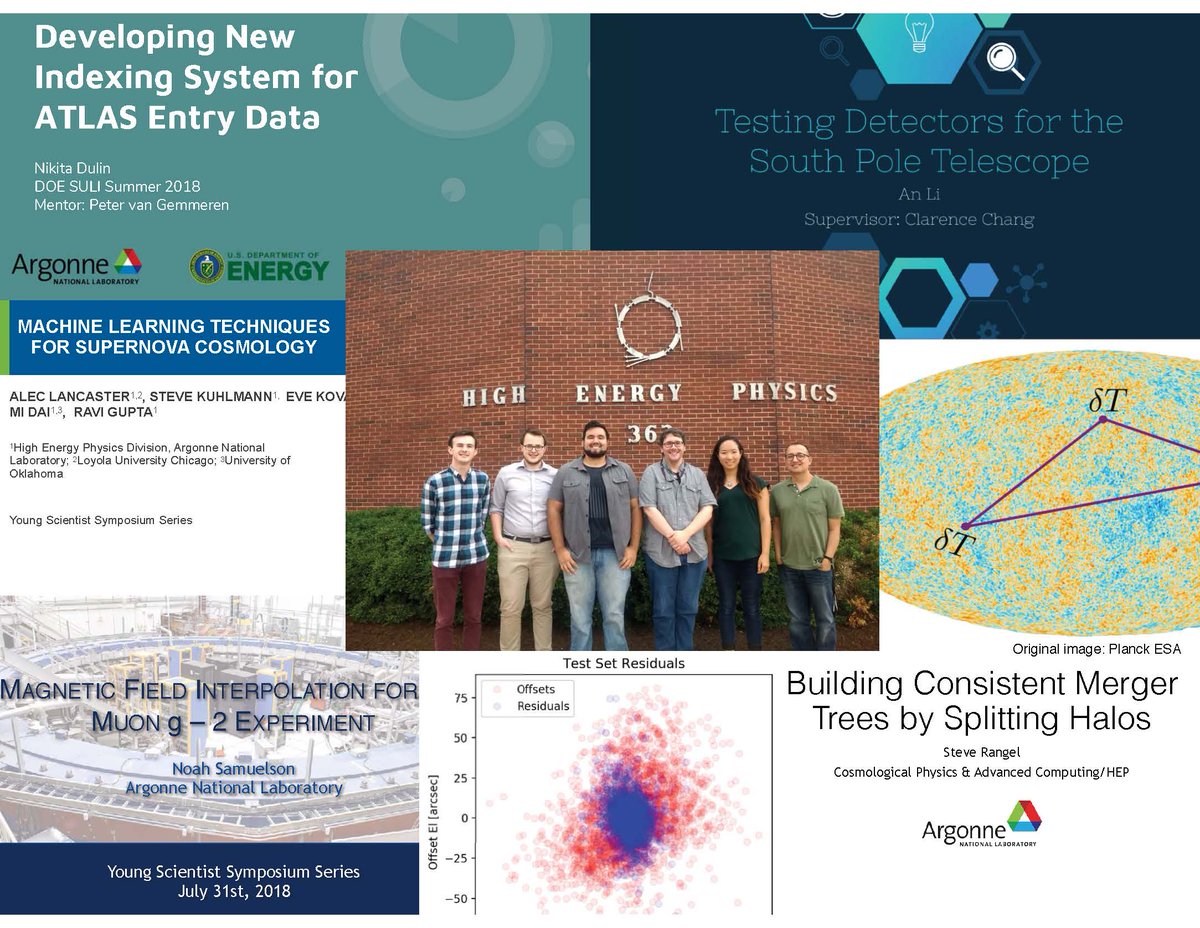
Thank you to all of the speakers at our recent Young Scientist Symposium! It was fantastic to learn about some of the exciting work accomplished by HEP students and post docs this summer!
The hunt for neutrinos clears hurtle
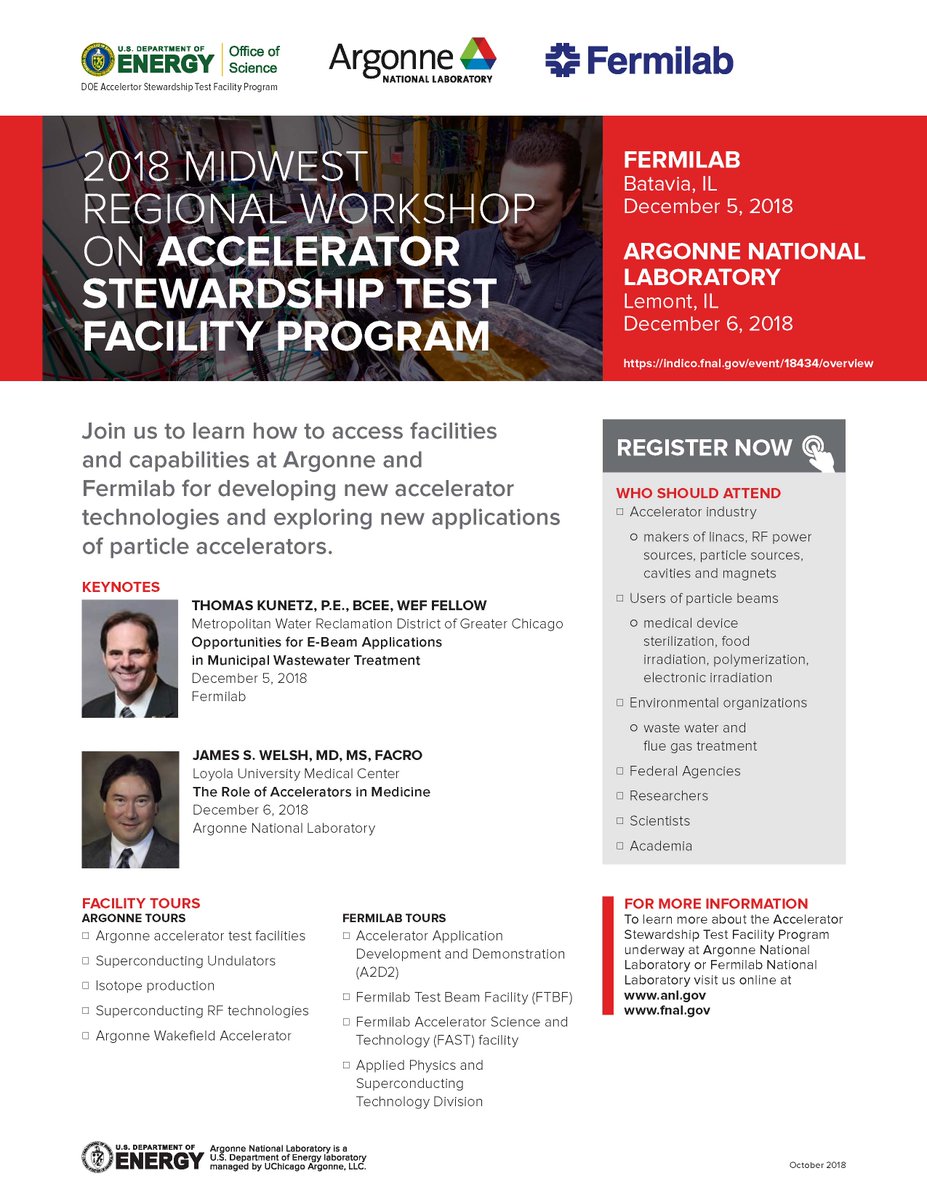
Argonne will help Fermilab roll out its accelerator upgrade project by producing and testing a set of special superconducting cavities.
https://t.co/WKBA2VM8fe
Two projects from ANL’s High Energy Physics division will be among the ten first to run on the Aurora supercomputer: “Dark Sky Mining” & “Simulating and Learning in the ATLAS Detector at the Exascale.” HEP is at the forefront of exascale computing. https://t.co/xwzvX5fIGB
Two major new projects were awarded to our division on Aurora, expected to be the first exascale supercomputer in the US. The projects expand on traditional simulation-based research to include data science and machine learning approaches. Terrific news for the division!
The Argonne High Energy Physics Division congratulates KEK, SuperKEKB and
the Belle-II experiment with the observation of the first collisions! This
incredible achievement inaugurates what will surely become an extremely
successful physics program.