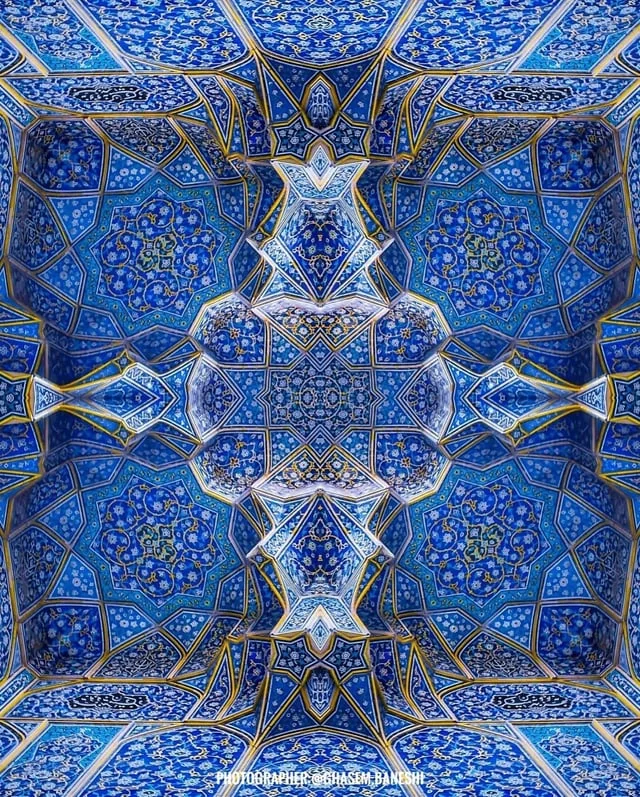
The Sidi Saiyyed Mosque, located in Ahmedabad, Gujarat, India 🇮🇳, is indeed a historical masterpiece...
The Sidi Sayed Mosque is famed for its exquisite jali windows, spider web fine, depicting the intricate intertwining branches of the ‘Tree of Life’ that is best seen from the road that runs along the back of the mosque. The central arch of the mosque is also bereft of the intricate latticework, making the eyes go straight to the main stunning work at the back wall. The mosque still functions as a place of prayer.
Popularly known as Sidi Sayed ni Jali the mosque was built in the period 1572–73 AD by Sidi Sayed. It was the same year that the Mughals conquered Gujarat. Sayed was an Abyssinian saint of African descent who served in Ahmed Shah’s army. He was from a community distinct in culture and appearance that lives in parts of Gujarat even today. This makes the intricate window over 450 years old, a true testament to the skill and artistry of its makers.
The mosque is entirely arcuated and is known for its ten intricately carved stone latticework windows (jalis) on the side and rear arches. The rear wall is filled with square stone pierced panels in geometrical designs. The two bays flanking the central aisle have reticulated stone slabs carved in designs of intertwined trees and foliage and a palm motif. The central window arch of the mosque, where one would expect to see another intricate jali, is instead walled with stone. This is possibly because the mosque was not completed according to plan before the Mughals invaded Gujarat. This intricately carved lattice stone window is the Sidi Saiyyed Jali, the unofficial symbol of city of Ahmedabad and the inspiration for the design of the logo of the Indian Institute of Management Ahmedabad.
As attested by the marble tablet fixed on the wall of the mosque, it was built by Shaikh Sa'id Al-Habshi Sultani. Sidi Sa'id was originally a slave of Rumi Khan, a Turkish general who had come to Gujarat from Yemen, bringing along with him his Habshi slaves. Sidi Sa'id later served Sultan Mahmud III, and upon his death, joined the Abyssinian general Jhujhar Khan. Upon Sidi Sa'id's retirement from military service, Jhujhar Khan granted him a jagir. Sidi Sa'id over his career became a prominent nobleman: he collected a library, owned over a hundred slaves, performed the Hajj pilgrimage, and instituted a langar (public kitchen). Previously at the site there was a smaller brick mosque, which was rebuilt by Sidi Sa'id, and he was buried near the mosque when he died in 1576. The mosque was built in the last year of the existence of Gujarat Sultanate.
During the British colonial period, it served as an office or kachery for the Mamlatdar of Dascrohi taluka. During its time as an office, doors were installed, the mihrabs were converted into presses, and the interior was whitewashed. During an official visit to Ahmadabad, Lord Curzon, Viceroy of India, ordered the Mamlatdar's office to vacate the premises, as part of his wider policies of preserving historic monuments.
#archaeohistories
Vasija de pie.
La pieza proviene de Teposcolula, en la Mixteca Alta, Oaxaca. Fue elaborada en barro. Representa un pie humano, los pintores mixtecos colocaron pigmento ocre para simular las uñas y para decorar el huarache (calzado) emplearon color marrón, negro y blanco.