Charlie Kirk closed his eyes to this earth for the last time… and opened them to eternity for the first.
A powerful video where he shares his journey of faith. His life was short, but a life well-lived.
Rest in peace, brother. Your wisdom will echo through the lives you’ve touched, and your influence will remain forever irreplaceable.
Explosive and deeply troubling.
Federal prosecutors have charged two NIH researchers with allegedly smuggling monkeypox and other biological materials into the U.S. and misleading investigators.
If true, this is far more than a paperwork violation. It raises serious questions about biosecurity, oversight, accountability, and public trust.
The American people deserve answers. National security begins with integrity inside our own institutions. AW
#NIH #Biosecurity #Accountability
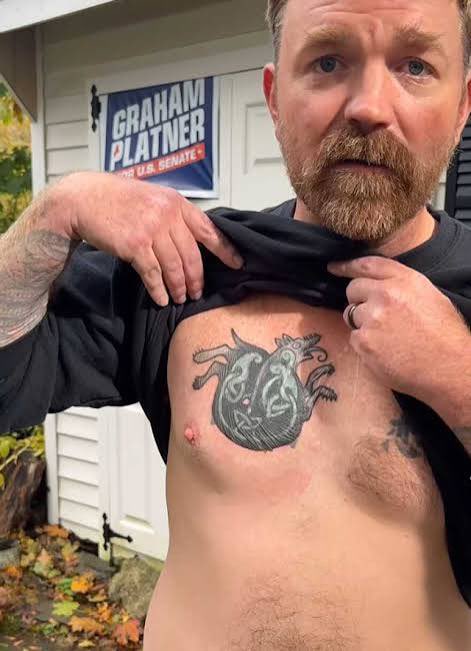
The danger for Democrats is not simply one candidate’s controversy. It is the growing perception that the party establishment is willing to excuse or overlook rhetoric that would be condemned if it came from the other side.
Throughout history, antisemitism has often disguised itself as political criticism before evolving into something much darker. Legitimate debate about Israeli policy is fair game in a democracy. Suggesting, however, that American elected officials are controlled by Jewish interests or are incapable of acting independently because of support from pro-Israel voters revives stereotypes that have fueled prejudice for generations.
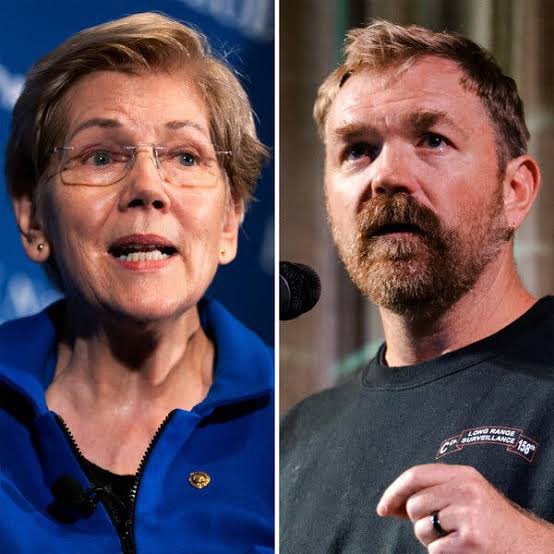
What should concern Democrats is not only the controversy surrounding Graham Platner, but the reluctance of some party leaders to confront it directly. Silence can be interpreted as acceptance, and acceptance can become normalization.
The Democratic Party has long presented itself as a coalition of minorities, religious communities, and those opposed to discrimination in all forms. That commitment must include standing firmly against antisemitism, regardless of the political source.
The lesson is simple: political expediency is a poor substitute for moral clarity.
When parties excuse prejudice because the offender happens to share their ideology, they risk losing credibility with voters who expect principles to be applied consistently. History teaches that intolerance ignored rarely disappears it grows.
Democrats would be wise to remember that voters are increasingly demanding consistency, not convenience, when it comes to condemning bigotry and hate.
AW
What, if anything, did Democrats gain from Tuesday’s election?
They avoided a worst-case scenario.
Democrats succeeded in advancing a candidate to the California governor’s race and preserved their opportunity to retain control of the state’s highest office. But beneath the headlines lies a more important story.
In one of the most Democratic states in America, voters continue to express growing frustration over affordability, homelessness, crime, public safety, housing costs, and the overall direction of government. The fact that a Republican remains highly competitive in California should concern Democratic strategists nationwide.
The election was less a victory than a reprieve.
For Democrats, the results offer time to regroup. For Republicans, they demonstrate that even long-standing political strongholds are not immune to voter dissatisfaction.
The broader warning extends beyond California. From New York to Los Angeles to Washington, voters are increasingly questioning whether progressive governance is delivering on its promises. The struggles facing Los Angeles under Mayor Karen Bass have become part of a larger national debate over public safety, homelessness, economic opportunity, and the proper role of government.
Tuesday’s results suggest that many voters are not simply choosing between parties. They are evaluating outcomes.
The message is clear: ideological purity may energize activists, but practical results win public confidence. Political leaders in both parties should take note. Voters are becoming less interested in slogans and more interested in whether their communities are safer, more affordable, and better governed than they were four years ago.
The warning for Democrats is that dissatisfaction is no longer confined to conservative states. It is emerging in places long considered progressive strongholds. Ignore that message at your own peril.
AW
Bill Pulte’s appointment as Acting Director of National Intelligence reflects a broader debate about leadership in America. Should critical institutions be led by career insiders or by proven executives from outside the establishment? Supporters see management experience and accountability. Critics question the lack of intelligence experience. Either way, it is a bold and closely watched move. AW
Bill Pulte’s appointment as Acting Director of National Intelligence reflects a broader debate about leadership in America. Should critical institutions be led by career insiders or by proven executives from outside the establishment? Supporters see management experience and accountability. Critics question the lack of intelligence experience. Either way, it is a bold and closely watched move. AW
As a farmer growing up and tending our family gardens, I learned early on from my parents that whatever you plant, nurture, and water is what eventually grows.
The same is true in life.
Your mind is a garden. If you water fear, bitterness, envy, and resentment, those things will eventually take root. If you cultivate faith, gratitude, discipline, and hope, they will bear fruit as well.
Not every thought deserves your attention. Not every fear deserves your agreement.
Jesus understood this during His forty days in the wilderness. Satan attacked Him with doubt and temptation, but Jesus answered every lie with truth.
We may not control every thought that enters our minds, but we can control which thoughts we nurture and which ones we pull out by the roots.
What you allow to grow in your mind will eventually shape your character, your decisions, and your life. AW
The NBA often presents itself as a champion of social justice, yet its deep financial ties to China continue to raise difficult questions.
With Steph Curry signing a major sneaker deal tied to the Chinese market, critics argue that economic interests increasingly outweigh principles. China represents hundreds of millions of basketball fans and billions in potential revenue, making it difficult for the NBA and its stars to challenge the Chinese government on human rights or free speech issues.
This is how influence works not through force, but through money, entertainment, sports, and access to enormous markets. When financial interests become too valuable, principles can become negotiable.
AW
The fog of war is becoming impossible to ignore.
We are told there is a ceasefire, yet Israelis are once again running to bomb shelters as drones and missile threats continue. Iran has fired missiles toward Kuwait, attacked regional targets, and signaled escalation rather than restraint. The reality on the ground looks far different from the language coming from diplomats.
What is also being forgotten is that before the U.S. and Israel launched strikes earlier this year, the Iranian regime had already left a trail of suffering measured not in headlines, but in generations. The 100,000 killed and not 20,000 victims reported by the bias media include students, protesters, dissidents, journalists, religious minorities, and ordinary citizens who dared to challenge the regime.
Imagine if Israel had been accused of causing the deaths of more than 100,000 of its own protesters and political opponents this year alone . The outrage would dominate every front page and every broadcast.
Instead, much of the world looks away.
There is no meaningful ceasefire when missiles are still flying, drones are still being launched, and civilians are still seeking shelter. This is not de-escalation. It is escalation under a different name.
The first casualty of war is often the truth. The second is moral consistency. Israel’s civilians matter. Iranian civilians matter. Kuwaiti civilians matter. The standard for human rights and human dignity must be the same for everyone.
AW
Fog of War Reality Check
President Trump’s latest strikes against Iranian military targets are a reminder that peace in the Middle East remains fragile. Even as negotiations continue, both sides are still exchanging military blows, revealing how quickly tensions can reignite.
Adding to the uncertainty are reports of political upheaval inside Iran, including the resignation of the country’s president. History shows that leadership changes during times of conflict can create both opportunities for peace and risks of further instability.
The reality is that wars rarely end with a single agreement. They move through periods of retaliation, diplomacy, and internal political struggles. The Middle East now stands at one of those pivotal moments.
The fog of war is not just found on the battlefield. It exists in the uncertainty of what comes next. AW
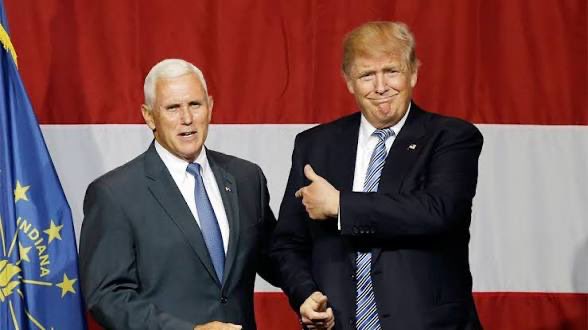
Former Vice President Mike Pence is increasingly criticizing President Trump’s policies, reigniting a debate about the future of conservatism. Pence argues that political movements should be guided by enduring principles and constitutional limits, not simply by personalities or public sentiment.
His comments raise a larger question: Will America’s future be shaped by conviction and institutions, or by the passions of the moment? Movements come and go. Principles endure.
When You Stop Trusting God, You Start Replacing Him.
Human nature rarely leaves a vacuum. When trust in God fades, something else quietly takes His place success, money, politics, relationships, status, intellect, comfort, control, or even ourselves.
We begin believing that if we work harder, accumulate more, gain influence, or manage every outcome, we can secure peace apart from Him. But eventually those substitutes reveal their limits. Success cannot comfort the soul. Wealth cannot guarantee tomorrow. Influence cannot give purpose. Control cannot stop uncertainty.
Often our greatest danger is not weakness it is the illusion that we no longer need God.
Faith does not mean abandoning responsibility; it means recognizing that we are stewards, not masters of our lives. Work faithfully. Plan wisely. Build boldly. But remember who gives breath, opportunity, wisdom, and grace.
When God is no longer at the center, something else will become our altar.
The question is not whether we worship but what we trust most when life becomes uncertain.
AW
One of the quiet disciplines of life is refusing to let despair become our lens. The world has always carried wars, uncertainty, and brokenness but at the same time it has carried births, healing, invention, forgiveness, courage, and people choosing goodness when no one is watching.
Perhaps wisdom is not ignoring darkness, but refusing to believe darkness tells the whole story.
Keep searching for what is true, good, and worthy of attention. It is often there just not always leading the media headlines . AW
Moral clarity requires us to remember that history is rarely written in real time.
Most presidents leave office believing their accomplishments deserve greater recognition than they received while serving. Yet in America, monuments, statues, currency, and the naming of public institutions have traditionally been decisions made by future generations, not by the leaders themselves. Time, not power, is usually the final judge.
If President Trump desires his name on buildings, monuments, or even currency, that is ultimately a question for history and the American people. Great leaders do not determine their own legacy; their legacy is determined by what endures after they are gone. George Washington did not place himself on the dollar bill. Abraham Lincoln did not commission the Lincoln Memorial. Martin Luther King Jr. did not build the monument that bears his name.
The lesson is larger than any one president. The pursuit of achievement is admirable. The pursuit of recognition is human. But the pursuit of immortality through symbols can become a distraction from the more important work of service.
History has a way of rewarding humility and testing ambition. The leaders most remembered are often those who focused less on how they would be honored and more on whether they faithfully fulfilled the responsibilities entrusted to them.
The final verdict on every presidency belongs not to the president, but to future generations. AW
Before automobiles, trains, and airplanes connected the world, horses were the engines of civilization. They carried armies, transported goods, connected distant communities, and helped build nations. The George Washington University Museum and The Textile Museum’s exhibition, Adorning the Horse: Equestrian Textiles for Power and Prestige, offers a fascinating look at how societies honored these indispensable animals through elaborate textiles, ceremonial trappings, and works of extraordinary craftsmanship.
More than an exhibition about horses, it is a reminder of the central role they played in shaping human history. The artistry on display reflects the wealth, culture, and values of civilizations that depended upon horses to move people, commerce, and ideas across the world. AW
The battle over the Kennedy Center is no longer simply about a building, a name, or even politics. It has become a test of how America governs its cultural institutions in an age when every national symbol risks becoming a partisan battlefield.
A federal judge’s ruling ordering President Trump’s name removed from the Kennedy Center and blocking plans to close the institution for two years will undoubtedly energize supporters and critics alike. But beneath the legal arguments lies a larger question: Should our nation’s artistic and civic landmarks reflect the passions of the moment, or should they stand above them?
The Kennedy Center was created to honor the legacy of President John F. Kennedy and to celebrate the performing arts as a unifying force in American life. Its greatest purpose has never been political victory but cultural stewardship.
Regardless of where one stands on President Trump, the lesson is that institutions endure only when they are larger than the individuals who temporarily influence them. Courts will rule, politicians will come and go, and administrations will change. What remains is the responsibility to preserve places that belong to the entire nation.
In a divided America, perhaps the greatest challenge is not winning every political battle, but ensuring that our shared institutions survive them. AW
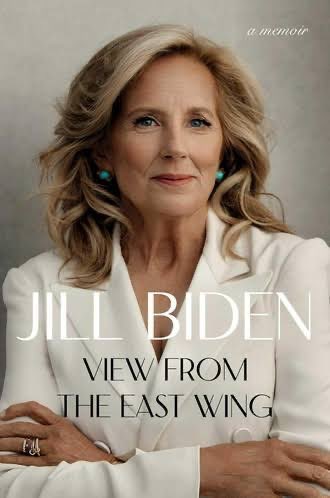
The lesson from Jill Biden’s revelation is not simply about a debate performance. It is about trust, transparency, and timing.
Americans understand that presidents age. They understand illness, fatigue, and human limitations. What they expect is honesty from those closest to power.
What makes this revelation particularly striking is that it is emerging long after the debate itself and during the promotion of a new book. That reality inevitably raises questions. Some will view the disclosure as a candid reflection offered with the benefit of hindsight. Others will wonder why these concerns were not shared more openly when the nation was actively debating President Biden’s fitness for office.
The larger issue is not whether Jill Biden feared something was medically wrong that evening. The larger issue is whether private concerns differed from public assurances.
History is often more forgiving of weakness than it is of the perception that difficult truths were withheld. Once trust is questioned, attention shifts from the event itself to the credibility of those surrounding it.
The lesson extends beyond one family or one administration. In politics, business, faith, and public life, trust remains the most valuable currency. People can handle difficult truths. What they struggle to accept is the belief that those truths were revealed only after the fact or when there is a commercial or political incentive to tell the story.
That is why this controversy continues to resonate. It is not ultimately about a debate. It is about confidence, credibility, and whether the public was given the full picture when it mattered most.
AW
The Pope’s warning about AI is not really about technology. It is about humanity.
The hard truth is that every generation builds its own Tower of Babel believing its intelligence, inventions, and power can replace wisdom, humility, and ultimately God.
AI risks replacing human relationships with simulations, truth with algorithms, and dignity with data points. The danger is not that machines become more human. The danger is that humans become less human valuing efficiency over compassion, information over wisdom, and convenience over genuine connection.
When people are reduced to profiles, productivity, and predictions, human dignity begins to erode. When truth becomes impossible to distinguish from deception, trust collapses.
Technology can be a great servant, but it is a terrible master. The question is not what AI can do. The question is whether we have the moral courage to remain fully human while using it.
AW
The latest development in the Trump–E. Jean Carroll legal saga shifts attention from the civil verdicts themselves to the integrity of the judicial process. The Department of Justice is reportedly investigating whether Carroll made false statements under oath regarding who financed her legal fees during the litigation.
The underlying civil judgments remain intact: two juries found President Trump liable for sexual abuse and defamation, resulting in awards totaling more than $88 million. Those verdicts have withstood substantial legal review.
The question now is narrower but significant. If prosecutors can prove that Carroll knowingly made a materially false statement under oath, the consequences could extend far beyond the original cases and potentially trigger new litigation. If, however, the issue centers on facts already reviewed by the courts, a successful prosecution may be difficult. AW
Breaking 🚨: Trump administration officials are allegedly asking the Bureau of Engraving and Printing to develop a proposed $250 bill bearing President Trump’s image.
This would mark the first time a living American has appeared on U.S. currency in over 150 years 🤯