Thu, June 18 · 6 PM · Pilgrim Rest Baptist Church, Phoenix.
With ASU's Center for the Study of Race and Democracy.
Reserve your spot:
https://t.co/OS3FOgqVgV
Mark your calendar. On June 18, Arizona Talks gathers in Phoenix to hold two anniversaries at once: the end of slavery in 1865, and America's 250th year.
Music, food, stories, and honest dialogue. 🧵
Speech and debate gives students the tools to communicate clearly, think critically, and engage with difficult conversations. Meghana shares why programs like these matter for Arizona’s future.
Support the next generation through the link in bio.
Today, board member Tara Cosentino shared why Arizona Talks has become a place for meaningful conversations. The kind where people show up curious, ask hard questions, and leave thinking differently. Join us in strengthening civil dialogue. Learn more at the link in bio.
3/ The gap isn't inevitable. Most schools lack teams because of funding, not interest. That's why they launched the Arizona Talks Civic Action Network to expand access statewide. https://t.co/gDWN21zgpV
2/ They argue the activity teaches students to disagree productively, not just win arguments. Debaters prepare both sides. They research, listen, respond in good faith.
Thu, June 18 · 6 PM · Pilgrim Rest Baptist Church, Phoenix.
With ASU's Center for the Study of Race and Democracy.
Reserve your spot:
https://t.co/57ntOi77gZ
In 1865, freedom finally reached the last enslaved Americans. In 1776, the country promised liberty for all. As America turns 250, what does that arc mean now?
Arizona Talks brings the conversation to Phoenix on Thursday, June 18. 🧵
“Speech and debate is my home.”
Milo shares how debate gave him a place to speak openly about difficult issues and be part of a community thinking seriously about the future. Join us June 10 in Scottsdale to support Arizona’s student debaters. Link in bio.
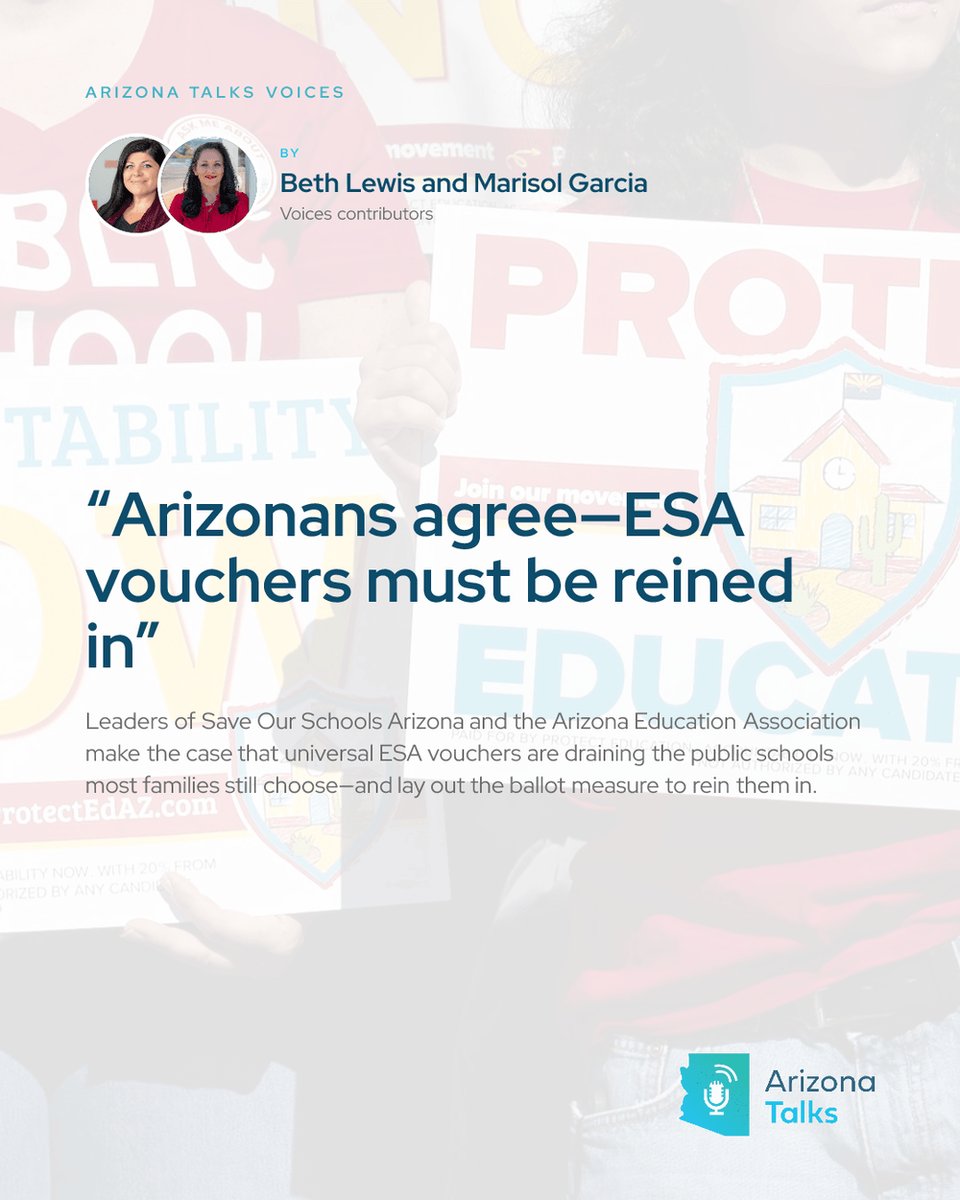
@AZBethLewis@MarisolGarciaAZ The education advocates are working on the Protect Education Act, which they say would rein in universal vouchers while preserving them for students with disabilities. https://t.co/Ux9QvsxSVI
@AZBethLewis@MarisolGarciaAZ They write that since universal expansion in 2022, 39 Arizona public schools have closed. The state ranks 48th in per-student spending, $6B below the national average.
Jane learned how to speak with confidence, argue with rigor, and listen closely through speech and debate. On June 10, support the Arizona students learning those same skills at Investing in the Next Generation of Civil Dialogue. Join us and donate today at the link in bio.
3/ She makes the case for mail-in voting as practical, not partisan: "A democracy should not require obstacle courses to participate." https://t.co/uQkTCNxicR
1/ Kimber Lanning watched an elderly woman outside a South Phoenix polling place last fall, asking strangers where she was supposed to vote. Her location had changed. The notice never arrived.
2/ Lanning argues voting rights debates stay abstract while real people squeeze voting between work shifts, child care, and exhaustion. For many, missing two hours in line means choosing between democracy and making rent.
Why does the other side feel like a different species? Dr. Steven Neuberg (ASU) on the psychology of political division. Tomorrow! 6 p.m. at Greater Phoenix Leadership.
Jenny Clark argues that Arizona's ESA program gave her kids with dyslexia access to support the traditional system couldn't provide, and that a proposed ballot measure would hurt families like hers. https://t.co/Z3MZ9AFBoW