🇮🇶#Irak. Ali Al-Zaïdi, nouveau premier ministre, n'est pas un réformateur : il est le nom que le blocage s'est donné pour continuer. Validé par Washington, acceptable pour Téhéran, il incarne un système qui se reproduit sans se réformer.
🔗https://t.co/DWGAUJAZrG
✍️@ArminMessager
“Without Real Equality Among Iran’s Peoples, There Will Be No Shared Future”—An Interview with Karim Parwizi (Democratic Party of Iranian Kurdistan)
https://t.co/Lo2387f7n7
Nouvelle interview.
J’ai échangé avec Karim Parwizi, porte-parole du Parti démocratique du Kurdistan iranien, sur l’effondrement possible de la République islamique, le rôle des partis kurdes et les conditions d’un futur démocratique en Iran.
https://t.co/gYtCxlD9ct
Parwizi avertit aussi que toute alliance de l’opposition qui refuse de reconnaître les droits politiques des Kurdes, Baloutches, Arabes, Azerbaïdjanais et autres restera fragile et incomplète.
Une conversation essentielle sur ce qui pourrait advenir après la République islamique.
Arrachement à la terre, à la mémoire et aux liens sociaux, imposant un ordre inégalitaire basé sur la contrainte et la soumission, sous le regard passif ou complice des puissances occidentales.
🔗À lire sur OrientXXI !
https://t.co/v34eKk8jXz
Extension israélienne : occupation, colonisation, annexion
Déplacement des populations natives
Démilitarisation et création de zones tampons
Implantation de colonies et formalisation juridique
Objectifs : contrôle stratégique, ressources et projet idéologique-religieux.
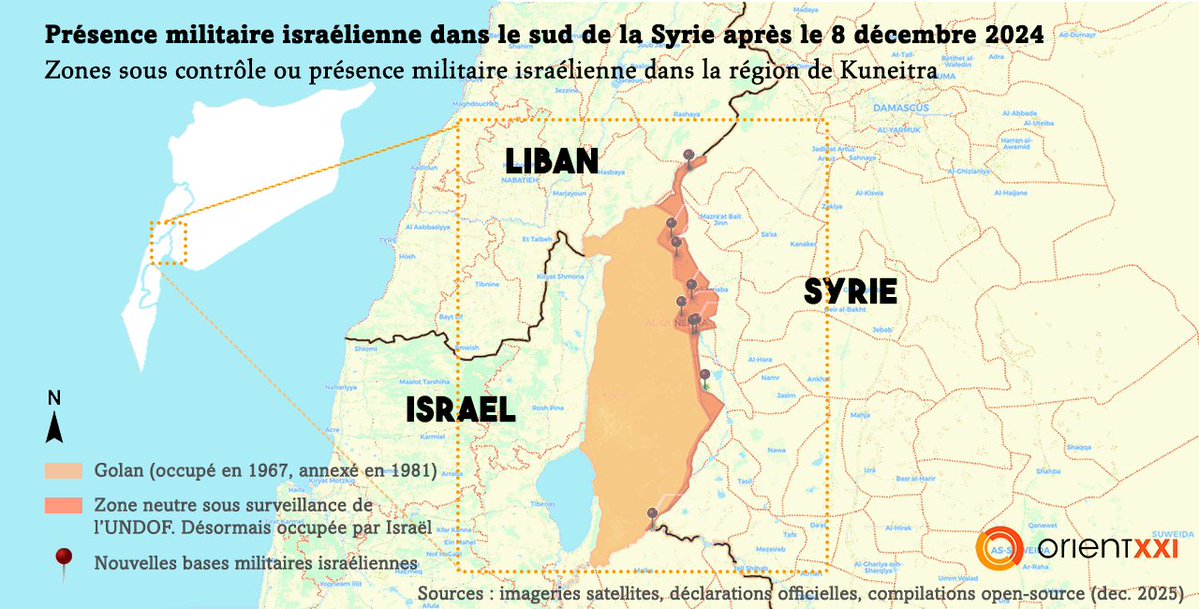
Syrie: le Golan, «les yeux d’Israël»
Depuis 67, Israël occupe et colonise le plateau.Depuis Déc. 2024:
350km² supplémentaires occupés
Plusieurs centaines de frappes sur infrastructures militaires
9positions militaires, implantation de colons renforcée
Population locale déplacée
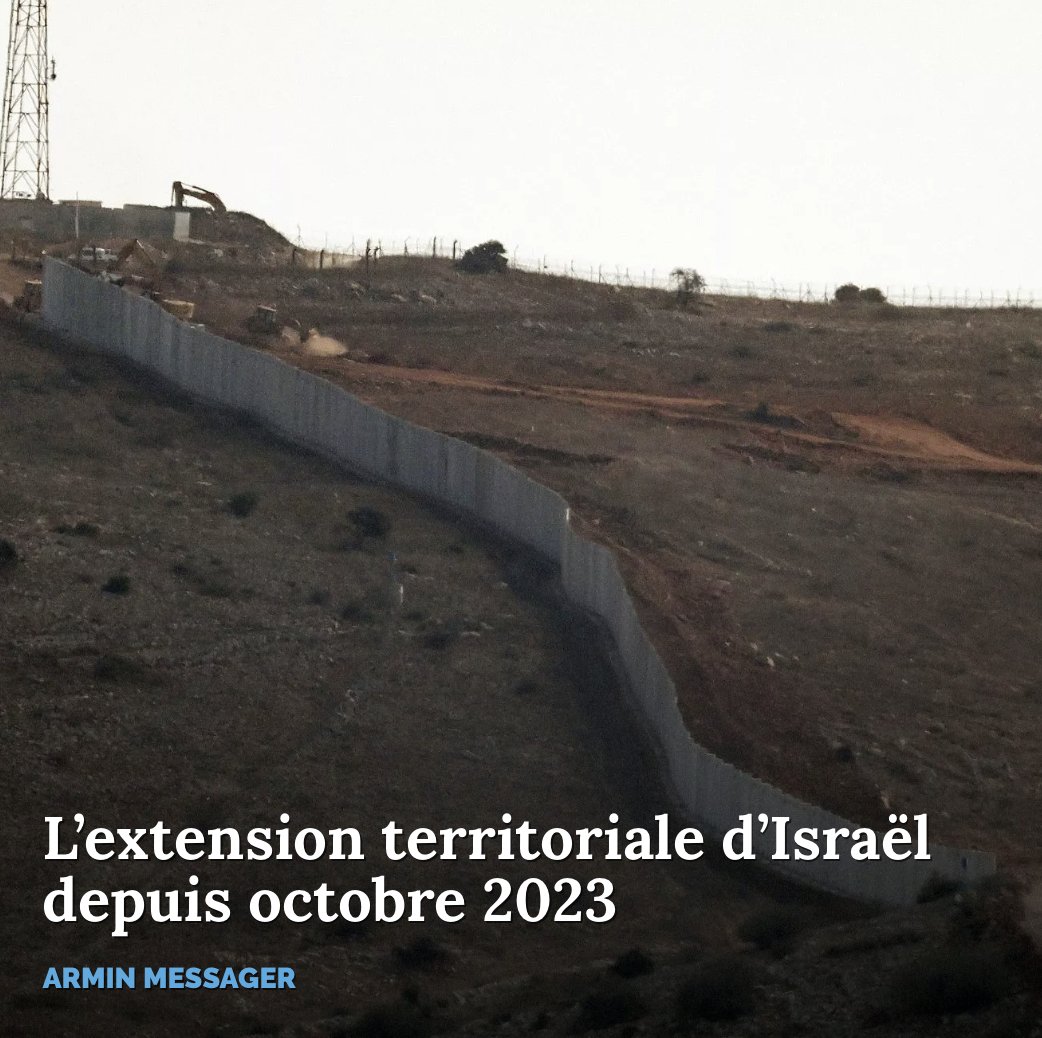
Sud-Liban: la « zone tampon » est une zone morte
Post-Sept 2024:
Offensive aérienne et terrestre massive
Infrastructures et villages détruits
Murs de 9m de haut construits, 5 bases israéliennes installées
04/03/26 Israël ordonne l’évacuation de tous les habitants au sud du Litani
Cisjordanie: expansion coloniale et violences record
Depuis Oct 2023:
22 nouvelles colonies et 86 avant-postes
116 km de routes de colons non autorisées
2 400 ha déclarés «terres d’État»
1 222 Palestiniens tués, 39 843 déplacés
1 828 incidents contre propriétés palestiniennes
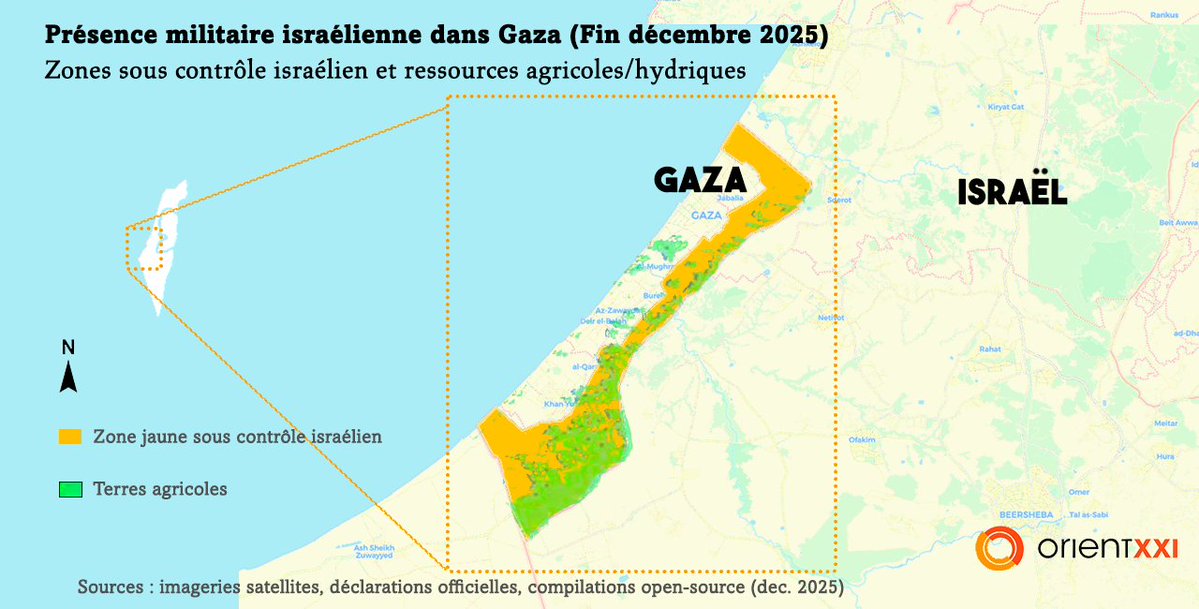
Gaza est désormais coupée en deux
Depuis le cessez-le-feu d’Oct. 2025, une « ligne jaune » sépare l’enclave : 53 % du territoire est sous contrôle militaire israélien et vidée de sa population. Les terres agricoles et les ressources en eau sont majoritairement dans la zone jaune.
🇮🇱#Israël. L’extension territoriale depuis octobre 2023
Depuis le 7 octobre, la guerre sert à redessiner les lignes : à Gaza, en Cisjordanie, au Sud-Liban et en Syrie, Israël étend son emprise territoriale. Une constante de son histoire.
🔗https://t.co/v34eKk8jXz
✍️@ArminMessager
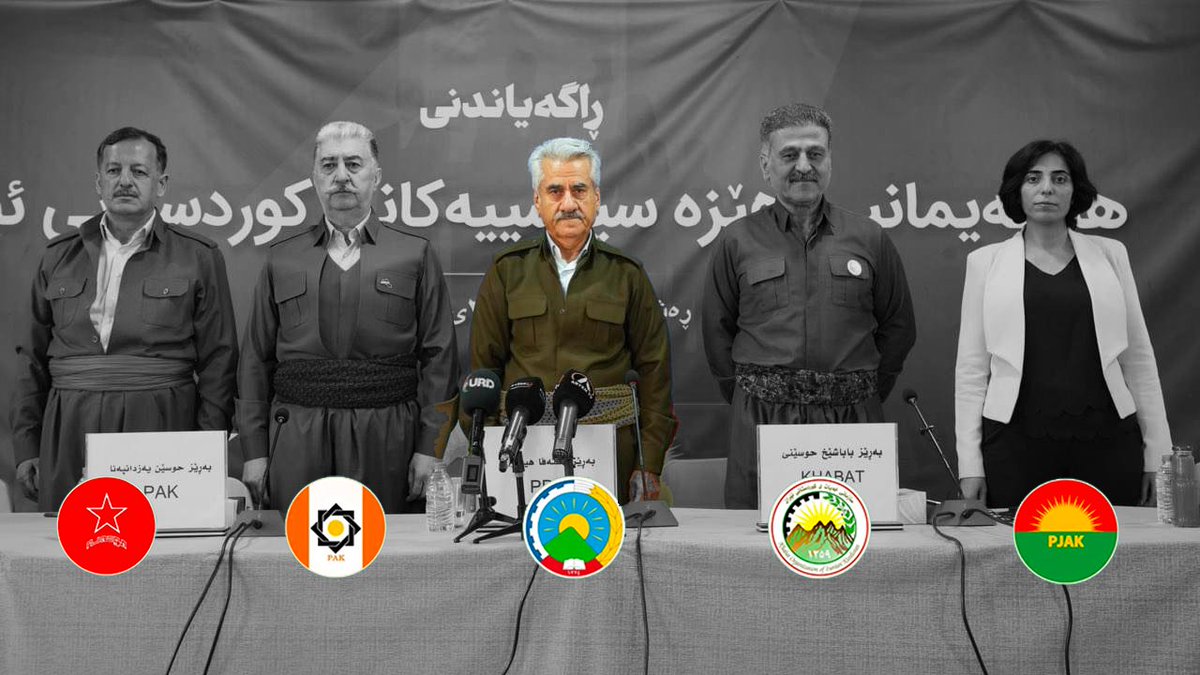
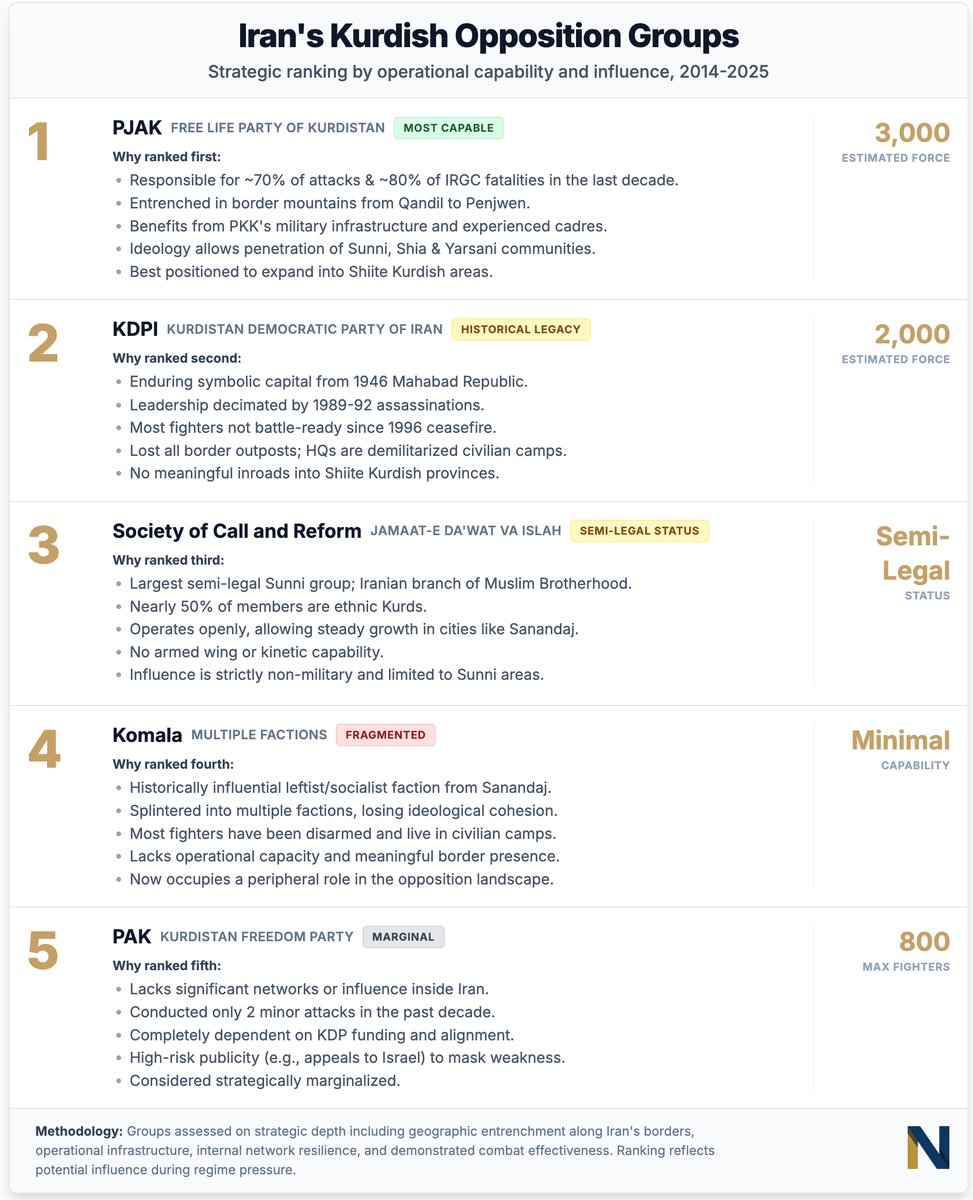
Ranking Iran’s Kurdish Opposition: Strategic Depth, Networks, and Potential
When assessing Iranian Kurdish groups, the key metric is strategic depth: their geographic entrenchment, operational infrastructure along Iran’s borders, and the resilience of networks inside Iranian Kurdistan, as detailed here:
Despite its status as a latecomer, PJAK has emerged as the most active Kurdish militant group operating against the Iranian regime in the past two decades. Between 2014 and 2025, PJAK was responsible for about 70% of all attacks by Kurdish groups on Iranian forces, and approximately 80% of IRGC fatalities in these incidents, despite maintaining a formal ceasefire with Tehran. While PJAK’s overall number of attacks and resulting IRGC casualties may appear limited, the fact that it achieved such figures under a ceasefire only puts into perspective how marginal the other groups have become in operational terms.
A significant factor contributing to PJAK’s strategic edge is its entrenched presence in mountainous regions of the Kurdistan Region of Iraq bordering Iran. Confirmed PJAK positions span from the PKK stronghold of Qandil in the north down to the Asos mountains and further south in the Penjwen-Hawraman areas, providing unique proximity to Iranian territory. With an estimated fighting force of around 3,000, PJAK is not only larger than other Iranian Kurdish groups but can readily draw on a broader pool of PKK fighters, many of whom possess significant combat experience from conflicts in Turkey and Syria. The PKK’s flexibility in reallocating experienced personnel, particularly with the ongoing peace process in Turkey, significantly boosts PJAK’s combat readiness.
PJAK also benefits from a unique sociopolitical positioning. The Iranian Kurdish population is fragmented along both sectarian and linguistic lines - divided between Sunnis (around 50-60%), Shiites (35–40%), and religious minorities such as the Yarsanis, and between Kurmanji, Sorani, Gorani, and Kalhori speakers. While this fragmentation has historically limited the ability of Kurdish parties to build unified movements, the PKK’s ideological framework - which integrates Alevis, Yazidis, Sunnis, and secularists - gives PJAK a structural advantage in penetrating these fault lines.
That said, PJAK’s expansion is not uniform. In traditional KDPI strongholds in what is known as Mukriyan belt, its influence remains more limited. Similarly, in parts of Urmia, some tribal populations retain historical allegiances to the Barzani family and KDP-linked networks.
The KDPI is the oldest and historically most prominent Kurdish party in Iran. Its deep legacy, including the founding of the Mahabad Republic in 1946, gives it enduring symbolic capital and a residual support base - especially among families with generational loyalty to the movement and among sections of the Iranian Kurdish diaspora in Europe.
However, its military capacity has been significantly diminished. The KDPI currently maintains a nominal force of around 2000 fighters, but most are no longer battle-ready. Following major losses in the 1980s and 1990s, the group declared a halt to armed operations in 1996.
The Iranian state’s targeted decapitation of KDPI’s leadership was also a decisive blow. The assassinations of Abdul Rahman Ghassemlou in 1989 and Sadegh Sharafkandi in 1992 deprived the party of charismatic leadership. In the years since, the party has struggled to produce new figures capable of uniting its ranks or galvanizing a new generation of activists.
More details: https://t.co/INEMAuCeY6
Four Maps to Understand Iran's Kurdish Provinces
Here's how four layers of data, from geography to religion to language, explain the region:
https://t.co/NefP7wmYwl
#Iran Carte de Téhéran : lieux de protestation identifiés via les vidéos sur les réseaux sociaux, croisés avec la stratification sociale des quartiers (huppés, de classe moyenne, populaires), le milieu bazari (commerçant) et les universités.