At #INC2026 in Islamabad, SVI set four. My short answers:
1. Compellence. "Bharat cannot compel Pakistan." Turning an unverified allegation into war, while reserving the decision to strike, doesn't work.
2. Limited war. "The defender also has a vote, and Pakistan can again cast it decisively." Restraint is responsible statecraft, but "restraint is not endlessly renewable."
3. Entanglement. India's dual-capable missiles, precision strike, canisterisation, MIRVs, missile defence and sea-based forces are converging. "That is a shift from stability by fear to instability by confidence."
4. Technology. BrahMos brings all three risks together. "Radar cannot reveal payload or intent." Meaningful human control must stay central to military AI.
The conclusion: "South Asia is a nuclear flashpoint and here the true enemy is the belief in useful war."
Full speech in the reply. I first set out the BrahMos argument in my CISS essays and the wider frame in my FRS paper (link below).
#SouthAsia #NuclearDeterrence
Reply 1:
Full session (my speech from 27:28): https://t.co/s4BBNMiMZN
Reply 2:
FRS paper: https://t.co/Z5g6FkV4Bm
@YusufDFI A respected friend, who does not Tweet sent my following comment:
"Fact = Urdu is not an ‘Indian Language’. Urdu is an Indo-Aryan language of the Indo-European family, written in a modified Perso-Arabic script….RIP"
Also, try to write and sing songs in Hindi :)
“I showed Odin war. And he repaid me with love and trust.”
We sent dogs into wars they never chose. They carried wounds they could never explain—and still trusted us.
No animal should have to earn its peace.
#HeartOfTheBeast 🐾
@ParamountPics@dog_rates@dodo
@POTUS in Shenzhen today: "As the world's three largest nuclear powers by far, the United States, Russia and China are uniquely positioned to discuss how to reduce the number of nuclear weapons on Earth." President Xi answered that a nuclear war cannot be won and must never be fought. @KremlinRussia_E@MFA_China
Nobody at that table speaks for the one dyad where two nuclear-armed neighbours actually fought last year.
Big-three arms control has a basement. South Asia lives in it, and Pakistan's security dilemma is shaped there too.
The numbers: @SIPRIorg Yearbook 2026 puts China at ~620 warheads (the Pentagon expects 1,000+ by 2030, per @BelferCenter), Bharat ~190, Pakistan ~170. And SIPRI's read of Bharat: its longer-range systems "appear to be focused on China, but its planning still remains heavily influenced by its long-standing rivalry with Pakistan."
Translation: every Chinese warhead Washington counts becomes a Bharati alibi, and the alibi's weapons sit on Pakistan's border.
Three tests for whatever comes out of Shenzhen:
1st: Equality. Beijing wants "strategic stability on the basis of respect, fairness and reciprocity." Belfer's Hui Zhang goes further: "No agreement should legalize any party's strategic inferiority." Good principles. Pakistan has heard "equality" before, from regimes that then carved out exceptions for Bharat. A rule that protects Beijing must hold one floor down.
2nd: Declaratory honesty. China's no-first-use is unconditional. Bharat says it has "strictly adhered" to NFU, yet its 2003 doctrine keeps a nuclear option against "biological or chemical weapons", and its Defence Minister added: "What happens in future depends on the circumstances." Pair that with dual-capable or deliberately ambiguous BrahMos and Pralay, and NFU becomes a posture with an expiry clause, riding on missiles whose payload no one across the border can know in flight. Pakistan's Army Rocket Force is conventional. That asymmetry is the stability problem.
3rd: The paradox. @CarnegieEndow's Tong Zhao warns in @WarOnTheRocks that greater stability among the big three "could embolden aggression at lower levels of violence". South Asia does not need the warning. May 2025 was the experiment, and the belief that war can be started low, kept low and stopped on command is the real danger.
Stability bought at the top and exported downward as risk is not arms control. It is outsourcing. Restraint, like deterrence, has to be mutual. Pakistan's Strategic Restraint Regime offer is still on the table. New Delhi has yet to come to it.
Trump remarks (@YonhapNews): https://t.co/hcaU04B6Ej
Belfer: https://t.co/KCjF4d1Bm5
WOTR: https://t.co/eui031PNzF
SIPRI: https://t.co/ez0sutvugi
China MFA: https://t.co/mIhWKQT3IP
NFU caveats (@Diplomat_APAC): https://t.co/J0S2p47EOp
My take on May 2025: https://t.co/K78KKIAK2E
#Shenzhen #ArmsControl #SouthAsia
@RadioactiveFrnd@CISS_Islamabad@SVI_Pakistan@bttn_quetta@CISSS_Karachi@bttn_quetta
@dratiaalikazmi@OfficialDGISPR Pakistan's explicit separation of conventional and nuclear missile forces contrasts sharply with perceived warhead ambiguity/entanglement in India's missile arsenal. India should not forget that such ambiguity can lead to miscalculation or unintended nuclear escalation.
*We Belong to Same Box — But Whose Box*
Very aptly put. In every sense, for every stage of life!
But the board is not ours, nor is the game. "_Blessed is He in whose hand is dominion… who created death and life to test you as to which of you is best in deed_" (Al-Mulk 67:1–2).
King or queen, knight or pawn, we hold power only on trust, as His Vicegerents / khalifas on earth (Al-Baqarah 2:30). He "_raised some of you above others in degrees that He may try you through what He has given you_" (Al-An'am 6:165).
So positions and titles are a test, not a trophy.
Man and woman are "_allies of one another_" (At-Tawbah 9:71), and the noblest of us is the most righteous (Al-Hujurat 49:13).
Does it matter how far we moved? Or does it matter whether we moved with justice, humility and mercy?
*For every piece goes back to the same box*: "_Indeed we belong to Allah, and indeed to Him we will return_" (Al-Baqarah 2:156).
(Source: chess-metaphor video clip by an unidentified speaker. Quranic translations: Sahih International.)
#ISPR Press Release #Fatah3
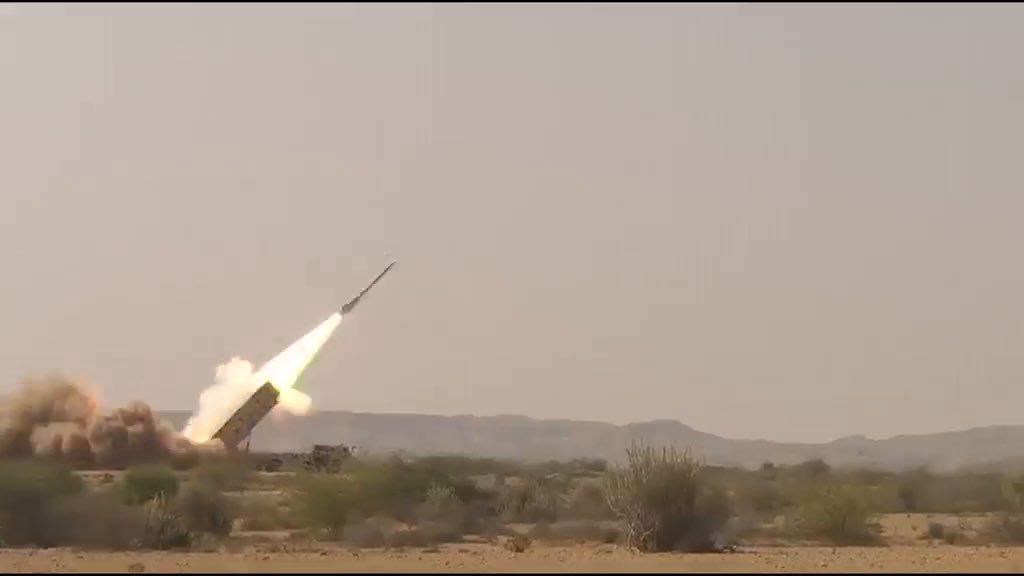
Pakistan Army today conducted a successful launch of Fatah-3 Supersonic Cruise Missile, marking another significant milestone in the advancement of national defence capabilities. The weapon system is equipped with advanced navigation and propulsion systems and is capable of engaging targets at long range with high precision and lethality at supersonic speed.
Fatah-3 will significantly enhance the operational flexibility and strike reach of the Pakistan Army’s Rocket Force Command, further strengthening the country’s overall conventional deterrence and defence posture.
The launch was witnessed by Commander Army Rocket Force Command and senior officers of the Pakistan Armed Forces, along with scientists and engineers.
The President and Prime Minister of Pakistan, Chief of Army Staff & Chief of Defence Forces and Services Chiefs commended the successful launch of Fatah-3 and appreciated the dedication and commitment of all those who contributed towards achievement of another significant milestone in development of national defence capabilities of Pakistan.
When a Fatah-3 leaves its launcher, nobody has to wonder what it carries.
ISPR's statement today assigns it to the Army Rocket Force Command and ties it to Pakistan's "overall conventional deterrence and defence posture" (@OfficialDGISPR : https://t.co/FmFSWJCY4K). Pakistan 🇵🇰 has drawn that line in public. Its long-range precision strike sits in a dedicated, conventional rocket force.
Now look across the border 🇮🇳 . BrahMos Aerospace says its missile "carries a conventional warhead upto 200 kgs" (https://t.co/3HaN1CGP2f), yet outside analysts have long questioned whether that is its only payload. Pralay is the starker case. In Dec 2021, India's Ministry of Defence called it a "conventional Surface-to-Surface missile" (https://t.co/zyrb6eMqCk). In Feb 2025, the government's own magazine said "The missile is capable of carrying nuclear weapons" (https://t.co/gRRJVbD4AN). One missile has two official answers.
That is the real stability problem in South Asia, and it is not symmetrical. In a crisis, a Pakistani decision-maker watching an incoming Indian missile often cannot know from its flight path whether it carries a conventional or a nuclear warhead. There are minutes, not hours, to decide. Separation on one side does not cancel ambiguity on the other.
The gap is worse because cruise missiles sit outside the only test-notification arrangement the two countries have. The 2005 agreement covers "surface-to-surface ballistic missile" tests only (https://t.co/B39yreuvhb).
So the question isn't how far Fatah-3 flies. It's whether India will be as clear about its missiles as Pakistan has been about its own: say plainly which systems are conventional, keep them that way, and agree to notify cruise-missile tests. Clarity costs nothing. Ambiguity, in a crisis, could cost everything.
#CrisisStability #SouthAsia #ArmsControl
On the left, Trump comes down the Air Force One stairs at Shenzhen Bao'an Airport today and is greeted with flags and a band, with the original audio. On the right is the official Minuteman III launch footage from Glory Trip 256 on 20 May 2026
Was the Minuteman III test timed for the Trump–Xi–Putin meeting in Shenzhen? The record says no. But that's not the whole story:
An unarmed Minuteman III, Glory Trip 257, launched from Vandenberg at 11:01 pm PT on 17 Nov. Air Force Global Strike Command says it "was scheduled years ago and is not in response to world events." https://t.co/03eiX8OYwE
The launch window was announced on 14 Nov. Beijing formally announced the 19 Nov summit on 16 Nov. "Glory Trip" is the routine reliability-test series, and 257 is simply the next number. https://t.co/7EwxZC1BiE
But the same test has been moved before. In March 2022, after Moscow's nuclear-alert order, the Pentagon postponed and then cancelled a Minuteman launch to avoid "any actions that can be misunderstood or misconstrued." https://t.co/6zG6TwmG8O
In August 2022, during China's drills around Taiwan, the White House delayed it again: "a strong, confident, capable nuclear power can afford to wait a couple of weeks."
https://t.co/7MMlQJqXAW
This time there was no delay, on the eve of talks the White House says will cover "the reduction of nuclear weapons in the world." https://t.co/M5vMX9djjy
Precedent shows timing is read as a signal whether or not one was meant. China's 1995–96 firings near Taiwan were deliberate. North Korea fired a missile the day before the first Trump–Xi summit in 2017.
GT-257 coincided with Shenzhen rather than being timed for it. Still, a power that knows how to delay a test, and has done so twice, chose not to. In arms control, how a test is read matters as much as why it was scheduled. Moscow and Beijing have yet to comment.
QAU has played a vital role in mineral ecosystem in Pakistan-training skilled geophysicists and geologists in modern exploration techniques such as gravity, magnetic, seismic and electrical resistivity surveys. Gover invest QAU Human resources. https://t.co/Z7rIo2tmKT
12 May 2025, IAF DG Air Ops: “We have not hit Kirana Hills, whatever is there.”
25 Aug 2026, ex-CDS Chauhan: “It must have come and hit one of those hills.”
India cannot agree with itself. Deterrence held; the story did not.
#OperationSindoor #MarkaEHaq
@CISS_IslamabadCISS_Islamabad @c@ciss_ajkss_ajk
𝐂𝐈𝐒𝐒 𝐒𝐭𝐫𝐚𝐭𝐞𝐠𝐢𝐜 𝐕𝐢𝐞𝐰 | 𝐓𝐡𝐞 𝐃𝐞𝐭𝐞𝐫𝐫𝐞𝐧𝐜𝐞 𝐓𝐡𝐚𝐭 𝐃𝐢𝐝 𝐍𝐨𝐭 𝐅𝐚𝐢𝐥
Nuclear deterrence is not failing. The claim that it is, is dangerous. May 2025 showed that unilateral aggression cannot produce a fait accompli against Pakistan. The real peril is that Bharat mistakes Pakistan’s restraint for a precedent to be repeated or enlarged.
A theory that calls four decades of crises ending short of major war “failure” has redefined success out of existence.
𝐀𝐮𝐭𝐡𝐨𝐫: Dr. Zahir Kazmi
𝐑𝐞𝐚𝐝 𝐭𝐡𝐞 𝐟𝐮𝐥𝐥 𝐚𝐫𝐠𝐮𝐦𝐞𝐧𝐭: https://t.co/Sb6O7WXU6m
•
•
🔗 𝐡𝐭𝐭𝐩𝐬://𝐜𝐢𝐬𝐬.𝐨𝐫𝐠.𝐩𝐤
🏛 𝐂𝐞𝐧𝐭𝐞𝐫 𝐅𝐨𝐫 𝐈𝐧𝐭𝐞𝐫𝐧𝐚𝐭𝐢𝐨𝐧𝐚𝐥 𝐒𝐭𝐫𝐚𝐭𝐞𝐠𝐢𝐜 𝐒𝐭𝐮𝐝𝐢𝐞𝐬
📘𝐅𝐨𝐥𝐥𝐨𝐰 𝐂𝐈𝐒𝐒: 𝐟 | 𝐗 | 𝐢𝐧 | 📸| 📱
خدا آسمانوں اور زمین کا نور ہے۔ اس کے نور کی مثال ایسی ہے کہ گویا ایک طاق ہے جس میں چراغ ہے۔ اور چراغ ایک قندیل میں ہے۔ اور قندیل (ایسی صاف شفاف ہے کہ) گویا موتی کا سا چمکتا ہوا تارہ ہے اس میں ایک مبارک درخت کا تیل جلایا جاتا ہے (یعنی) زیتون کہ نہ مشرق کی طرف ہے نہ مغرب کی طرف۔ (ایسا معلوم ہوتا ہے کہ) اس کا تیل خواہ آگ اسے نہ بھی چھوئے جلنے کو تیار ہے (پڑی) روشنی پر روشنی (ہو رہی ہے) خدا اپنے نور سے جس کو چاہتا ہے سیدھی راہ دکھاتا ہے۔ اور خدا نے (جو مثالیں) بیان فرماتا ہے (تو) لوگوں کے (سمجھانے کے) لئے اور خدا ہر چیز سے واقف ہے ﴿۳۵﴾ (وہ قندیل) ان گھروں میں (ہے) جن کے بارے میں خدا نے ارشاد فرمایا ہے کہ بلند کئے جائیں اور وہاں خدا کے نام کا ذکر کیا جائے (اور) ان میں صبح وشام اس کی تسبیح کرتے رہیں ﴿۳۶﴾(یعنی ایسے) لوگ جن کو خدا کے ذکر اور نماز پڑھنے اور زکوٰة دینے سے نہ سوداگری غافل کرتی ہے نہ خرید وفروخت۔ وہ اس دن سے جب دل (خوف اور گھبراہٹ کے سبب) الٹ جائیں گے اور آنکھیں (اوپر کو چڑھ جائیں گی) ڈرتے ہیں ﴿۳۷﴾ تاکہ خدا ان کو ان کے عملوں کا بہت اچھا بدلہ دے اور اپنے فضل سے زیادہ بھی عطا کرے۔ اور جس کو چاہتا ہے خدا بےشمار رزق دیتا ہے ﴿۳۸﴾
بھلا کون بیقرار کی التجا قبول کرتا ہے۔ جب وہ اس سے دعا کرتا ہے اور (کون اس کی) تکلیف کو دور کرتا ہے اور (کون) تم کو زمین میں (اگلوں کا) جانشین بناتا ہے (یہ سب کچھ خدا کرتا ہے) تو کیا خدا کے ساتھ کوئی اور معبود بھی ہے (ہرگز نہیں مگر) تم بہت کم غور کرتے ہو ﴿۶۲﴾