In her first editorial,Dr. Ami Kantawala reflects: “How do we as educators creatively and collectively re-imagine teaching and art practice during these turbulent times, which is shaped by our most powerful asset, our own lived experience?”
https://t.co/kN6r1o5fLX
"CALL FOR SUBMISSIONS:
Special Section: Experiences in Distance and Isolation: Art Stories from the Pandemic.
Submission Guidelines can be found at: https://t.co/qEFj5DUao5"
Call for submissions: Art Education will run a special section titled “Experiences in Distance and Isolation: Art Stories From the Pandemic” for the first five issues of 2021. Details at https://t.co/Y1gN2pEulo
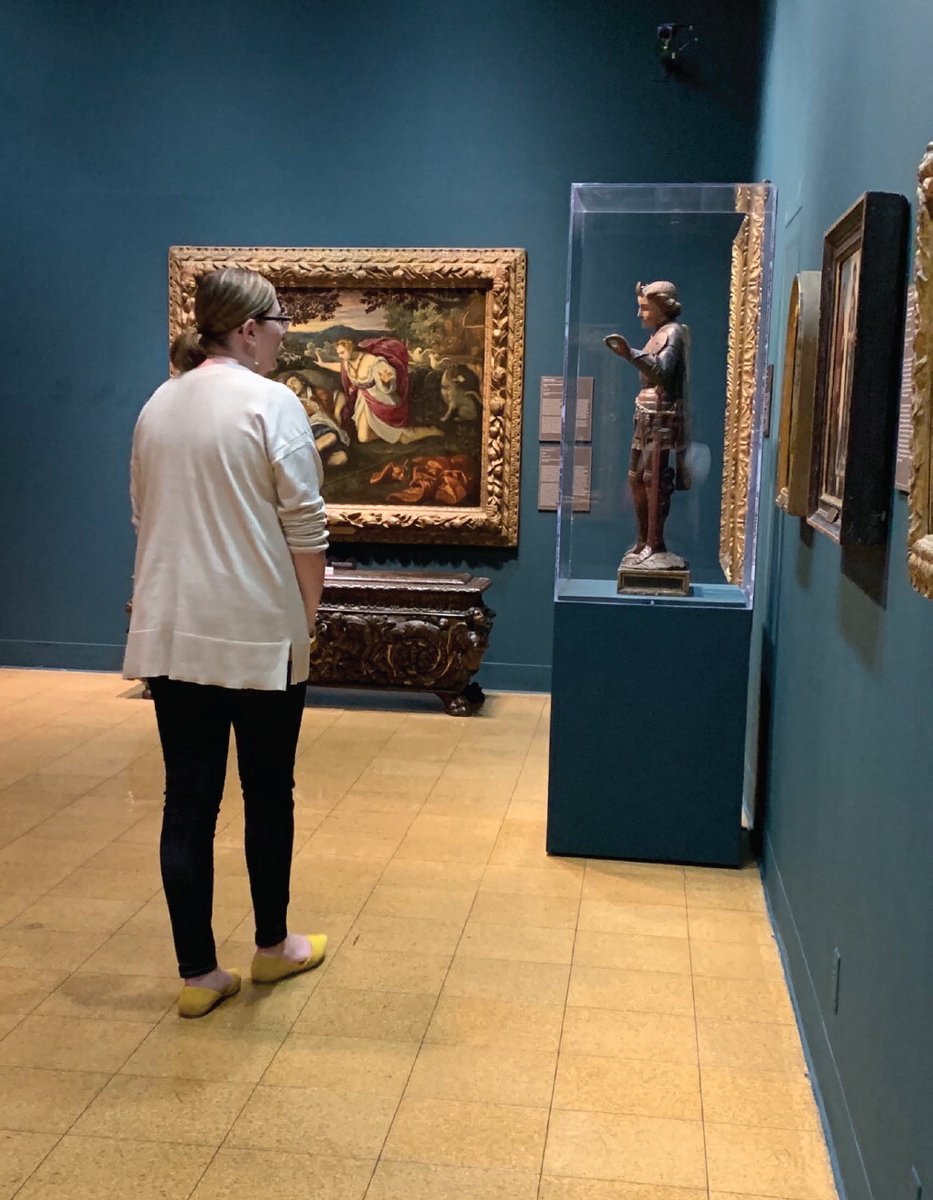
Image: A student explores Renaissance art as she wanders through galleries. University of Arizona Museum of Art, University of Arizona. Photo by Carissa DiCindio. Photo courtesy of the author.
Carissa DiCindio looks at how experiences with works of art can be designed and facilitated to encourage wonder, laughter, and an attitude of discovery in her article in Art Education, Driven by Curiosity: Creating Opportunities for Exploration on Guided Tours in Art Museums.
You can find this article by logging into your NAEA member account here: https://t.co/l0qC0hdLnG
And then follow this link to the article:
https://t.co/vHaHZnnSbN
Read more in the article “Using a Mindfulness Software Application to Practice Artmaking and Meditation.”
You can access this resource in Art Education free with your NAEA member login here: https://t.co/l0qC0hdLnG
Direct link to article: https://t.co/0KTEwp5yBp
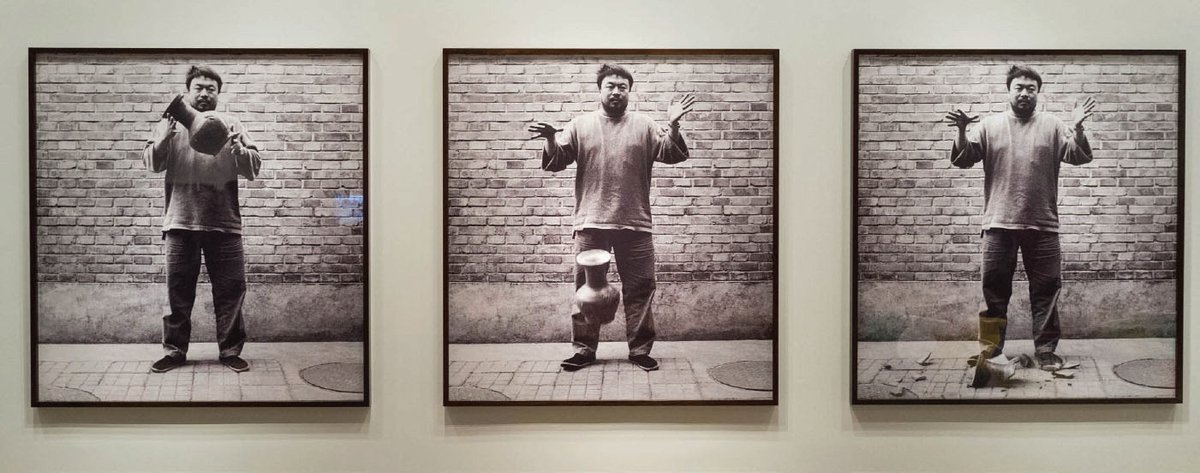
Art is powerful and necessary for imagining the world we wish to live in. In the Instructional Resources, titled “Art + Politics = Activism: The Work of Ai Weiwei,” Alex Lentz and Melanie L. Buffington analyze select pieces by the renowned political artist.
They explore the ways in which curriculum design is a political act, and they discuss how teachers might approach Ai Weiwei's work in the classroom.
You can access this resource for your classroom in Art Education free with your NAEA member login here: https://t.co/l0qC0hdLnG
How do you address race, power, and privilege in your classroom?
Samantha T. Nolte-Yupari and Rachel Bailey Jones demonstrate the power of story-telling as a way to confront oppression in “Tunnel Book Narratives: Telling Stories of Microaggressions.”
This article centers a tunnel book project that enabled students to talk about their experiences with injustice and “unpack how race, power, and privilege affect their daily lives.”
You can access Art Education free with your NAEA member login here: https://t.co/l0qC0hdLnG
You can access Art Education free with your NAEA member login here: https://t.co/l0qC0hdLnG
Image: Creative Time Submit: North Korea and South Korea. Courtesy of Conflict Kitchen
Jaehan Bae shares pedagogical stories about a socially engaged art project in which students conducted intercultural research to create informational food wrappers and sculptures that, in turn, provided a space in which to deepen human connections.
Check out the article by Bae entitled, “Contemporary Art Practices in Preservice Teacher Education: Using Conflict Kitchen in a College Art Methods Course,” in Art Education and read more about the social relevance of art and cultural production through this unique project.
Access this article FREE with your NAEA member login here: https://t.co/l0qC0hdLnG
Learn more about Naomi's work: https://t.co/alRtaR8OIO
Image: Collage with recycled fabric. Student collage was inspired by the exhibition Recycling & Resourcefulness. Courtesy of the author.
Quilt making, in this context, was a culturally relevant practice that deepened teachers' understandings of how to develop curricula with cultural connections to engage and inspire students.